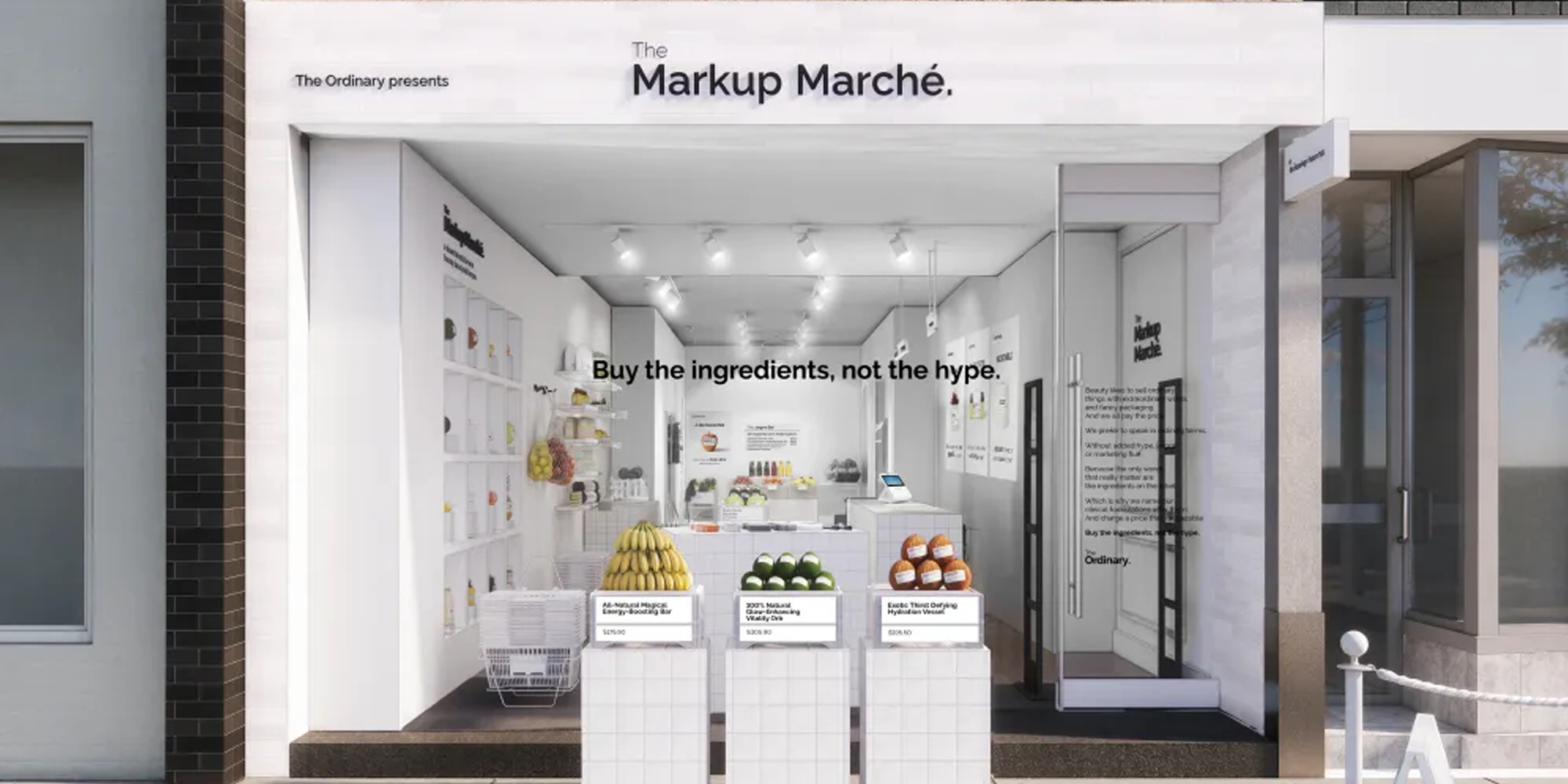
The Ordinary Takes On Luxury Markups With New Pop-Up. Is It Justified?
Speaking to Women’s Wear Daily, Amy Bi, VP at Deciem, the Estée Lauder Companies division behind The Ordinary, said that luxury goods can carry markups as high as 700%, and the pop-up concept is meant to show that efficacy doesn’t require towering prices. But perhaps Bi should look closer to home before broadly criticizing markups.
In 2020, Business Insider cited an estimate suggesting a 3.4-oz. jar of Estée Lauder-owned La Mer’s Crème de la Mer could be recreated for about $35. Adjusted for inflation, that’s roughly $50 today. Against the product’s current $625 retail price, the implied markup would exceed 1,000%, though the estimate likely excluded packaging, marketing, retail margins and other operating costs.
The Ordinary’s anti-markup campaign comes as consumer sentiment is fragile, trust in corporations has deteriorated, dupes have proliferated, and many people are feeling financial strain. The brand has a history of taking on beauty industry practices in its marketing, including pseudoscience buzzwords in The Periodic Fable campaign last year, inflated ingredient claims and the reliance on celebrity-driven messaging over expertise.
In that context, for the latest edition of our ongoing series posing questions relevant to indie beauty, we asked 12 beauty industry consultants, product developers, cosmetic chemists and founders the following: Is anti-markup messaging an effective customer acquisition tool? What kind of markups do beauty brands need to succeed in the age of dupes and increasing price transparency? If a product performs and consumers love it, does markup criticism really matter?