Digital Beauty Consultation Startups Take Professional Product Guidance Beyond Spas, Salons And Stores
When many brick-and-mortar stores were removed from the beauty shopping equation at the outset of the pandemic, beauty brands got a quick lesson in improving online shopping with virtual consultation and artificial intelligence capabilities to close the gap between stores and websites. Now, a burgeoning crop of platforms, including Lionne, Pomp, Carra, Myavana, The Hair Consult and Coralai, have placed those capabilities at the core of their proposition in a bid to deliver superior individualized online experiences as consumers increasingly digitize their beauty behavior.
Megan Felton, co-founder of skin education platform Lionne, explains consultation and AI startups represent a maturation from brands like Skin+Me, Apostrophe and Curology designed to bring dermatologist-recommended products to people’s homes. She says, “Consultation is taking that to a new level because it’s not just one product that’s personalized to you, but now it’s actually creating an entire holistic wellness routine that’s personalized off the back of consultation.”
While the pandemic played a big role in supercharging AI and virtual consultations for personalized product guidance, their roots precede it. Felton has been aware of their rise since 2016. “Although it seems like there’s been this explosion, we’ve seen it coming,” she says. “If you really studied the beauty industry, you could see this personalization trend on the horizon [with] people wanting skincare that was personalized for them.”
Nevertheless, the pandemic sped up the process of personalized virtual beauty care as aestheticians and hairstylists were forced to do what they could to retain clients. As a result, Nicole Cox, co-founder and COO of skincare consultation platform Pomp, says, “People became much more comfortable with online communication.” The comfort with online communication has eased the path for AI and consultation platforms.
McKinsey & Co. has been tracking the evolution. In 2020, a report by the management consultancy predicted that the pandemic would shift in-person engagement to digital environments, and AI would be a catalyst for online beauty consultations. For the economy, there’s concern that AI will strip jobs, but, in respect to online beauty consultations, the human element hasn’t been eradicated. Instead, it’s typically intertwined with AI to facilitate quality interactions between beauty experts and consumers soliciting their expertise. Often, AI isn’t the end of personalized support, it’s the beginning of it.
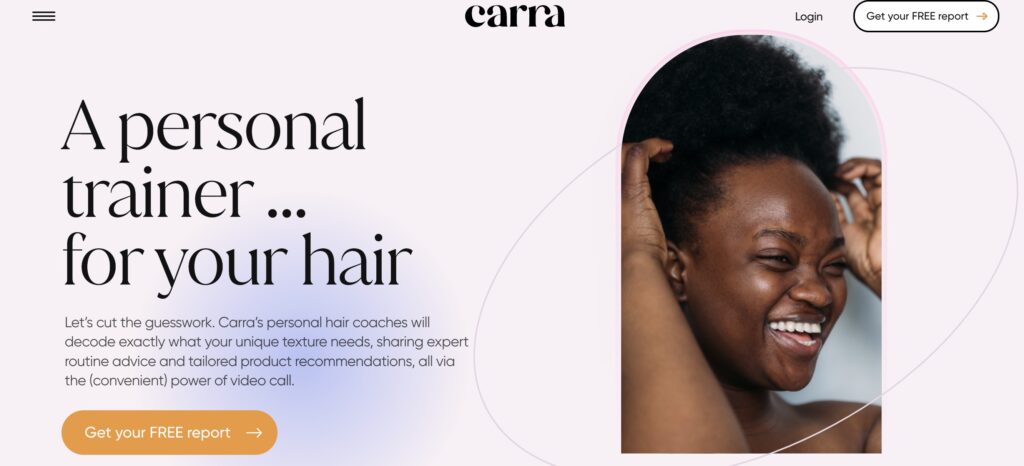
AI and beauty consultation platforms point out the challenge with AI technologies is prepping them to meet consumer demands. “How do we utilize artificial intelligence to make sure that the recommendations that we’re providing continue to be relevant for thousands of people?” says Winnie Awa, founder of the textured hair coaching company Carra. “And also, how do we make sure that everything that we’re doing is backed by data?”
Felton is dubious about the sophistication of AI integrated into a lot of the consultation platforms popping up. “People claim that they’re using AI, but, really, it’s not that nuanced in terms of what they’re actually doing,” she says. “They’re kind of offering a version of an online quiz and then calling it AI.”
Lionne’s expert consultation and curation is modeled on peer-to-peer recommendations. “What we wanted to do is replicate that experience, but with an expert,” says Felton. “And you achieve a skincare routine realistic for you.” She adds, “Our goal is really to educate consumers and be that unbiased source that they go to, and I hope that people become educated on what they need before they purchase and make more informed decisions because ultimately that is a more sustainable way to shop.”
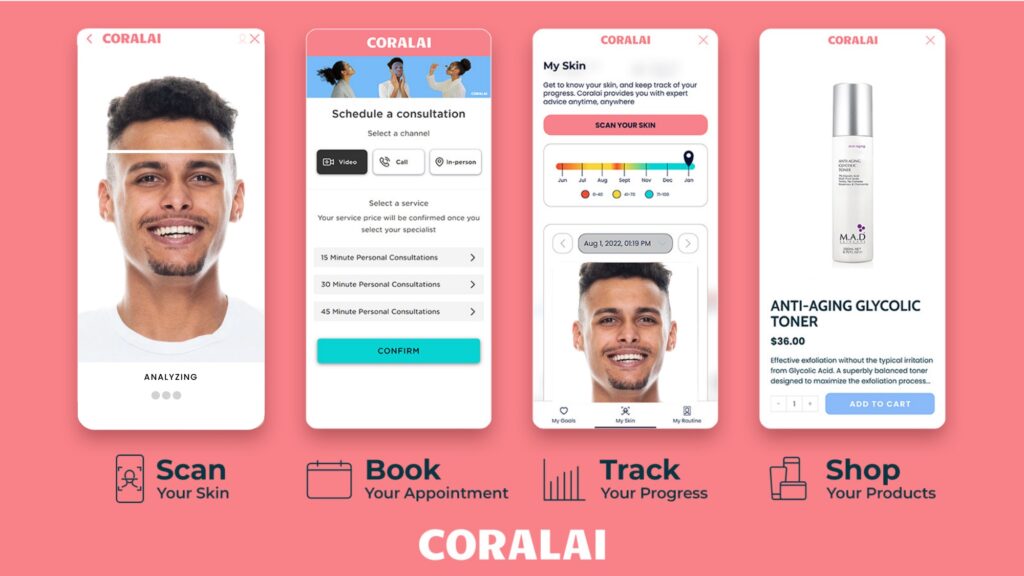
In an ideal scenario, the pairing of artificial and human intelligence avoids a one-size-fits-all approach to people’s beauty regimens. Corpus Group-owned professional skincare platform Coralai combines the qualitative with the quantitative. It incorporates technology from skin analysis company Revieve and booking platform Clientela. Coralai conducts a face scan followed by a series of questions such as, “Are you experiencing hormonal changes,” “How do you identify?” and “Where do you live?” From there, customers are given product choices and the chance to consult with an expert.
Co-founder Sean Patrick Harrington, who likens Coralai to “Fitbit for skincare,” says, “Our early days [with Coralai] was scan the skin, use the AI and then offer products for people to purchase based on those results. We heard from the marketplace, consumers and professionals, and they all said, ‘Wow, this is well and good, but, boy, it’d be even better if I could book some time with a provider.’”
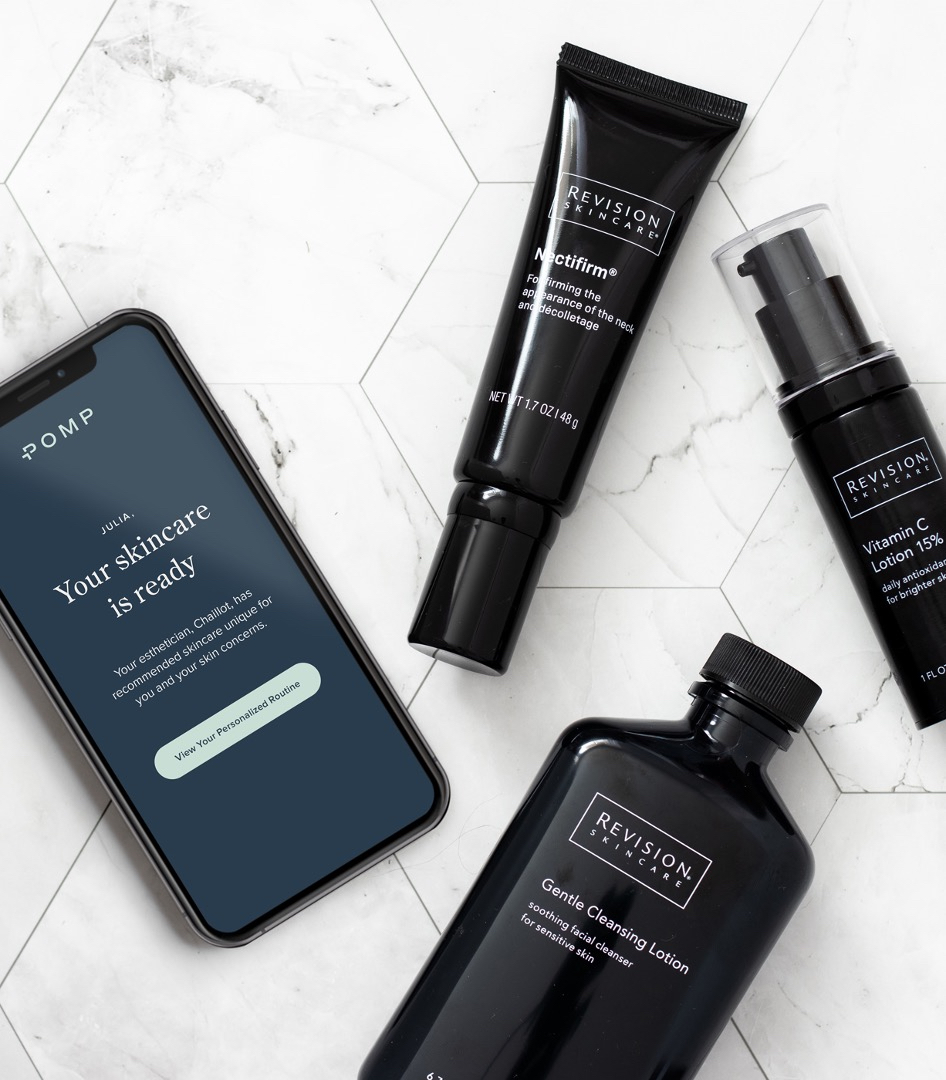
Pomp has aestheticians examine the answers of customer questionnaires before determining product suggestions. Shannon Erley, co-founder and CEO, says, “When you look at customer loyalty and what we’re seeing on our end, we have a very loyal customer base, and they’re coming back every month because we are brand agnostic in our approach, and people are coming back because our aestheticians are getting it right.”
Underserved consumers and those going through life transitions are prominent core customers of beauty consultation and AI platforms. Serving people who might not see themselves in products on mainstream retail shelves makes sense as they’re searching for alternatives to those retail shelves—and they represent a substantial chunk of people.
Pomp’s audience tends to be females aged 30 to 50 years old. Its objective is to widen its audience, and Erley mentioned people identifying as male as among its targets. Almost four in 10 Americans identify with a non-white race or ethnicity, per the United States Census Bureau.
Harrington is interested in Coralai holistically supporting vast audiences, not just women, but “more broadly the LGBTQ+ communities and even more broadly, the BIPOC [community],” he says, noting there can be differences between products effective for BIPOC and non-BIPOC customers. Harrington says, “We knew that we could help address [this]…looking at products and looking at skin as health through the lens of a diagnostic read.”
Carra, which focuses on haircare professionals recommending science-backed products, is shepherding people that have only recently “stopped or started to see the impact of relaxers on their hair. Both consumers and brands are learning about textured hair, why it’s different and what the right routines are,” says Awa. She elaborates the platform is particularly beneficial for consumers as they learn about textured haircare because it confronts what she describes as a “choice paradox,” where they’re faced with an overwhelming number of products, making it difficult for them to choose the appropriate ones for their hair.
Carra is currently bootstrapping. The platform was a 2021/2022 winner of an Innovate UK Women in Innovation grant. In 2020, Carra and Lionne participated in co-working company Huckletree’s The Alpha Accelerator, a program aimed at pre-seed businesses helmed by founders from underrepresented backgrounds. Felton previously told Beauty Independent that Lionne raised $185,325 in a convertible note.
Harrington didn’t discuss Coralai’s financials, but the business makes money through e-commerce and providing software as a service (SAAS) for companies. Venture capital firm Chasing Rainbows has invested an undisclosed amount in Corpus Group. Coralai is Corpus Group’s first launch.
Consultation platform founders assert the platforms are avenues outside of spas and salons for aestheticians and hairstylists to profit from their expertise. “The majority of aestheticians that we work with are independent and small business owners,” says Erley. “We are truly able to support aestheticians in a bigger way and help them be better businesspeople, improve client relationships and then make more money.”
Feature image credit: Lionne
The players
5 mentionedThe Doux

iS Clinical
AS Beauty
Rizos Curls
Under Your Skin