Poom Cosmetics Founder Irene Ham On The Rewards And Risks Of Building In Public
A year ago, Poom Cosmetics founder Irene Ham posted a TikTok video showing herself wiring $30,000 to an overseas manufacturer, effectively draining her savings account to fund the brand’s first inventory order. For many beauty founders, the moment would have remained private. For Ham, it was content.
The video became one of the earliest traction points for Poom, the acne-safe K-Beauty complexion brand Ham launched in 2024 after personal struggles with acne. Over the past year, she has built the business largely in public on TikTok, documenting everything from formulation decisions and packaging revisions to retailer feedback.
“I would wake up every day and ask, ‘How can I get more sales today?’” says Ham. “Content really became the key to getting the brand started.”
The strategy reflects a broader shift across the indie beauty landscape, where founder visibility on TikTok increasingly functions as brand marketing and a low-cost customer acquisition channel. The result has been profound for early-stage brands that don’t have institutional funding or large paid media budgets.
“I couldn’t compete with bigger brands with production, aesthetic shoots or influencer marketing,” says Ham. “So, I thought, ‘What is the best free way to market my brand?’”
According to Ali Kriegsman, industry consultant, brand marketer and author of “How to Build a Goddamn Empire,” TikTok accounts for roughly 30% of first-touch customer attribution traffic for some of the brands she advises, often outperforming more traditional acquisition channels.
Kriegsman says, “It’s so much easier for founders that are bootstrapping, less resourced or aren’t plugged into the VC community to get customers and build traction.”
She adds the building-in-public model works especially well to draw younger consumers who respond to vulnerability rather than controlled aspiration. “This younger generation is so anti the gloss and the sheen and seeming like everything is fabulous and perfect,” says Kriegsman. “They want to see as much transparency as possible because it makes them trust you more. This consumer feels like they’re supporting a person, not just the business.”
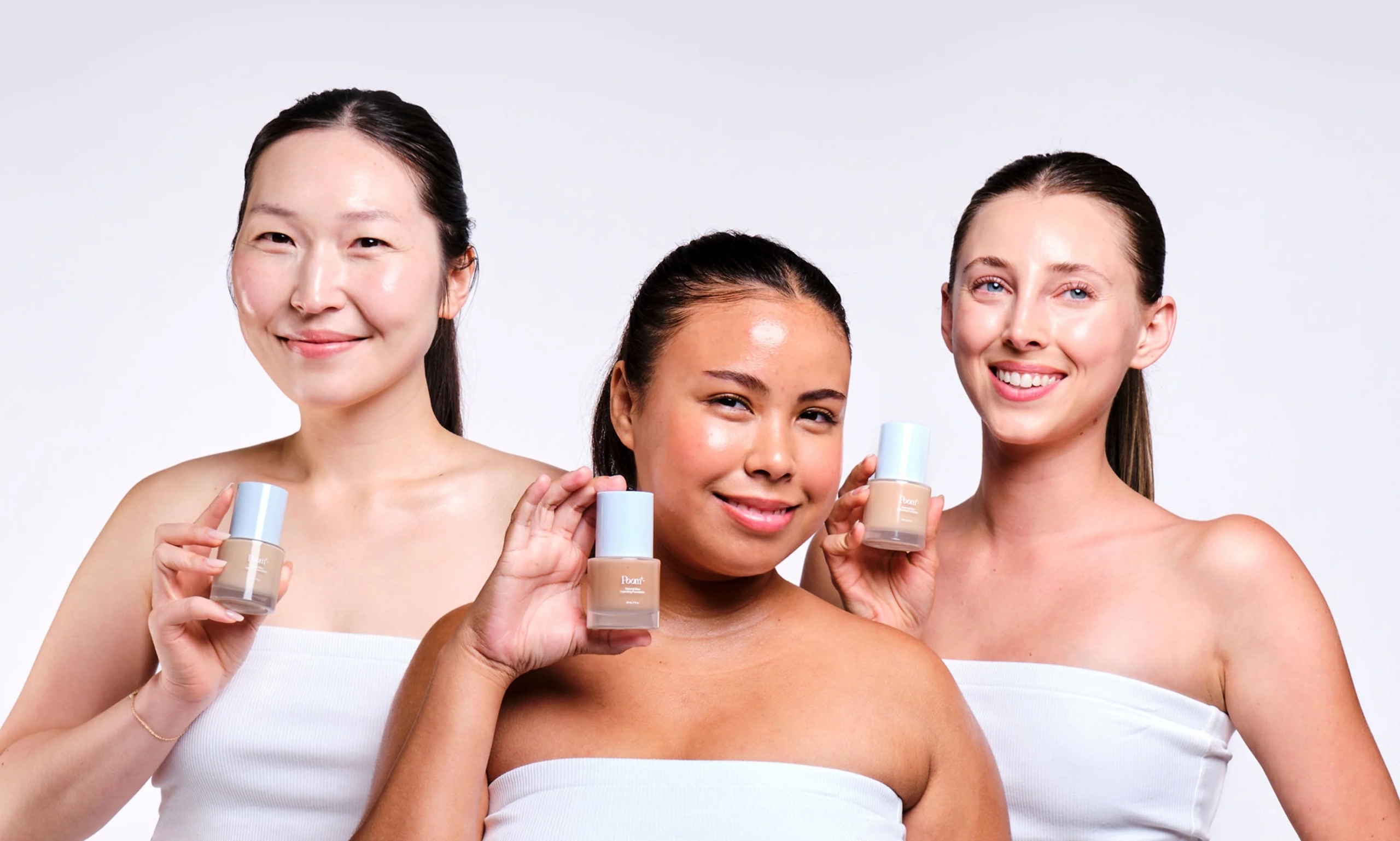
Ham launched Poom four months after giving birth to her son and funded the startup using $70,000 she had saved from working in real estate. The initial launch consisted of a single foundation in six shades, a range constrained largely by budget. Without the resources for a polished creative campaign or influencer seeding, she began posting TikToks documenting the realities of building a beauty company from scratch.
“The first 300 videos were terrible,” admits Ham. “I would never watch them myself as a consumer on TikTok.”
Consistency eventually paid off. Ham says Poom became profitable within four months of launch and has fulfilled more than 6,500 orders across direct-to-consumer, Amazon and TikTok Shop. In its first year, she disclosed on TikTok that Poom hit $300,000 in sales, but that sum certainly didn’t make her rich as almost every single dollar is going back into the business, including $120,000 for new inventory, $12,000 for tariffs and $10,000 for shipping.
Ham’s videos have attracted followers—Poom has nearly 24,000 on TikTok—customers and operational support from the beauty industry. After Ham aired the travails of finding a third-party logistics partner, consultants and vendors began reaching out with referrals and advice. Photographers inspired by her vulnerability offered to take product photos for free.
Ham says, “When you open yourself up, you’d be surprised by how many doors open.”
The brand recently expanded onto Ulta Beauty’s online marketplace after being accepted into the retailer’s accelerator program MUSE. The acceptance came with a $50,000 grant, which Ham is using to extend Poom’s foundation range from six to 12 shades and revamp packaging based on retailer feedback.
Ham says, “Ulta told me my packaging wasn’t retail-ready because it didn’t communicate the brand story or why I started the company.”
Founder transparency is beginning to splinter into different approaches. Some founders lean heavily into aspirational lifestyle storytelling, while others like Ham focus on operational transparency and documenting the mechanics of running a company in real time. Kriegsman notes that consistent posting boosts a founder’s “surface area for serendipity,” a phrase she credits 4AM Skin founder Jade Beguelin, another beauty founder building in public on TikTok, with coining.
The open-book strategy has risks. Last year, Ham faced online criticism after another K-Beauty brand publicly alleged that Poom copied its products. The backlash generated negative comments, reaction videos and online speculation about the company, forcing Ham to address the controversy publicly. She says, “You can’t reap the benefits of being a founder-led brand and ignore the controversial parts.”
Kriegsman believes there is a delicate balance between accessibility and revealing operational instability in ways that could unintentionally undermine consumer confidence. She says, “If it were me personally, I don’t know that I would be showing so much behind the scenes of the financing logistics.”
At the same time, Kriegsman notes that founder-led brands can create unusually strong consumer connections. She says, “The connection you feel to the person gets mapped onto the thing that they’re showing you.”
For brands building in public, there may be long-term issues when so much of their traction is tied to a founder’s personal visibility and platform algorithms. For now, the strategy continues to fuel growth for Poom. One of the brand’s next major goals is entering Ulta stores through the retailer’s Sparked program for emerging brands. In-store testing remains critical in beauty, particularly in cosmetics where shade-matching is important.
“Selling complexion online is so difficult,” says Ham. “Customers are basically playing a guessing game with shade matching.”
As Poom expands into retail, the challenge won’t simply be helping customers find the right shade, though. It will be determining whether the founder intimacy that fueled its early growth can translate beyond TikTok.
The players
1 mentioned4AM