Why Eye (Area) Care Is Everywhere
Specialty eye area products have been multiplying, with modern, doctor-led brands like Peep Club, NuLids, In My Eyes, CorneaCare and even dedicated e-commerce platforms meeting demand from weary-eyed consumers. Many of these brands are bringing a beauty category product development and branding approach to this beauty-adjacent category as consumers deal with greater eye stressors due to screens, climate change-induced pollen proliferation and even menopause-related eye dryness.
Leah Klatt, who co-founded of Ayurvedic personal care brand Paavani in 2014 says she’s seen growing consumer interest in eye health over the past few years. “We believe this is largely driven by increased awareness of the impact of prolonged screen time and digital device use, which has made people more proactive about caring for their eyes.”
Beauty Independent first clocked and covered the emergence of targeted eye health products back in Jan. 2020, when Paavani and eye care brand We Love Eyes exhibited at Indie Beauty Expo LA 2020. Paavani offers a Eye Cleansing Ritual Kit that has been one of its best sellers since launch.
Eye health practices are nothing new. In fact, they date back to ancient times. Klatt notes that eye washing is an Ayurvedic exercise that dates back over 5,000 years meant to soothe excess pitta or heat in the eyes. The modern version of this ritual includes lid and lash cleansers and wipes, eye area skin treatments free from possible irritants and devices to alleviate dry eyes and soothe sensitized skin.
According to digital intelligence firm Spate, searches for “dry eyes” are up 14.6% on TikTok, where the hashtag receives 4.2 million average weekly views. Top concerns alongside the term are dry skin, eye strain, and stye. Market research firm Grand View Research estimates the global dry eye treatment market size was at $6.29 billion in 2024 and projects it will exceed $9 billion by 2030, growing at a rate of 6.5% from 2025 to 2030. North America accounts for 42.7% of the market.

Eye health specialists identify nearly incessant scrolling on screens as the most common, although certainly not the only, reason behind the uptick in eye complaints. Nicola Alexander, an investment banker-turned-optometrist and co-founder of eye care brand Peep Club, says, “You blink a lot less when you look at screens and being in air conditioned environments…Your eyes are parched by the end of the day.”
Alexander launched Peep Club in 2020 with Natasha Sales, a team lead at Google Creative Lab and patient of hers that had horrible dry eyes from staring at screens. It’s now the No. 1 recommended brand by independent optometrists in the United Kingdom, where it’s based, and sells at Victoria Health and Le Bon Marché. In May, Peep Club started direct-to-consumer distribution in the United States.
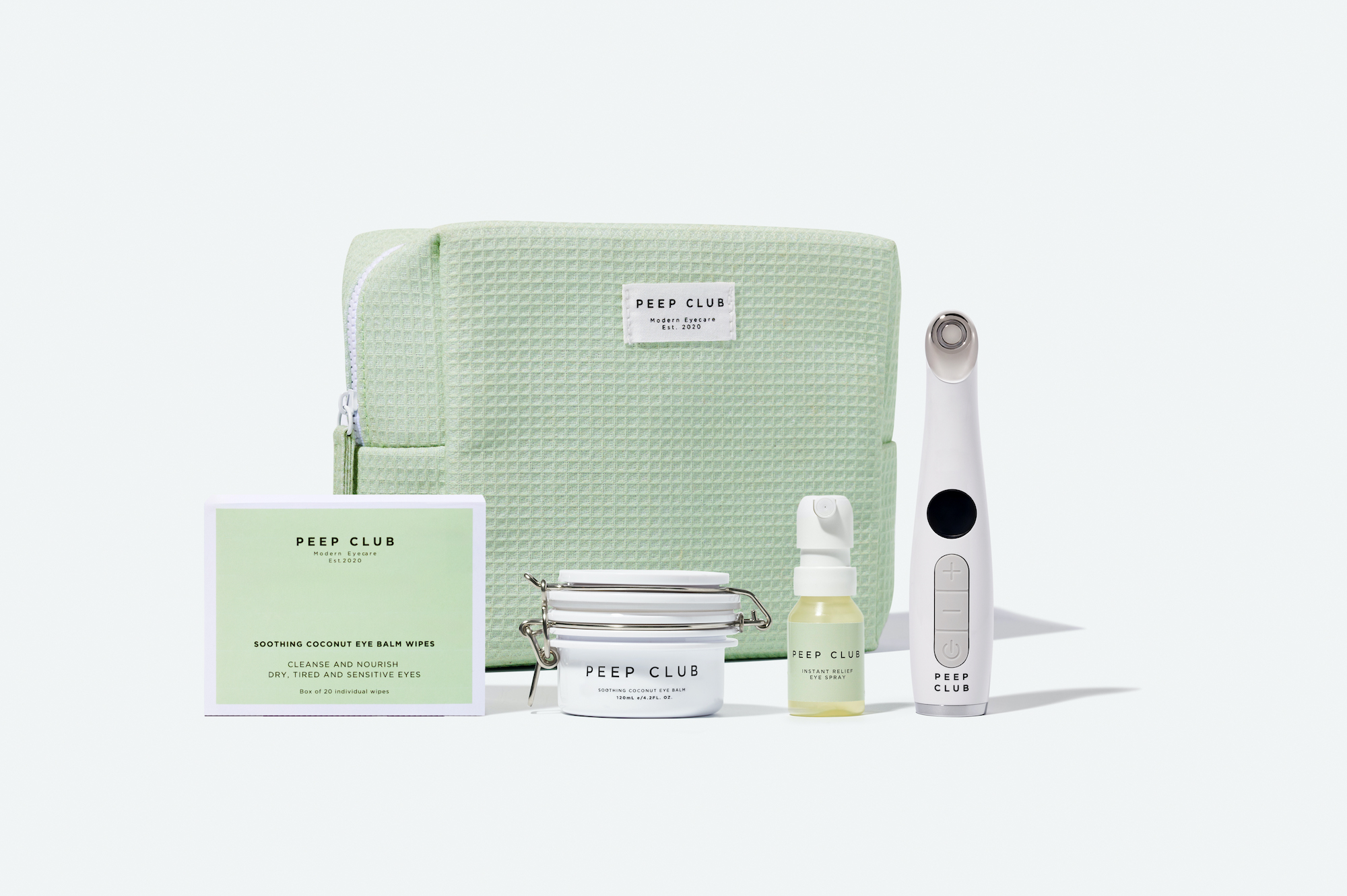
The brand spent over three years developing its $130 Heated Eye Wand LED+ to be simultaneously effective and stylish, appearing more akin to a beauty tool than medical appliance. The product draws upon the therapeutic mix of heat and massage that’s been integral to protocols for dry eyes and treating conditions like blepharitis and meibomian gland disease.
John Olkowski, optometrist and founder of eye health device brand NuLids, points out that over 30% of the population has dry eyes and 90% of dry eyes are the result of blocked meibomian oil glands on the eyelid margins. He explains, “The meibomian glands along the lid margin produce oil, which is crucial to prevent dry eyes.”
Proper eyelid and lash cleaning is a crucial step in treating dry eyes and associated conditions. Most targeted eye health brands have cleansing products in their lineup. Some brands like CorneaCare and Bausch & Lomb’s Biotrue offer wipes, the latter with micellar water and the former with tea tree oil. Tea tree oil is the main active ingredient in ophthalmologist-founded brand We Love Eyes’ $72 Eyelid Foaming Cleanser. Peep Club’s Soothing Coconut Balm Wipes blend raw virgin coconut oil to soften skin and strengthen eyelashes while protecting against bacteria. Alexander explains that for chronic dry eyes sufferers, removing eye makeup has to be done carefully.
“Eye makeup removers typically have ingredients in them that can irritate your eyes as much as they take off makeup, but they don’t necessarily fight bacteria on the eyelid,” says Alexander. “A lid cleanser should have that extra bonus of removing the bacteria, which is not really what makeup removers are made to do. They were made to dissolve makeup. They were not made to perform well on your tear film or protect your cornea. That is a big problem that we’re seeing.”
Chronic dry eye sufferers must mind the ingredient decks of any products that come near their eyes—not just cleansers or makeup removers. When looking for relief for her chronic dry eye condition, L’Oreal alum Sasha Woo saw many big beauty brands offering eye creams that claimed to be “sensitive-eye-friendly” or “tested on sensitive eyes” but still contained several known irritants. Even “clean” beauty brands can be culprits.
Woo says, “The common approach [is] using ‘clean’ formulas and adding a few soothing actives. When we saw jar-packaged eye masks, which often require preservatives that cause stinging for sensitive eyes, when we realized effective anti-aging doesn’t have to rely on retinol, that’s how our product line was born.” In My Eyes six-product range includes an eye area cleanser, eye contour mask, balm, serum, a metal gua sha tool and a makeup primer all formulated free from ingredients known to irritate the cornea and delicate skin around the eye.
Thorough eye area cleansing has risen in importance with the spread of false lashes that introduce allergens and bacteria into the delicate eye area. We Love Eyes created the $121 Lash Extension Home Care System with its Eyelid Foaming Cleanser, hypochlorous acid-infused Tea Tree Water Eyelid & Eyelash Cleansing Spray and Eyelid Margin Cleansing Brush and In Between Eyelash Cleansing Brush specifically for false lash wearers.
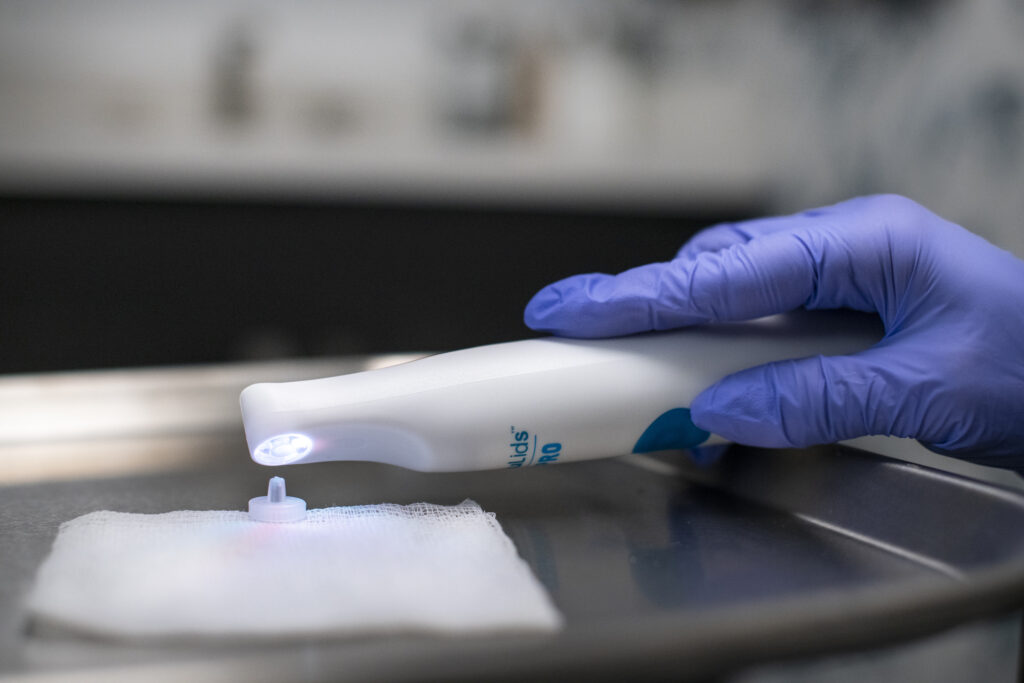
Olkowski created NuLids to provide superior methods to clean and massage the eyelid margins in his patients with dry eyes, blepharitis and meibomian gland disease. The brand launched in 2017 with $329 at-home device NuLids Daily and released a professional device for in-office use by eye care and skincare providers in 2024. A NuLids professional treatment can range in price from $50 to $200. Over 500 practices offer the treatment nationwide.
Olkowski says, “Patients were using moist towelettes or cotton swabs with baby shampoo, but compliance for these was very poor, so I felt it would be helpful to have a way to make this a more convenient and rapid treatment while also being more effective.” For Alexander, that poor compliance was one of the main drivers for making Peep Club products look and feel more like a beauty brand than a doctor-made targeted eye health offering. She says, “I know that if you want to build a habit, you have to have an endorphin hit. So, it felt really important to be super elevated in the approach. It has to feel good to use it.”
Olkowski details that NuLids Pro has similar technology NuLids Daily but is more powerful and uses different disposable tips for a more robust single treatment effect. “Kind of like having an electric toothbrush at home but going to the dentist for a periodic professional cleaning,” he says.
The NuLids Pro treatment price point makes it a more accessible option to many dry eye sufferers compared to other in-office treatment options that can range from about $2,000 to $4,000 for a single session.
“There are great ‘advanced’ technologies out there like thermopulsation and IPL,” says NuLids CEO Mark Saad. “There are also Low Level Light Therapy and RF devices. These are all high cost capital equipment which results in higher cost treatments for a range of outcomes.” Saad estimates that there are less than a million of these procedures done nationwide per year. “The practical impact of that is very small as there are at least 16 million people who are diagnosed with dry eye every year,” he adds.
Alexander, Olkowski and Klatt don’t foresee the demand for eye care products decreasing. Particularly among younger people, they predict demand will mount as the factors straining their eyes, screen time the most notable, continue to be exacerbated. Alexander adds, “Allergies are up, in terms of pollen and hay fever, and sensitivities to makeup are also up. More people are reporting having sensitized skin, even as makeup has gotten cleaner.”
Another positive trigger of heightened interest in eye care is a wider embrace of preventative, holistic self-care rituals and ancient wisdom traditions like Ayurveda. “People are seeking gentle, natural solutions that support overall well-being rather than just treating symptoms after the fact,” says Klatt. “Eye health rituals fit beautifully into this lifestyle approach, helping individuals reconnect with themselves through mindful daily practices.”
The players
5 mentionedRitual

AS Beauty
Formulate
L'Oreal
Under Your Skin