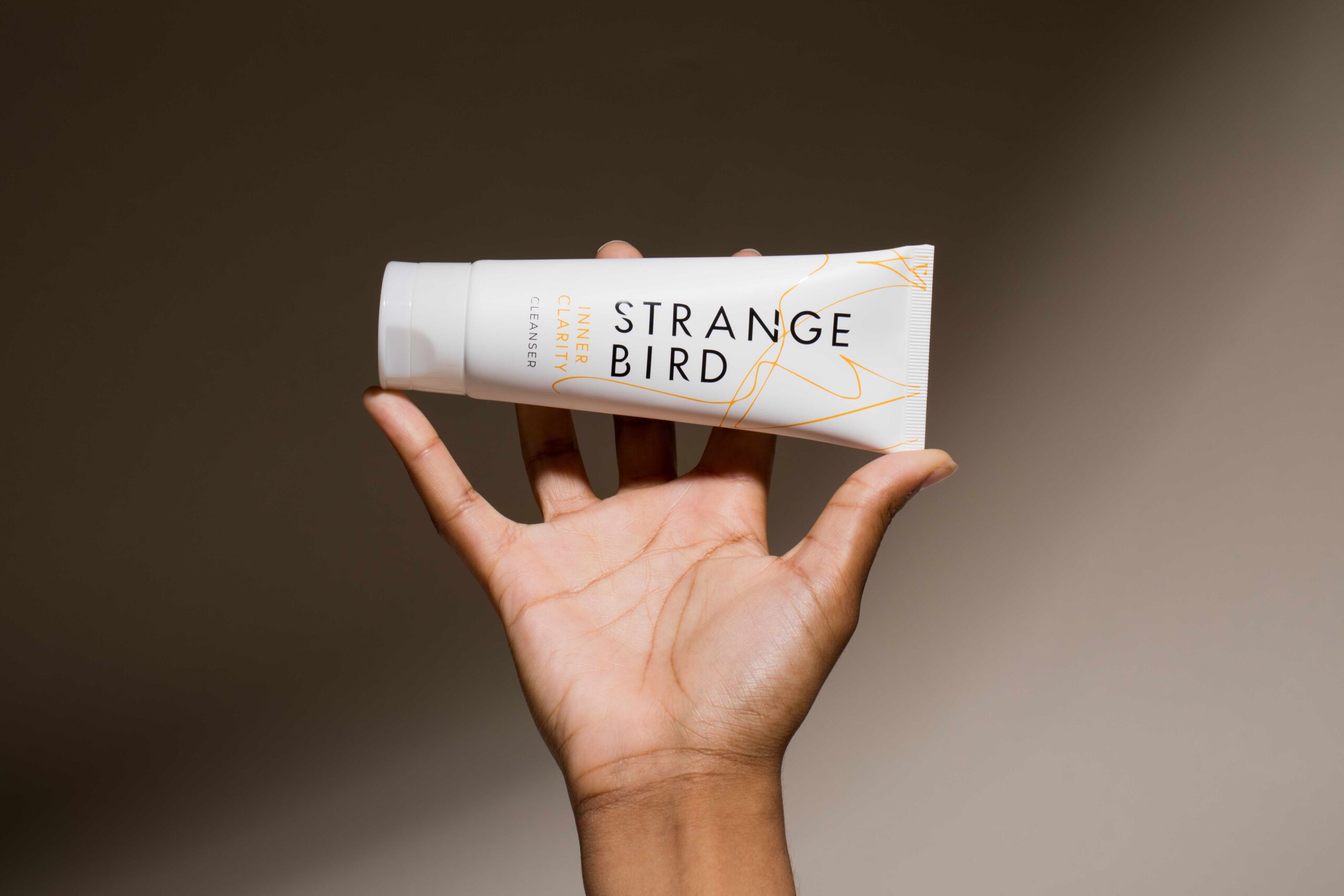
Strange Bird Founder Tina Chow Rudolf Opens Up About Why She Chose Her Contract Manufacturer
Larry Page and Sergey Brin will be pleased by Rudolf’s reply to this question: She Googled and Googled some more to find AE Labs. She had specific stipulations for the manufacturer she wanted to secure. It had to produce natural and organic formulas, and it had to offer formula ownership at a price she could afford. Other manufacturers told her they would charge at least $5,000 to own a formula. At AE Labs, she was quoted $1,500 a formula for ownership. Ultimately, she spent $3,000 to own Strange Bird’s first three formulas, and she established a five-year relationship with the company.
Relationship is the operative word. Rudolf needed to be comfortable with the connection she was forging with the manufacturer she was trusting with her brand’s products. “You have to make sure who you are getting into bed with is going to work with you and is easily accessible,” she says. Rudolf visited AE Labs prior to signing a contract with it and ensured she had an open line of communication with CEO Antonio Sciortino. Walmsley reiterates the importance of open communication because it’s unlikely manufacturing is going to be perfect all of the time. “If you are baking two different batches in a bakery, there are always discrepancies and issues that are unforeseen,” she says. “So, to me, it was great that they were human, and I wasn’t talking to this big business. They would help me if something ever went wrong.”
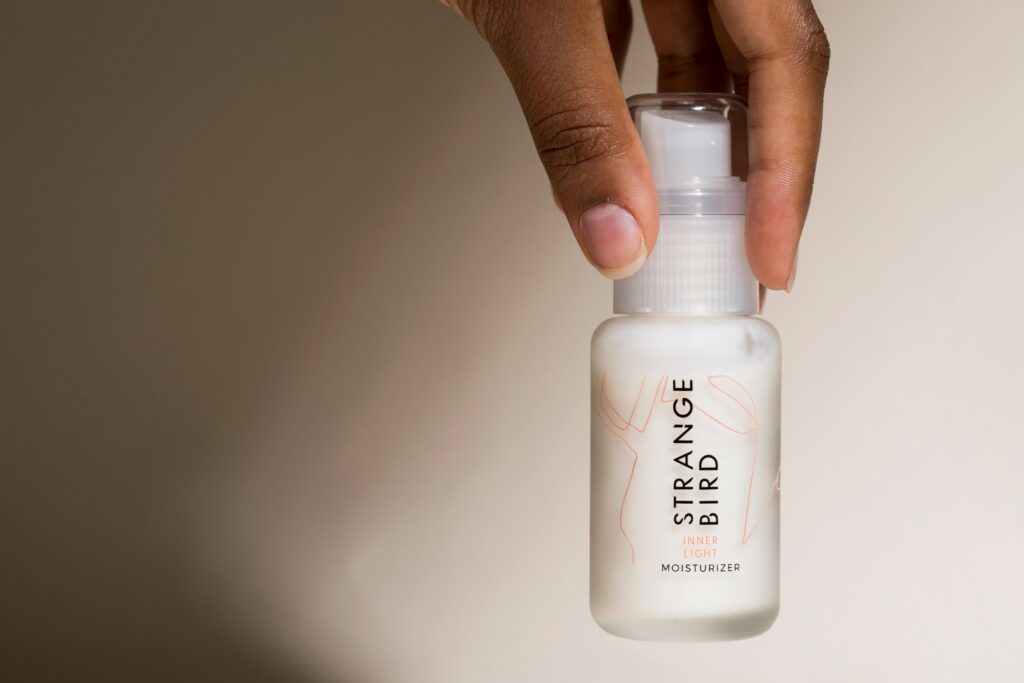
In the beauty industry, it’s common for manufacturers to own formulas, not brands. Heading into creating her brand, Rudolf instinctually felt she should own Strange Bird’s formulas. “What I always coach in life coaching is begin how you want to end. I just wanted to do it right,” she says, noting she was advised it would be valuable to own Strange Bird’s formulas if she sought investment or a sale later on. “Not everyone has the same growth dream and not everyone gets into the business for the same reasons, and my reasons may change as a brand. Maybe I will never get to that place,” says Rudolf. “I just want the freedom to grow and change however I want to right from the start.”
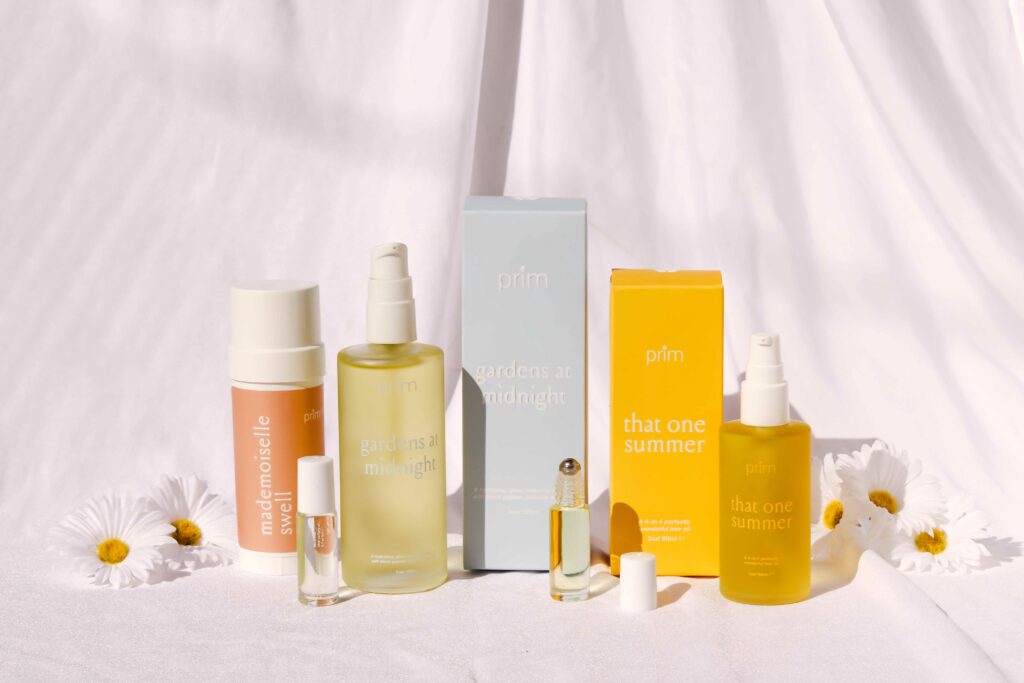
Walmsey recounts she began Prim “on the kitchen floor in a bikini covered with oils” and funded it with $3,000. Four years ago, the brand outgrew Walmsey’s kitchen, and she turned to AE Labs, which manufactures its hair oil, body scrub and body oil. Because she had been whipping up products on her own prior to handing them over to a contract manufacturer, she had ingredients she preferred for them. AE Labs permitted her to continue to use them in Prim’s products. Manufacturers often frown upon brands bringing in ingredients themselves.
Walmsley leans toward formula ownership, but she doesn’t own Prim’s entire assortment of around 10 formulas. “For formulas, you can work with the lab to do them completely custom or you can shop around to get different existing formulas to be tweaked to your liking, which is what I usually end up doing more of,” she says. Because Walmsley is OK with existing formulas, she quickly responded to hand sanitizer demand amid the pandemic by tapping AE Labs’ hand sanitizer capabilities. Prim sold 14,000 hand sanitizer units through its website and to Anthropologie. In addition to AE Labs, the brand depends on Rustic Maka to manufacture its deodorant and Harbor Mill Co. to make its candles.
Strange Bird kicked off with three products because Rudolf believed it would have been too much to manage and pay for more than three products at the outset. To create Strange Bird, she spent roughly $40,000. That amount includes the entire gambit of formulation, packaging, website construction and graphic design. Rudolf advises beauty entrepreneurs to launch brands with one to three products. Walmsley, who launched Prim with five products, concurs with Rudolf that one to three products is the way to go.
Reached last month, AE Labs sales director Patricia Darbonne disclosed the manufacturer’s MOQs on most products are 500 units and on bar soaps are 1,000 units. When Rudolf was searching for a manufacturer, AE Labs’ 500 unit MOQ was the lowest she came across for a manufacturer that met her stipulations. Walmsley started with 250 units along with an agreement that she would eventually have AE Labs make 500 to 1,000 units of each of Prim’s SKUs she had partnered with the company on.
“This is not a commercial for AE Labs. This is a plea. Other labs out there, please make it easier for us to be entrepreneurs and do this,” says Rudolf. “What is great is the barrier to entry is low. People can start in their kitchens, but I didn’t want to start in my kitchen. So, what’s the option for me?”
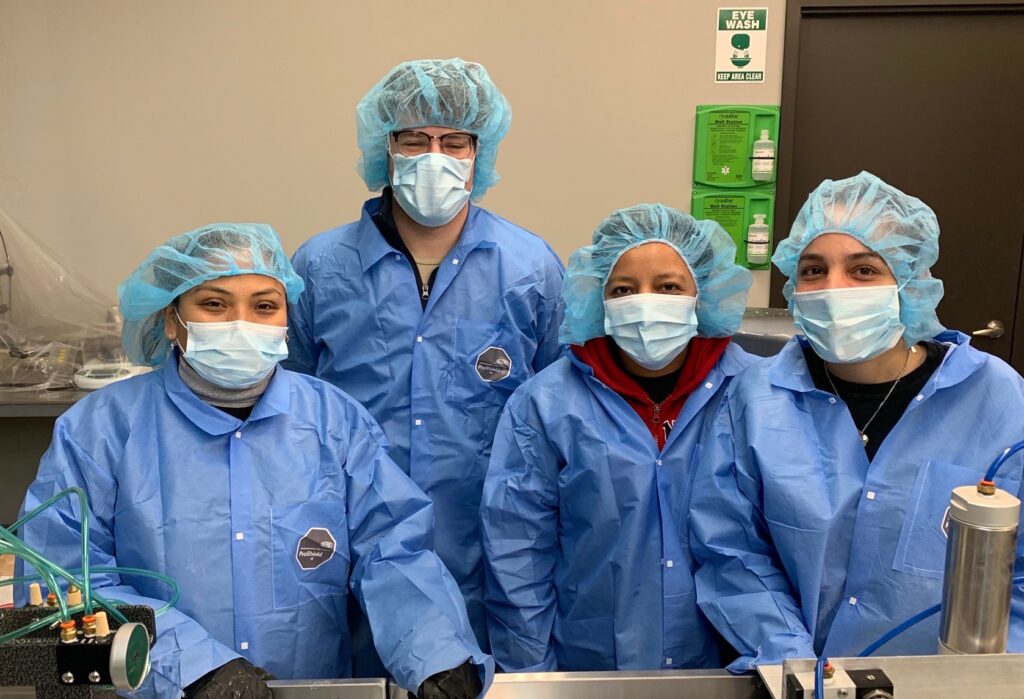
To develop Strange Bird’s formulas, Rudolf pinpointed products that she was attracted to for various reasons as benchmarks and assembled them in an Excel document that contained those reasons. She relayed the benchmarks to AE Labs. Then, she vetted prototypes for three years before finalizing the formulas she would move forward with for Strange Bird. Her pledge to manufacture with AE Labs for five years was a motivator for the company to allow her to scrutinize multiple prototypes.
Rudolf’s open line of communication with Sciortino at AE Labs enables her to negotiate deals in order to produce units she might have been prevented from producing with a different manufacturer. For example, a subscription box service ordered 4,000 units from Strange Bird for the winter. The service paid on net 60 terms, and Rudolf couldn’t cover the full production run upfront. AE Labs arranged for her to pay half upfront and half after she received payment from the service.
While Rudolf has an open line of communication with AE Labs, she admits it can be difficult to speak the language of a contract manufacturer. To aid her in translating her goals for Strange Bird’s products to the company, she paid cosmetic chemist Perry Romanowski, co-founder of podcast The Beauty Brains and founder of website Chemists Corner, to allot 30 minutes per month to her as she was developing the brand to educate her on cosmetic terms she wasn’t familiar with. When she was vetting cleanser prototypes, Rudolf says she desired the formula to be shinier or glossier. “He was like, ‘Those are not terms your lab is going to understand.’ You have to say you want to up the jojoba 1% or give it a little bit more slip,” she recalls. “I said that to Antonio at AE Labs, and he totally nailed it.”
Rudolf recommends beauty brand founders get a grasp on what they’re trying to deliver with their brand and not expect a manufacturer to have that same grasp instantly. “Because your lab is formulating hundreds of brands, it’s not realistic for them to be your tutor,” she says. “This is part of what I coached the people that I talked to. You need to be your own boss. You need to be the leader of this process.”
The selection of a contract manufacturer doesn’t complete the brand creation process. Walmsley and Rudolf shared other resources they use that are delighted to supply services to emerging beauty brands. Walmsley relies on Wizard Labels for labels and Stampa Prints for boxes. Rudolf used Cospack for packaging—she divulges it had an MOQ of 1,000 units—and Bella Printing to print on it. She says, “Sure, I would have liked everything to be custom custom, but I felt like I got lucky with very unique bottles and pumps that you don’t see everywhere out there that are super high quality.”
Rudolf emphasizes beauty entrepreneurs should be thinking about their cost of goods and retail pricing, too. She didn’t think about them much as she shaped Strange Bird. Instead, she concentrated on her ideal ingredients. The result is that she says the margin on her brand’s cleanser isn’t as high as it should be. Rudolf mentions Melody Bockelman, owner and CEO of beauty startup consultancy Private Label Insider, suggests beauty brands retail their products for at least 6X their cost of goods. Strange Bird’s cleanser is priced at around 5X the cost of goods. “It’s a cleanser. You can only charge so much for it,” says Rudolf. She instructs beauty entrepreneurs to ask themselves a question as they develop products: “What kind of margins do you want?”
Many beauty brands are afraid that, if they publicize their manufacturers, a competitor will attempt to obtain their formula recipes from the manufacturers and copy their products. There can also be marketing spin occurring by brands that hope to convey they’re in control of the entire process. Rudolf and Walmsley have concluded the benefits of naming their manufacturer outweighs the costs.
Rudolf argues beauty brand founders swapping resources can assist those without considerable advantages in advance of their jump into entrepreneurship and help diversify the beauty industry. “I don’t have the rolodex so many privileged people have,” she says. Walmsley says, “I have such a network of badass beauty owners, and I’ve never once felt like I was in competition with anyone. If you put yourself in the mind of the consumer, it’s all different products anyway. I don’t think there needs to be so much secrecy there. Each brand is still responsible for their ingredients, formulas, branding, packaging and messaging.”
The players
5 mentionedAS Beauty

Strange Bird
Glossier
Formulate
Anthropologie