Six Emerging Australian Beauty Brands Making Sustainability Strides
The six brands covered below are situated in various categories, including oral care, skincare, color cosmetics, haircare and grooming, but all hail from Australia, which boasts an incredibly botanically diverse environment. For many in the country, nature is top of mind. The Raw Vedic founder Rupa Chopra says, “We’re so fortunate to have incredible outdoors: beaches, forest, deserts. Looking after them is more instilled in our culture.”
No matter the country, of course, brands can improve their practices to lessen their impacts on the environment. The six we’re highlighting here are jumpstarting conservations about ethics in the beauty business and presenting consumers with earth-conscious options to, according to Ewe Care co-founder Nicole Gilliver, “agitate for better outcomes in the beauty space.”
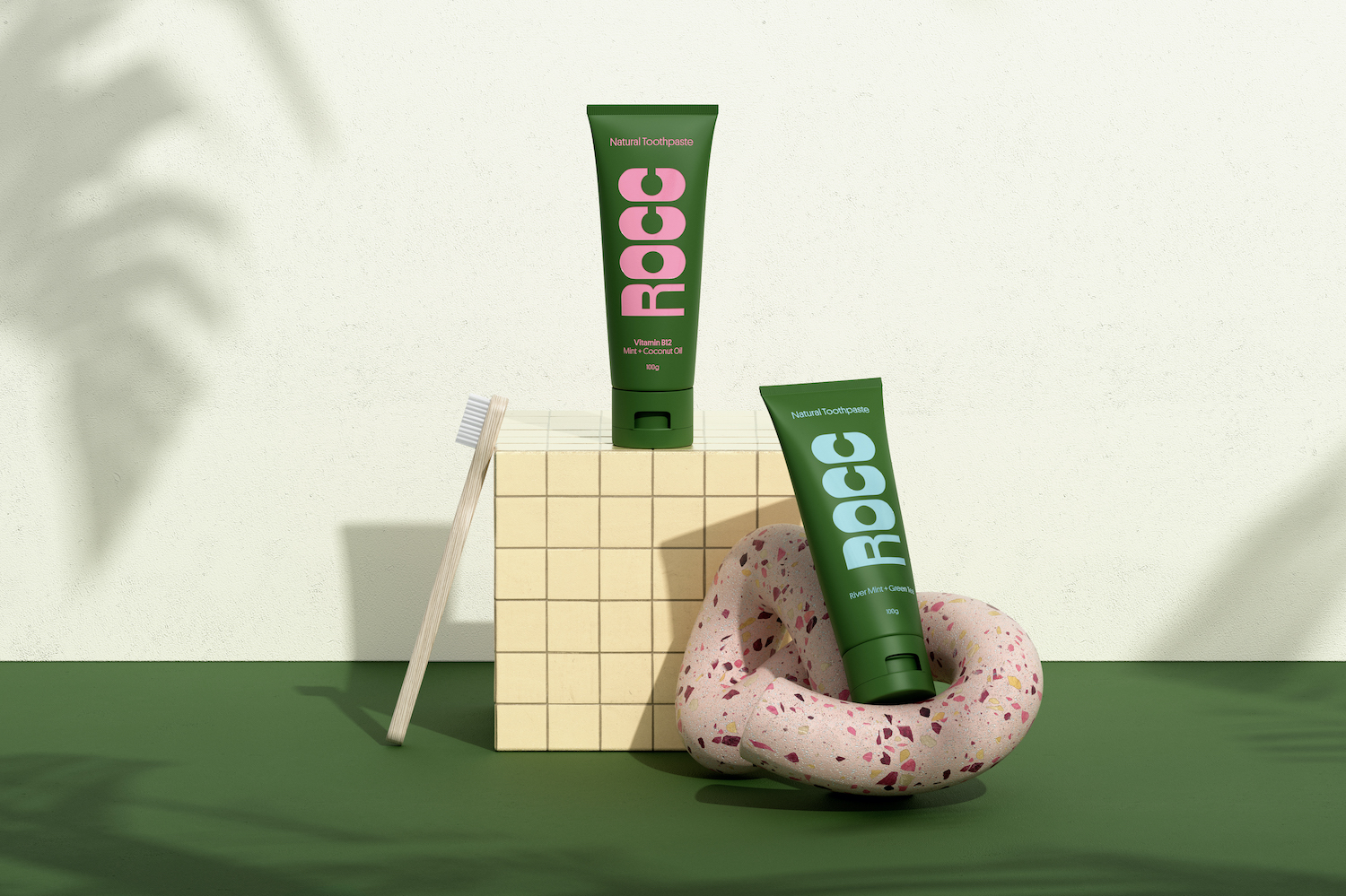
Rocc Naturals: Many people brush their teeth day and night coupled with clean skincare routines, so why aren’t there more conscious oral care brands out there? That’s the question Prue Rocchi pondered while pregnant and standing in a supermarket aisle. “I wanted to switch from a [synthetic] chemical toothpaste to a natural toothpaste with fewer nasties,” she reflects. “I also wanted to shop sustainably. There wasn’t one single product in the sea of red and blue boxes that did both.”
She acted on her wants by creating the brand Rocc Naturals. It offers a biodegradable bamboo toothbrush priced at 6 Australian dollars or almost $5, and three mineral- and vitamin-rich toothpaste varieties priced at 10 Australian dollars or about $7.50. The toothpastes are housed in a biodegradable tube Rocc Naturals estimates breaks down in landfills in six to ten years compared to a reported 500 years for a conventional toothpaste tube. It’s the first of its kind in Australia.
“I always said, when conceiving Rocc, ‘If I couldn’t find a way to make it sustainable, I wasn’t going to launch it,’” says Rocchi. “We are also working hard to improve our sustainability practices, including tracing our impact on the environment and accreditation.”
Rocchi’s efforts have caught the attention of stockists ranging from high-end hotels and fashion boutiques to naturopath clinics and bathhouses. The brand entered more than 800 Coles supermarkets across Australia early this year.
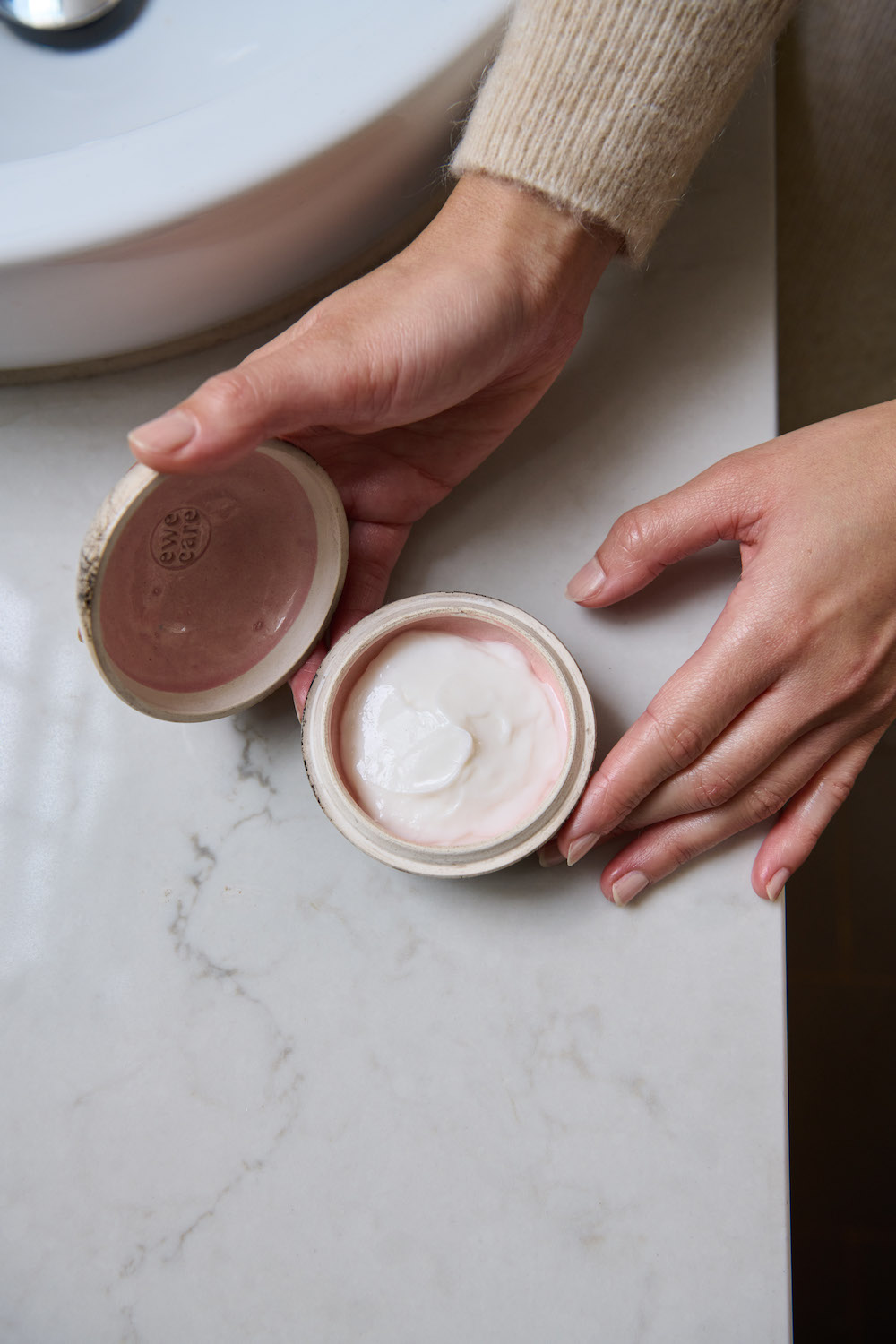
Ewe Care: Tasmanian dairy company Ewenique Enterprises is turning vitamin-rich sheep milk that would otherwise be disposed of into Ewe Care’s range of luxury skincare products. The brand represents the company’s first foray into skincare, but it’s by no means its first attempt at upcycling. Six years ago, it started a distillery that transformed sheep whey, a byproduct of its sister business Grandewe Cheese, into vodka and gin.
“Our business has always had a very strong foothold in sustainability, even before it was a marketing term,” says Gilliver. “It has been the cornerstone of what we believe to be responsible land and business stewardship for the last 20 years.”
Ewe Care launched in July 2021 with two stockkeeping units: a day cream and night cream. Gilliver says “it will stay that way for the foreseeable future.” A smaller travel version of the products, though, is in the works for release at the end of the year. The creams are available in bespoke raku ceramic vessels made by local Tasmanian artist Ian Clare at the price of 165 Australian dollars for the day cream and 180 Australian dollars for the night cream, which amounts to $122 and $134. Customers can buy 60-ml. sachets of the products for 65 and 80 Australian dollars or about $48 and $60.
Beauty brands are increasingly gravitating to PCR or post-consumer recycled plastic packaging, but Gilliver sees two major issues with it: Consumers won’t recycle it because beauty packaging is hard to clean, and people may skip recycling it out of laziness or forgetfulness. “In order to stick rigidly to our values we had to offer a non-plastic, high value—if the packaging isn’t high value in both costs and aesthetics then we throw things out—compostable solution,” she says. “Thus, we looked to creating packaging that represented not only our values, but would add value to the user as an extension of the ritual of beauty in its aesthetics and feel, a unique piece of art that would take pride of place as a permanent solution to beauty packaging.”
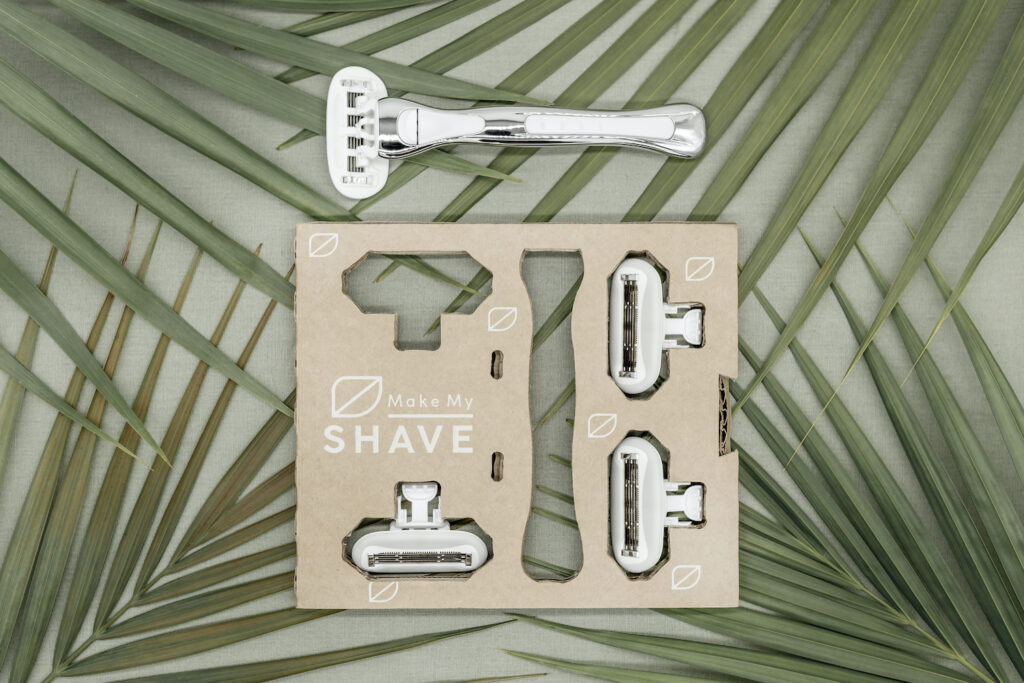
Make My Shave: Make My Shave is Australia’s first and, at the moment, only shaving subscription specifically designed for women. Queensland-based husband-and-wife duo Lindsay Kinniburgh and Michael Flynn poured 50,000 in Australian dollars or a little more than $37,000 of their savings to create the company to be inclusive and designed for longevity.
Make My Shave incorporates razor head recycling via TerraCycle, free carbon-offset delivery and a tree planting partnership with One Tree Planted into its month price of 21.99 Australian dollars or about $16. Each re-up includes four new blades. The idea is that customers will save their used razor heads to return. To make it easy for them, the brand sends out a pink compostable mailer with prepaid postage on the sixth refill delivery.
“We felt that, to encourage more people to recycle their used razor heads, recycling has to be easy, convenient and completely free,” says Kinniburgh. “Because we don’t believe consumers should be penalized for opting for a planet-kind product, we were determined to make Make My Shave premium, sustainable and affordable.” Since launching in December 2021, the brand has seen a 40% month-over-month increase in customer uptake.
Focusing on direct-to-consumer consumers has allowed Kinniburgh and Flynn to keep Make My Shave’s prices low and manage a reliable subscription service they can easily oversee and retain control over. Its product, fulfillment and distribution center are all based in Australia. In Make Make My Shave’s first year of business, Kinniburgh and Flynn hope to recoup their investment investment in it. Their goal is to expand its operations to the United Kingdom next year and the United States the year after that. However, the biggest and loftiest goals are to plant 1 million trees and keep 1 million plastic disposable razors from going to landfills.
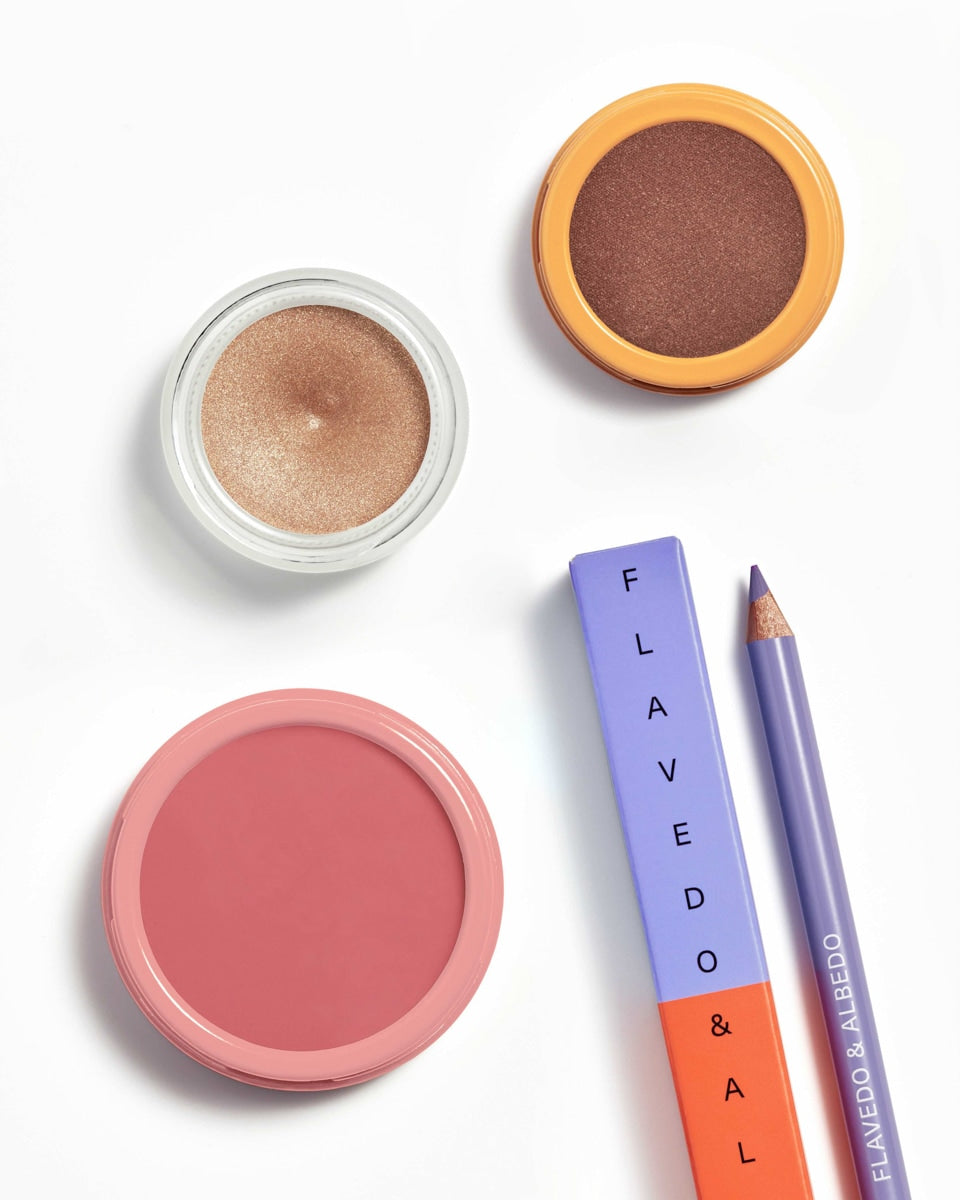
Flavedo & Albedo: Cosmetics brands have been slower to evolve their packaging than brands in the body care, skincare and haircare categories. Flavedo & Albedo was launched to show cosmetics brands can do better for the environment. Co-founder Emily Perrett says the brand helps makeup consumers “reconcile our love of makeup with our increasing anxiety around plastic packaging, low recycling rates and, ultimately, plastic landfill.” She adds, “We can’t recycle our way out of the plastic problem.”
Flavedo & Albedo avoids plastic by using aluminum, glass, paper stock and sustainable timbers for packaging housing its cheek, eye and lip products. The brand’s collection includes 17 SKUs, and there are more products on the way. Its Dew Tint, a multitasking lipstick and blush, in the shade rose has proven to be the most popular, followed closely by the product in the grapefruit shade. The product is priced at 44 Australian dollars or approximately $33. The products and bright cheerful packaging are designed in Sydney and manufactured in Italy.
“We set out to make a zero plastic packaging color cosmetics brand that doesn’t strip the joy and color out of makeup,” says Perrett. “Hopefully, the result is makeup that doesn’t come packaged in plastic, but is still super fun and something you actually want in your makeup bag.”
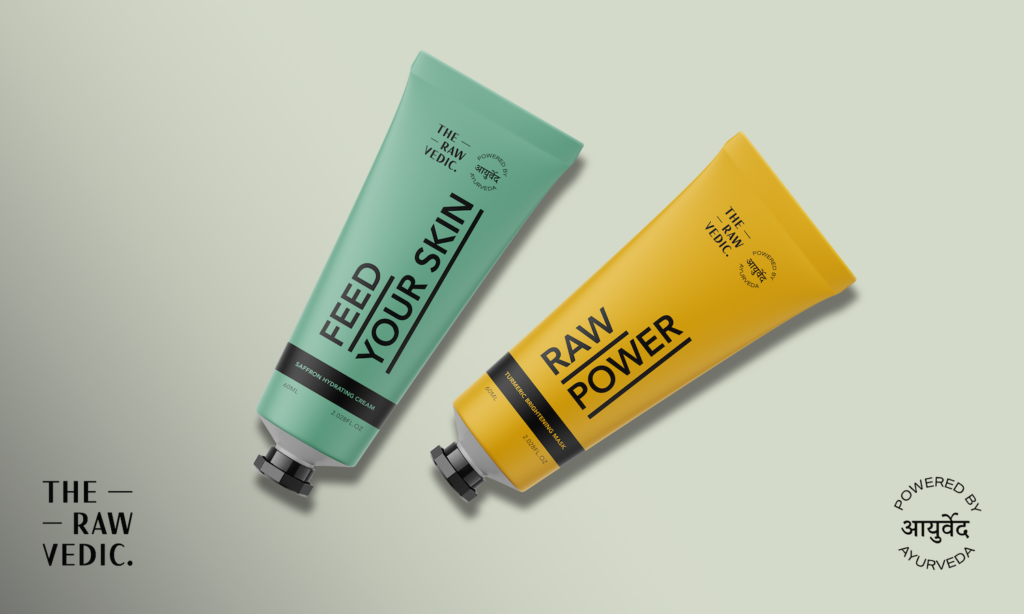
The Raw Vedic: When Rupa Chopra moved to Australia from the U.K. in 2018, she struggled to find the Ayurvedic plants she grew up with and credits for keeping her acne-free for 30 years. “I had to resort to modern skincare packed with confusing ingredients, including many synthetics, which ended up being detrimental to my skin,” she says.
So others don’t have to suffer the same fate, she’s made it her mission to bring 5,000-year-old Ayurvedic traditions to her adopted home country next month with the launch of The Raw Vedic. Ayurvedic beauty has taken off recently and a rising number of brands have put their spins on the ancient system for contemporary beauty consumers. Chopra is skeptical of their approaches. She says, “Many of them are simply adding certain ‘ancient’ botanicals into formulations with 40-plus ingredients…this is not the Ayurvedic way.”
The Raw Vedic’s formulas were designed from scratch in partnership with Ayurvedic specialists, and they’re limited to 18 ingredients. Its assortment contains a turmeric face mask, saffron hydrating cream, tamarind facial cleanser and tulsi exfoliating scrub.
Chopra invested 200,000 Australian dollars or around $150,000 of her personal savings to fund research and development, marketing and inventory. She projects revenue will reach 250,000 Australian dollars or almost $190,000 by December this year. “Being bootstrapped has meant that every decision was personal, conscious and thought through to make sure we stayed true to our brand pillars,” she says.
The Raw Vedic is sticking to local manufacturing in order to increase “control, quality and agility,” explains Chopra. Its products are cruelty-free and packaged in recyclable materials. Chopra likes to say the brand is Indian-inspired and Australian-made. She underscores it’s “built to bring you back to nature with a simple routine, consciously chosen ingredients and products produced in world-class facilities.”
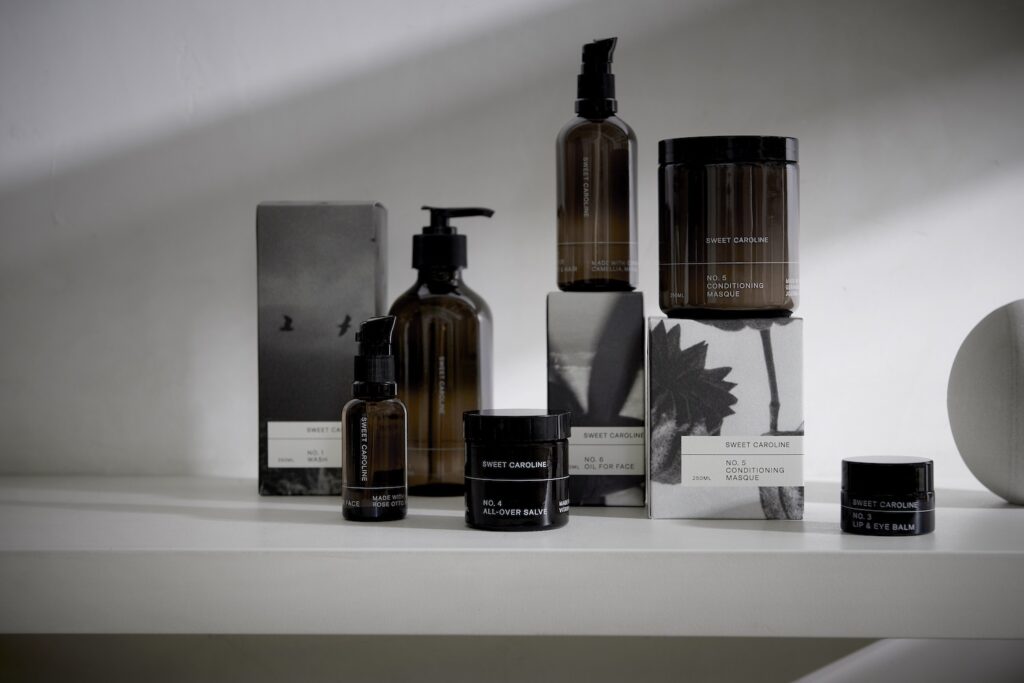
Sweet Caroline: The hair salon is a respite for a lot of people, a place where they can be pampered, leave feeling more confident than they arrived and, in some cases, air grievances. “As you can appreciate, many confidences are shared while in the comfort and security of being seated in a salon with a trusted hairdresser,” says hairstylist Jamie Macfarlane.
By engaging in hundreds of conversations with clients over 35 years, Macfarlane learned they were seeking simpler, personalized haircare experiences. “What was really needed was a tight edit of just a handful of hard-working products that did what they promised, so off we went and created Sweet Caroline,” he says.
Sweet Caroline operates by the motto, “We believe that beauty should be uncomplicated.” The motto is reflected in its compact selection comprised of six multitasking haircare and skincare items encased in refillable and recyclable glass bottles. Sweet Caroline’s formulas feature ingredients grown locally and ethically within Australia. The brand uses carbon-neutral delivery service Sendle for shipments.
Macfarlane oversees product development and his co-founder at Sweet Caroline, Kath Edwards, is in charge of brand curation. The self-described “glow-getters” and “goal diggers” manage the business from two time zones. Macfarlane is in Italy, and Edwards is in Australia. The arrangement is surprisingly advantageous. “It’s like having an extra two hands on deck as we get to work 24 hours,” says Macfarlane. “It’s absolutely the best example of working smarter, not longer.”
For distribution, the pair aspires to combine DTC with hair salons and what Macfarlane describes as “unique retail spaces that stock inventive brands doing great things.” Pan After is a unique retailer that carries Sweet Caroline. Macfarlane previously operated a salon in the Melbourne suburb South Yarra, but, as his focus has shifted to Sweet Caroline, he opens it up just four times a year for appointments. “People are still wary of crowds, so an intimate experience is the way to go,” he says. “Connection is something everyone has been missing.”
The players
5 mentionedRitual

Better Being
Formulate
AS Beauty
Under Your Skin