Should The Spa Industry Fight For The Legalization Of Sex Work?
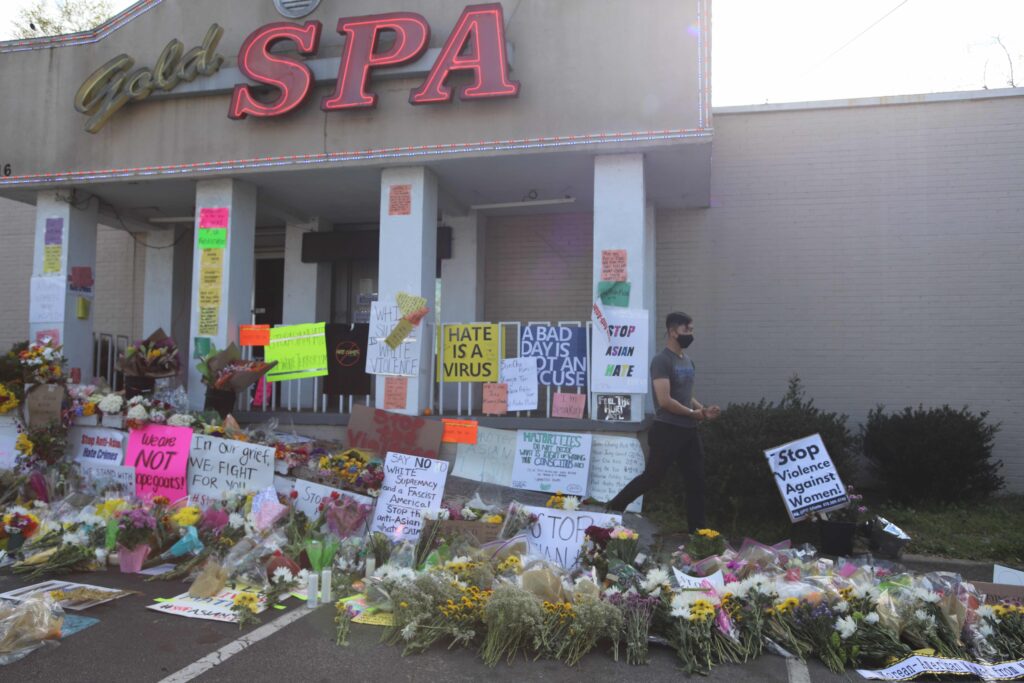
The prevalence of sex work in spas and massage parlors is uncertain. Legal concerns lead to difficulties obtaining precise data. To get an idea of how widespread it is, Urban Institute identified 4,790 erotic massage parlors in American cities on the website EroticMP.com in 2013. Regardless of the numbers, what’s apparent is that the perception of spas as sites for sex work, combined with a stigma around sex work, foments hostility affecting the spa industry generally. In the wake of the Atlanta shootings, Asian spa owners and employees were fearful of future attacks.
Could shifting cultural perceptions of sex work shift views of the spa industry? And if more cities and states in the United States decriminalize sex work, would the decriminalization change public perceptions of the spas and massage parlors, and even how they operate? Beyond decriminalization, what would be the ramifications of sex work legalization on the spa industry?
Currently, Nevada is the only jurisdiction in the country where sex work is decriminalized. It allows regulated brothels to operate in rural counties with populations of 700,000 or fewer people. On the state level, sex work decriminalization legislation has been proposed in Louisiana, Oregon, Washington, California and New York, but the proposed legislation has faced opposition both from Republications conservative on issues of sexuality and Democrats worried about the exploitation of women.
There’s a difference between sex work legalization and decriminalization, and most legislation proposed in the U.S. involves the latter. With decriminalization, sex work would stay illegal, but police wouldn’t enforce the law. There are already jurisdictions in the U.S. such as New York City, where sex work is effectively decriminalized because police rarely arrest people for it. Official decriminalization doesn’t prohibit arrests and often, as cannabis decriminalization illustrates, reduces arrests without stopping them entirely.
The federal role in regulating sex work complicates matters. A federal statute passed in 1910 called the Mann Act making it illegal to bring a woman across state lines for “immoral purposes” could be wielded against spas offering sex work in jurisdictions that have decriminalized sex work, instructs attorney Richard Storkan. He says, “If these spas recruit for spa/sex workers, it could come under this law, especially if they, say, post an application online since they are availing themselves to people outside the state.”
Joseph Richard Gutheinz, Jr., a criminal defense attorney, retired federal law enforcement officer and former commissioned member of the Texas Council on Sex Offender Treatment, is a proponent of sex work legalization to enable licensing of sex workers, weekly testing, requirements that parties be of legal age and use protection, and investigations into human rights violations.
“I believe spa and massage workers who engage in prostitution should fight to have their services legalized and tightly regulated,” he says, elaborating, “I really oppose the idea of decriminalization because that’s a cop-out on the part of politicians. You’re not really fully protecting the women engaged in prostitution. It really should be legalized, and there should be very strong regulations imposed.”
Massage therapist Stephanie Agakian-Colon, owner of a massage studio in Broomfield, Colo., agrees with Gutheinz, Jr., that sex work should be legalized. She explains keeping sex work underground “encourages the setup of illegal prostitution businesses often masquerading as massage businesses. Not only does this perpetuate the stigma that massage and sex work are often intertwined, but it has other negative effects such as the promotion of human trafficking.”
In a 2019 study by Hunter College professor John J. Chin and USC professor Lois M. Takahashi among several researchers that conducted interviews with New York and Los Angeles sex workers working in massage parlors, 17% said they had been coerced by clients or massage parlor owners or managers. If sex work were legalized, police could visit massage parlors offering sex work to make sure trafficking isn’t occurring.
While the most obvious benefits of legalization may be for spas where sex work takes place, Agakian-Colon argues the benefits would accrue to the spa industry on the whole. Legalization would permit establishments and spa professionals to clarify what they do and don’t provide. She says, “People are going to engage in sex work regardless of legality, and those who want to seek those services often reach out to legitimate massage businesses in hopes of receiving those services.”
Charlotte, a massage therapist in Los Angeles offering erotic massage and sexual healing sessions, has had clients patronize her with unspoken expectations because they’re anxious about the legal repercussions of admitting what they want over text. “I’m like, ‘What kind of massage style do you want?’” she says. “They tell me. I go, and then they’re like, ‘Oh, can you do this?’ or ‘Oh, will you do that?’ And I’m like, ‘No, you didn’t ask for that beforehand.’”
Permitting sex work to be publicly advertised could yield greater trust in spas. “By criminalizing sex work, this is causing sex workers to have to hide behind spa and massage parlor fronts while living in fear of being arrested,” says spa consultant Julie Pankey. “Legalization can benefit spas because, once we can finally have a distinction between the two, sex workers do not need to hide behind the facade of massage therapy or spa.”
Gutheinz concurs that the main advantage of sex work legalization for the spa industry is that businesses offering erotic massages would no longer have to hide, and it would become evident which spas, massage studios and masseuses exclusively offer massages. As a result, people seeking sex work would likely not pour into spas strictly offering massages and those spas would possibly be seen in a better light. The hope is that legalizing sex work would better the perception of sex work, too.
In addition, although sting operations and police raids are fairly uncommon in spas, legalization would reduce the chances of police mistakenly going after spas that don’t offer sex work, and those that do wouldn’t have to be afraid of being shut down. Kirk H, an operations manager in California who received an erotic massage at a spa years ago, remembers a light in the room that was designed to be turned on to warn workers of police.
Charlotte might prefer decriminalization over legalization because she’s not interested in having the government entangled in her work. She says, “I could see them having really high, heavy taxes or having certain restrictions like, ‘You have to do it this way or that way,’ or ‘It has to be in this establishment.’ Maybe you have to get licensing and pay more money.”
There are cases, though, where the government could be a good thing. Mass shootings like the Atlanta area spa shootings garner a ton of press attention, but lower-profile violence happens at spas that offer sex work—or that are assumed to—regularly. Gutheinz maintains that decriminalization or legalization would make it easier for victims of violence to receive assistance from the police.
“In Europe, where you have decriminalized or legal houses of prostitution or brothels, violence still exists, but it’s nothing like it is here in the United States,” he says. “U.S. street workers go missing all the time because they’re killed by serial killers. Customers will go to a massage parlor and beat up a prostitute without fear that the prostitute will call the police because there goes the business.”
Sexually transmitted infections are another safety issue. Gutheinz has discovered that German sex workers are much less likely to have HIV and venereal diseases than sex workers in the U.S. Plus, enabling sex workers to find work in spas with increased visibility could take their work off the streets, where they’re in more danger.
The criminalization of sex work compromises the treatment of customers as well. A customer may come into a massage parlor simply to get a massage and be assaulted. Michele Waldron, a psychologist specializing in sex and relationship therapy, had a male client who got a massage on a trip and was touched sexually by a massage therapist without his consent.
“The massage started typical and ended with the woman engaging in unwanted manual stimulation,” she says. “There was no prior indication or discussion of such a service.” Charlotte similarly has had clients tell her about times they “just wanted massages, and they went to a parlor and the people were trying to do sexual stuff, and they were like, ‘I didn’t want that.’”
Waldron says, “Should sex and massage be legalized, like any business, services should be made clear for the benefit of the potential customers and employees. Employees and customers should be given the ability to choose and refuse.” If spas are upfront about whether or not they offer sex work, clients may feel safer going into a standard spa knowing that no unwanted touching will occur.
Agakian-Colon says, “Like all businesses, sex work should be regulated, and there should be clear lines between massage and sex work. For example, you should not be able to receive both services from the same business. This keeps a clear boundary between those with massage licenses and those licensed to engage in sex work.”
However, spas and massage parlors distancing themselves from sex work wouldn’t decrease public hostility toward sex work (legalization might), and the distancing could generate a hierarchy between “legitimate” spas and those that offer sex work. Charlotte deems both her sex work and her massage work to be healing modalities and thinks people should be able to practice both and perhaps integrate the two as long as they’re transparent about what will happen in each session.
Steve Oskard, a massage therapist and sexological bodyworker or hands-on sex coach employing tactics like erotic massage to teach people about their bodies and sexuality, contends the legalization of sex work could blur the line between touch that’s healing and touch that’s for pleasure, a blurring he judges to be valuable. With legalization, he predicts more massage therapists would start offering services such as sexological bodywork and tantra coaching, and more schools would pop up to teach people these practices. Since sexological bodywork is currently illegal, legalization would allow the service to spread.
“People who are trained massage therapists really shame people who do sex work, partly because they’re frequently approached to do sex work, and then they resent it—and rightfully so,” says Oskard. “Being asked to do something that is clearly not on the menu is kind of like someone going into a burger joint and asking for a slice of pizza. However, [if sex work were legal], they could say, ‘Oh, you want to go next door where they’re serving pizza.’ They’d easily be able to refer out.”
Ultimately, with the caveat that the effects of sex work decriminalization or legalization on the spa industry remain to be seen, many experts are in accordance that decriminalization or legalization policies should be evaluated as they’re likely to make sex work—and any activities associated with it—safer.
Sex workers “are really devoid of protections from the criminal justice system, and they could easily fall victim to crime,” says Gutheinz. “The real concern is practices that are not safe for the women engaged in prostitution and not safe for the customers. I thought I was going to be on one side of the argument, and that side was, keep it illegal, make the laws tougher. And what I realized after doing a lot of research and talking to a lot of people is that the best thing that possibly could happen with respect to prostitution is to legalize it, put it inside and regulate it.”
The players
3 mentionedBetter Being

Too Faced
Addition