“We're Losing Talented People”: As Production Slumps, Hollywood Makeup Artists And Hairstylists Fight For Survival
Coupled with increased competition from far-flung jurisdictions to be backdrops for movies and shows, the disruptions have caused a staggering slump in production not expected to be meaningfully reversed anytime soon and decimated the already fragile film and television hairstylist and makeup artist ecosystem. Seasoned beauty professionals are scrambling to make ends meet and being pushed from the epicenter of Hollywood and out of the industry entirely.
“We’re losing so many talented people,” says Linda Dowds, a makeup artist who won an Oscar for “The Eyes of Tammy Faye” and Emmys for “True Detective” and “The Kennedys.” “People are struggling to stay in the business and stay in LA. A lot of people are making really hard choices right now and trying to figure out, how do I stay in an industry I love? Can I still continue to do a craft that I’m passionate about or do I really have to figure out something else?”
Dowds’ over four decades of experience hasn’t made her immune. She estimates she worked a scant 13 weeks over a 20-month period stretching from 2022 through 2023. “COVID crushed [our industry] for a lot longer than any of us anticipated. We all kind of thought, it’ll lift a little bit eventually,” says Dowds. “And around the time that COVID was ending, our contracts came up for renewal…There was no work leading up to that time because studios didn’t want to start projects only to have them shut down for [more] strikes.”
After continually landing jobs as a makeup department head on television programs and movies like “Grown-ish,” “The Vince Staples Show” and “The Glass Onion,” Golden Shyne experienced her first extended professional dry spell in September 2023 after shows she was on were either cancelled or completed. To cushion the financial blow, she relocated from LA to Tulsa, where she has family. There, she could score a two-bedroom, 1,200-square-foot apartment for $1,600 a month (the average LA two-bedroom is nearly double that amount) and provide complimentary makeup services to members of her church while looking for work.
“I knew that [by moving] it would be like starting back down at zero,” says Shyne. “Though Scorsese did his last film close to Tulsa and films were branching out into that area, I wasn’t really able to kind of get my feet wet again because most of my relationships were [in LA]. So, I had to be realistic about it.”
Well before the pandemic, Dowds observed an exodus of productions from LA as studios chased tax incentives to reduce costs. Inside the U.S., Georgia and Louisiana have become entertainment hubs, and countries outside the U.S. as varied as Hungary, Canada, Colombia and Saudi Arabia are luring productions with tax credits.
“When tax credits started to come into play, there was a lot of shifting of where the work went, with everyone starting to follow where the biggest tax credits were. Suddenly, the industry dries up in the state and city that you live in,” says Dowds, adding. “It’s become a very global world for filmmaking.”
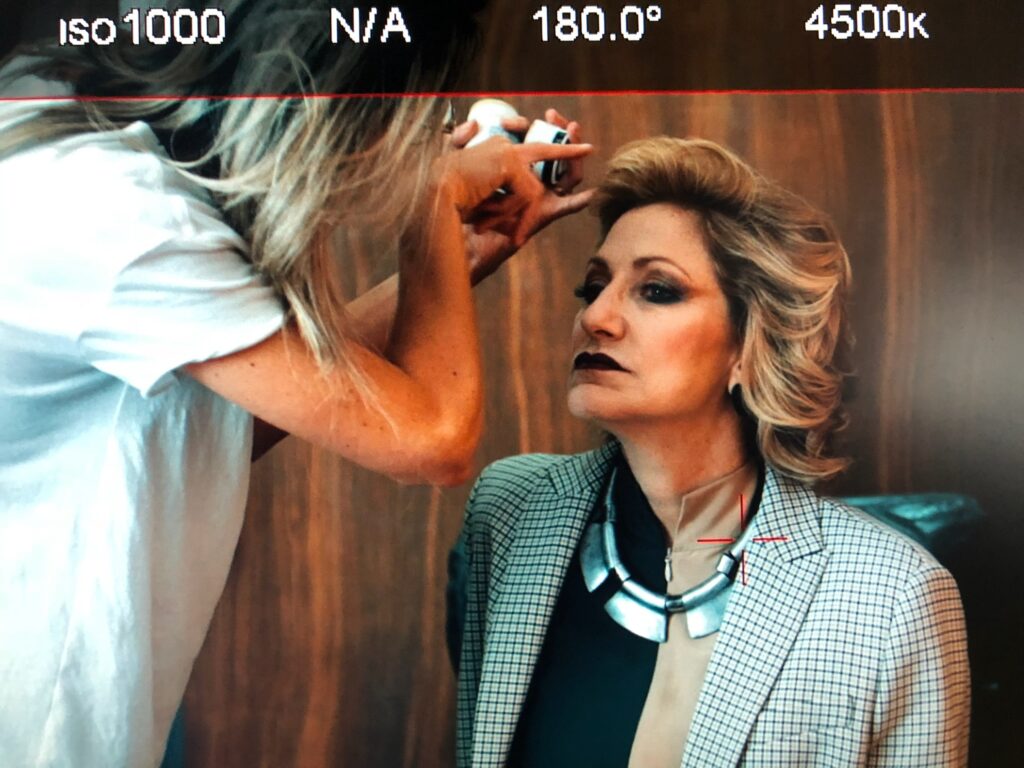
As opportunities migrate elsewhere, hairstylists and makeup artists must decide whether to leave LA to chase them. Stacy Schneiderman, a hairstylist on the shows and movies “Euphoria,” “For All Mankind,” “Fool’s Paradise” and “Lizzie Lazarus,” says, “I learned a bunch of people were moving with the industry to places like Georgia. It feels like a circus, moving to the next hub after work dries up. I’m not chasing my industry. I live [in LA] and moved here to do this, so I’m not going to uproot my life and hope that someone hires me in another state.”
During the SAG-AFTRA and WGA labor strikes, unemployment benefits kept Schneiderman afloat. Once the unions reached a deal, she expected work to resume, but it’s remained scarce aside from occasional day player positions. “There weren’t many new projects going into production,” says Schneiderman. “A lot of people started to get into doing commercials. I was lucky and was able to do four commercials, from September to December of 2023.”
In the spring of 2024, Schneiderman joined the hair department for HBO show “The Sex Lives of College Girls.” That project wrapped in June last year, and she finally secured steady work again on a popular television show just a few weeks ago. In the meantime, she wiped out her savings and worried whether she’d be able to bank the minimum 400 hours per year required to remain eligible for health insurance benefits under the union rules.
“It’s very up and down and very difficult,” says Schneiderman. “Honestly, I feel like the last five years has been a big hardship.”
Even when hairstylists and makeup artists find work, they encounter ever-tightening budgets, which are slimming hair and makeup teams and shooting schedules. Dowds says, “Hair and makeup departments in particular are being cut back. So, there’s an increased crunch that everybody feels to complete more work in a day and with less.”
Previously, Dowds mentions that hair and makeup departments often had weeks to prepare for a shoot. Now, they’ll be lucky to have a week of prep. “It’s getting more intense because there’s less time given for a project period and that can compromise with the quality of the work,” she says. “As artists, we’re always looking to do the best job. I’ve noticed on projects, people are feeling demoralized about their ability to do their job in the way that they feel they would most like to do it.”
Following nearly six months without work, Shyne landed a head-of-department gig on the Netflix show “Forever,” a three-month production with a departmental budget that forced her to do more with less. It didn’t reimburse her for the full cost of her preferred makeup for the production, and she called in favors with brands to get some.
Shyne says, “The budget was like an indie movie—very, very small—and I had to rely on my personal relationships with brands to get the makeup and skincare products needed to execute the quality and style of makeup that I’m known for, without compromise.”
By July 2024, Shyne’s duties on “Forever” ended, and she was back to being unemployed and living in LA. “I was able to save so much money in the short time I was in Tulsa that I thought it would be okay for me to come back [to LA],” she says. “But I haven’t gotten calls, even for day playing, so there really hasn’t been any sort of income coming in since July.”
The makeup artist has been able to make a few hundred bucks here and there by offering leadership classes and organization tools online. However, it’s nowhere enough for financial security or peace of mind. She hasn’t been able to pay into her pension and her union dues, $360 quarterly, have lapsed. She has managed to hold on to health insurance, although anticipates it will expire in the fall if she doesn’t book steady jobs. Next month, fortunately, she’s slated to begin work on a three-month shoot with Universal.
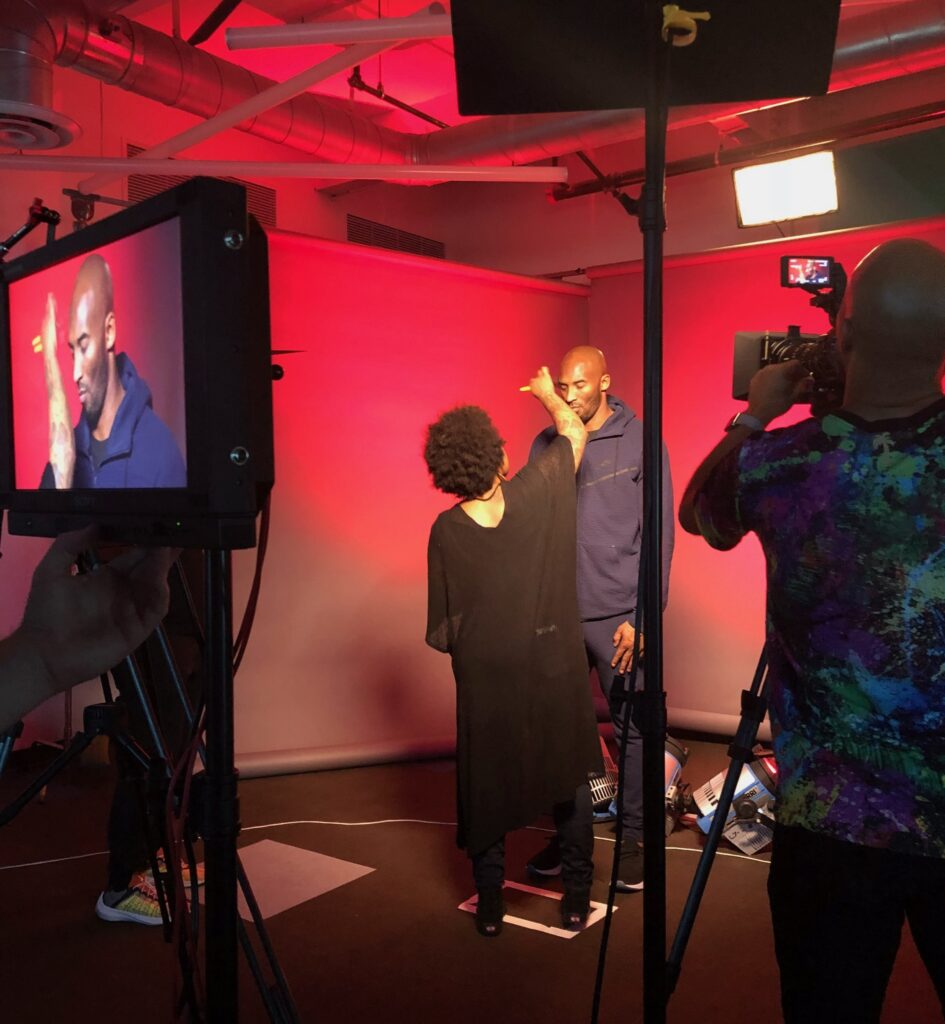
“I’m living like a college student, giving myself an allowance of $3,600 a month,” she says. “I don’t have the wiggle room to do the little things that I enjoy doing in life, like going to the movies or hitting up Nordstrom Rack. I’m pinching every penny, and I am really nervous about what I will do when my savings run out.”
For every makeup artist and hairstylist that doesn’t depart LA or the industry, there are plenty who have. According to a survey by ProdPro, a production data tracking firm, of roughly 700 below-the-line crew members, including hairstylists, makeup artists and costume designers, 23% had a negative outlook for 2025, 63% said their 2024 income from freelance work fell short of expectations, and 41% planned to work less or leave the industry entirely in the next five years. In contrast, suppliers and studio executives indicated they’re optimistic about 2025.
Schneiderman rates her quality of life at a quarter of what it used to be before the industry slowdown. “I can’t really enjoy the city that I’m in,” she says. “It’s hard to not be valued for what we do.” Dowds says, “I’m seeing a lot of people really struggling with mental health issues, and it’s a direct correlation between the way the industry has been going over these last several years.”
The wildfires only exacerbated the issue. Kya Bilal, a hairstylist who’s worked on shows and movies such as “Insecure” and “Mad Max: Fury Road,” lost her health insurance coverage in December after not clocking enough hours on film, television or commercial sets in the wake of the strikes. A month later, she lost her Altadena home in the Eaton fire. Bilal attributes a 50% dip in her monthly income to the fire and subsequent stress from it. She’s turned down jobs to protect her mental health.
“I am normally a very social person, but since this fire, [I feel] so much trauma and anxiety that I question wanting to be around people…and whether I have enough energetic bandwidth to do the job,” says Bilal. “I’m very aware that, if my energy is off, then that can affect the actors’ energy, which can then affect their performance.”
In an effort to return film and TV productions to the state, California governor Gavin Newsom announced a proposal in October that would more than double the state’s film and television tax credit program to $750 million annually. A grassroots #StayinLA campaign launched in the wake of the wildfires in response to the city’s declining film and television industry, and it’s amassing widespread support, with its petition drawing more than 20,000 signatures and counting.
The efforts may be too little too late for on-set hairstylists and makeup artists. Bilal is expanding her horizons beyond hairstyling. During the strike, she shadowed producers to learn about becoming a producer or showrunner. “I put my blood, sweat and tears into this industry doing hair for 25 years,” she says. “I love doing hair and I’m grateful for every opportunity that has come, but [I’ve realized] it’s part of the journey, not the destination. I just have bigger goals now.”
But, for many, the allure of being a Hollywood makeup artist or hairstylist hasn’t been totally lost. “For me, there’s definitely nostalgia and sentimentality involved in actually being able to work in Hollywood, doing Hollywood productions,” says Dowds. “It meant something to be going to work in Los Angeles, a sense of ‘I made it’ that stems from a deep love of film, a love of the work and a lot of the people. I’m not ready yet to stop doing the work. I still want to do it for a while longer.”
The players
2 mentionedAS Beauty

Nordstrom