New Sexual Wellness Brands Carve Out Niches And Incorporate Technology To Succeed In A Challenging Category
Banana Split, for example, opened presale last month with customizable vibrators for lesbian couples with universal connectors to pair different sizes and shapes. Another new brand, Lubify, is serving older women interested in luxury sexual wellness merchandise. For technology buffs, yet another new brand, Sensera, has sensors and lube built into its vibrator, and an app that collects and analyzes data to adjust lubrication. Incubator Maesa’s latest venture, Niches & Nooks, an intimate care brand launching at Target, literally and figuratively concentrates on niches with products it describes as addressing people’s “most overlooked nooks.”
The new brands touch upon the biggest trends in the sexual wellness space outlined by management consultant McKinsey & Co. last year in its Future of Wellness survey, including personalization through technologies such as artificial intelligence, biomonitoring and doctor recommendations. And, besides Niches & Nooks, which is following Maesa brands Frenshe, Kristin Ess, Fine’ry, Mix:Bar and Hairitage into mass retail, they’re often pursuing distribution outside of traditional beauty chains, where sexual wellness has been a tough category, at least early on. This approach allows them to get in front of distinct consumers searching for specialized products and be showcased in environments that prioritize customer education.
“New brands that differentiate themselves from legacy players and offer a more authentic, consumer-aligned approach are uniquely positioned to succeed,” says Carli Sapir, founding partner at Amboy Street Ventures, a sexual health and wellness venture capital firm that’s part of professional services company Healthy Pleasure Group.
Nicole Leinbach, retail expert and founder of sexual wellness trade show Stimulate, says, “Innovation is ultimately what creates category growth. It creates growth in mature categories like skincare. Despite growing sexual health/wellness needs, the category has historically lacked innovation, which has suppressed growth. I believe that, when innovation emerges that finally meets these underserved needs…growth and total addressable market will explode.”
Katie Davis, founder and CEO of Banana Split, is in the community she created her unapologetically queer brand for and understands how logistically challenging it can be to develop vibrators for simultaneous pleasure. In a poll of over 100 people who engage in lesbian sex, she discovered vibrator size was a major issue, and 78% had trouble locating partner vibrators that worked for them.
Previously, Davis says they tended to have “pretty outdated design, and they’re often not made and for our community at all. They’re also all just a one-size-fits-all design, which means you have to hope to get the combination right for two bodies and that really doesn’t accommodate the diversity of the sapphic community.”
Banana Split’s vibrators priced at $72 each, The Banana and The Dollop, are available in small and medium. The brand is starting in direct-to-consumer distribution and selling in person at queer events. As it gains traction, the plan is to enter discussions with queer- and women-owned stores in the United States, where its target audience turns to for sex toys.
Sensera’s $299 vibrator is equipped with parent company Femto’s proprietary Smart Release System, which tracks heart rate, moisture levels, muscle contractions and more, to help users personalize their experience by dispensing lubricant from capsules attached to its high-tech vibrator. The brand won the Innovation Award in the AI category at the electronics trade show CES this year. Sensera’s vibrator has a free iOS app for biomonitoring and collecting information, although the vibrator can be used without the app, too.
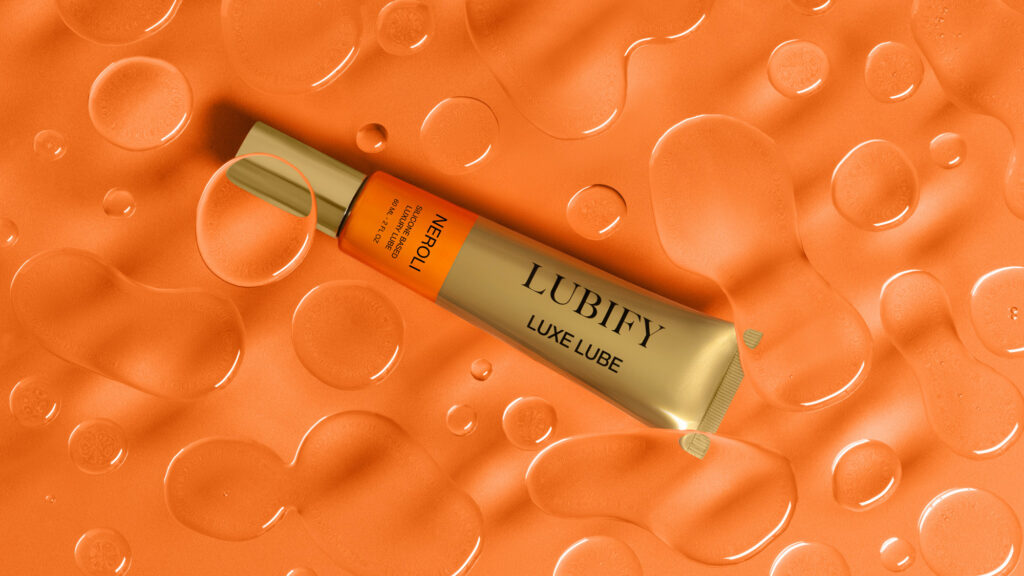
It took Orla Maguire, formerly sittings editor at the magazine Cosmopolitan, two years to ready Lubify for market with Luxe Lube, a silicone-based vegan lubricant featuring hyaluronic acid, vitamin E, and a neroli and sandalwood scent. She compares the product to “the Tom Ford of lubes.” At $36, its price is double or more the price of premium lubricants from Maude and Playground. Lubricants at mass retailers can be priced at under $5.
“When you look at other products in the category, a lot of them are fun, fantasy scents and flavors,” says Maguire. “There’s nothing as elevated as a neroli with cedarwood. I wanted a unisex scent that would have a luxury feel to it, that you’re indulging and enveloping yourself with.”
Maguire, who became a certified intimacy coach as she was building Lubify, envisions Lubify in doctors’ offices, where women are sharing their sexual health and wellness concerns. She explains, “When you’re having those conversations with your gynecologist, you’re hearing from a medical professional about the importance of lubrication as we age…You’re also hearing from your own trusted medical professional about the importance of the brand.”
Leinbach advises emerging sexual wellness brands to choose distribution that resonates with their particular audience. “The path to retail is not black and white or even the same rainbow for everyone,” she says. “What helps one brand scale can be wildly different from another…ultimately the product needs to be valued by the customer, positioned within the right retail destinations to reach their target market and deliver quality results for their users.”
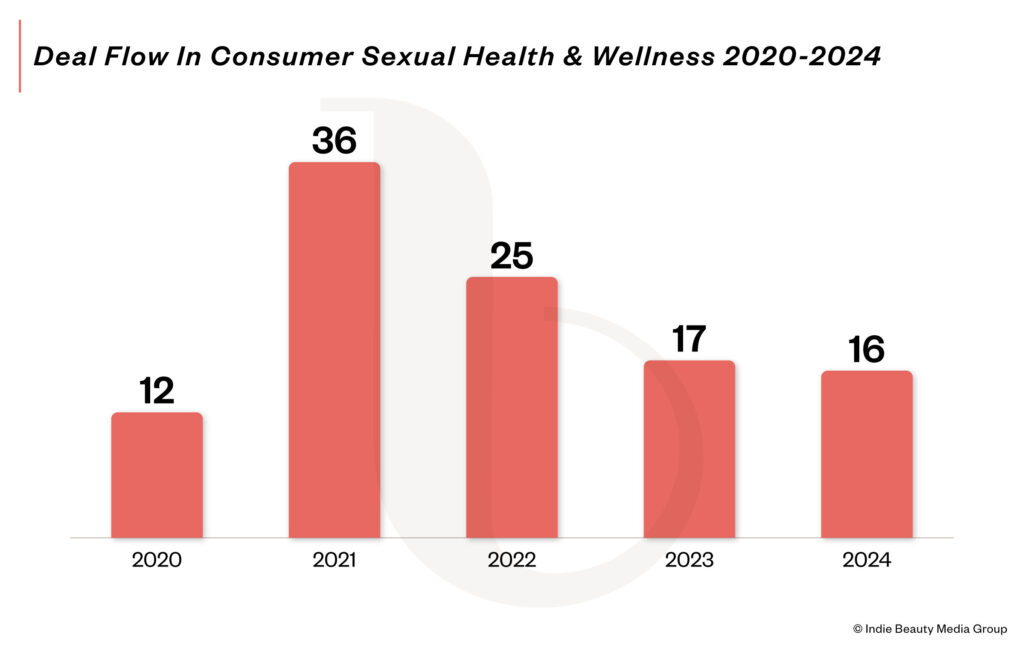
In a challenging fundraising environment for consumer packaged goods startups that’s nearly impossible for nascent sexual wellness players—sexual wellness deals have tanked to 16 last year from an estimated 36 in 2021—new sexual wellness brands are figuring ways to finance their businesses without institutional capital.
Davis has raised a friends, family and angel funding round she characterizes as “small” for Banana Split. Maguire has poured nearly $225,000 from her personal savings into Lubify so far. Notably, Femto, the Canadian parent company of Sensera raised $17 million in private placement in February.
“Without market size data, investors discount the category’s future potential, which unsettles them and, in many cases, further scares them away from investing in the category,” says Catherine Magee, founder of Playground, a lubricant brand that raised its first round of institutional funding last year. “Many investors try to size the category in the same way that they do a mature category, but evaluating an emerging category the same way as a mature category does not make sense.”
The players
5 mentionedFine'ry

Kristin Ess
AS Beauty
Being Frenshe
Playground