Influencer Marketing: Strategies For Indie Beauty Brands
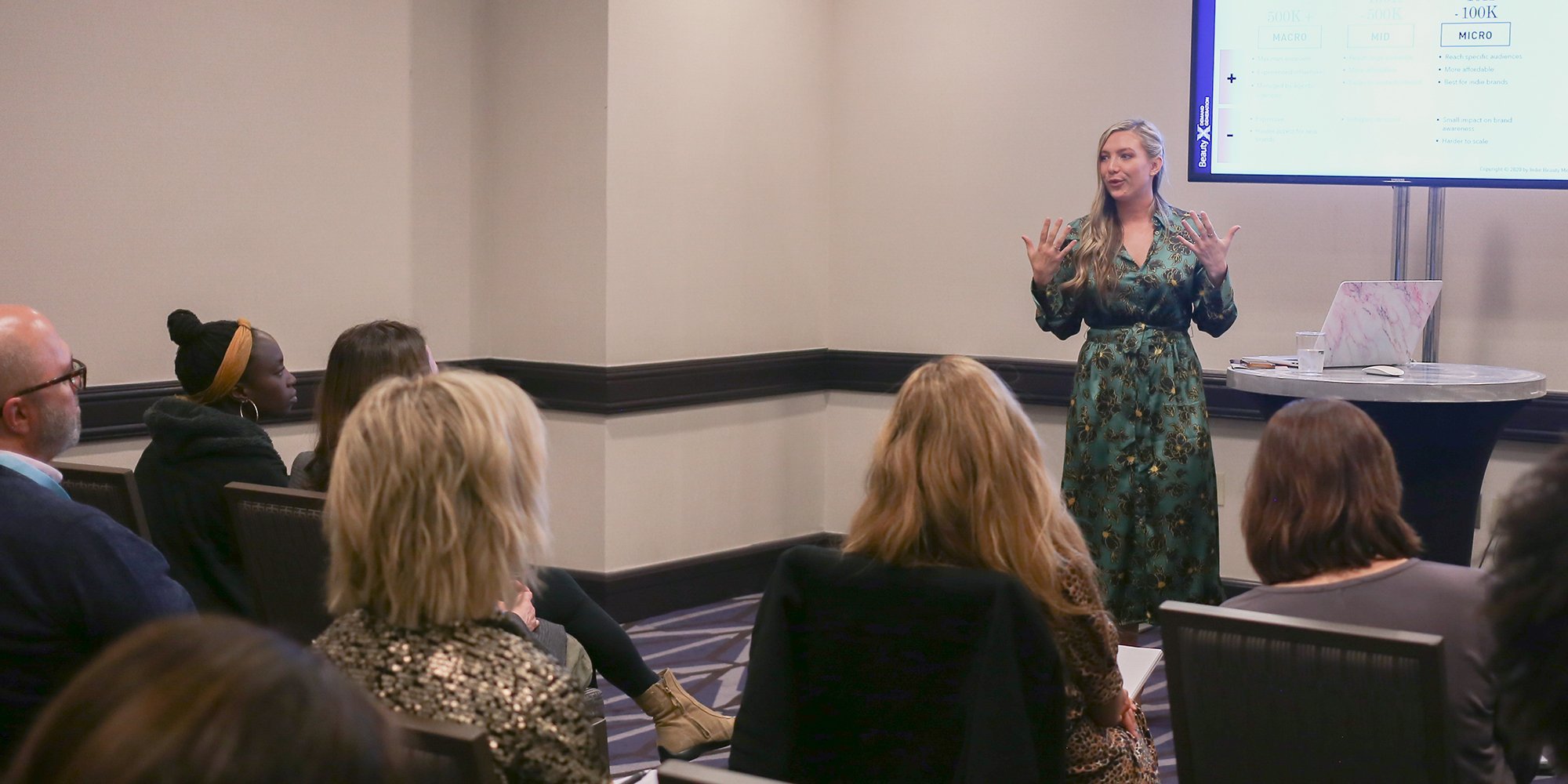
At BeautyX Demand Generation Summit earlier this year, Jane Carlson, the lead for press and influencer relations at Indie Beauty Media Group, parent company of Beauty Independent, presented on strategies and methods emerging beauty brands should employ to raise awareness, build traffic and drive sales. The course, Influencer Marketing: Friend Or Faux, defined the influencer tier best suited for independent brands and identified campaign objectives. Here are the key takeaways from the influencer marketing presentation:
Develop influencer marketing in conjunction with an overall marketing strategy
A consistent theme throughout the Demand Generation Summit was that a one-shot approach to any element of marketing is destined to fail. Influencer marketing is no different. Influencer campaigns need to be approached with the long view in mind and supported by a variety of assets: a compelling brand or product story; visual collateral; a proper customer profile; and other forms of digital advertising, email capture and live events. “You don’t want to wait until your sales are in a slump, or that you already launched your product and nothing’s happened,” says Carlson. “You have to go six months out, eight months out, with a plan.”
Reach Out In Advance
Start thinking about who you want to work with well in advance and have an outline ready long before a product is put out on the market. As Carlson advises that, if you’re going into it unprepared, you might make bad choices. “It’s like calling your ex-boyfriend after you’ve just been dumped,” she says. “Your back is against the wall, and you’re not sure what you’re going to do next. You’re working out of fear.”
Focus On A Specific Segment Of Influencers
The shared characteristics among successful influencers is that they have a unique perspective, share it and create content of consistent quality and frequency. The combination of their content and established credibility, ability to entertain or inform, technical expertise and dedication to a given subject allows them to generate followers. Whether or not the influencer operates in the beauty space isn’t as important as their followers’ potential interest in a brand’s products.
Segmenting by, for instance, reach, subject, platform and content type is a critical piece of the influencer marketing puzzle, a craft and process that requires an analytical approach. The different tiers of the influencer landscape range from macro-influencers such as Marianna Hewitt and Lady Gaga with over 500,000 followers to nano-influencers with under 10,000 followers.
For indie brands, the sweet spot lies between the two extremes with micro-influencers drawing 10,000 to 100,000 followers. “They’re a great entry point for indie brands: They have targeted audiences, you can generally work with them, and a lot of these people are experts,” says Carlson. “They want to work with indie brands because they want to grow with you.” On the nano side of things, influencers are often less experienced and more unreliable.
Know What You’re Getting: Status Comes In Different Styles And Sizes
Carlson cited three mid-to-micro influencers with track records of success within the independent beauty community to offer examples of the wide range of options for brands. The Fat Mascara podcast built its authority based on the curatorial experiences of two beauty editors. Katy Denno, a celebrity makeup artist, is a proponent of green beauty. Jackie Johnson, the wit behind podcast Natch Beaut, regards herself as a comedian who derives material from her love of beauty.
You should know who you’re attempting to get into business with before you even reach out and part of that knowledge is understanding their brand. “You need to have something that really resonates with their audience,” says Carlson. “If they’re a clean beauty blogger, and your spray tan formula has a ton of chemicals in it, it won’t make sense for you all to work together.”
Build Your Own Network
There are more horror stories of independent brands embarking on failed campaigns run by public relations companies and influencer agencies than not. The ones that work were carefully managed by brands that recognized what to look for. Even large brands like Proactiv with its disastrous alliance with Kendall Jenner can get it wrong. While the inauthenticity of having a big celebrity promote a $39 acne product isn’t necessarily an obvious pitfall for indies, throwing money at influencers through an intermediary can result in stumbles. One brand looking to promote its pop-up at Coachella commissioned an agency to hire multiple influencers headed to the festival at $5,000 each to promote the brand. A series of errors ensued such as loose contractual terms and ill-defined objectives, and the campaign generated zero sales.
Carlson recommends old-school blocking and tackling. Continually research and identify influencers producing content that might work well with your brand, what she calls “authentic brand-influencer alignment.” Reaching out to a handful at a time via email or messaging with clear simple subject lines, two to three sentences of introduction and a proposal to work together is preferred versus sending out mass communications. Once you have a meaningful number to work with on the campaign, prepare to measure the results and part ways with influencers that don’t perform and start finding replacements. “It’s on you as the brand to do the due diligence,” says Carlson. “You’re going to have to put in the elbow grease once you find your roster of influencers.”
What’s In It For Them?
Money. Influencers moving the needle charge for tapping their audience. “They need to be paid,” says Carlson. “They cannot sustain off a diet of free product just like you cannot pay your landlord with eye cream.” An exception to payments may be nano-influencers who, at the beginning of the relationship, are usually OK with barter exchanges and the exposure that comes with the partnership. Think along the lines of local businesses with a large following that may want to cross-promote with your brand.
Aside from payment, influencers also want to align themselves with brands that their followers will like and appreciate. They do not want to dilute their credibility. Will your product make them look good? Will it position them as early adopters of a soon-to-be hot trend? Will it save their followers time and money and deliver results? A brand’s initial proposal should entice the influencer to respond to its outreach. The right program will motivate them to help you grow as they grow.
Take Them Seriously
“Many influencers feel like they’re small business owners. They’re entrepreneurs,” Carlson says. And, in many ways, they are. Therefore, they should be treated as partners.
Give them free rein to promote products and create content as they wish (within reason, of course). “You’re going to them and not an advertising agency for a reason,” says Carlson. “They connect with their audience in a very specific way. They want to take your talking points or whatever you’re giving them, put their spin on it, get their creative juices flowing, and come up with something amazing.”
Set Clear Objectives
“It is not the influencers’ job to tell you what you’re getting out of this partnership,” says Carlson. Every expectation must be addressed on both sides for complete transparency, from the task of content generation, sharing, responding to comments, frequency of posts and tools for gauging success.
Do you want to increase your website traffic by 30%? Or sell every unit of the new product that’s launching? Make your intentions clear. Carlson says, “You need to know exactly what you want out of this partnership because that’s how you’re going to decide what kinds of influencers you’re going to work with.”
It will also determine what your game plan is going to be with influencers. If you think having them post on Instagram Stories will help to get more eyes on your site, then be specific when putting in your requests. If you think a post on the feed is more impactful, then be explicit about that. “You need to know what type of content you’re looking for and what the results of that content should be,” says Carlson.
—If you’re using an influencer with a large following to raise awareness have a plan to capture new followers from the partnership: get their emails or have them join your social platform.
—Reach and likes doesn’t equal engagement. Measure the number of meaningful comments generated. Shoot for an engagement rate of 5% of total followers.
Be Open To Feedback
Manage your expectations. Not every influencer operates in the same way or in the way you might want them to. “A lot of posts to me is 10, but maybe to this influencer it’s three,” says Carlson. They also may have insights into their followers’ preferences and what’s worked for them previously. Carlson notes, “The influencer might also come back and say, ‘I like the idea, I see where you’re going with this. In the past, however, let me show you what I’ve done and that really yields better success.’”
By the end of the conversation, the brand and influencer should be on the same page and comprehend their responsibilities. “Don’t think, do,” says Carlson. “Write it down, put it in an email, create a paper trail because most influencers, if they’re of quality, will want that as well.”
Set Up A Long-Term Partnership Plan
When you get to a point where you know what works and what doesn’t work as well as which influencers are best at what, you should create a near-term and a long-term plan. “Lay them all out and talk about what’s going to be going on for you,” says Carlson. “You want to make sure your bases are covered all year long.”
It’s likely that you’re not the only brand that they’re working with. So, it’s helpful for influencers to know what’s coming up in case they have plans to collaborate with a competitor of some kind (a non-compete can be included in the contract). “If you know you want them to be promoting your holiday collection nine months from now, you should be starting that conversation with them so that they’re not planning to work with a competitor in the months leading up to that,” says Carlson. “You want to make sure they’re not promoting other like products because then their followers will think it’s completely phony.”
Give Yourself Time To Fail—And Then Succeed
“You are likely not going to hit it out of the park on the first time or the second time and that’s OK,” says Carlson. “There will be times where you start a partnership, and it doesn’t work and you need to pivot, but you need to give yourself time.” Carlson emphasizes that building an influencer network and influencer marketing campaigns is an iterative process that needs constant development.
The players
5 mentionedAS Beauty

Better Being
Target
Target
Addition