20 Bold Indie Beauty Predictions For 2019
Uncertainties abound about the changes to indie beauty that could happen next year. Will the economy and consumer confidence stay strong to the advantage of prestige beauty? Will the mass segment improve? Will beauty brands finally be done with influencers? Will luxury companies embrace Amazon? While we await the answers to those questions, we have few ideas about what we’ll be covering in the months ahead. Here are our predictions of 20 trends to watch in 2019.
1. Green beauty will be back
Clean beauty reigned in 2018. The Clean at Sephora program was introduced, and Credo clarified its stance on clean beauty to zero in on the safety of ingredients. The impacts of beauty products on humans, not the earth, was the emphasis. A shift toward interest in the planetary effects of products is underway. The debate over plastic waste is central to this shift, but elevated scrutiny of the sources of palm oil, coconut oil, argan oil and more is involved, too.
“It has a lot to do with our political situation, but also with the growing awareness of climate change, with several countries and U.S. states banning single-use plastic bags. Consumers are beginning to see how their money spend affects the environment, communities and animals,” says Lin Chen, founder of beauty marketing and branding firm Pink Moon. “In my Facebook feed, I am always seeing all sorts of videos showing how much single-use plastic is in our ocean. The more the videos become viral, the more consumers begin to care and want to get involved to have a cleaner planet.”
Green beauty places responsibilities on brands to fully track their footprints. Victoria Fantauzzi, creator of A Night For Green Beauty and co-founder of La Bella Figura says, “I predict there will be more accountability—rightfully so—for brands to be able to walk their talk and be open about ingredient sourcing, traceability and formulation knowledge.”
2. The new green beauty won’t be wishy washy
When natural beauty came onto the scene in a major way, it was slammed for being good-smelling stuff in a jar that didn’t work. Natural brands began to pack their formulas with actives to combat the sense their products did nothing. Today, they can turn to eco-friendly technology to amplify their recipes. Consumers will be hearing a lot more about green chemistry, a field dedicated to creating compounds in labs that don’t have the sustainability issues of many ingredients plucked from the ground while avoiding the noxious effects of the chemical industry. And they’ll be learning about, for example, advanced plant stem cell extractions that lead to pure ingredients without deleterious consequences.
“Green tech is appealing from a formulation perspective because it allows for greater innovation. Now, we can talk about that advanced technology in a totally clean and green formula,” says Rachel Roberts, founder and CEO of branding and marketing agency Oyl + Water. “It’s appealing from an operational perspective because it creates efficiencies. And, as a conscious entrepreneur who cares about human and planetary wellness, green tech promises answers to environmental issues as well.”
3. The anti-SPF movement will have its day in the sun
For years, it’s been beauty canon that you should never go out in the sun without serious sun protection. But, as beauty formulations from shampoos to serums became cleaner, synthetic chemical-laden sunscreens have been questioned concerned consumers and marine life advocates. Add to that the banning of oxybenzone in Hawaii and new scientific studies extolling the benefits of sun exposure, and you’ve got a fertile environment for conscious sun worship that throws shade at SPF use.
“It’s going to gain momentum,” says Nadine Artemis, founder of clean beauty brand Living Libations. She wrote a chapter in her book, “Renegade Beauty,” about safe sunbathing. “Besides the chemicals and the toxins in sunscreen products, we’re also turning off our body’s alarm system for saying, ‘Hey, you’ve been in the sun too much. You want to get out,’” she says. “Also, we’re blocking off the ability to absorb vitamin D, which is so essential for our health and our beauty. For me, engaging with the sun is one of those ways where I know if I do that very pleasurable activity, then I’m super charging myself and my skin in a way that no beauty stuff can do.”
4. Consumers will get high on their beauty supply
CBD has been touted for not being psychoactive to widen the customer pool for weed-related products. For some brands, though, mood alteration is the point. Kin Euphorics isn’t afraid to talk about the high its products impart. “Kin Euphorics is bottled for sharing and formulated for effect, created using both adaptogens and nootropics that leave you with a natural feeling of euphoria, clarity and uplifted relaxation,” says co-founder Jen Batchelor. “Kin believes in a night where social isn’t sinful and self-care doesn’t stop at sunset. It didn’t exist at the bar, so we created the world’s first euphorics to elevate your state, connect with others, and take back our morning afters.”
5. A new green beauty retail guard will rise
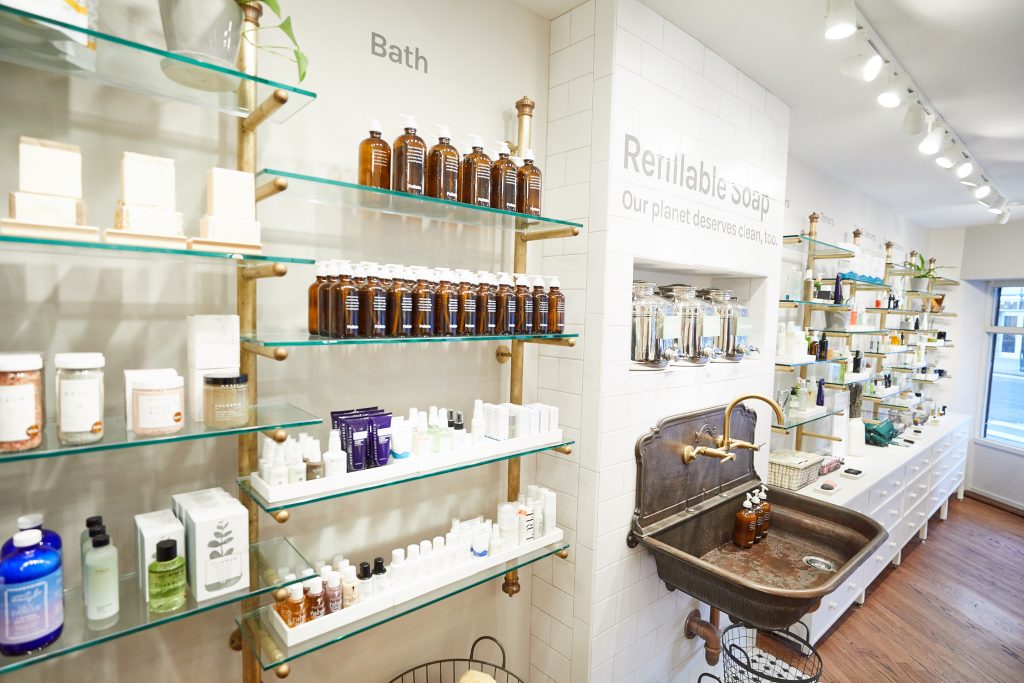
The last two years saw the holy trinity of green beauty retail, Credo, The Detox Market and Follain, open New York locations. In 2018 alone, Follain planted shops in Seattle, Washington, Dallas and Bethesda, Md., in addition to New York. Now that these retailers have crossed into chain terrain, 2019 will be the year that green beauty retail upstarts make their presences felt on streets and at shopping centers with strategies that are NYC-free. “If I went to New York, I might be the fifth or sixth player in the city,” Aillea founder Kathryn Dickinson told Beauty Independent last year. “I don’t think that’s terribly exciting. Not to say that I won’t go there one day, but it’s not on my immediate radar. I like the smaller cities that are very health-forward. I don’t believe in predatory real estate. The whole country is wide open and starving for clean beauty.” While the bigger players were swept up in the Manhattan real estate hustle, Dickinson opened up a handful of locations, including in Atlanta, Charleston and Raleigh. Other players to watch are Trellis Beauty, Shop Good and Lemon Laine.
6. Beauty and wellness media will go niche, authoritative, stylish and connected to vetted merchandise
Publishing houses didn’t reverse a string of rough years in 2018. Condé Nast in particular was a well of woes this year. The magazine Glamour ran its final print issue, editorial darling Phillip Picardi left to lead Out magazine, rumors swirled that Anna Wintour would exit, and it embarked on a difficult search for a CEO to replace Bob Sauerberg and bring a big vision to steer the company to the light at the end of the tunnel. Certainly, Condé Nast wasn’t the only troubled media player. Even Mic, once a celebrated specimen of the millennial reinvention of the press for the digital age, laid off the majority of its staff and sold to Bustle for less than $5 million after raising $60 million.
As the giants crumble, crafty media-commerce hydrids will gain ground. Like many indie beauty brands, they look cool, are attuned to their audiences and eschew the rules that encumbered revenue models of their forebears. Svn Space, the CBD and hemp wellness information and product destination, is case in point. It’s treading on High Times’ territory, but addressing a rising group of hemp and CBD enthusiasts not enmeshed in the longstanding marijuana culture. “We created a female-friendly website that we wanted to be welcoming and elevated,” says Megan Villa, creative and content director of Svn Space. “A lot of people have a stereotype of hemp. They think of hemp friendship bracelets and hackie sacks. We wanted to destigmatize the plant and get away from the hippie vibe.” The site sells decidedly unhippie products from Aur, Shea Brand, Life Elements, Vertly, The Good Patch, Juna and more.
7. Commitments to improve society will become interwoven with indie beauty business models and not simply contracted out to external nonprofits
Charitable connections have become musts for beauty brands. Whether it’s through support for 1% For The Planet, She’s The First or The Humane Society, they’re linking their businesses to issues that are undoubtedly important to their founders, but that they also think will encourage purchases. Data is piling up to provide evidence that consumers care about corporate altruism. A Unilever study, for instance, found that a third of consumers buy from brands they believe are doing good socially or environmentally.
Charitable giving is to be commended, but brands’ nonprofit selections often feel more like marketing pushes than true devotion to causes larger than their operations. Moving beyond giveback initiatives to internal programs makes relationships to causes seem less remote and promotional. The B Corp proliferation, Plant Apothecary’s reliance in part on adults with physical and mental disabilities to produce products, and new brand Undefined Beauty’s commitment to address societal concerns in its business practices illustrate moves toward taking responsibility for the greater good in-house.
“I believe real social impact and sustainable change doesn’t come in the form of simply donating to charity. It’s about elevating the mantra of ‘Be good. Do good,’’” says Undefined Beauty founder Dorian Morris. “As society starts to wake up and understand how their purchase decisions can be a form of resistance and empowerment both good and bad, I think consumers will align themselves with conscious brands who make an impact through socially-responsible, ethical practices and business decisions.”
8. Pod retailing will become increasingly common
The retail apocalypse has come with significant destruction. This year, some 4,000 stores have closed in the U.S., according to Coresight Research. Antiquated practices, Amazon and failure to meet consumer expectations have spelled doom for many brick-and-mortar doors. As the store landscape contracts, stores that excel become more precious, particularly for indie beauty brands that get lost in the noise online. However, they can be costly and difficult to enter for startups.
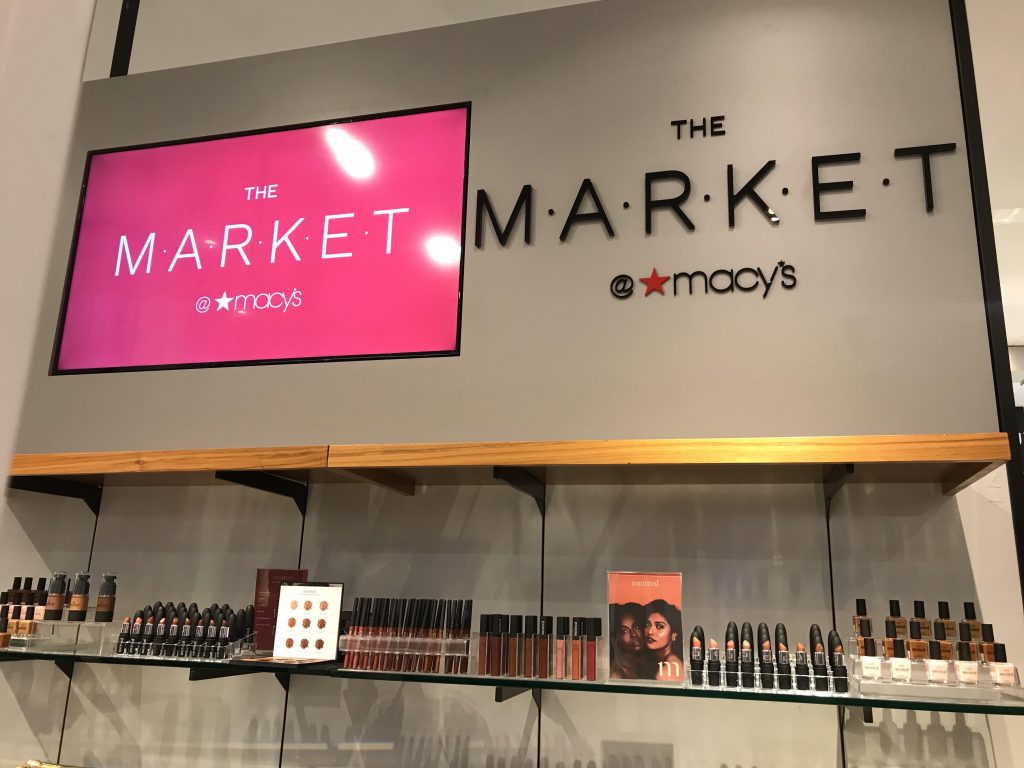
Pod retail concepts, mashups of pop-ups and stores, have emerged to give young brands, especially those bred digitally, entrée to physical space. The Market @ Macy’s, Showfields and The Gathering Shops are different takes on the pod retail concept. Each have their own method for easing the financial burden of retailing. Brands pay an upfront fee to be part of The Market @ Macy’s for one to three months and retain 100% of their sales. The Gathering Shops inks licensing agreements with brands and receives a percentage of their sales.
David Rodrigues, co-founder and CEO of Elysian, a participant in The Gathering Shops, says, “This kind of retail format is only going to continue to grow and expand in order to offer customers new experiences from exciting brands they’ve never heard of before while offering indie brands and designers an opportunity to get into a retail space they traditionally wouldn’t be able to access.”
9. The inside-out beauty category will span the medicine cabinet
Ingestibles made inroads in beauty with products designed to deliver beauty benefits. The Beauty Chef’s Glow Inner Beauty Powder and Hum Nutrition’s Red Carpet Skin Hydration Supplement are products exemplifying beauty-tailored ingestibles. With customers becoming accustomed to those products, the purview of ingestibles at beauty stores is expanding from items with direct beauty associations to offerings developed to combat headaches, digestive discomfort and other ills regularly plaguing people. “It’s about redoing the medicine cabinet in a way that’s very clear, transparent and interesting,” says Therese Clark, partner and CMO at beauty brand development and sales agency Creme Collective, and founder of intimate skincare brand Lady Suite, “For example, Hims started doing it with men’s Viagra. We’re seeing more efficacious natural replacements for typical medicine cabinet options.”
Of course, supplements, no matter what they’re for, are virtually unregulated, and there’s little to no proof that most of them are effective. But their sales are surging as they’re being reimagined to suit millennial preferences. Millennials aren’t avid fans of doctors, and the pharmaceutical industry is regarded suspiciously. “We know there are pharmaceutical lobbies that are very politically-involved, and pharmaceuticals may have long-term compromising effects,” says Clark. “There’s a lot more wellness-oriented care and integrative solutions.”
10. Influencers and editors will say no to swag
Not everyone will jump off of the freebie train, but a growing number will opt out of press relations packages. Samantha Ravndahl, the influencer known on Instagram as ssssamanthaa, is leading the charge. She’s taken herself off the PR lists of around 45 brands. Ravndahl had been receiving 10 to 30 packages weekly. In a YouTube video revealing her decision, she says, “It’s so much stuff. It’s over the top, and it’s just not interesting content to show you guys.”
Ravndahl dives into the many reasons she’s choosing to stem the PR packaging stream. Waste is an important one for her, but she’s also convinced the drive to make more and more products to chase influencer mentions leads to worse merchandise. “It’s kind of the same stuff being pushed out as quickly as possible,” she says. Additionally, Ravndahl notes that getting products gratis makes out of touch with her fans. She didn’t realize how much shipping cost until she tried to buy some brushes. And she reminds her audience that, with PR packages, comes expectations on behalf of brands that perhaps aren’t always warranted. Ravndahl explains, “PR is 100% a business transaction. It’s not because the brands just really like these influencers.”
11. CBD beauty product shoppers will ask for documentation
Cannabidiol (CBD) has sparked what may be the biggest gold rush the beauty industry has ever seen. Skincare items with CBD are sprouting like weeds and the range of quality is enormous. Amid the outpouring of CBD products, it’s difficult for consumers to tell the difference between formulas, especially as weedwashing spreads and brands hop on the CBD bandwagon without putting CBD in their products. To separate real CBD products from pretenders, consumers will begin asking for brands to prove they have CBD in their formulas. Specifically, they’ll ask to view a certificate of analysis showing the results of potency testing determining a product’s CBD levels.
CBD skincare brand Code of Harmony has its certificate of analysis on display online for consumer perusal. “CBD brands should put their testing results up on their website,” asserts founder Janet Schriever. “It shows transparency. It shows that the brand has done their due diligence and has selected a clean, quality, purity-tested CBD.”
12. Tokenism won’t be good enough
The players
5 mentionedThe Center

Under Your Skin
Unilever
AS Beauty
Lady Suite