How To Measure And Improve Customer Loyalty
The high CAC environment coupled with a not coincidental shift in emphasis in the direct-to-consumer space to profitability over feverish growth makes sticky brands all the more valuable today. No matter their stage, beauty companies should be thinking about stoking healthy repeat rates. However, healthy repeat rates aren’t static. They fluctuate by beauty category and business model. We dive into the numbers—and what brands can do to bolster them—with the help of investors, investment bankers and brand executives.
Whether it’s a liquid, powder, gel or cream, almost all products in the beauty industry are meant to be repurchased continually. According to e-commerce growth platform Metrilo in statistics cited by the publication Business of Fashion, the average customer repeat or retention rate in the beauty industry is 23%, and customers make an average of 1.6 purchases from a brand annually. In other words, in a specific month, an average of 23% of customers are returning from the same month a year ago.
Repeat customer rates vary by category, with haircare notching the lowest (13.2% on average) and skincare the highest (21.8% on average), per Metrilo. Brands that span categories or sell what Metrilo labels specialized products addressing certain skin issues register higher repeat rates of 30% and 36.1% on average.
Ava Henriksen, an investor at Verity Venture Partners, figures repeat rates in the 20% to 30% range are usual in the beauty industry, while 50% is the gold standard. Bou-Saba says, “If we are seeing companies with 40% to 50% that would say to us, wow, something is really going on here, it seems like people are really sticky. Conversely, if it’s less than 20%, we would really want to understand what’s going on there because that would be a red flag. Is the business model working? Is this sustainable?”
Makeup and fragrance are generally expected to have weaker repeat rates, makeup because people tend to experiment in the category with a variety of products and brands, and fragrance because the period between purchases is longer. Metrilo estimates customers buy a fragrance every 123 days on average. Across categories in the beauty industry, customers wait on average 103 days prior to repurchasing a product.
Although repeat rates are typically examined at yearly intervals, there are reasons to examine them at shorter intervals. Brands may want to analyze the impacts of events or strategies on generating repeat business in the short term and, as Ashleigh Barker, head of beauty and director in the consumer group at investment bank Lincoln International, points out, intended purchase frequency can play role in repeat rate tracking.
For a product intended to be purchased on a three-month basis, she says, “Month three represents the second purchase occasion and, to get a good sense of retention, I would look at least nine to 12 months out to ensure I’m capturing enough buyer history in my retention measurement. For a product that is intended to be purchased monthly, month three represents the fourth purchase occasion and may demonstrate a different retention rate as the potential to lose that customer is pushed up in the timeline.”
She adds, “Overall, the longer you can demonstrate retaining a customer over a relevant timeframe to your product offering, the more valuable that customer becomes and the more profitable your business becomes. If you’re constantly losing customers after that second or third purchase occasion, you’re in a perpetual state of spending money to acquire new customers just to replace the churn rather than build on growth.”
Metrilo monitors brands in DTC distribution, but brands concentrating on distribution outside of their own DTC channel won’t necessarily emulate the repeat rates of their DTC-focused counterparts. “Take a brand with 50% driven by dot-com and the remaining at Sephora, that’s different from a business that’s 75% built on Sephora,” says Kevin Kim, director of consumer investment banking at Raymond James. “Practically speaking, the realities of measuring true retention will have limitations.”
Furthermore, young brands with a few early adopters won’t necessarily have the same repeat rates as established brands with large audiences. “All things being equal, we would expect that companies would hopefully get better and sharper at navigating the retention levers at their disposal, and you would see with each monthly cohort they would get better at it. If the numbers get bigger, that’s a great sign,” says Kim. “If they start to get materially worse, that’s a bad sign and shows that the target demographic is not as big as they originally thought, and they may have to spend more to get customers on the fringe.”
Shopping behavior at the outset of the pandemic, when there were widespread brick-and-mortar store closures and e-commerce boomed, may distort brands’ customer repeat rates. As a result, Kim says he notices “a lot of brands not talking about their growth in 2020 because they had the COVID bump. It’s about looking at sales in 2021 compared to 2019 because those are more like for like in terms of the market environment.”
Subscription formats can skew data, too, especially if the data is being viewed month-over-month. “When brands set minimum subscription periods of two to three months, that’s a way that the repeat purchase rate can be inflated,” says Barker. “When you get into the weeds of the numbers, which is what an investor will do, it will come through in the marketing spend and in cohort analysis or the number of customers you bring in any given month added onto the existing customer base minus the customers you lose.”
Customer loyalty is tied up in profitability because brands aren’t generally profitable on the initial purchase. Barker explains it’s common that a customer will become profitable for a beauty brand on the second purchase. She says, “What it comes down is, how profitable are the users you’re acquiring? If you are spending all this money on marketing and the second you turn it off, your sales decline, it means your customers aren’t really coming back, and you’re not driving the organic growth you want to see.”
Once a customer becomes a repeat customer, the goal is to increase the amount that customer is spending with the brand or increase the customer’s average order value (AOV). Lifetime value (LTV) is the amount customers are spending with a brand over the course of their relationship with that brand. Metrilo finds the average LTV in the beauty industry is $138.
Lauren Leibrandt, leader of the beauty and wellness practice at investment bank Baird, highlights that the ratio of LTV to CAC is important for brands and investors to watch. An LTV to CAC ratio of three is solid, but she’s seen brands with an LTV to CAC ratio of 10. Leibrandt says, “Acquiring customers is expensive these days, so the longer you can keep them and the more opportunities for them to buy and the more they buy in each individual session, the higher the profitability profile associated with those customers are.”
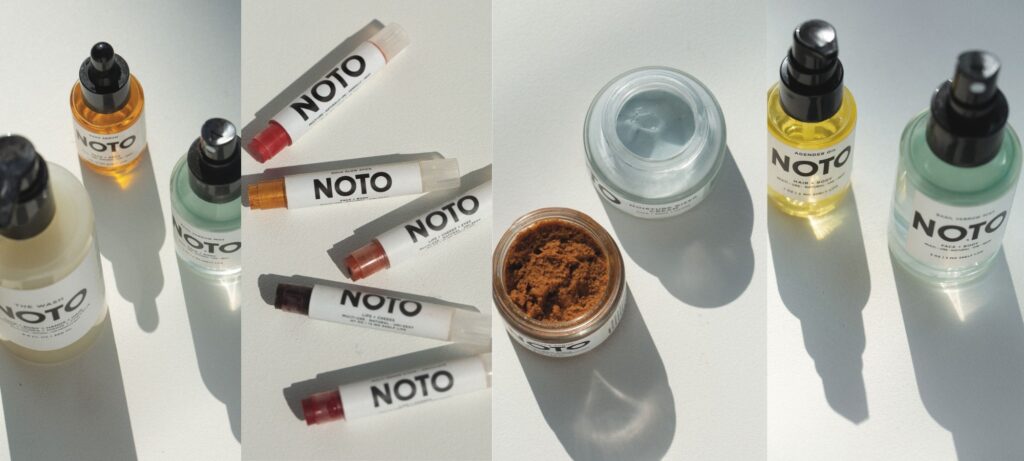
Another metric to pay close attention to is the website conversion rate. Metrilo pegs the average conversion rate in the beauty industry at around 5%, and that’s about where the brand Noto Botanics sits. Noto Botanics president Chantel Waterbury says the brand has worked hard to fine-tune its site to heighten conversion. It’s enabled online shoppers to easily put products in their digital carts and provides many payment options that are automatically populated for seamless checkouts.
“I would be concerned if I saw something under 2%. I hear of people that have a .8% conversation rate, and I think something is wrong,” says Waterbury. “It’s about being aware of the user experience and mindful of where they are getting caught up in the process. Be very mindful of what the experience is like on mobile versus desktop. If 80% of your traffic is mobile, that’s the experience that matters.”
Metrilo content manager Dimira Teneva argues there are two main interconnected causes of customer disloyalty: “People believe cosmetic products stop working in a while and thus they are eager to try new things in hope they’ll work even better: a new hair color, a new scent of perfume, a new face mask, etc.”
Of course, selling products that don’t stop working is crucial to preserving customer loyalty. Brands can convey the effectiveness of their products through testimonials, reviews, clinical studies and before-and-after images.
Understanding what products customers are loyal to and why can aid brands with elevating customer loyalty and order values. Leibrandt advises brands to be “analytic as opposed to haphazard about how you move people across your architecture, and how you up-sell and cross-sell.” If a haircare brand has a lot of loyalty for its shampoo, for example, it can leverage that to show how its treatment or styling products might be paired with the shampoo for maximum results or to achieve a hot style.
Product launches and bundles should build upon a product with a fervent following. Noto Botanics’ bundle offerings include The Essentials Kit and The Skin Edit Set priced at $115 and $75 for products valued at $153 and $100, respectively. The discounts are attractive to new customers and can transition customers who’ve already bought a single product to a broader regimen.
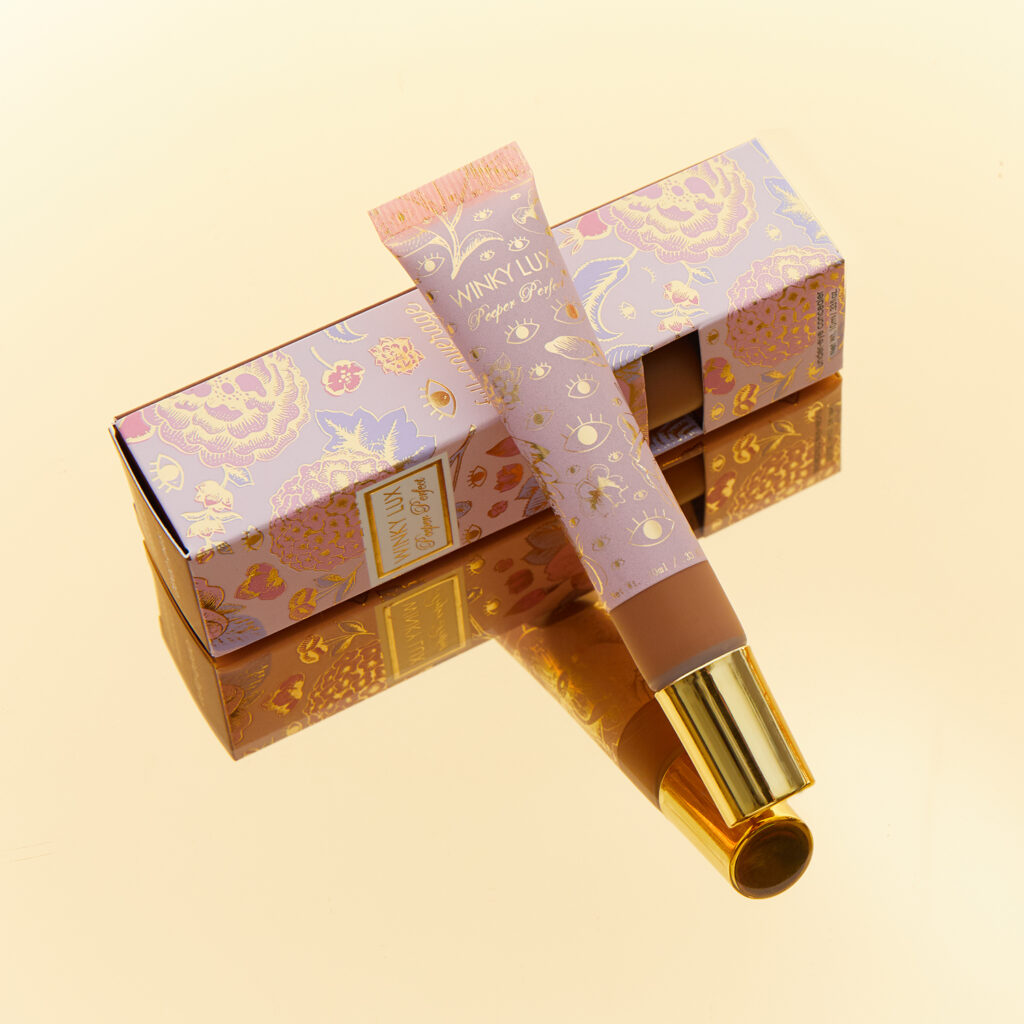
Cosmetics brand Winky Lux’s understanding of customer loyalty has guided its sampling program. After its Cheeky Rose Highlighter went viral on TikTok, the brand doled out samples of Peeper Perfect Under-Eye Concealer or Uni-Brow Precision Eyebrow Pencil with purchases of the highlighter because the concealer and eyebrow pencil are stickier products.
“Brands sometimes get siloed into one hero product, and it’s our job to figure out how to make sure the customer knows to come to us for her other problems,” Natalie Mackey, co-founder and CEO of Winky Lux parent company Glow Concept, tells Beauty Independent.
Subscription is a go-to tool for brands aiming to lock in customer loyalty. Barker says brands with subscription models clicking on all cylinders can achieve customer repeat rates in the 70% range. If a subscription model is clicking on all cylinders, Bou-Saba stresses brands should invest in boosting their subscriber pool and weigh increasing discounts to incentivize subscriptions. She also notes not every consumer likes subscriptions, and brands can attempt to get in front of them regularly similarly to how they might a subscriber with communication methods such as text and email at opportune moments for purchases.
Loyalty programs are another go-to tool for enhancing customer loyalty. Last year, Noto Botanics’ customer repeat rate, which is over 50%, climbed 53%. A revamping of its loyalty program called The Hookup Program was a key trigger of the repeat rate rise. Noto Botanics customers receive points back with their purchases. Prior to the revamp, they received 5% of their purchases back in points. With the revamp, they receive 10%.
Noto Botanics strives to make its loyal customers feel special. On top of points, members of The Hookup Program get early access to launches and sales, and information about events and campaigns. There are unique email communications designed for the loyalty program members. In general, refining the email flow to communicate directly with distinct sets of customers has been advantageous to the brand. If a customer buys Noto Botanics’ Deep Serum, they may receive an email that delves further into the product and shares founder Gloria Noto’s story.
Logistics optimization has been integral to Noto Botanics’ repeat rate jump as well. It secured a third-party logistics company that facilitated speedier shipping of generally two to four days versus five to 10 days previously.
The connection between a brand and customer underpins loyalty. Metrilo asserts a niche approach can be appealing to niche consumers that can’t replace the niche brand with endless competitor brands and may have intense affection for brands within the niche. Teneva writes, “The better your brand is aligned with the values of your target audience, the higher the conversion rate will be.”
Waterbury underscores Noto Botanics’ values bind customers to it. “Diversity and identity are at the core of the brand and, when people share those values, it creates a highly-engaged customer,” she says. “It’s not just about sharing a product, it’s about sharing those values.”
The players
5 mentionedBetter Being

Too Faced
Momentous
AS Beauty
iS Clinical