Getting A Deal On “Shark Tank” Isn't What It Seems
But most of the deals more than 4 million people watch get done on the show aren’t completed the way they’re depicted, with nearly half not even happening at all, according to a Forbes analysis of 112 businesses offered deals on “Shark Tank” during seasons eight through 13. Along with the almost half of the deals not going through, the publication discovered 15% wound up with different terms. In 2016, a Forbes analysis found that 27% of 237 “Shark Tank” deals were closed as structured on the show, 30% went through with restructured terms and 43% weren’t carried out.
The difference between presentation and reality reflects the varying rationale of the businesses that enter the “Shark Tank” and the so-called “sharks” on the show evaluating those businesses. The exposure and potential sales from “Shark Tank” are the primary reasons for businesses to pitch on it—and they applaud the program for living up to the promise of its spotlight. For a portion of them, nailing investment isn’t the objective. They may already be funded, have the opportunity to gain investment elsewhere or entertain the terms defined on the show despite them not being terms they’d actually agree to in real-life scenarios.
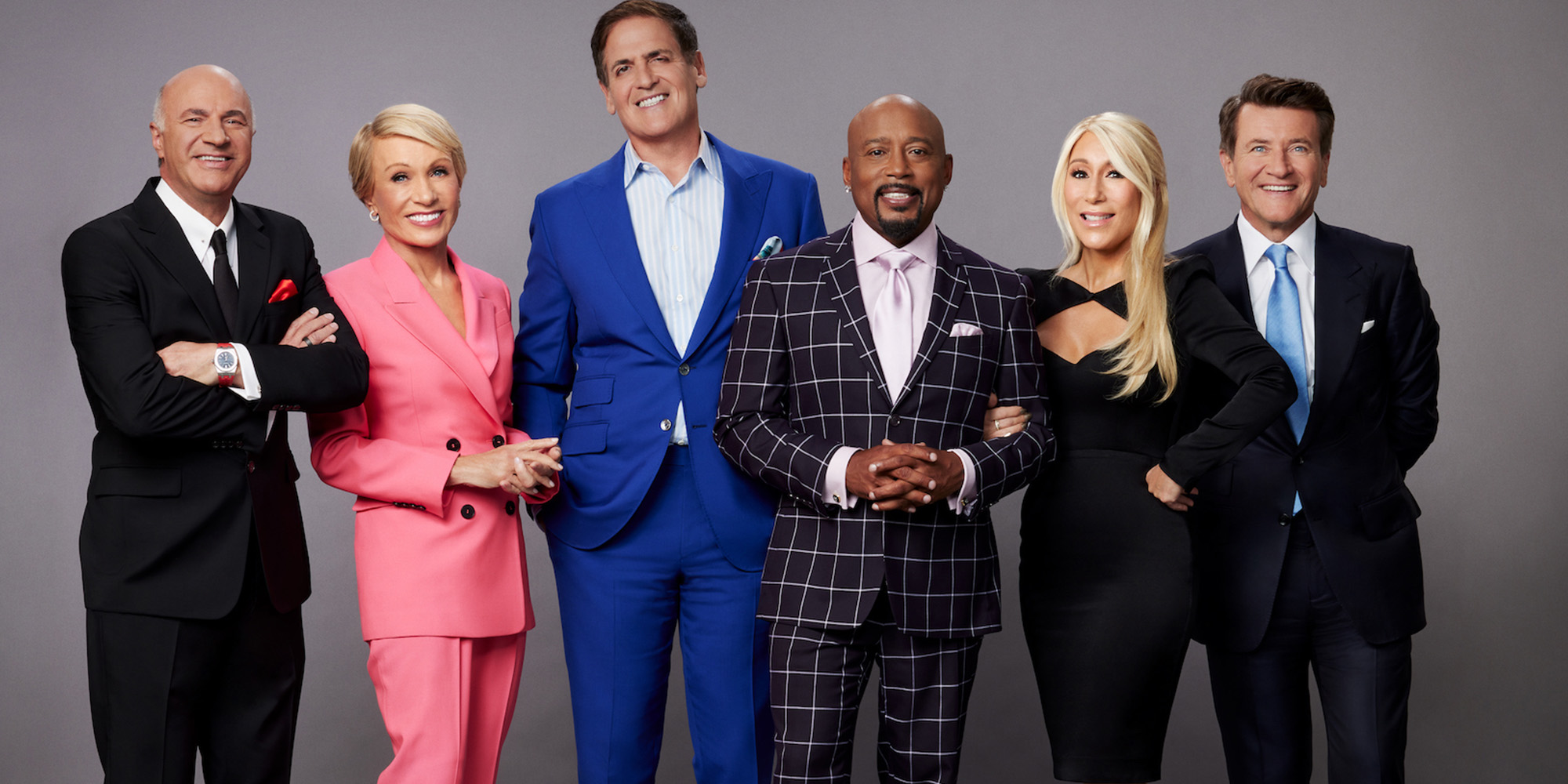
Some entrepreneurs feel the deals on the show aren’t practical or desirable. There can be unappealing clauses in term sheets and misalignment on business expectations. Among the sharks, there isn’t an equal appetite for investing in the businesses on “Shark Tank.” Barbara Corcoran is the most likely to finalize a deal. Forbes estimates she completes deals 60% of the time following a business’s “Shark Tank” appearance. Daymond John finalizes deals at a 56% rate, but is the most likely to adjust the terms agreed to on the show. Kevin O’Leary closes deals at a 45% rate.
Forbes reports, “Mark Cuban, who closed 54% of the 37 deals we tracked, invested in more than double the number of companies as other investors.” Cuban told the network CNBC last year that 25% of his “Shark Tank” deals are flops. Lori Greiner, known as the “Queen of QVC,” is the least likely to close deals, at a 29% rate. ABC didn’t return Beauty Independent’s request for comment.
John and Cuban explained to Forbes that information not shared on air causes deals to unravel. In an email to Forbes, John said, “When we do deals on Shark Tank, these are based on oral pitches with people who present well on TV on their ‘first date’ who are only providing their word and no written documentation to their business and its state of play.”
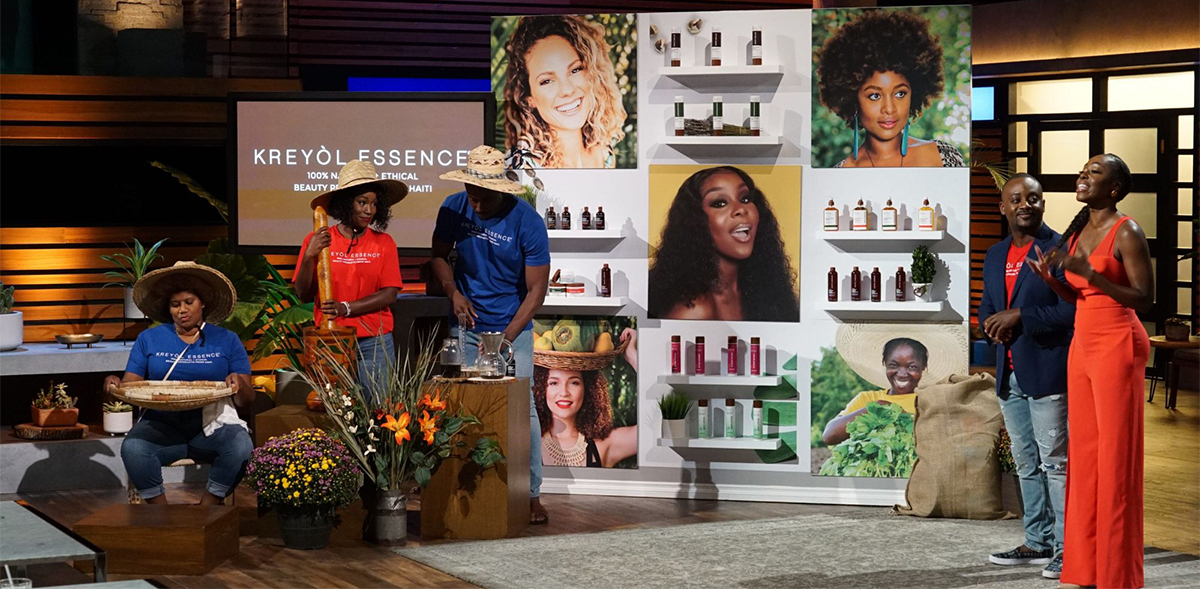
In a 2020 appearance on “Shark Tank,” Laura Schubert and Lillian Tung, co-founders of body hair brand Fur, landed a $500,000 investment from Greiner for 8% equity and $50,000 toward charitable efforts, but the deal fell through post-taping. In 2020 as well, Kreyol Essence co-founders and married couple Yve-Car Momperousse and Stephane Jean-Baptiste snagged a deal with O’Leary that gave him 5% equity and a 25 cent royalty on every item sold in perpetuity in exchange for $400,000. The pair ultimately didn’t take the deal. Both Kreyol Essence and Fur are bootstrapping.
“We decided not to proceed with the deal with Kevin O’Leary due to the impractical terms of perpetuity,” says Momperousse. “These terms didn’t align with our ability to sustain perpetual activities for brand growth, making them unsuitable for a long-term perspective. As a result, we chose to prioritize organic growth instead.”
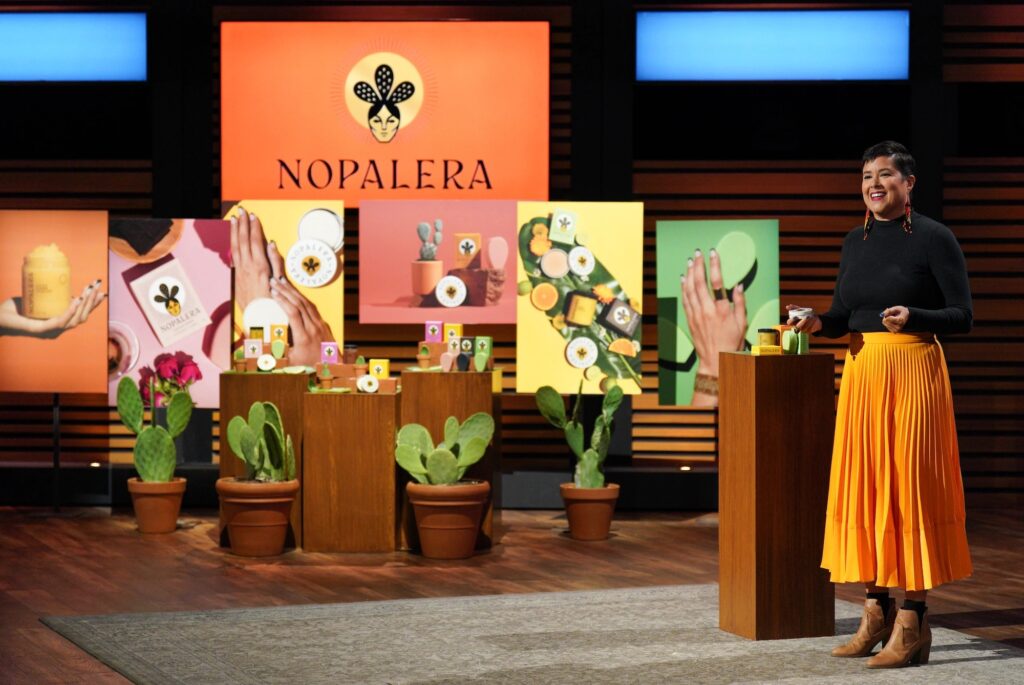
“Shark Tank” seems to realize that the discrepancy between the deals showcased publicly and the comparatively low amount that are executed privately is a problem. Cuban confirmed to Forbes that entrepreneurs are now instructed to accept the deals or risk not being shown on television. Nopalera founder Sandra Velasquez, who appeared on “Shark Tank” in January, relays that producers told her, “‘If you say yes and then we hear that you’re yanking Mark Cuban’s chain during due diligence afterwards, we will not air your episode.'”
Velasquez came on the show seeking $300,000 for 5% equity and didn’t dilute her ask. O’Leary offered her $300,000 for 30% of Nopalera, and guest shark Daniel Lubetsky offered $300,000 for 25%. Velasquez’s only counteroffer was $600,000 for 10%. She mentions that there are worries investors outside of “Shark Tank” think that “Shark Tank” deals don’t benefit entrepreneurs in the long run.
“Venture capital investors know that Shark Tank deals can be unfavorable to founders regarding the amount of equity they are asking for,” says Velasquez. “Most Americans watching don’t understand what giving up 30% of your company means for the valuation of your company and its subsequent raises.”
Having a shark on a business’s cap table may dissuade outside investors from backing a brand. However, that’s not the case for Cristina Nuñez and Rich Gersten, co-founders at True Beauty Ventures. Early-stage beauty and wellness investment firm TBV has invested in Youthforia, a makeup brand that appeared on “Shark Tank” in May. Founder Fiona Co Chan landed a $400,000 deal with Cuban for an 8% equity stake in Youthforia.
Nuñez says, “Having ‘Shark Tank’ investors on the cap table does not impact our thinking around the viability of a potential investment and does not add or detract from the brand’s credibility given we have a very specific investment lens through which we evaluate opportunities.”
She continues, “What we would not want to see happen is a scenario where a founder gives up a significant portion of their equity to secure a ‘Shark Tank’ deal (or any deal for that matter) given how important it is to us that founders continue to have meaningful skin in the game.” Gersten adds that he and Nuñez generally prefer to be “the largest investor with a meaningful voice at the table.” At Youthforia, he notes that Cuban has been valuable to have on the cap table.
Elizabeth Edwards, founder of H Ventures, a investment firm that backed tattoo care brand Mad Rabbit following its appearance on “Shark Tank” in 2021, says, “An appearance on ‘Shark Tank’ doesn’t really factor into my evaluation of a brand—either positively or negatively. ‘Shark Tank’ has 4 to 5 million viewers, so that can obviously give a brand a boost in awareness.”
Mad Rabbit closed its on-air “Shark Tank” deal with Cuban of $500,000 for 12% equity, and co-founders Oliver Zak and Selom Agbitor harnessed the show’s awareness boost to raise a seed round led by Acronym Venture Capital and a $10 million series A round in April. The round was led by Lucas Brand Equity, with participation from H Ventures and Mad Rabbit’s shark investor Mark Cuban.
Cuban has supported Mad Rabbit by reposting the brand’s posts, including when it announced its partnerships with GNC and Walmart. Zak says, “Not only are [Mark and his team] a great name to have on the cap table, but they’ve also actively made introductions for us and I think he, more so than other Sharks, carries a lot of weight in the venture community.”
According to an article on beauty brands appearing on “Shark Tank” in publication Women’s Wear Daily, Cuban has made the majority of deals that involve beauty and wellness. Along with Youthforia and Mad Rabbit, he’s invested in the brands Bala, Art of Sport and Tania Speaks Organic Skincare. Forbes calculates that Cuban, the most prolific investor on “Shark Tank,” has invested $29 million in at least 85 companies.
Black-owned makeup brand Range Beauty completed a “Shark Tank” deal, but modified terms of the deal. In its appearance on “Shark Tank” last year, it landed a $150,000 deal with Greiner and guest shark and Emma Grede, co-founder of fashion brand Good American, for 20% equity. Founder Alicia Scott moved forward with Grede as an investor in Range Beauty, but not Greiner. Scott declined to divulge terms of the deal with Grede.
“It came down to who really aligned with the brand the best and being very intentional about who I have on my cap table,” says Scott. “Currently, it’s all Black women, and with our brand focused on melanin-rich women, it just made the most sense. [Grede’s] connection to the 15% Percent Pledge was obviously big for us as well, so it was just like, do we need to give up so much equity for two Sharks or can we do something and still get that impact with one?”
Fearless Fund, an investment firm specializing in women of color-founded early-stage businesses, is also an investor in Range Beauty. Scott, who’s fundraising again for Range Beauty, believes having Fearless Fund and Grede on her brand’s cap table has been hugely beneficial.
“They’re such heavy hitters, and everyone is so excited and they kind of get that FOMO where they’re like, ‘Oh my gosh, these are incredible people that you have backing you, we want to learn more, we want to get behind you.’” Speaking of Grede specifically, she says, “Having her and what she brings to her industry, it’s a huge validation for Range and for me as a founder.”
Deal or no deal, the “Shark Tank” effect is real. Range Beauty has an “as seen on Shark Tank” badge on its website to draw customers. When “Shark Tank” re-aired the brand’s episode three nights in a row for Black History Month this year, it experienced a 30% increase in traffic to its site and its weekly revenue multiplied 2X. Scott says, “It’s an incredible amount of exposure that cannot be bought or would be extremely expensive for you to try to acquire.”
Regardless of the outcome of an appearance on the show, Velasquez points out that, once a brand is a “Shark Tank” brand, it’s always a “Shark Tank” brand. She says, “It’s like being nominated for a Grammy, you are forever Grammy nominated.”
The players
5 mentionedRange Beauty

AS Beauty
Essence
Nopalera
Under Your Skin