Gen Z Consumers Are Skipping Deodorant. Will They Foul The Deodorant Market?

Now 23 years old, Negrete, founder and creative director of production company and talent agency Dalmata Media, has moved on from Dove—she’s bought Glossier’s new deodorant and Kosas’s serum deodorant—but generally isn’t afraid to skip deodorant. She only wears it during the summer or for occasions she knows she’s going to be sweaty like gym sessions—and she’s not dissimilar from her peers today. As they grow out of their tween and teen years, gen Z consumers in the United States aren’t using deodorant as much as consumers that preceded them, a pattern with broad implications for the personal care market if it persists.
“I don’t think gen Z isn’t using deodorant, but I also don’t feel like they do much,” says Negrete. “I think our generation is more mindful of the types of deodorant they use after having so many studies come out about how some can cause cancer and others can be toxic, so there might be some caution at play. Also, many of us tend to live more sedentary lifestyles after quarantine, which could also be a contributing factor.”
Mintel consumer surveys enumerate gen Z’s depressed deodorant usage relative to older generations. According to the market research firm, 56% of American consumers aged 18 to 24 have used deodorant in the past 12 months compared to 77% of American consumers aged 45 to 54 and 79% of American consumers aged 55 to 64. Nearly 60% of American consumers aged 18 to 24 use deodorant every day compared to 80% of American consumers aged 45 to 54 and 79% of American consumers aged 55 to 64.
American gen Zers’ deodorant usage is lower than their counterparts in the United Kingdom and exemplifies a softness in the U.S. deodorant and body care segment. Mintel has found that 78% of U.K. consumers aged 16 to 24 have used deodorant in the past 12 months compared to 63% of U.K. consumers aged 45 to 54 and 64% of U.K. consumers aged 55 to 64. Although Mintel estimates U.S. deodorant and body care retail sales rose 7% in 2022 to $7.7 billion, adjusting for inflation flattens the gain, and it predicts sluggish sales progress in the coming years.
As Negrete indicates, American gen Z consumers’ product mindfulness appears to influence to their shift away from deodorant usage. Of all the generations it polled, Mintel discovered gen Z is most interested in body care with natural ingredients. Around 40% of consumers aged 18 to 34 identify natural ingredients as an important consideration in their body care purchasing decisions. The percentages gravitating toward natural ingredients dips into the thirties for consumers aged 35 to 54 and twenties for consumers aged 55 and above.
!function(e,i,n,s){var t="InfogramEmbeds",d=e.getElementsByTagName("script")[0];if(window[t]&&window[t].initialized)window[t].process&&window[t].process();else if(!e.getElementById(n)){var o=e.createElement("script");o.async=1,o.id=n,o.src="https://e.infogram.com/js/dist/embed-loader-min.js",d.parentNode.insertBefore(o,d)}}(document,0,"infogram-async");
While, as The New York Times points out, “there’s no definitive evidence that regular deodorants or antiperspirants are worse for your health than natural deodorants,” brands with natural deodorant that avoiding aluminum, a sweat-blocking ingredient in antiperspirants, are optimistic gen Zers will switch to and stay with natural options, and aluminum-free deodorants are a rising slice of the largely stagnant deodorant category. Market research firm Report Ocean forecasts global aluminum-free deodorant sales will advance at an annual compound growth rate of 8.9% to go from $997.5 million in 2021 to almost $2.15 billion in 2030.
Michael Malinsky, founder and CEO of DCB Lab, owner of aluminum-free deodorant brand Type:A, calls natural deodorant a “new category that is exploding with lots of new options that work much better than the what was initially presented in the early 2000s.” He says gen Zers and millennials “are far more hip to clean products [and] have been the target audience for advertising and information and more likely to make the switch to natural.”
Along with offering natural alternatives, Clare Hennigan, senior global beauty and personal care analyst at Mintel, recommends deodorant brands supply sensorial benefits (e.g., unique textures and sensations) and explore fragrance to boost gen Z engagement. In addition, gen Zers have a greater interest than older consumers in multipurpose products designed for several areas of the body that provide a value proposition. They have a slightly greater interest in eco-friendly deodorants than older consumers.
“TikTok has played a major role in introducing Gen Z consumers to the world of luxury fragrances,” says Hennigan. “APDO [antiperspirant/deodorant] brands can harness the current interest and excitement around fragrances by highlighting various scents and keynotes featured in products. There are opportunities to demonstrate to consumers how they can layer deodorants with personal fragrances to create unique and harmonious scents.”
Available in a scent mimicking its eau de parfum You, Glossier’s new deodorant leans into fragrance as a deodorant differentiator. In tandem with aluminum-free formulas and lifestyle marketing, a focus on fragrances has been working for Hume Supernatural. The deodorant brand has elevated scents like Out West, which features notes of tobacco and leather, and Desert Bloom, which features orange neroli, agave and prickly pear notes. It reports that its gen Z customer base has doubled year-over-year, and gen Z consumers convert at higher rates than consumers from older generations on its website.
Christine Campbell, director of product development for deodorant, body care and skincare brand Summary Brand, suggests brands should experiment with different product iterations to deliver deodorizing items that motivate gen Zers to purchase and fit within their routines. “It’ll be important for brands to innovate in this space and give gen Z and others new and interesting formats such as wipes, mists, detox masks, etc. The drugstore antiperspirant stick days are over,” she says. “Summary is thinking of new products in this space, and I am excited to see how the personal care space continues to reinvent itself.”
Emerging brands in the deodorant space declare that reinvention is exactly what’s needed. They hold that gen Z consumers are leaving deodorant behind because legacy brands—Unilever brands like Rexona, Dove and Degree alone command a quarter of the deodorant market share worldwide—don’t speak to them. Carly Broderick launched the new tween and teen deodorant brand Miles because she believes there’s a gap in the market for effective clean deodorants from companies spreading positive messages rather than the conventional masculine marketing of big CPG players.
“These consumers may not be resonating with their brand options in the space, and if they forgo rather than choose a brand that’s not right for them, that’s probably showing up in the statistics,” she says. “What that means is, if you have the right consumer insights and you are formulating against those insights with a really solid product and really thoughtful brands, that’s going to help you break through with these consumers.”
!function(e,i,n,s){var t="InfogramEmbeds",d=e.getElementsByTagName("script")[0];if(window[t]&&window[t].initialized)window[t].process&&window[t].process();else if(!e.getElementById(n)){var o=e.createElement("script");o.async=1,o.id=n,o.src="https://e.infogram.com/js/dist/embed-loader-min.js",d.parentNode.insertBefore(o,d)}}(document,0,"infogram-async");
Negrete asserts deodorant brands’ marketing and product formats must improve their relevance to gen Zers to persuade them to be on board with deodorants. She says, “None of these boring, overtly feminine ads could ever convince me to buy in, and why would I want a boring stick lying around when I could have a cute blue tube with a roll-on applicator or have a refillable cylindrical case with a nice pop of color around the rim?”
Concurring with the sentiment that the deodorant space has been disappointing, Malinsky argues, “The customer has to be won into the category again.” He elaborates, “The opportunity is there to rebuild the relationship with the younger consumer from the ground up, with top-down confidence in the brand first and then absorption—pun intended—of the product.”
He adds, “The strategies should begin and concentrate on those platforms and areas where the gen Z consumer resides and…including not just a beautiful lifestyle, but real information about the products, methods, people behind the brand, and formulas. The marketing that is more open, honest, entertaining and direct will win.”
Reinvention, of course, won’t win if gen Z consumers are leaving deodorant not merely out of disappointment with brands and products, but due to a lasting behavioral transformation. There’s been mounting acceptance of both men and women shaving less, leading to business implications for purveyors of razors, and Campbell speculates that gen Z consumers’ rejection of societal norms could be part of the explanation for the dip in deodorant usage.
“They’re not going to start using a product just because that’s what they’re told to or that’s how it’s always been done. They are like the ‘60s counterculture in this way. They are independent thinkers, risk takers and savvy consumers,” she says. “Although gen Z values self-care and embraces beauty as a form of self-expression, some may not feel the need to wear deodorant every day.”
Broderick reasons that gen Z consumers have increased freedom to elect to wear or not wear deodorant, but she doesn’t imagine that freedom will have a dramatic market impact. “It’s an intensively personal choice of, ‘Do I like the way my body naturally smells or not?’ But maybe we are moving to a time where there will be more choice of, I will be fine with the way my body odor smells,” she says. “I think more people than not will still continue wearing deodorant, and I believe that’s from just wanting to feel your best.”
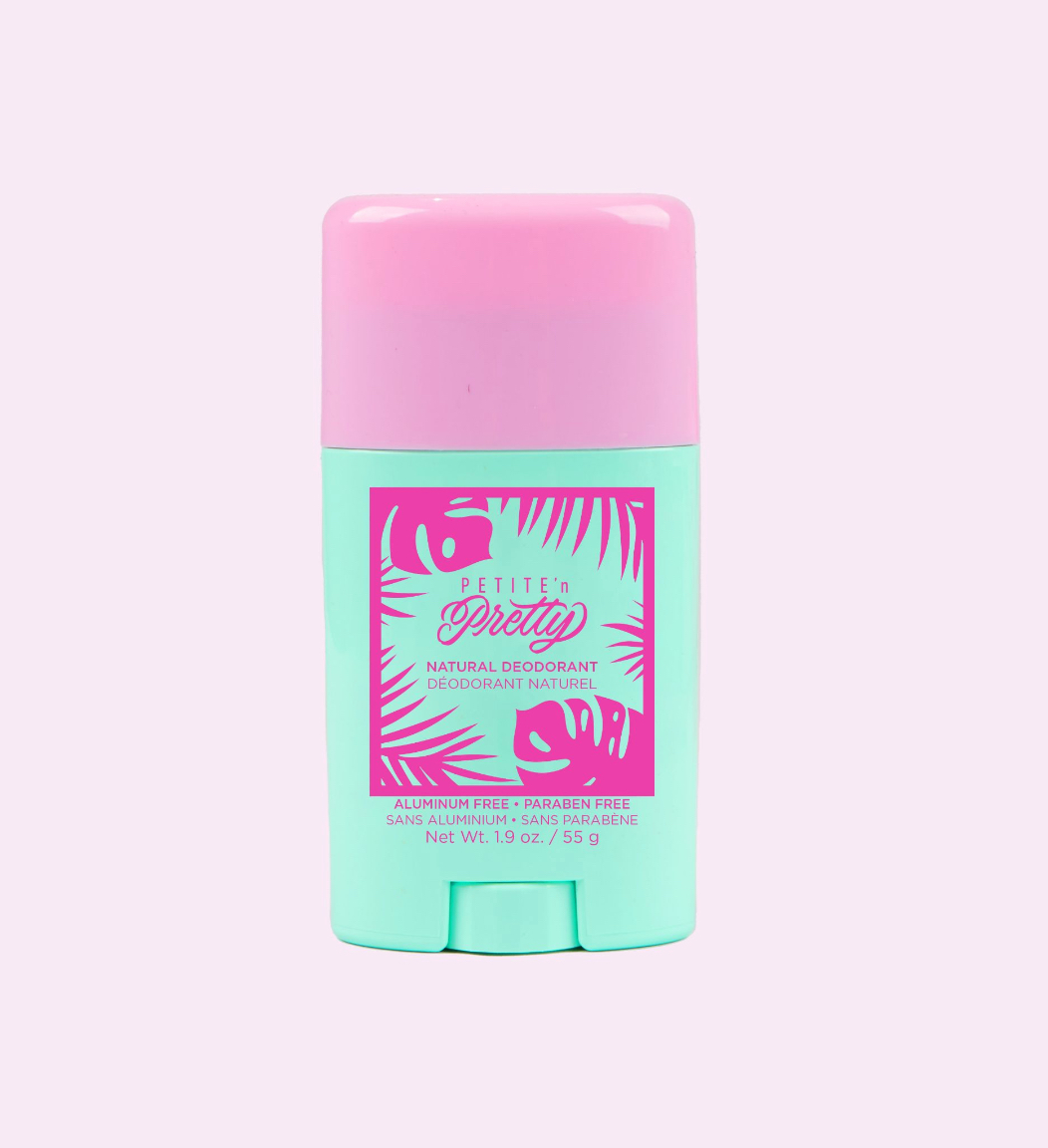
No matter if they’re intermittent or loyal deodorant users, gen Z consumers are open about discussing their opinions on the matter and raising awareness that their deodorant practices don’t have to follow their parents’ deodorant practices. Samantha Cutler, founder and CEO of Petite ‘n Pretty, a beauty brand aimed at gen Z consumers that’s released a natural deodorant, says, “Gen Z is a very proud and open community of individuals who are very comfortable sharing their lives. For example, when I was younger, if you had a pimple, it was all about concealing and hiding it, but, with this new generation, it’s about ‘owning’ it and wearing fun pimple patches because, in reality, everyone is going through it. I am seeing the same thing with deodorant and body odor.”
Deodorant brands like Cleo+Coco and Curie sidestep the gen Z conundrum by targeting older consumers. “As a gen Xer founder myself, I do think that we branded and targeted more of gen X and millennials since that’s our founding story—we created Cleo+Coco to fill a need for my generation of women and me—and from the statistics I’ve read recently, we are a larger demographic who currently spend more on personal care and beauty than gen Zers do,” says Suzannah Raff, founder of Cleo+Coco. “So, if there is a decline in deodorant usage by gen Z, we don’t feel it as a brand since we reach multiple generations.”
Still, if gen Z’s deodorant usage habits don’t change, the deodorant sector could shrink, but Daniel Roescheisen, founder of deodorant brand PAPR, doesn’t foresee that happening. He envisions gen Zers’ relationship with deodorant deepening in the decades ahead. Roescheisen says, “That particular age bracket is very young and at that age you might have other priorities than worrying about your underarm maintenance.”
And deodorant brands are looking beyond gen Z consumers to generation alpha or the post-gen Z generation of kids born after 2010 to drive the deodorant market in the future. They’re hitting puberty earlier, an important juncture for introducing deodorant usage. Per a study published in the journal Jama Pediatrics, girls today are reaching puberty a year before their mothers did. Girls typically show signs of puberty such as the appearance of breasts at 9 or 10 years old.
J.P. Mastey, founder of deodorant brand Corpus Naturals, says, “I have elementary school kids, and I can declare from my own circle that usage of deodorant in skewing younger and younger with hormones presenting sooner in age than previous generations.”
The players
5 mentionedGlossier

Kosas
Not Your Mother's
Unilever
AS Beauty