Formula Botanica’s Lorraine Dallmeier Says Beauty Isn’t Getting Real About Sustainability Unless It Focuses On Degrowth
“We have to get out of this mentality of unchecked, unlimited growth. You can’t have unlimited growth with finite resources, and it still underpins the way the beauty industry works,” she says. “It’s a half-a-trillion-dollar industry, but can we really continue like this with rampant consumerism? Until the conversation shifts and the beauty industry talks about what matters, we are churning out billions of units of beauty products that inevitably end up in our waterways or landfills, and we won’t be anywhere on the path to sustainability.”
To help change the conversation, Beauty Independent recently spoke with Dallmeier about strategies indie beauty entrepreneurs can realistically pursue today to move toward degrowth as they run their companies. Below, she identifies six that will bring beauty closer to a consequential path toward sustainability.
“When you tell people they are not good enough and they are not beautiful enough, they internalize all that messaging, and that’s in part what has led to the average women having 16 products on her shelf. It wasn’t like that 30 years ago,” says Dallmeier. “I think indie beauty is really well placed for this. I haven’t seen many indie beauty entrepreneurs going, ‘You are not good enough, so buy my products.’ They’ve positioned themselves by focusing more on wellness and making you feel good about yourself. It’s a completely different approach.”
Referring to consumers, she asserts, “You have to go with what you need rather than what the industry is telling you you need. That decoupling will take a long time because people’s mindset has to shift.”
“Circular is a term we really need to start educating our customers about,” says Dallmeier. She outlines the four main principals of circularity: work with nature’s systems, maintain resources in circulation, reduce waste, and support biodiversity and regeneration. “We have to start to think about the natural resources that go into our formulations. We have to try to minimize those inputs into the loop to start with,” says says Dallmeier. “Once we use resources, we have to try to keep them in the system as much as possible. Upcyling is exciting to see.”
She adds, “Most of the beauty industry just talks about the packaging, which is a huge component of beauty products, but it’s not the only component. I would really like the circularity conversation to talk about formulation and the whole process of creating a beauty product.”
“No single business globally can ever be called sustainable because it’s a journey, it’s not a destination. You are never going to reach it and go, ‘Alright, I’m here now!’” says Dallmeier. “But it becomes a bit of a challenge for beauty brands when you can’t use a term you’re trying to aim toward. Still, there are certain things you should be doing to justify that you are moving to sustainability. If you phase out a term from the way you speak about a brand, you can’t even use it as aspiration, and it becomes very difficult to speak to consumers, but, with all these terms, they can be used for good or evil and be heavily greenwashed.”
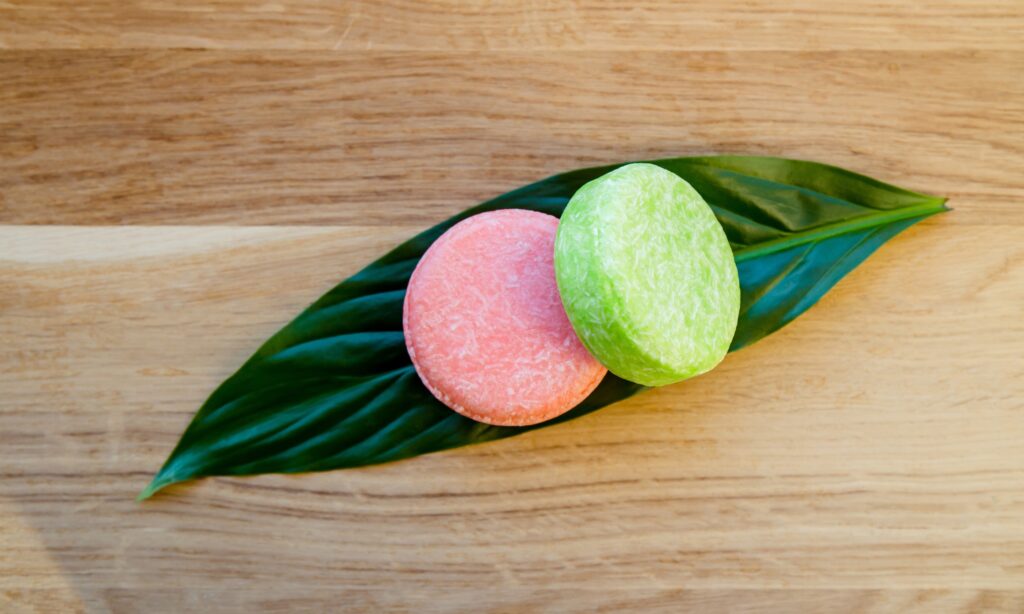
“A very easy example of a multifunctional product is a balm that you can use on your face, body and hair to cleanse and moisturize. I see a lot of indie brands already doing this,” says Dallmeier. “We’ve been taught that you have to buy all these individual products, and that’s often not the case. Things like moisturizers can be used on so many parts of the body as well as the face and hair. With solid formulations, there’s nothing stopping you from using a shampoo bar that doubles as a conditioner bar that doubles as a body was bar. It’s about how innovative you want to get.”
Not generally set on world domination, Dallmaier points out that beauty entrepreneurs are more inclined to a degrowth model than their corporate counterparts. Turning to their local communities for customers and suppliers can be an impactful element of that degrowth model, although it’s not the be-all-end-all solution for achieving sustainability in the beauty industry.
“You can create a really lovely financially sustainable business by sticking to your local community. It does require a change of hearts and minds from consumers,” says Dallmaier. “And local doesn’t always mean more sustainable. You might live in a part of the world where you can’t grow some ingredients, and then you have to look at the overall footprint of what it is that you’re doing.”
“We’ve positioned beauty products as being luxury items, and yet when you buy in bulk, it doesn’t feel that way. Solid formulations don’t feel that way,” says Dallmeier. “I would work on making consumers feel that these products are more high-end and luxury.”
The players
3 mentionedToo Faced

AS Beauty
Formulate