The Fertility Industry Has Mostly Ignored Men. New Sperm Health Startups Are Changing That.
When Steve Zanette and his wife experienced multiple miscarriages, the medical attention they received was mainly concerned with her fertility. “It’s very focused on women and what women should be doing differently, whether it’s tracking their cycle or changing their diet,” he says.
Unsatisfied with the approach, he researched what he could do to improve his fertility, finding that omega 3s, vitamin D, zinc, coenzyme Q10 and other supplements could reduce oxidative stress and improve mitochondrial function in sperm. After the supplement protocol helped him conceive his son, Zanette combined the ingredients to formulate supplements for his brand SwimClub in collaboration with male reproductive medicine specialist and urologic surgeon Michael Eisenberg and brand incubator Squared Circles.
“Anybody who wants to be a parent should be able to do it,” says Zanette. “There’s no silver bullet, but there are things you can do to shift the odds. If you are living an unhealthy lifestyle and you have something unaddressed, that’s going to show up in your sperm.”
The same week SwimClub launched last month, betting startup Sperm Racing, which allows you to—you guessed it—bet on sperm races, armed with $10 million in seed funding, launched its “sperm performance” gummy supplement, Sperm Worms.
Similar to Zanette, Khaled Kteily established his sperm health brand, Legacy, following fertility challenges. He was disappointed with the awkward and laborious process of testing his sperm at a clinic. His company makes sperm testing and freezing kits that customers can use at home. It’s raised $45 million from investors, notably Bain Capital Ventures, DJ Khaled, Orlando Bloom and Justin Bieber.
“Sperm freezing has been offered for decades for anyone who might have medically induced infertility,” he says. “In the LGBTQ+ community, it’s fairly well known because anyone who’s transitioning may want to freeze their sperm today.”
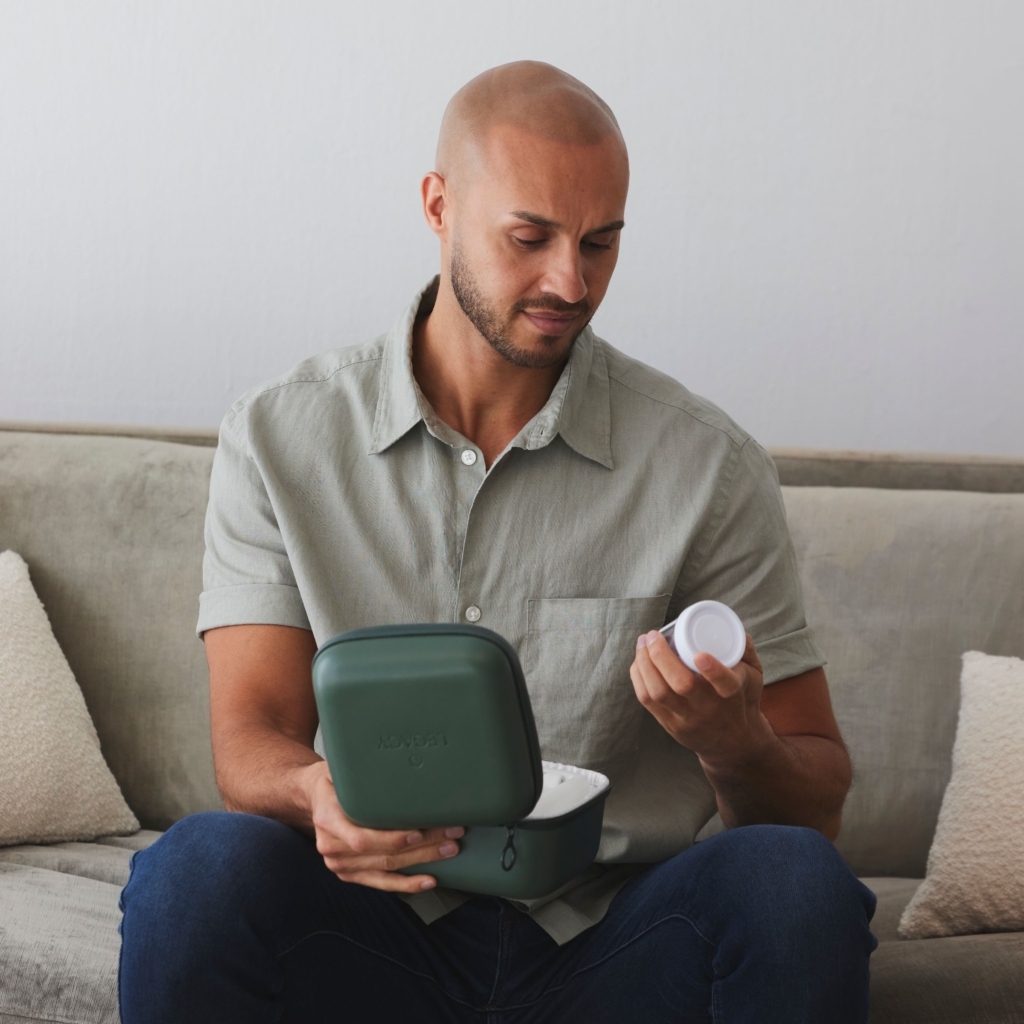
With egg freezing costing upwards of $10,000 in the United States, sperm freezing at a few hundred dollars is a much cheaper option for people looking to preserve fertility. Kteily says, “Sperm health is a few years behind egg freezing in terms of understanding, but it’s moving in the same direction.”
On top of diagnostic tools like sperm testing kits and supplements, the sperm health product category includes digital health tracking apps and clinical interventions such as procedures and medications. Traci Keen, co-founder and CEO of fertility clinic network Onto Health, forecasts growth in the areas of data and personalization, with sperm health being involved in medical records and wellness apps as a measure of endocrine, metabolic and vascular health. “The market is moving toward integration,” says Keen. “Standalone supplements are giving way to bundled solutions that combine diagnostics, digital coaching and medical pathways.”
The male infertility market was valued at approximately $4 billion in 2024 and is projected to grow at nearly 10% annually through 2030, the fastest growth rate within the broader fertility treatment sector, according to market research firm Mordor Intelligence. Still, male fertility remains a fraction of the overall fertility market, valued at $34.63 billion in 2025 and projected to reach $49.02 billion by 2030.
Reproductive endocrinologist Aimee Eyvazzadeh says, “We’re on the verge of a real shift in how we think about sperm health. For years, it was something only discussed in fertility clinics, but that’s changing fast. In the next few years, I foresee that a semen analysis will become as routine as checking cholesterol or blood sugar. I always counsel both partners when it comes to optimizing fertility, because male sperm health is half the equation. I routinely recommend lifestyle optimization plus supplements and at-home sperm testing to track progress.”
For supplements, Eyvazzadeh suggests ConceptionXR, coQ10, vitamin D3 and fish oil. The at-home tests she recommends are Yo sperm test, Fellow sperm test and Legacy sperm test. When abnormalities show up, she turns to the Balls Method, a sperm health checklist that can help pinpoint a cause. She says, “In some men, DNA fragmentation testing, varicocele repair, hormonal optimization or targeted therapies have led to measurable improvements.”
Men’s sperm count has been on the decline for decades. A 2022 study discovered an average decline of over 50% across the globe between 1973 and 2018. Sperm quality, encompassing sperm cells’ ability to survive and move toward an egg, has declined as well in recent years for an array of reasons, from pollution to processed foods.
A contributing factor is that people are having kids at older ages due to changing social norms and financial limitations, contributing to lower birth rates. Showing that fertility is a greater concern, more men and women are resorting to in vitro fertilization and intrauterine insemination.
Historically predominantly preoccupied with women’s infertility issues, the medical establishment is starting to encourage prospective parents to look into sperm health. “As semen analyses become more routinely incorporated into infertility workups, men are more attuned to how sperm quality plays into conception,” says Eyvazzadeh. “Increasingly, research frames sperm quality not just as a fertility metric, but as a window into systemic health: metabolic function, cardiovascular risk, aging. Men’s health topics, including fertility, now have more public visibility via social media, podcasts and men’s wellness spaces, making it easier to talk about and act on.”

The increased awareness stems at least somewhat from shifting masculinity ideals and a sense that men and women should take equal responsibility for parenthood, including reproductive health. Zanette notes there’s less taboo around men discussing emotions and topics such as family planning. He says, “A lot of couples have gone through what I went through, which is: Why is the discussion only about the woman in the situation where I’m 50% of the equation?”
Kteily says, “Part of masculinity today is being thoughtful about what it means to be a good partner, father and husband and being emotionally attuned in a way that 20 or 30 years ago just wasn’t talked about. When you are thoughtful about your fertility, you are doing something that’s quite feminist. You are caring about your partner and future children.”
The increased focus on male fertility reflects the ethos of the Make America Healthy Again (MAHA) and pronatalist movements, with figures like Elon Musk and Vice President JD Vance backing efforts to boost the U.S. population. These advocates urge men to “optimize” themselves for reproductive health and fatherhood.
Julie Kucinski, business consultant and co-founder of women’s wellness brand Wile, says, “Sperm health is spot-on for the MAHA moment, spanning virility and manhood, longevity and wellness with a whiff of pronatalism.”
Sperm health products shouldn’t be marketed only to men, though, says Zanette. While 70% of SwimClub’s customers are men, the rest are women seeking solutions for their partners. Another goal of his is to sell products through fertility clinics and urologists’ offices, and it’s been fielding requests from clinics since launch.
Legacy is responding to demand for sperm freezing for military members wishing to preserve their sperm in case they are injured or killed. It’s been tapped by the U.S. Department of Defense to provide sperm freezing to active-duty military. Kteily mentions more states are offering fertility benefits, with California planning to require that insurance companies cover fertility treatment beginning in 2026.
There’s an overlap between the fertility and sexual health spaces. Sexual health brand Popstar Labs, for instance, offers male fertility supplements along with lube, ejaculation delay spray and supplements to improve semen volume and taste. Founder and urologist Brian Steixner created the products after users reported that the same ingredients that improved sperm health improved their sex lives, too. Increasing semen volume, for instance, increases the number of sperm cells per ejaculation and strengthens orgasms.
Steixner anticipates that in the coming decade, we may approach a “dystopian scenario where global fertility rates become as big a conversation as global warming” due to endocrine-disrupting agents, obesity, substance use, diet and sedentary lifestyles. “We are going to see the risk to the global population becoming a nightly conversation on the news,” he predicts. “Women bank their eggs if they’re worried about the future. We see men doing that now and taking the supplements prior to that.”

Zanette hopes men will consider their sperm health earlier in life, way before they’re planning to have kids. “Whatever you’re doing earlier in your life is going to show up later,” he says. Kteily agrees, saying, “This should be part of sex ed. You should be learning about this frankly in high school. For people who want to have kids one day, they think about it in their 30 and 40s. But ideally, I’d like them to be able to think about this in college and freeze their sperm when they’re young and healthy.”
Already, Steixner is noticing a paradigm shift in medicine in this direction. “Right now, they say, ‘Try for six months to a year, and if you can’t conceive, maybe we’ll check your sperm.” That’s still the norm. And, so, what I’m seeing now is men coming into the office saying, ‘I’m nervous about my sperm health and sexual health,’” he says. “Fertility is now being introduced early on. They’re monitoring with home sperm testing so that they’re not getting blindsided at age 33 or 43.”
The players
5 mentionedFormulate

iS Clinical
Topicals
Momentous
Target