Dua By AB Science And The High-Stakes Gamble Of Diffusion Brands
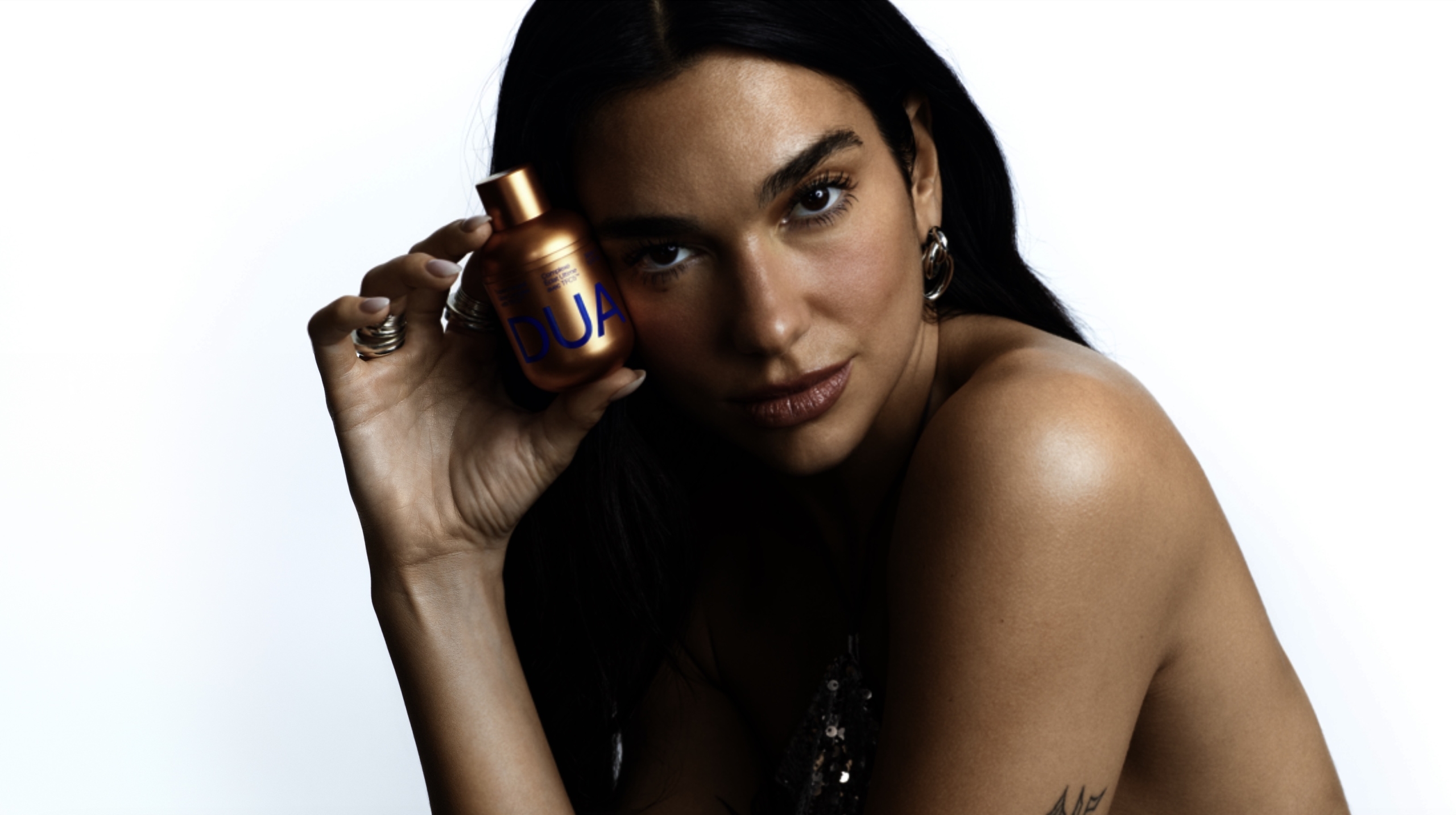
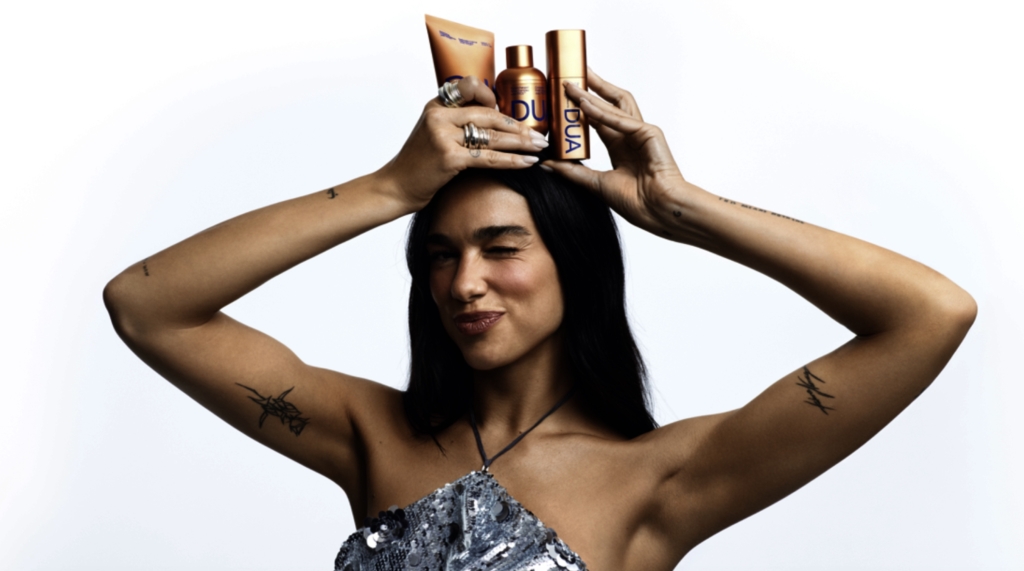
The splashiest recent example is Dua by AB Science, a new subbrand from Augustinus Bader that launched on Nov. 4 in partnership with pop star Dua Lipa. One of Spotify’s most-streamed artists, with billions of lifetime streams, Lipa brings a fan base that skews to 20somethings and 30somethings, considerably younger than Augustinus Bader’s core customer. The subbrand premiered with three skincare products priced roughly 70% to 75% below Augustinus Bader’s hero offerings. Augustinus Bader’s The Rich Cream retails for $285. Dua’s Renewal Cream is priced at $75.
“Consumers are more selective and more value-driven. They still want results backed by science, but are more cautious about premium spending,” says Charles Rosier, co-founder and CEO of Augustinus Bader. “Dua answers that shift directly: it offers high-level research and measurable performance. It meets consumers where they are without sacrificing credibility.”
He adds, “A strong cultural partner like Dua Lipa accelerates reach and relevance. It allows us to speak instantly to a younger global audience and positions Dua as a brand with both scientific depth and cultural presence. The partnership isn’t about visibility; it’s about alignment, authenticity and scale from day one.”
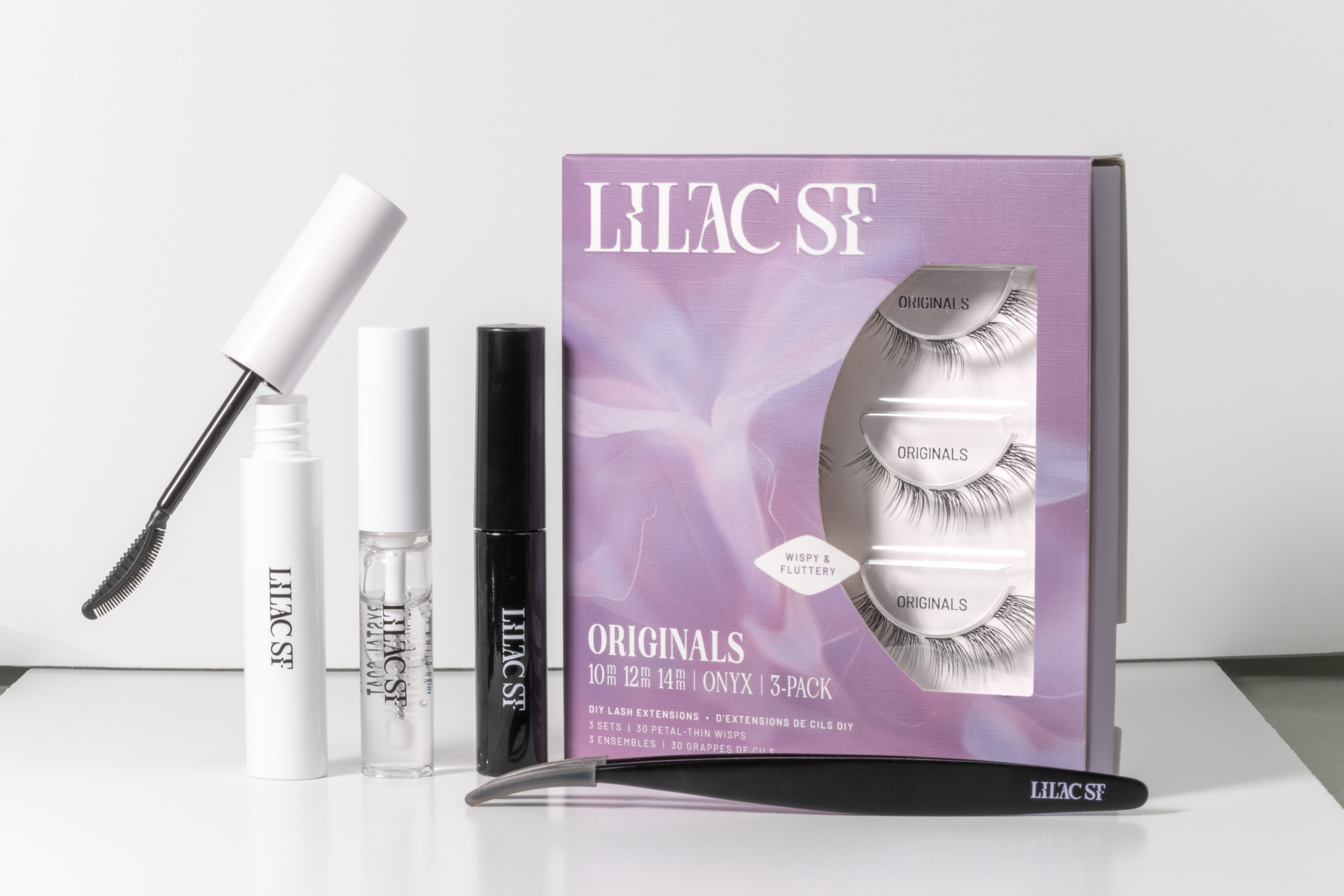
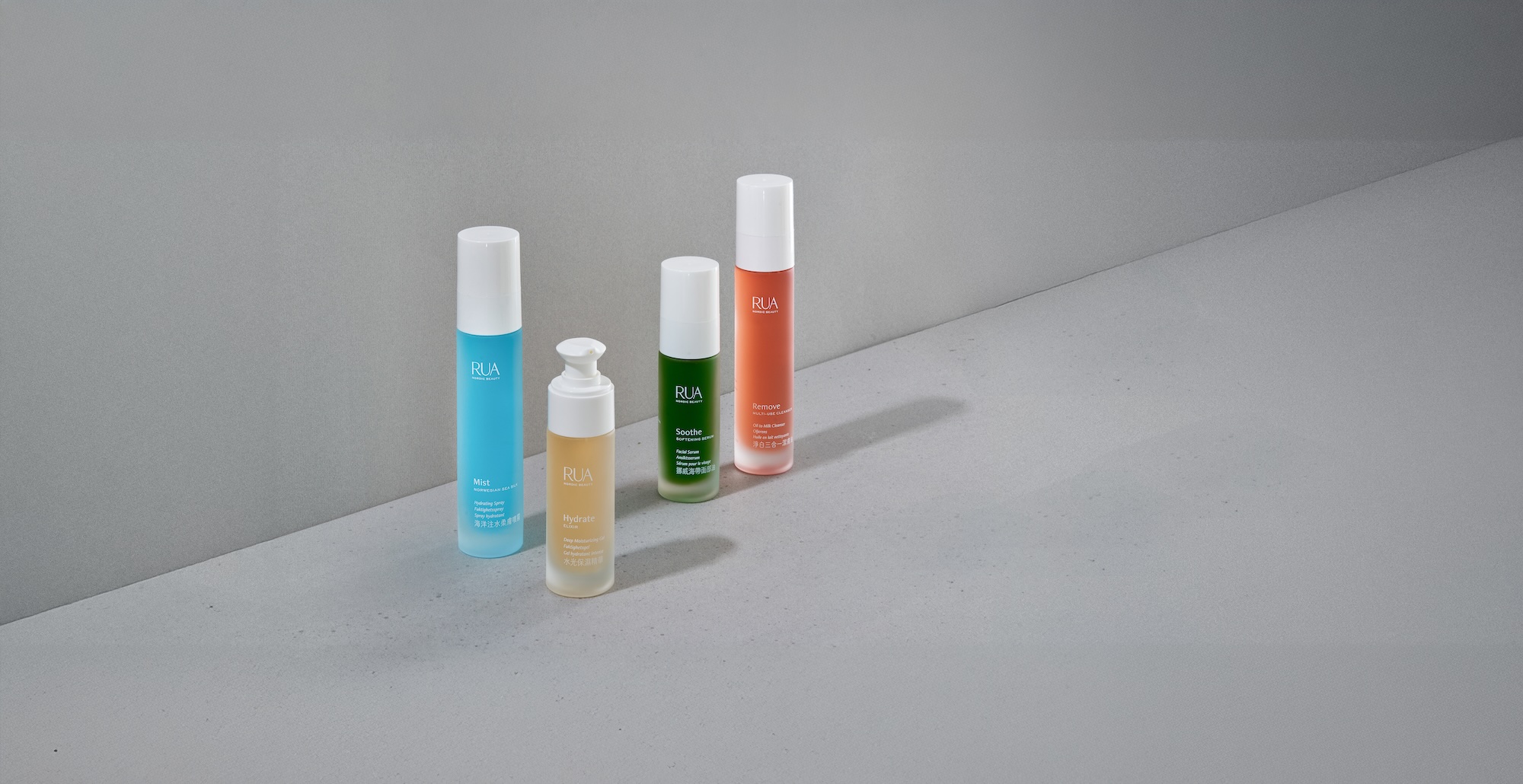
Dua may be the most visible subbrand launch of late, but it’s hardly alone. Foreo introduced Foreo by EveryOne, a wallet-friendly line aimed at gen Z; Snif unveiled Notewrks, a gen Zalpha men’s fragrance subbrand; Quick Flick rolled out lower-priced sister brand Quick Face for discount department store distribution; and Pacha Soap Co. launched Foxly, a comparably affordable brand for gen Z natural grocery shoppers.
The wave of secondary brands or diffusion lines highlights how urgently beauty companies are responding to consumers trading down and the distinct preferences of rising generations. Companies often view subbrands as long-term customer acquisition vehicles to capture younger consumers early and, over time, ladder them up into core brands as consumers’ incomes grow. The danger of inaction is becoming the next legacy brand scrambling to undo years of market share erosion.
Diffusion lines are a well-worn diversification strategy in beauty and fashion, with mixed results. In fashion, Marc by Marc Jacobs, D&G and DKNY are prominent illustrations. Marc by Marc Jacobs embodied a cultural moment, but was discontinued in 2015, underscoring the volatility of expanding into more accessible price tiers.
In beauty, MCoBeauty is an instance of a diffusion line becoming so popular it outshines the original brand. A child of ModelCo, MCoBeauty has built a reported $600 million business on cheap dupes, and ModelCo ceased operations as of February 2025. Good.Clean.Goop had the opposite fate, staining the reputation of the parent company Goop. It killed the mass-market subbrand last year after poor sales at Target, a perceived mismatch between founder Gwyneth Paltrow and value-oriented stores, and expensive prices for big-box shoppers.
The idea of a diffusion brand tends to look good on paper, but Rachel Roberts Mattox, brand developer and founding member of The Board, emphasizes the execution is rarely seamless and the risks are profound. “When done without clear strategic intent and audience-rooted storytelling, they erode trust instead of building it,” she says. “Rather than laddering up to the halo brand, a subbrand that feels opportunistic can cast doubt on the legitimacy or pricing integrity of the original.”
Roberts Mattox is skeptical of Dua. Along with the price discrepancy, the brand diverges from Augustinus Bader by incorporating an ingredient complex called TFC5. Augustinus Bader’s marquee ingredient complex is TFC8. Rosier describes TFC8 as an “advanced and intensive complex for significant skin renewal and correction.” In contrast, he describes TFC5 as “scientifically rigorous, but engineered for a different level of need. It relies on different inputs, targets different performance outcomes and is also less expensive to produce than TFC8. This allows us to offer Dua at a lower price point while staying fully aligned with our standards.”
Roberts Mattox isn’t buying it. “Younger skin doesn’t necessarily require a ‘lighter’ dose of regenerative technology. And without robust clinical evidence, the shift from TFC8 to TFC5 reads more as a cost-cutting move than a strategic reformulation. The celebrity tie-in lacks depth,” she says. “Beyond name alignment and demographic targeting, the collaboration between a German-engineered, science-first luxury skincare brand and a global pop star lacks meaningful connective tissue. It doesn’t answer the fundamental ‘why.’”
Rebecca Bartlett, principal and creative director at Bartlett Brands, is comparably bullish about Dua’s prospects and believes it’s a calculated power move. “They’re using a trendy celebrity and lower price point to acquire community and funnel a new, younger consumer into the Bader ecosystem. It’s a Trojan horse for Bader brand awareness and engagement,” she says. “It’s laying the groundwork from access to the ultimate aspiration. The risk is real, and the cost is high, but the potential payoff is compelling.”
Mattox identifies distribution as a deciding factor in subbrands’ fortunes. A prestige brand targeting distribution at a lower price with a subbrand can anger its prestige distribution partners (Sephora has been notoriously prickly about brands it sells launching cheaper lines) and destroy sales at higher-end distribution partners as consumers gravitate to the affordable subbrand.
Mattox says, “If the subbrand enters channels misaligned with the hero brand’s positioning or, worse, cannibalizes attention at retail, it undermines the luxury positioning that took years and millions to build.”
Seemingly aware of the possible downsides, Rosier stresses Augustinus Bader is protecting its brand equity by drawing firm boundaries between it and Dua on ingredient technology, creative universes, pricing and distribution. Out of the gate, Dua is focused on direct-to-consumer distribution. Augustinus Bader is available at prestige department stores and beauty specialty retailers like Sephora, Nordstrom, Space NK, Bluemercury, Bloomingdale’s and Macy’s.
“The Augustinus Bader line stays in curated luxury environments. Dua is positioned for broader, premium distribution with more cultural reach,” says Rosier. “Each brand lives where its audience expects it. No overlap, no dilution.”
But drawing firm distinctions isn’t without problems. If a brand has expertise in a certain distribution channel, breaking into a channel it doesn’t have as much expertise in with a subbrand can prove challenging. Diffusion lines frequently are spawned by prestige brands seeking a launchpad into the mass market, and this route may become increasingly popular today should mass-market beauty growth continue to exceed prestige beauty growth and economic uncertainty persist. In the first nine months of 2025, market research firm Circana estimates mass market beauty sales were up 5% and prestige beauty sales were up 4%.
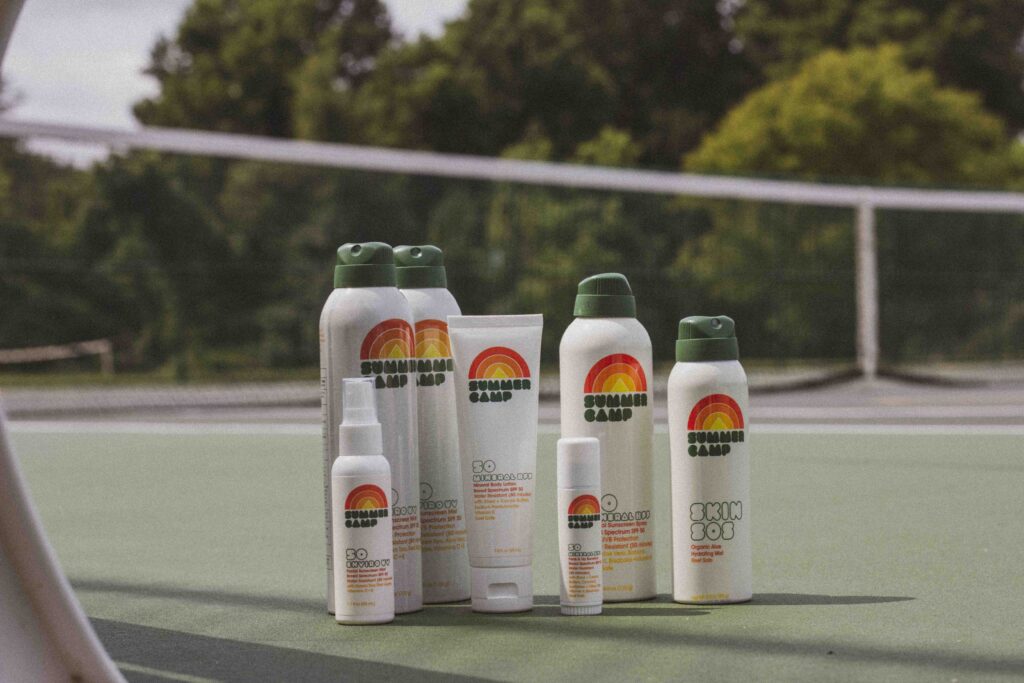
Valerie McMurray, founder and CEO of prestige sun care brand Soleil Toujours, got a hard lesson in the difficulties of branching out to another distribution channel with a subbrand. In 2021, Soleil Toujours released Summer Camp, a gen Z clean sun care brand geared to the mass market that was carried by Walmart. About three years later, it shuttered.
McMurray explains mass-market retail “requires an entirely different operational model, level of resourcing and marketing investment than prestige. As a small, lean team, we underestimated how capital-intensive and execution-heavy that environment is, especially without a meaningful marketing budget to support the launch. Ultimately, the brand was not profitable, and the experience clarified something important for us: success in mass retail isn’t just about price point, it’s about scale, infrastructure and a customer mindset that is fundamentally different from prestige.”
Not all diffusion strategies falter. Launched in 2012, Everyone is an affordable subbrand of EO Products, which was established in 1995, and has achieved longevity. The two lines are stocked on the same shelves at retailers such as Whole Foods and Sprouts, though Everyone’s volume is substantially larger than EO’s.
Susan Griffin-Black, founder and co-CEO of EO Products, says the model works because the company has “different people in mind as our muse. We design our products and experiences with those profiles in mind: elegant and simple for EO and multitasking workhorses for Everyone’s families.” She elaborates, “The ideas can start to converge if you lose sight of your core consumer. We also need to work with partners and hire people that can drive both lines and not be reductive so as to only chase the biggest dollar. It needs to be a ‘yes and’ mentality when you have two brands vying for attention.”
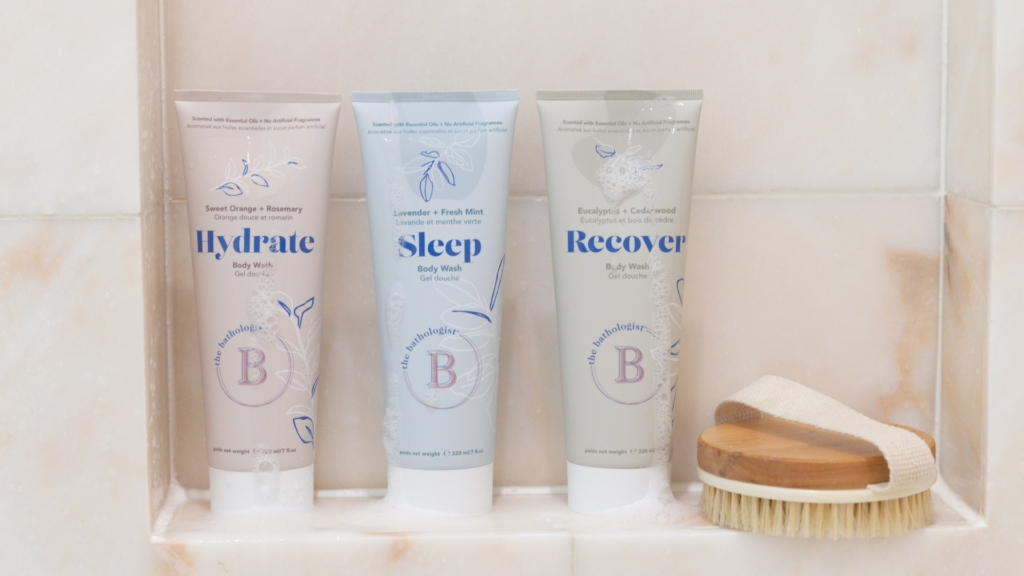
Premium bath products brand Bathorium launched lower-priced subbrand The Bathologist in 2018 after receiving a request from off-price retail company TJX’s locations in Canada. Originally, it had placed Bathorium in TJX and faced pushback from its high-end hotel partners. A 900-gram bath salt product from The Bathologist is $25, and a 600-gram bath salt product from Bathorium is $30. The two brands have begun to be merchandised together on shelves and are sold at Whole Foods.
Originally, Bathorium handled The Bathologist with the same team, but Bathorium Inc. founder and CEO Greg Macdonald discovered they operated better with teams dedicated to the individual brands. That has helped the brands drill down on their consumers and flesh out their unique voices. This year, Bathorium anticipates The Bathologist will contribute 20% to 25% of its bottom line.
“No one wants to be told, ‘Oh, this is the cheap version for mass market.’ That’s not going to sell,” says Macdonald. “So, we really have to look at, what is the ethos of Bathologist and who’s that customer segment? If we look at the segments of Bathorium and the segments of Bathologist, there’s some overlap, but they’re very different consumers. What do each want to hear? We really use different words like, for example, at Bathorium, they’re nightly rituals, and Bathologist, they’re daily routines.”
So far, Rosier suggests Dua is escaping the traps that have plagued previous subbrands. He didn’t disclose Dua’s revenue, but praises its early momentum as “very encouraging.” He says, “Sell-through is outperforming our forecasts, and consumer engagement with TFC5 has been exceptionally high…In the short term, Dua is a high-growth complement. Over a five-year horizon, it has the potential to become a significant share of the business as we scale into a broader audience. Importantly, it expands the ecosystem without weakening the luxury core.”
Awareness metrics have been strong, too. According to brand monitoring platform Launchmetrics, Dua achieved $2.8 million in media impact value (MIV), a marketing metric quantifying the monetary worth of media exposure, within 48 hours of its launch announcement and $4.1 million within a month of the announcement. Augustinus Bader saw an immediate impact following the announcement, with the brand’s MIV jumping 932% from the prior day. Dua Lipa was Augustinus Bader’s top voice for the month post-Dua launch, generating $618,000 in MIV across six placements during the period, accounting for 6% of Augustinus Bader’s total MIV.
“As consumer confidence shrinks, shoppers are moving away from hype-driven brands toward products that deliver clear value and proven credibility, renewing momentum for clinical leaders such as Augustinus Bader. The launch of a more accessible line positioned the brand to welcome a broader consumer base at a moment when value sensitivity is reshaping purchasing behavior,” says Alison Bringé, CMO of Launchmetrics. “Paired with Dua Lipa’s cultural reach and visibility, the partnership extends the brand’s relevance beyond its core luxury audience, introducing new consumers to the Augustinus Bader universe through a lens that feels both aspirational and attainable.”