Clinical Studies Historically Haven't Been Inclusive. Here Are 5 Strategies To Help Ensure They Are.
While clinical testing can be an important differentiator, it’s historically been conducted with a one-size-fits-all approach that leaves out skin tones darker than three on the controversial Fitzpatrick scale of human skin color. The skin color inequities in clinical testing have made it unclear whether many products are effective and safe for people with darker skin tones.
“Melanin-rich skin is biologically unique from a dermatologic perspective,” says dermatologist Mohana Gahara. “We have different amounts of melanin, different amounts of collagen, different amounts of ceramide, and so you can’t expect that that one cream or one product is going to react the same way amongst different races.”
Ahead, we identify five strategies as starting points for brands to help them get on the path to conducting inclusive clinical testing.
1. Do The Research
The first step in the clinical testing process is finding a reputable lab partner or clinical research organization (CRO). The lab partner or CRO is typically in charge of recruiting patients and translating a brand’s vision to the clinical testing process. When erecting a clinical study, brands should have an idea of their target audience, what will be studied and the measurements to be used. “Provide clarity around the message you want to convey to your lab partners, and ensure that the test methods and desired claims align with that message,” says Robyn Watkins, founder of clean beauty product development firm Holistic Beauty Group.
A lot of brands opt for an established manufacturer, buy an existing formula and refine it for their audience. Watkins urges against that copy-and-paste method, particularly for diverse consumers. “Start within. Collaborate with your formulator or product developer and fully understand the key actives and their properties,” she says. “If you are using actives at efficacious levels, you can anticipate the benefits that may test well. Also, consider your consumer, their specific need states and test based on that. Every product is a new opportunity to provide the consumer with a solution, your clinical study approach should be a demonstration of that solution.”
Testing regulations are stricter in France than in the United States, but Noelly Michoux still found herself having to set up testing processes for her brand 4.5.6 Skin, which is headquartered in Gellainville, France. “Unfortunately, the whole regulatory process in at least in France is based on white skin, that’s just how it was back in the day, and that’s how it is still today,” she says. “I think as a founder, even if you’re not a scientist—I’m not—you have to take an interest in clinical testing if you’re doing them because this is directly linked to how people are going to perceive your products effectiveness. It’s really important for you to understand your process and to be able to challenge it from the point of view of your customers.”
Chemist and Sula Labs founder AJ Addae presses brands to be critical at every step and do their own academic research. She says Google Scholar’s open access journals is a good place to begin researching. Cosmetic Confessions co-founders and cosmetic chemists in residence at Revela Victoria Fu and Gloria Lu have turned to studies done in South Korea and Brazil to get an idea of how actives react on various skin tones.
Addae advises,“Read clinical trials and become familiar with the language because then you’ll start to pick out like, oh, I see how they arrived at this, but maybe the study was open label. Had it been double-blind, would they have arrived at the same thing as well? There’s a playbook to the clinical trial nowadays, and it’s very much set forth by medical-grade skincare companies, but I think there are a lot of flaws in what they do.”
In the past, Gohara points out researchers may not have disclosed the race or ethnicity of the participants in studies. “A company could come out and say, ‘75% or 90% of our people experienced positive results,’ when most of those people were one ethnicity or race,” she says, adding that there’s been improvement over the last few years “in terms of reporting race and ethnicity with studies and clinical trials, but it’s still kind of inching along as it pertains to diversity in the clinical trials.”
2. Vet Testing Partners
Cosmetic chemist Ron Robinson, founder of skincare brand BeautyStat, underscores that labs are pretty much going to do what brands tell them to do. “It’s really up to the brand to brief their partners,” he says. Labs can fall short when it comes to baseline inclusivity. Common Heir co-founder Angela Ubias recounts the launch schedule for her brand’s 10% Vitamin C Serum was persistently delayed to address poor diversity in the clinical study participant pool.
“We realized, holy crap, this isn’t actually representative of the core demographic that we’re going after, so these results are going to look skewed,” she says. “We kept having to add additional time and work really closely with Citrus Labs, who are the ones that have done both of our clinical trials, to ensure that we were starting to see more diversity that was actually representation of people that looked like me and people in my community or deeper skin tones than that.”
Typically, Ubias mentions clinical testing providers will have a list of brands they’ve worked with previously on their website. Those lists can be beneficial to understand what they’re capable of, and brands can contact previous clients to learn about their experiences.
Michoux suggests enumerating specific questions about testing setups. She details, “What is the process? Are they doing it in vitro or on skin? If they’re doing it in vitro, do they have samples for your audience?…How do they select their testers? Are they paid or do they use volunteers? That could change the results. When your panel is completely paid, they’re going to say what the lab needs to hear for the study to move forward. When it’s volunteers, then it’s a different topic. They will tell the truth, at least that’s what we see.”
Lu stresses that where the testing company or its possible partners in the testing process are located can impact studies. “A lot of the time diversity across the U.S. isn’t exactly the same ratio. So, if a testing center is only in White Plains, New York, it’s a little harder to get the profile you want,” she says. “Bigger clinical sites may have collaborations across different countries that might help you.”
Regardless of their location, Addae argues that, if a CRO contends they can’t recruit people with dark skin tones, that’s an immediate red flag. She says, “There are dark-skinned people everywhere in this country, so what I’m hearing is we’re not connected with these communities, we’re not putting effort into these recruiting measures and we just don’t care as much.”
Fu highlights that brands hold a lot of power and a part of wielding that power is rejecting wrong partners. She says, “The general theme is there’s more work to be done, but it can start with the brand founder asking the right questions and pushing these third-party facilities to recruit more diverse profiles.”
At Holistic Beauty Group, Watkins often partners with laboratories in Brazil for inclusive testing. In the U.S., she recommends Essex for consumer perception and clinical instrumentation, and The Good Face Project for technology-savvy consumer testing. She recommends CPTC and ALS Group as well.

3. Delineate Testing Parameters For Darker Skin Tones
Addae says brands should consider tweaking clinical testing parameters for darker skin tones. Skincare testing generally delves into redness, wrinkles and uneven pigmentation, but the former two don’t always affect people with melanin-rich skin. “A lot of efficacy claims are very much geared toward lighter skin tones,” says Addae. “Things like redness as a parameter for vitamin C, for that to be an efficacy end point to say that this product works in that manner, it just doesn’t apply to me personally because my skin does not get red.”
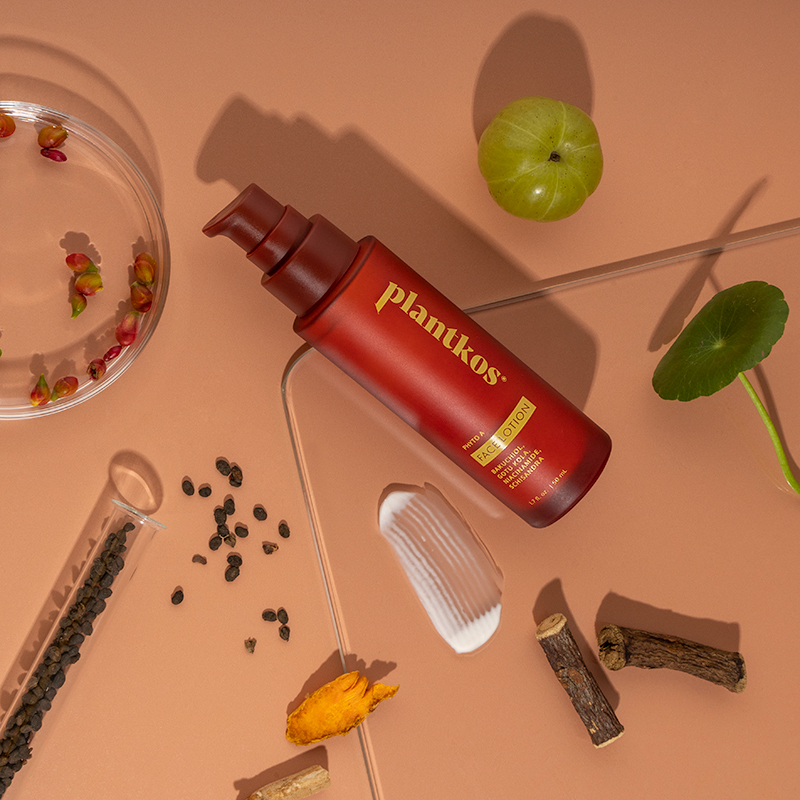
In clinical testing design, Plantkos founder Sejal Patel concentrated on frequent issues like hyperpigmentation, dehydrated skin and irritated skin. For testing vitamin C, Michoux zeroed in specifically on irritation versus redness.
“When we were doing our first round of development, we were so excited to use ascorbic acid, and then we were like, oh 1%, which is already a lot for our standards, but it’s really not working on hyperpigmentation for our darker skin tones,” she found. “You have to increase it to 5%, and at that point, it’s going create irritation, and this was so aligned with what we were seeing with women coming to us and saying, ‘I’ve been using this vitamin C serum, and in the beginning, it was amazing, but not my hyperpigmentation has come back with vengeance.’”
Ingredients for fine lines and wrinkles like retinol can be hard to gauge on darker skin tones in tests. Stuart Hall, co-founder of design studio Holiday, counsels brands to test visible signs of aging rather than focus on age. “Different ethnicities and different skin types that have different amounts of melanin in them, that can have a huge impact on the way that skin ages,” he says. “Be a little bit more diagnostic in the way that you test rather than being random about it or not having a point of view on what you’re trying to test.”
4. Be Flexible And Patient
Clinical trials traditionally have stuck to people falling within one to three on the Fitzpatrick scale, the lighter skin tones. As a result, Ubias says that, unfortunately, striving for inclusivity requires time and effort. Reflecting on her brand’s testing process, she elaborates, “It’s not that Citrus Labs did a bad job. This side of the industry being really broken, it has just operated this way for so long that, when labs like these are going out naturally and reaching out to people that are automatically opting into these sorts of studies, those people tend to not be folks of deeper skin tones because these types of studies have not traditionally been marketed to them.”
Gohara says communities of color, particularly the Black community, can be hesitant to volunteer for studies given the long history of discrimination they face and horrendous examples of unethical past testing practices such as with the Tuskegee experiment that recruited Black men under false pretenses and didn’t give them care, and Henrietta Lacks not consenting to her cancer cells being collected.
“There’s a historical reference point where ‘being tested on’ is not necessarily welcomed in a lot of communities,” explains Gohara, emphasizing it’s crucial to hire experts from diverse communities who can relate to the concerns of people from those communities. “You have to make sure that you cast a wide net when it comes to melanated skin, but also when it comes to age, gender and sexual orientation,” says Gohara. “We know that patients are much more comfortable with race concordant visits or gender concordant visits, so that’s important.”
Addae says the advantage of having experts of color guiding the testing process is that they know what to look for. She expounds, “I’ve tested so many products and been involved in formulating products where the difference in it actually touching the dark skin population is just somebody being involved in that process and saying, ‘Hey, this actually doesn’t look good on my skin,’ or ‘Hey, this redness parameter doesn’t really pertain to me. If this is something that you’re going to market, that’s great, but maybe don’t market it as having universal efficacy.'”
5. Consider Out-Of-Lab Alternatives
Clinical testing can come with a hefty price tag. Plantkos paid around $40,000 for clinical testing. Addae estimates a 12-week study usually costs $25,000 to $60,000. Subjects are a separate $300 per person fee. The more test subjects, the more data a brand able to extrapolate. Addae recommends an average of 60 per claim. “Remember in science, it’s important to get as many as possible,” she says. Lu says that labs may increase the price by 10% if a client is asking for more diverse testers because they can be harder to recruit.
“The more you’re trying to test, the more and more you’re going to have to contribute to your budget for clinical trial,” says Patel. She advises brands examine their budget to determine if they can afford the process. Watkins says brands should invest “in the big claims that are aligned to the formula benefits that can strengthen your product education and marketing story.”
Ubias maintains clinical testing doesn’t have to be conducted on every occasion. She says, “There are certain products that this makes a lot of sense, for which, to me, tends to fall in the actives category. There are other formulas that it might not make as much sense for. I think you just have to weigh those options, especially when you are just starting out and depending on how you’re choosing to fund the business…Brands should really just be mindful of what kind of products they’re putting out there and what these claims can really do for them.”
It can be a cheaper route for brands to organize regular panels of consumers to try products and share feedback. “Sometimes it teaches you more than if you went to a clinical body to do the whole shebang,” says Michoux. Addae offers consumer testing at Sula Labs that she says gathers information “on consumer acceptance on the sensorial, psychosomatic and visible effects of a product.” She believes consumer testing can be a viable alternative to clinical testing.
“At the end of the day, you’re getting direct feedback from consumers that actually would be buying your product and you do have a lot more control in those,” she says. “I also don’t really think [consumers] care as much as just to see whether the product works, and if that’s the case, go with a consumer test. Don’t spend all that money and work with people that are really, really interested in making sure that these results can be extrapolated towards a larger population rather than just the 20 or the 30 people that were in your study.”
The players
5 mentionediS Clinical

Deeper
Topicals
BeautyStat
Formulate