The Beauty Industry's Tariffs-Fueled Transformation Is Already Starting
Trump has enacted blanket 10% tariffs on some 180 countries and steeper “reciprocal” tariffs on roughly half of them, including 104% on China. According to market research firm NielsenIQ, only 7% of beauty products sold in the United States are manufactured domestically, making the beauty industry particularly vulnerable to the ripple effects of heightened tariffs, driving up the cost of goods and leading brands to elevate prices charged to consumers.
Beauty brands are furiously mapping out their supply chains and assessing pricing to determine their next moves. Megan Cox, founder of formulation agency and factory Innacos Labs, says, “This isn’t just about knowing what finished products you have on hand, but understanding exactly where your packaging, ingredients and manufacturing are coming from. Most brands I’ve spoken with are surprised to learn just how dependent they are on Chinese components, even when they thought they were sourcing elsewhere.”
Cox recommends brands that have been considering placing orders with domestic manufacturers do so. “Suppliers learned from COVID, when they had one to two years of inventory on hand. They’ve implemented new procedures that reduce their risk exposure,” she says. “We’re already seeing domestic ingredient supplies tightening, and I expect available manufacturing capacity to be fully booked within 30 days as brands scramble to adjust. Those who hesitate may find themselves with limited options.”
On new formulas, Kailey Bradt, founder and CEO of Syndeo, a platform connecting brands to behind-the-scenes innovators, urges brands to work closely with contract manufacturers, product developers and formulators to tweak formulas to blunt the blow from tariffs by picking ingredients from countries or companies that aren’t as hurt by them. She suggests brands should be, “for example, looking for sustainably produced synthetic ingredients from the biotech industry that offer better resilience in the supply chain.”
Amy Regenstein Berk, founder and CEO of beauty brand consultancy 317 Consulting, says brands should be “renegotiating vendor terms to extend payment timelines and stagger cash outflows more effectively” and “reforecasting sales and inventory needs conservatively to avoid tying up cash in excess stock, especially in products with shorter shelf lives.” On top of renegotiating and reforecasting, she proposes they prioritize high-margin products and gauge whether to phase out low-margin products, explore alternative supply chain actors and concentrate on higher margin direct-to-consumer distribution.
“Tariffs undoubtedly add pressure to already tight margins, but they also present an opportunity for brands to take a deeper look at their cost structure and value chain,” says Regenstein Berk, continuing, “In times of economic pressure, the goal isn’t simply to cut costs, but to refocus where you’re spending your money.”
Despite beauty brands hunting for suppliers in the United States, domestic beauty manufacturing isn’t projected to multiply exponentially. In February, beauty manufacturers informed Beauty Independent that they could see U.S. beauty manufacturing accounting for 10% to 15% of beauty products sold in the country in a few years. Back in February, Richie Rubin, EVP at beauty manufacturer Garcoa, explained, “The reality is that the cost of labor in the United States is still greater than the cost of tariffs. I also want to add that tariffs, at their core, are inflationary. We do anticipate cost increases that fall in line with the total cost of tariffs.”
As brands grapple with mounting costs, beauty product prices have been rising, though the rise’s connection to tariffs is unclear. Data from Daash, an artificial intelligence-powered predictive commerce intelligence firm, shows the average weekly price for a prestige beauty product climbed $2.23 to $32.25 in January through February and ascended to $39.50 in March, while dollar sales of prestige beauty declined 15% and unit sales were down 14% in the month compared to January through February.
Monitoring the e-commerce websites of its customers, Ryan Petersen, CEO of supply chain logistics company Flexport, told the Bloomberg podcast “Odd Lots” on Monday that they’ve raised prices 5% to 10% due to tariffs. Earlier this year, when it was supposed that tariffs on China would be kept to 10%, NIQ predicted beauty product prices would jump 10% to 20%. With loftier tariffs, the jumps could be greater.
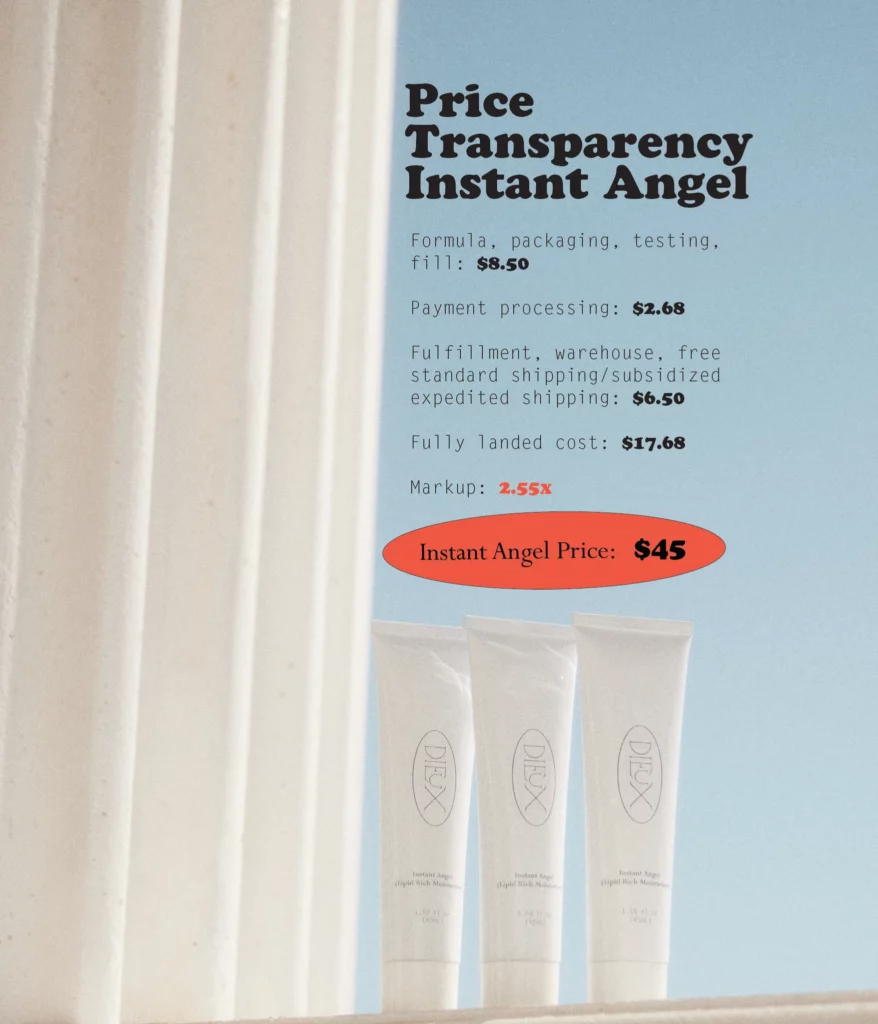
Cox recommends beauty brands implement what she describes as a “transparent price adjustment” within a month. She explains an adjustment “accomplishes several things: It generates immediate cash flow, builds goodwill through transparency and positions you ahead of the inevitable industry-wide price increases. Customers appreciate honesty, especially when they can see these economic forces affecting everything they buy.”
On the social media network X, Drew Fallon, co-founder and CEO of Iris Finance, a finance platform for startups, counsels brands to plump gross and contribution margins by, respectively, experimenting with pricing to raise their average order values, reducing discounts and employing tactics to boost customer retention. He mentioned the digital tools Triple Whale, Northbeam, Prescient, Haus, Fermat and Intelligems as helpful for testing prices.
“The biggest mistake right now is people looking to cut fixed/operating expenses,” he says. “It’s way too small of a line item to make up for it. Brands should be focused on revenue levers.” On X, he elaborates, “If your gross margin decreased 10% with tariffs, the only way you get that back is by basically eliminating 100% or more fixed expenses in 99% of cases.”
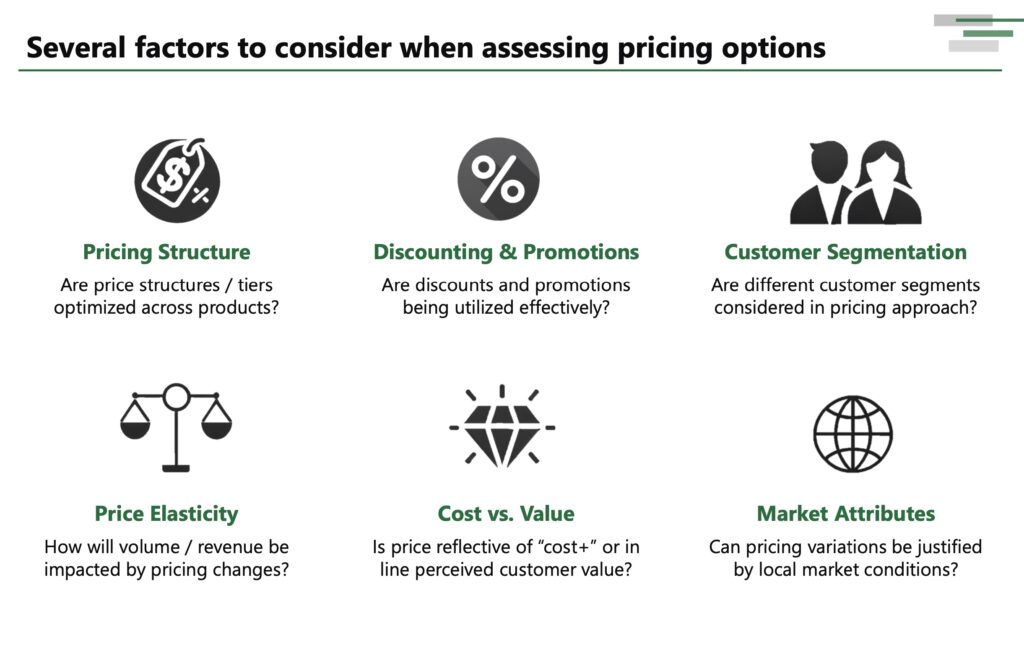
Justine Chan, managing director at professional services firm Meru, advises brands to explore their pricing history, customer responses to previous promotions and competitors’ prices to get a sense of pricing inelasticity and tap input from top customers to guide their decisions on bumping up prices. She acknowledges a key difficulty in pricing scenarios is tracking competitors’ approaches, but suggests brands shouldn’t swing with the market on a whim and instead adopt pricing that reinforces their distinct role in the beauty category.
“The more differentiated your product, the likely more price inelastic it is. If you have a patent, you’ll be more price inelastic,” she says. “If your product is easily replaceable—say you’re a nondifferentiated body soap—then it’s easy to trade down because people will care less about that being part of their regimen. Over time, it will encourage more people to put more money into differentiating and branding themselves.”
Price adjustments are simply one part of the tariff-resistance equation for beauty brands. The possibility of recession—financial giant J.P. Morgan puts the odds at 60% by the year end—forces brands to evaluate a broader agenda to shore up their businesses to confront prolonged economic pain and slumping consumer appetite for purchases.
Business research and data company Morning Consult’s Index of Consumer Sentiment dropped eight points to 90.6 on Monday from two days before, the second-largest two-day drop since 2018. A survey of American consumers by management consultancy McKinsey & Co. found that, in the first quarter of this year, three-quarters of consumers reported they traded down, up 1% from the end of last year.
“We’re already seeing early signs of consumer caution: slower velocity in prestige channels, smaller basket sizes and increased price sensitivity, especially in discretionary categories,” says Regenstein Berk. “Consumers aren’t necessarily abandoning beauty, but they are becoming more selective, trading down within categories or stretching time between replenishments.”
In the cautious environment, Regenstein Berk believes brands should double down on the efficacy and emotional payoff of their hero products and provide choices in sizes, bundles and loyalty rewards to engage consumers without overextending their wallets. On top of those strategies, she says, “Brands should plan for multiple demand scenarios, which means building agile inventory and cash plans to allow for quick responses to consumer behavior shifts. Ultimately, brands that stay close to their consumer listen, and adapt with empathy will be best positioned to earn long-term loyalty.”
In recessions, beauty brands’ value propositions are essential. Chan says, “There’s going to be an increasing market for brands that can communicate value, not just about how much someone is spending, but the perception of the value a product is providing. Consumers are going to be seeking value. How are you communicating that message?…Consumers’ value-seeking will be a behavior that becomes more entrenched if the tariff price increases really take hold.”
At early-stage investment firm Willow Growth, backer of Bubble, Dae, Phyla and Jupiter, founder and managing partner Deborah Benton is zeroing in on healthy cash positions, quicker cash conversion cycles, marketing efficiency, brand equity, customer loyalty, innovation and the customer experience. “Many of the lessons of past economic volatility apply. However, it does feel that the speed of change now is faster, and the aggression level of these tariff policies is higher,” she says. “Consequently, the impact may be swifter and deeper. Brands must stay nimble, stay calm, stay lean, pivot quickly, spend wisely, and use data to their advantage.”
Chan emphasizes, “The companies that win at the end of the day will be the ones that actually have cash to survive this difficult period, so I think liquidity as far as margin control is very important.” She expounds, “You can’t afford to have inefficient marketing spend, and what’s your SG&A [selling, general and administrative costs]? Is it in line with other companies’ SG&A?”
Brands may pull back on hiring or slim down their teams to save money—and there’s an exploding number of AI tools they’re experimenting with to replace or augment employees. Bradt, a fan of the business productivity AI tool Roam, says, “If you’re needing executive-level support, consider an advisor with equity compensation. This can be a great way to pull in the help you need without spending the cash.” For lower-level support, she instructs, “Consider hiring part-time experts. The beauty industry and consumer in general has great freelancers [that] are passionate at building, especially early-stage businesses.”
Of course, Trump could undo the tariffs at any moment, a potential beauty companies are clamoring for, but that underpins the challenges of the shifting ground upon which they’re attempting to manage their businesses. Higher tariffs or not, the unpredictability still could inspire companies to take defensive measures, damage economic growth and contribute to rocky consumer sentiment.
Cox says the tariffs “may be unsustainable long-term, and there’s always the possibility that Congress could intervene as trade policy ultimately falls under their domain. The beauty brands that will navigate this challenging landscape most successfully will be those that take decisive action now while maintaining the flexibility to pivot as the situation evolves. This isn’t the first supply chain disruption our industry has faced, and it certainly won’t be the last.”
The players
5 mentionedToo Faced

Better Being
Momentous
Deeper
Formulate