In-House Production Helps Numerous Beauty Brands Sidestep Supply Chain Issues
Numerous independent beauty brands are doing exactly that by handling their own production to gain better control over how, where and when their products are made. The decision whether to manufacture in-house is guided by quantitative and qualitative assessments. For the former, brands examine if the sizable investment needed to manufacture is feasible and worthwhile given probable future savings. For the latter, they wonder if it’s doable for their typically small teams to be involved in each step of the production process.
“This is always an interesting topic,” says Alyse Zunino, founder of niche beauty development agency Eminence Brand Development. “Coming from the branded side, you have so many sleepless nights trying to find the right contract manufacturer. It’s like dating! Brands must do their homework and know what questions to ask as ultimately the manufacturer is an extension of your brand and must be the right fit. They can honestly make you or break you.”
Can every brand choose internal production? It helps to have the space. Jill Rowe, founder of Cultivate Apothecary, does. Her nearly 3-year-old clean luxury skincare brand is based on the picturesque three-acre Stonegate Farm in New York’s Hudson Valley. Rowe formulates Cultivate’s products using ingredients like yarrow and avocado oil from plants grown on Stonegate’s grounds. Rowe says, “We literally do everything.”
Last summer, Cultivate expanded its operational footprint on Stonegate’s compound by transforming a cow manger into an 800-square-foot lab. “This space was something that we were underutilizing, and we figured we had to build a lab here,” says Rowe. “We built a small lab to start with in part of the ice house, but we quickly outgrew that.” It took slightly under $5,000 to construct the new lab. For brands that don’t have access to a space like Stonegate, Rowe thinks any dedicated space has potential. “There’s the ability for people to do it who may have a backyard garage or even something prefab,” she says. “It doesn’t have to be huge.”
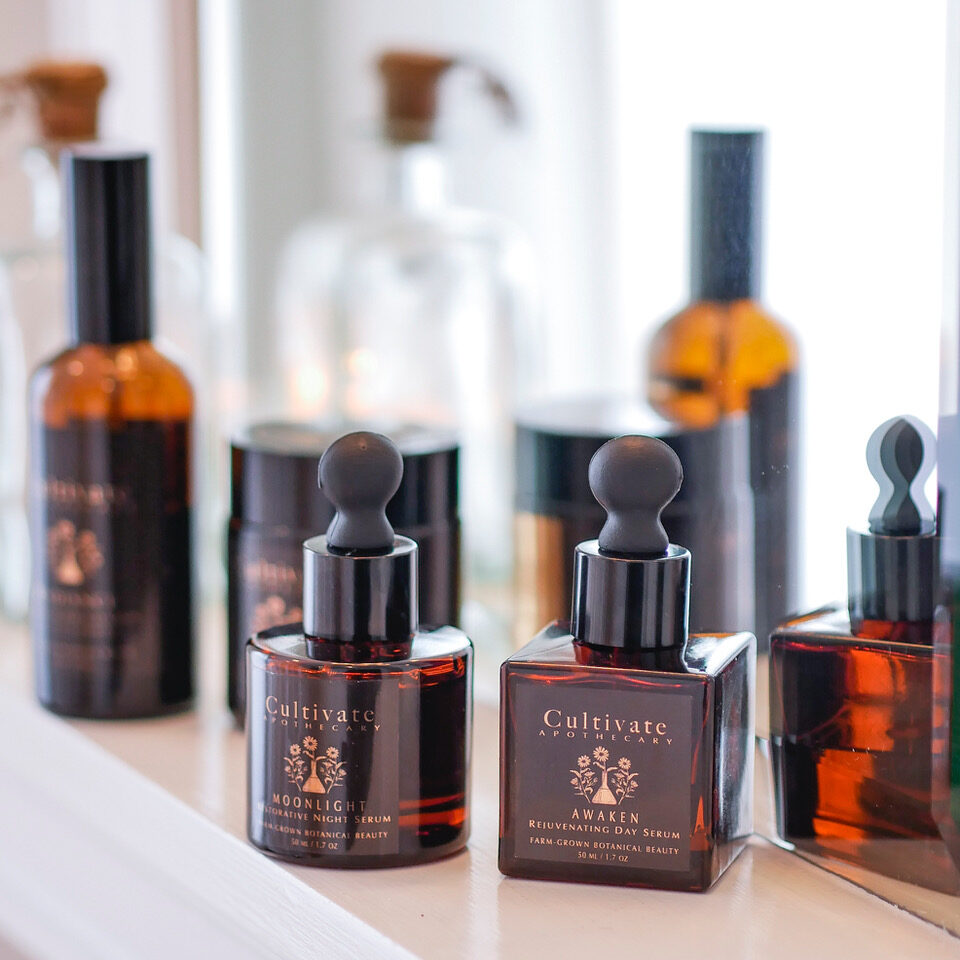
Cultivate found equipment and furniture like six-foot long lab tables secondhand on Craigslist. Rowe plans to purchase a professional refrigerator secondhand hopefully for around $500 and emphasizes resourcefulness is critical to reducing the investment required for in-house production. She says, “Thinking I have to buy all these things retail, no you don’t. There’s so many things that people are trying to sell that are in great, sometimes unused condition that you can get for a song.”
As COVID-related supply chain delays affected beauty brands, Cultivate enjoyed a good return on investment from having its own facility. “It gives us total control on when and how we can test, formulate and fulfill, when and how we want and need to,” says Rowe. “During COVID, that was a boon as many brands were unable to get ingredients. We never had that problem as we grow and create the majority of ours.”
Cultivate’s operations may not seem easily scalable, but Rowe is already pondering how she will enlarge operations as demand warrants. She says, “The beauty of having our property is that we can build the facilities we need as we grow.” Since Cultivate also grows ingredients for its products, Rowe imagines a time when Stonegate’s acres may not be sufficient. Rowe says the brand will “add farms in the Hudson Valley to our growing sources as necessary.”
Founders have strong visions for their products, and it’s often their uncompromising standards that push them to take on production. Rowe initially looked to have a third-party lab formulate Cultivate’s products. She explains she didn’t go that route because “we could find very few organic labs in 2018, and no one would use our oils to create products. They all said they would have to source existing oils. So, that gave us the acknowledgement we needed to in-source everything.”
Zunino spent most of her career on the contract manufacturing side of the industry. While brands might believe it’s ideal to have complete control of the product lifecycle from production to distribution, she says, “Brands can have more control over the manufacturing process than they think. I’ve worked with brands that will provide the manufacturer with completed formulas, specific suppliers for their raw materials, standard operating procedures and, of course, onsite for production runs. This allows the brand to have more ownership over their manufacturing process.”
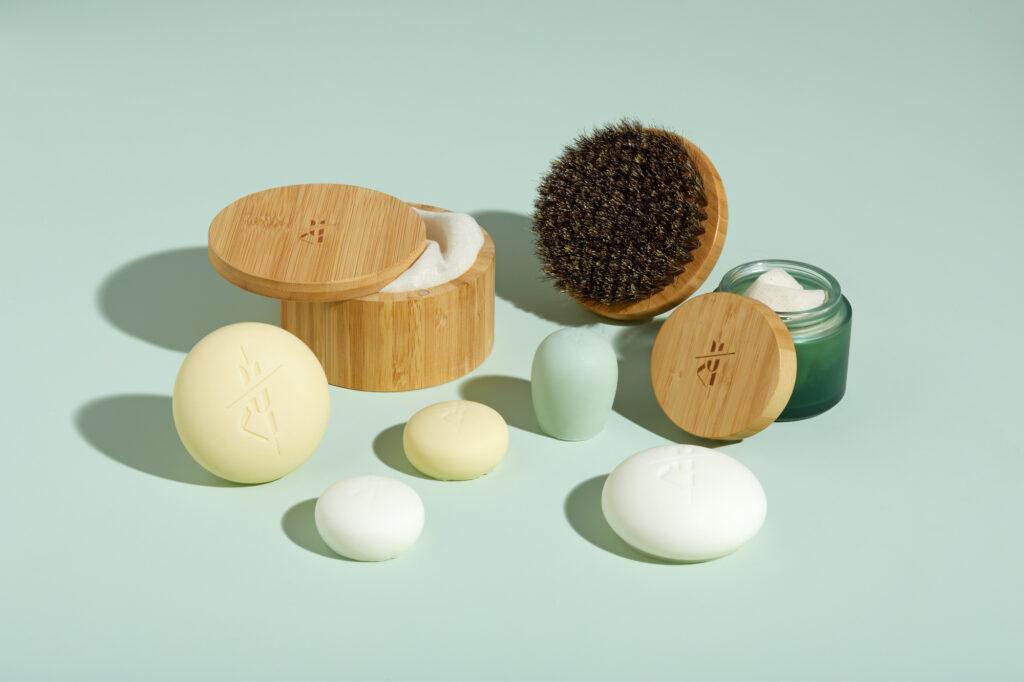
Still, brands with highly unique products frequently discover third-party manufacturing options aren’t quite up to snuff. Such was the case for pastry chef turned beauty entrepreneur Kate McLeod, founder of an eponymous range of premium waterless face and body cleansing and moisturizing products she calls “stones” containing food-grade oils and butters. Like countless beauty brand owners, McLeod started her company on her kitchen stove. As a beauty industry neophyte, she didn’t know about the world of contract manufacturing at the outset of her entrepreneurial path.
When she learned about contract manufacturing, McLeod says it was “really attractive. I won’t lie, when you have no employees and you’re making your product and everything, and you hear about somewhere you can outsource that, it’s like, ‘Wow.’” McLeod visited a facility, but was underwhelmed by what she saw, particularly the array of pre-made formulas. She recounts, “I didn’t get it. Once I explained to them the bare bones of how I made the stones it became very apparent very quickly they couldn’t do it.”
McLeod launched her company in a Brooklyn apartment complex that didn’t even have a freight elevator—a setup up that would be impossible given the size of her business now. She was hunting for a bigger Brooklyn location as the pandemic hit. McLeod switched up her search, coincidentally, to the Hudson Valley, though not near Stonegate. She settled on a mixed-use industrial space 10 minutes from her upstate house. “It literally was an old chocolate factory,” says McLeod. “We are the first people in about a full century, since the 1920s, to bring cocoa butter back to the chocolate factory, and we make everything in-house.”
To create her “stones” with the production and ingredients she wanted, McLeod had to get proper tempering equipment, but her bootstrapped company couldn’t afford it. So, for its first three years, it tempered its products by hand. Tempering is the process of melting down substances like chocolate before bringing them back to a cooler temperature and a solid consistency. “We made it through a QVC sale tempering by hand, which is insane,” shares McLeod. “Last year, we finally were able to invest in a full chocolate line [of tempering equipment]. Now, when you walk into our workshop, it literally looks like a chocolate kitchen. I don’t make my own essential oils. I’m not really a lab. We are a kitchen.”
McLeod didn’t divulge the cost of the tempering equipment, but a professional chocolate tempering machine can range in price from $5,000 to $30,000 or above. By waiting until her company could shoulder the cost of the equipment, McLeod says, “We didn’t scale too quickly. We have taken our time, gotten to know our customers and our product, and thankfully have been able to scale right alongside the increased demand.”
McLeod’s intimate knowledge of her company’s production enables her to accurately price its products. “I’ve gotten so much knowledge [that I would have never had] by going to a lab and just being like, ‘I’ve read about this oil. Put that in there,’” she says. “I also think with contract manufacturers, a lot will just back into prices based on the margins that they’re charging. It’s been really invaluable in a bootstrapped business…We know our costs down to the penny.”
Zunino says bringing production in-house can be a boost to a business through benefits like enhanced product quality, lower costs of goods, increased margins and improved planning, but warns, “Owning your own facility still does not prevent the ongoing supply chain issues such as raw material and packaging delays and, of course, the high freight costs that the industry has been experiencing.”
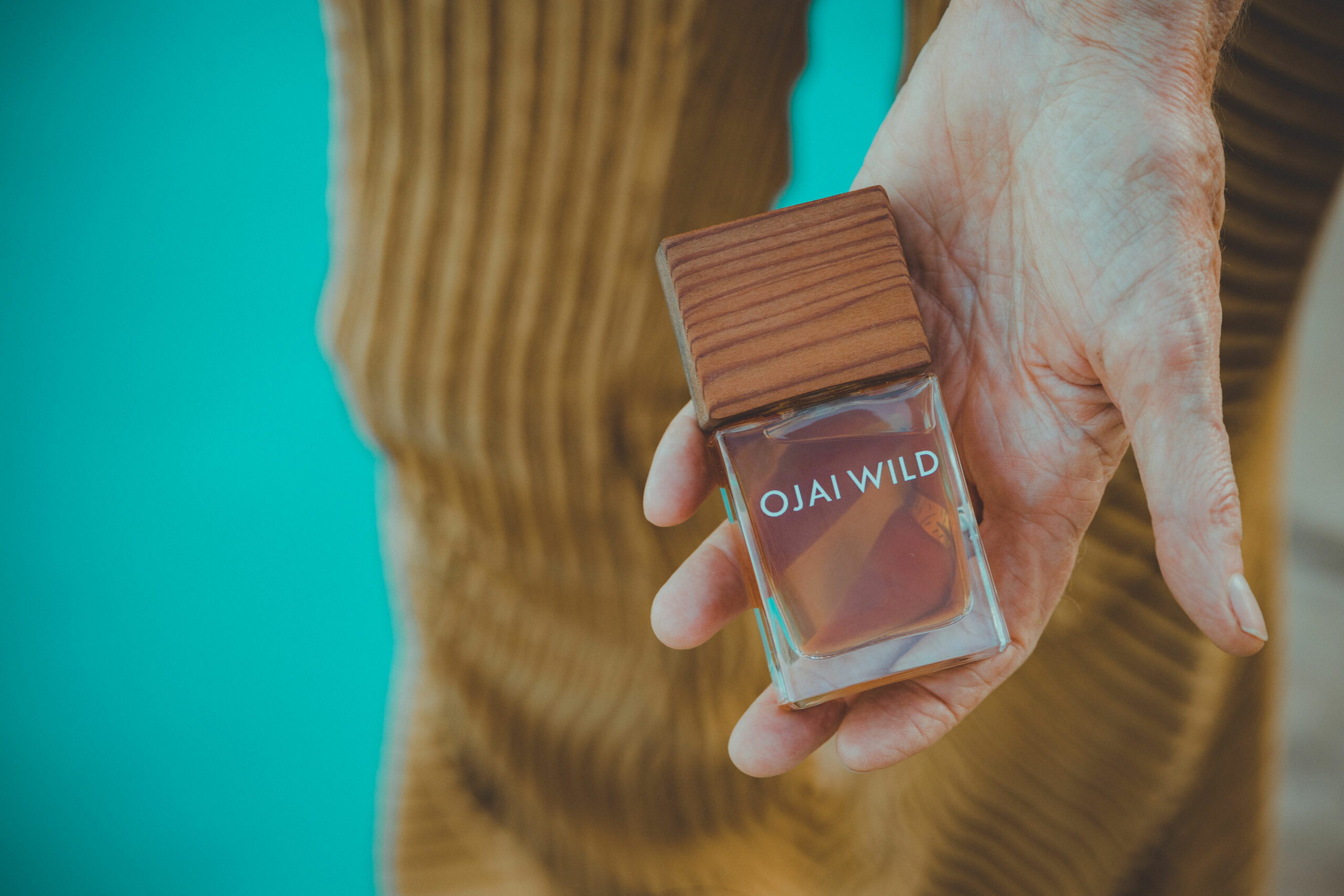
Brands like Cultivate and Ojai Wild that source ingredients from their own farms as well as do in-house manufacturing can sidestep most supply chain woes. “It’s definitely something that’s a differentiator,” says Janna Sheehan, founder of fragrance brand Ojai Wild. “Other brands that I’ve spoken to have said that [they] are really struggling, and we’re able to bypass those delays. And it’s not only delays, it’s also things being priced at a premium. We have everything done inside our own doors.”
Ojai Wild is at the helm of its entire supply chain. It has an 11-acre farm that yields almost all of its main ingredients, including white sage, rose, marshmallow root and patchouli, and a manufacturing facility with a custom-built distillery featuring patented hydro-distillation equipment. It facilitates fulfillment out of the facility. Sheehan invested $80,000 to $100,000 on the distillery.
“That’s a relatively low figure for doing something like that,” she says. “Part of the reason it’s less expensive is because I don’t need a lot of consulting…Because I have the skill set of being a distiller, I understand how all of that works.” She notes Ojai may have to pursue a larger space later this year.
Still, $100,000 is a significant capital investment that’s out of reach for a lot of indie brands. Ojai escalated its product development capabilities as its business expanded. The brand achieves savings from vertical integration, but Sheehan maintains the biggest advantage of it is ensuring product quality. “We harvest everything at the peak of its potency,” she says. “Everything is dried ethically. It’s not sitting on a warehouse floor. Nothing is getting moldy, nothing is getting dusty, nothing is losing its potency. That’s pretty incredible.”
Do consumers and retailers care about in-house production? Rowe spotlighted Cultivate’s lab construction on its Instagram account and says the brand’s community loved the behind-the-scenes glance. Sheehan says Ojai’s customers are fascinated by the brand touching every element of its product from soil to stores.
Although vertical integration can be a compelling selling point, Zunino asserts it’s merely a nice-to-have. “This is not a high priority for retailers and consumers,” she says. “All they want is for the brand to deliver when they say they will and not be out-of-stock on their favorite must-have, bestselling product.”
While the US generally more lax than other countries when it comes to laws governing the production of beauty and personal care products, there are still legal considerations around manufacturing practices to take into account when bringing production in-house. Cosmetic chemist and KKTConsultants founder Krupa Koestline says that all states have different requirements when it comes to manufacturing licenses. Most require licenses which make sure your cosmetics are produced in a safe and compliant manner,” she instructs. “However, some states do not require these and so cosmetics can be made in the garage, kitchen or wherever.”
The players
5 mentionedBetter Being

AS Beauty
Formulate
Topicals
Too Faced