The Beautification Of Bug Repellent
Brands such as Mimikai, Buzzie, Sckrfree and Swarm are making it buzzy with the aim of unseating dominant conglomerate-owned legacy brands like S. C. Johnson’s Off!, Spectrum Brands’ Cutter and Avon’s Skin So Soft and pulling customers away from crunchier players like Murphy’s Naturals, Sawyer and Ranger Ready. They’re entering an insect repellent arena that market report publisher Grand View Research predicts will accelerate at a compound annual growth rate of 7% to go from $4.81 billion in 2022 sales to surpass $8.2 billion in sales by 2030.
Andrea Popova, consumer investor and CEO of brand discovery platform CPGD, is bullish on brands energizing the category. “It has really strong growth rates and strong external stimulus for continued growth,” she says. “Not only is there increasing demand, the category is also ripe for disruption both in terms of formulation and packaging…I’m excited to see brands play with smells, active ingredients, efficacy, toxicity and application.”
The bug repellent category makeover follows the modernization of other consumer packaged goods categories like OTC with upstart brands often injecting better-for-you formulas and fresh branding into the mix.
“We’ve seen this happen in sunscreen, household cleaning, natural deodorant, men’s grooming and sexual wellness,” says Rich Gersten, co-founder and managing partner at early-stage beauty and wellness venture capital firm True Beauty Ventures. “This tends to occur more in traditional food, drug and mass channels, but we are also seeing some of this in higher end channels. I would love to see some disruption and innovation brought to the bug repellent category, and we are starting to see some investment opportunities in this area as well, so it is likely coming.”
Drawing a parallel between bug repellents and sunscreens, Cristina Nuñez, co-founder and general partner at TBV, adds that she’s detecting a groundswell in “both the clean movement and a science-led approach to formulations in the bug spray market. Layer on top some chic branding or fun messaging/positioning, and we could start to see some real growth opportunities for indies in this space.”
The parallels between sunscreen and bug repellent don’t end there. The two categories have traditionally been seasonal purchases. Sckrfree founder Veronica Armstrong notes that while, yes, repellent is usually a seasonal buy, she expects more than just a summer surge of sales for her brand. “My target customer loves to travel, so I expect holiday and spring break sales peaks,” she says.
There are other factors increasing demand for personal pest control products. Thanks to global warming, ticks and mosquitos are expanding their habitat range and periods of activity. As a result, people may increasingly be fending them off throughout the year and in a broader geography, possibly reducing insect repellents’ seasonality.
The fastest-growing vector-borne disease in the United States is tick-spread Lyme disease. West Nile, Malaria and dengue fever are spread by mosquitos. The blood-sucking small flies are considered the world’s deadliest animal, killing around 1 million people a year globally. Michelle Arnau, co-founder of forthcoming insect repellent brand Mimikai, says, “This category is going to continue to be needed and a lot of consumer interest keeps coming because of that…which is why a lot of retailers are super excited.”
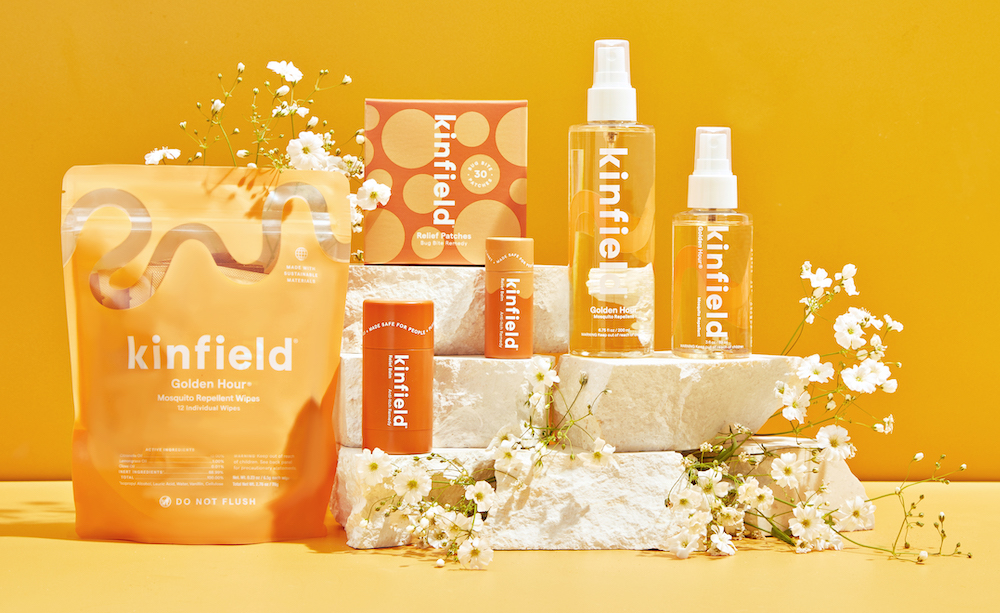
Kinfield has been shaking up retail in the insect repellent category for a few years now. Golden Hour Repellent Spray and Golden Hour Repellent Wipes are bestsellers for the skincare brand founded by Nichole Powell in 2019. Along with the repellents, Kinfield also offers the bug bite relief products Relief Patches and Relief Balm. The brand is stocked in about 700 doors in the U.S., including Grove Collaborative, Anthropologie, Erewhon, Orvis, Backcountry, Harmons and Credo, where Kinfield had the first and currently sells the only available insect repellent.
Credo has multiplied the size options of Kinfield’s repellents and picked up companion products to build on their velocity. Powell says, “Credo’s buyers understood that their customers were looking for clean, sustainable products in all areas of their life and recognized the opportunity to expand beyond beauty into personal and outdoor care.”

The beautification of bug repellent isn’t completely new. Before it shuttered last year, Brooklyn beauty destination Shen curated bug repellents from niche brands such as London perfumery Roullier White’s cult clean mosquito repellent spray Mrs. White’s Unstung Hero. Priced at $39 for an 8.5-oz. bottle, today it’s sold by select beauty and lifestyle stores like Sensoree in Thomasville, Ga., where it’s been on shelf for four years and is very popular. Although Sensoree has a number of bug repellents, store owner Erin Toole says Mrs. White’s Unstung Hero “sells the best, so we make sure to keep it in stock.”
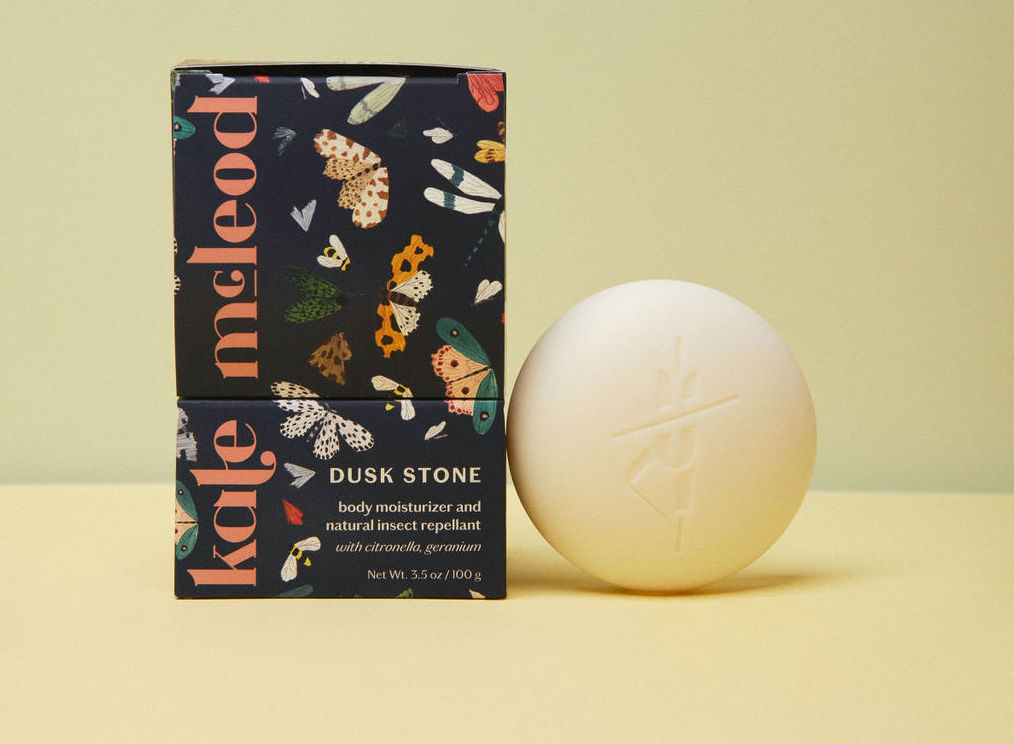
Sephora has also been bit by the bug repellent bug. In April, Kate McLeod’s Dusk Stone, a cocoa butter-based and citronella essential oil-infused product released in 2022 as an alternative to bug sprays with synthetic ingredients, landed online and in stores at Sephora, and it’s consistently been a top seller on the beauty specialty retailer’s website. Similar to Kinfield, Kate McLeod sells the first and only bug repellent at Sephora. Beyond Sephora, Dusk Stone is sold at Goop and Terrain, the Urbn-owned upscale home and lifestyle shop that carries Kinfield, too.
Product safety concerns are one of the major drivers of new brands flying into the bug repellent category. While N-diethyl-meta-toluamide, commonly known as DEET, has long been the gold standard for insect repellent ingredients, concerns about its safety, especially when used on children, pregnant people and pets, have instigated consumer searches for non-synthetic active ingredients. However, meaningful innovation has been slow due to regulatory hurdles.
The Environmental Protection Agency regulates insect repellents in the U.S. Insect repellents containing ingredients like DEET, picaridin and catnip oil are classified as pesticides, and under the Federal Insecticide, Fungicide, and Rodenticide Act, they must register with the government. The registration process is time-consuming and expensive.
When Ali Lee began working on Swarm, a bug repellent brand in the pre-launch phase, she planned to use picardin in a lotion and register it with the EPA, but decided to pivot because formulating the lotion would’ve cost $150,000. A picardin product remains the objective, but it might have to come after Swarm secures funding.
The brands Swarm, Kinfield, Sckrfree, Life Elements and Buzzie have released products deemed minimum-risk products featuring active ingredients such as citronella, eucalyptus and peppermint essential oils from an ingredient list pre-approved by the EPA. Not as effective as ingredients like DEET and picaridin, the pre-approved ingredients are appealing to consumers by avoiding synthetic ingredients. Minimum-risk products still encounter regulatory barriers. They must be registered in the states they are sold in.
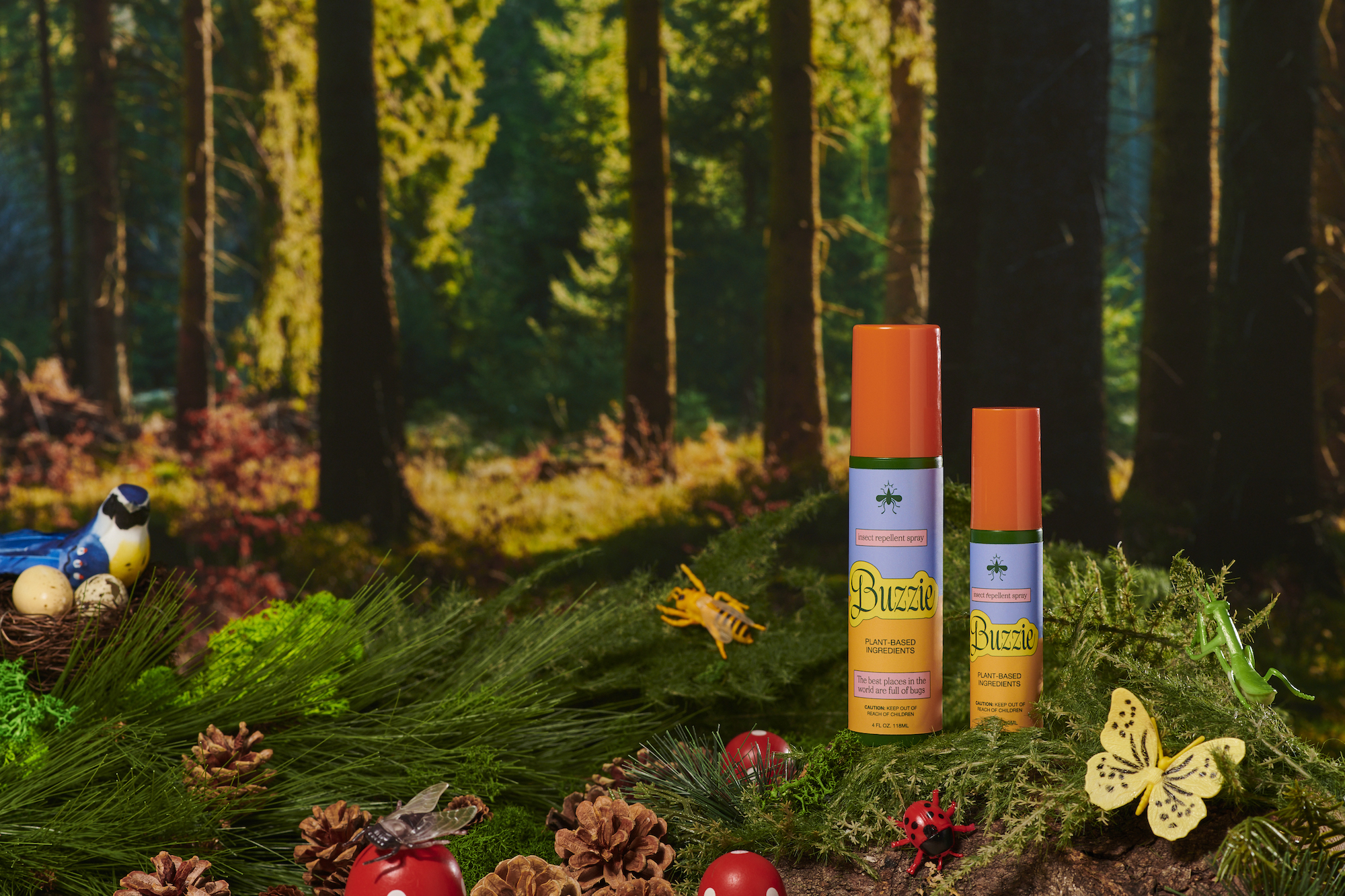
The labor-intensive process has caused Buzzie’s Insect Repellent Spray with geraniol, rosemary, cedarwood, lemongrass, geranium and peppermint oils to not be available in 16 states for its debut slated for next month. As a lawyer, the brand’s founder Ali Guthy, co-founder of Air Ventures, a VC firm backed by the co-founders of Guthy-Renker, is better equipped than most to navigate the regulatory landscape, but even she admits it’s “complicated.” She says the process is a key reason why Buzzie has taken two years from inspiration to pre-launch.
Buzzie has teamed up with creative agency Day Job to develop punchy packaging in order to stand out on retail shelves among what it believes is the stale branding of category incumbents. The agency was briefed to design “the Wes Anderson of bug sprays.” On top of insect repellent, Buzzie will sell T-shirts and baseball hats that embody the whimsical aesthetic.
Another brand that’s convinced the time is right to strike in the bug repellent category is Vanilla Mozi, a 15-year-old Australian brand introducing its DEET-free Bite-Proof Body Cream to the American market this summer.
Completely new and novel insect repellent ingredients face infinitely greater time-consuming and capital-intensive regulatory obstacles. Scheduled to launch later this year, Mimikai is doing just that. Its registered active ingredient, undecanone, is the first new active ingredient in the insect repellent category to be approved by the EPA in 25 years. According to Arnau, who was at Method for over a decade before founding clean dog care brand Rowan, it took Mimikai five years and cost over $1 million to register undecanone. The brand recently closed a seed funding round.
“This category has been wildly underrepresented because the chemistry just hasn’t been there,” says Arnau. “You’ve gotten a lot of really good innovation in the citronella and the eucalyptus oils…but in terms of getting and displacing the incumbents of DEET, picaridin, there just hasn’t been the chemistry to do it. Part of that is because it’s been so hard for smaller brands to innovate in this space because of the regulatory environment.”
Undecanone is a naturally occurring compound in wild tomato plants and tropical fruit skins like banana peel. It’s used in the food and fragrance industries as a natural way to enhance the flavor of orange. Arnau says, “We’re already actually eating undecanone and using undecanone in our world, but not in this [insect repellent] capacity.”
Figuring out the winning recipe for retail, notably determining proper pricing and placement, will be critical to emerging insect repellent brands’ trajectory. At stores, shoppers tend to hunt for insect repellents where they peruse sunscreens, but traditionally in a big-box chain like Target the products end up near Roundup. Arnau doesn’t think that placement makes sense and commends select mass-market retailers that are experimenting with putting insect repellents closer to personal care. Natural grocers that don’t usually sell products with DEET already merchandise sunscreen and bug spray together. “They’re often in a basket together organically,” notes Arnau.
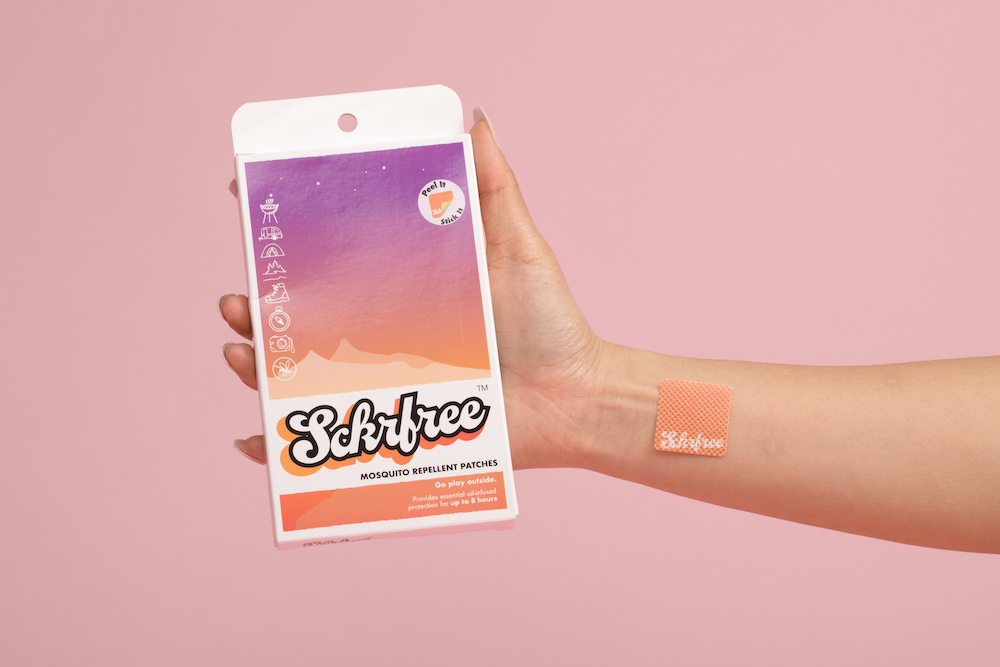
Brands typically set their insect repellents’ retail prices at under $20, with Kate McLeod’s Dusk Stone being an outlier at $38. A 36-ct. box of Sckrfree’s Mosquito Repellent Patches are priced at $15. Swarm anticipates its initial prices to range from $12 to $19, although the brand’s prices could decrease as it scales.
By comparison, almost all of Off!’s products are priced below $10. The bug repellent category has been characterized by price sensitivity. Nuñez says, “The challenge will be how much of a premium can you get consumers to pay for this category, especially since FDM is the primary channel, and whether they can appeal to a broader audience. And, of course, the biggest question is ultimately how effective these cleaner ingredients will be in staving off these pesky pests.”
Arnau is well aware of the challenge. As a two-time cancer survivor, her goal is for Mimikai to provide safer products for a small premium that’s palatable to a wide swath of consumers. She says, “I don’t want our brand to just be a clean ingredient brand that can only sit in certain shelves in the country and be $25. That’s not how we displace DEET.”
The players
5 mentionedUnder Your Skin

Too Faced
Formulate
Grove Collaborative
Better Being