Alternatives To Virgin Plastic Are Far From Perfect. Here's What You Need To Know About Them.
“Plastic is an incredibly necessary part of our way of living. It plays a crucial role in our society,” says Brandon Frank, a sustainable packaging expert and president of packaging distributor Pacific Packaging Components (PPC). “It also doesn’t take away from the fact that, when this incredibly durable polymer breaks down, it’s harmful to the environment, it is harmful to ocean life, it does stay in our landfills for hundreds of thousands of years.”
The solutions a lot of beauty brands are turning to is to attempt to recycle and reuse existing plastic. Retailers are playing a big role in driving packaging changes. Credo eliminated single-use plastic from its assortment in June. Its next sustainability step requires brands using petroleum-derived packaging to rely on options with at least 50% recycled content by 2024.
Under its Conscious Beauty program, Ulta Beauty pledged to move toward 50% of all the packaging it sells to be recycled, recyclable, refillable or made from bio-sourced materials by 2025. In order to obtain Sephora’s Clean + Planet Positive seal, among other things, 50% of the packaging of a brand’s core assortment has to incorporate a minimum of 30% post-consumer recycled content (PCR).
Every substitute for virgin plastic packaging has pros and cons. For example, PCR can only be remanufactured five to seven times, and the environmental promises of bio-plastic resins are often oversold. “Let’s embrace the complexity,” says Mia Davis, VP of sustainability and impact at Credo. “There’s a lot of space here for improvement, and I’m really hoping that when we can get out of our silos and get together at the same table to make them.” We dive into the complexity by exploring popular alternatives to conventional plastic to help beauty brands gather at the same more sustainable table.
PCR PACKAGING
When discussing alternative plastic packaging, PCR is an acronym frequently batted around. It’s also one of the most-recommended options. “In my opinion, PCR is the most sustainable option if you have to use plastics,” says Frank, elaborating, “The reason for that is that one of the biggest issues with plastic waste, especially here in the U.S. and really around the world, is that it is waste. It goes to landfills and ends up in our waterways and our oceans. So, in order to prevent that, we need to capture more of it, which means there needs to be a higher demand for recycled content. The more the PCR and the more packaging we buy that has recycled content in it, the more demand is going to go up, which means the more plastic we have to capture and actually recycle.”
The term “PCR” is used as a catchall, but not all PCR is created equal. Credo’s sustainable packaging requirements involve putting resin ID codes on beauty products containing plastic by 2024. “Resin codes are common on water bottles or food packaging, but not required by law for beauty products,” explains Davis. By placing the codes on the packaging, the idea is that consumers will be informed about the plastic that’s used and how to recycle it. “This is sustainability 101,” says Davis. “How can we even talk about where the things should go at the end of life if we don’t know what it’s made out of this? The lack of clarity is a nonstarter.”
Resin codes include labels numbered one through seven. Credo won’t allow packaging that falls into the three (PVC, polyvinyl chloride) or six (PS, polystyrene) categories. Types of plastics in the seven bucket, including acrylic, nylon, polycarbonate and some bio-plastics, are banned by the retailer as well due to their inability to be recycled. Davis says, “Not every customer or even brand should necessarily have to be an expert in what these codes mean at the polymer level, but we do have to have these codes so that we can better communicate on the market side and with the municipal recovery facilities what can be taken in which region.”
Polyethylene terephthalate (PET) is the most widespread and recycled PCR. Water bottles are generally constructed from it. In recycling streams, Frank says, “There’s a really easy feedstock there because you can capture it.” High-density polyethylene (HDPE), a material regularly in milk jugs, is the second-most recycled. Polypropylene (PP) ranks in a distant third. Frank estimates a mere 3% to 5% of PP is collected and recycled in the United States, though he predicts the percentage will rise in the near future. “Right now, there’s a demand for recycled polypropylene, but there’s very little supply of it,” he says. “So, the market’s responding to it, and there’s going to be additional capturing facilities for it in the future to be able to supply the market with that recycled content.”
Haircare brand Rhyme & Reason claims to be one of the first beauty companies to identify a source for recycled PP. Its flip-top caps are made from the material, a common use for PP because of its viscoelastic properties, according to Alana Bell, founder of packaging company CaliPak. Its bottles are made out of HDPE. Rhyme & Reason technical manager Colin O’Kell says, “We selected the bottle material due to its barrier properties, appearance and its ability to be molded into our unique Rhyme & Reason shape. Our main other option would have been recycled PET, but it would not have been possible to mold our bottle shape in this material.” He admits it’s difficult to get a quality supply of recycled PP material because of low recycling rates. That accounts for why it’s typically used in small packaging components.
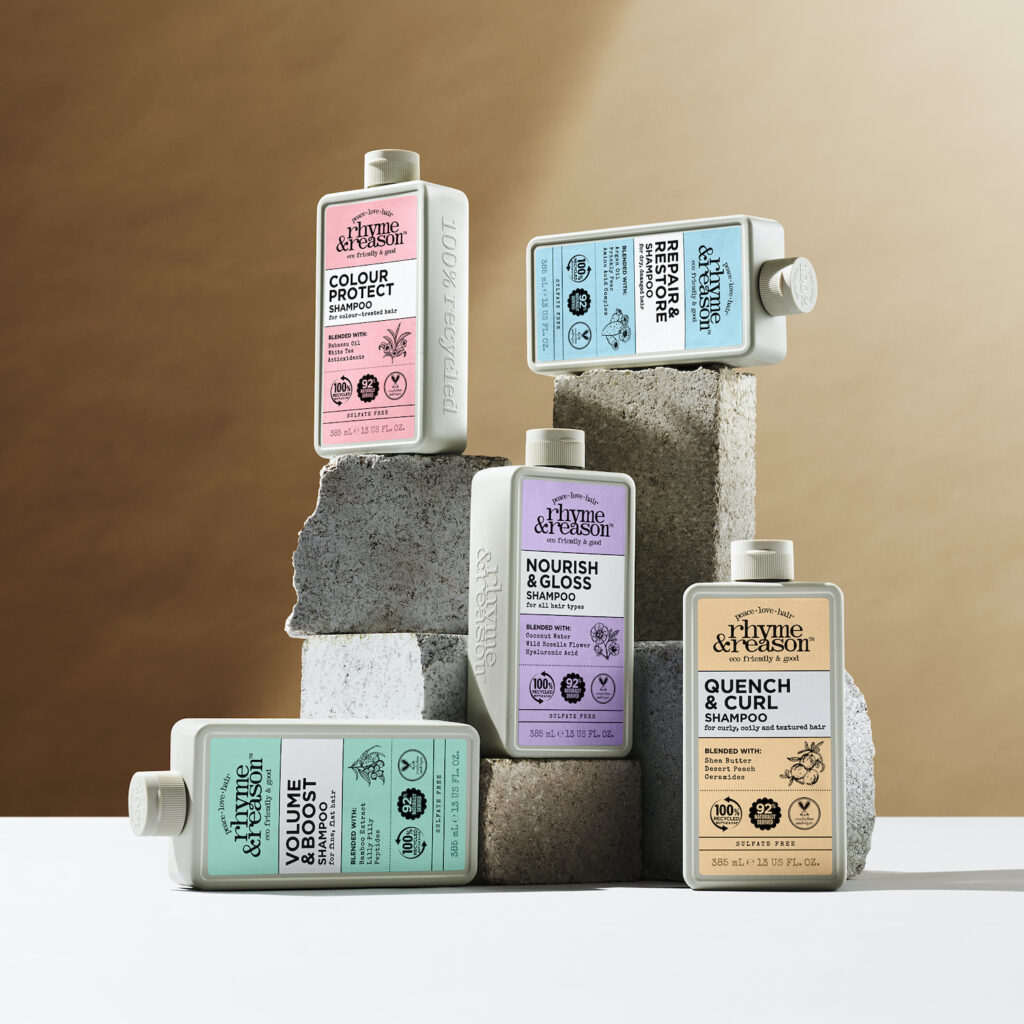
PET and HDPE have challenges, particularly when it comes to aesthetics. Since PCR is essentially dirty resin, it can be hard to achieve clear colorations for packaging components. “There’s going to be a gray or brownish tint to all recycled plastics,” says Frank. Brands mitigate tints by lowering percentages of PCR. A bottle with 50% PCR and 50% virgin plastic, for example, is going to look clearer than one that’s 100% PCR.
The packaging company Berry Global developed a 100% PCR bottle for the haircare brand Ingreendients. The laminate tubes it produces go up to 60% PCR, not counting the closure. Marketing manager Vali Braselton is noticing a growing number of brands embracing the murkiness of PCR packaging and even calling attention to it. She relays, “Some brands will say, ‘Well, yes, this may not look as pretty as you think it should, but that’s because we’re using PCR and we really care about the environment, so I hope you’re OK with this package that may look a little grayish.”
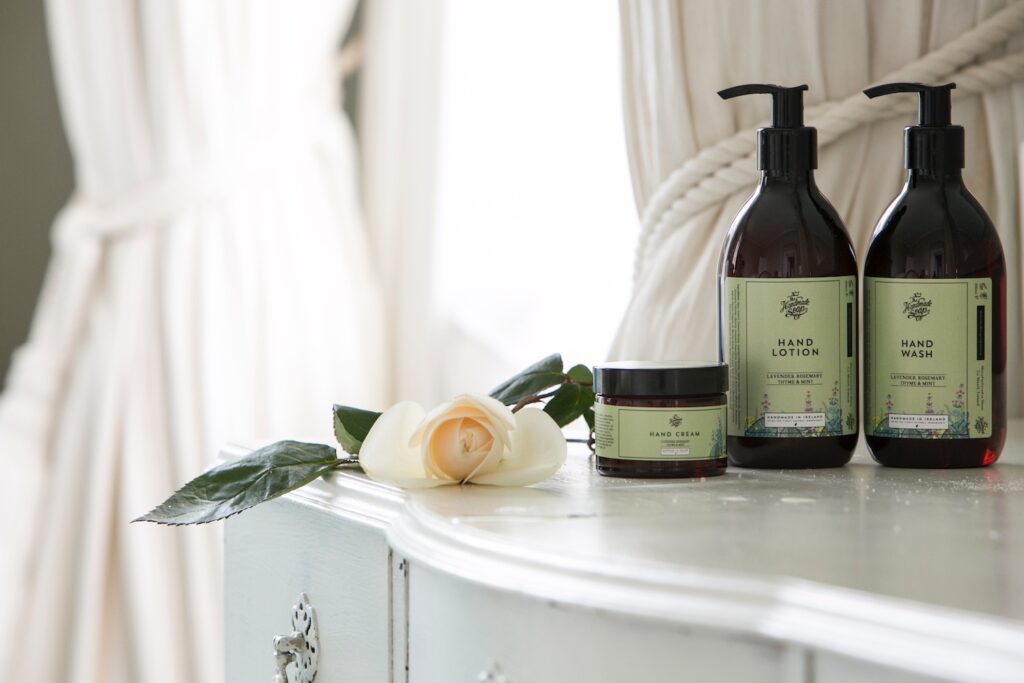
The Handmade Soap Company changed the color of the packaging altogether. When the brand made the switch over to PCR about five years ago, founder Donagh Quigley recalls it was almost impossible to obtain a clear bottle. “There are two reasons why we use amber-brown plastic,” he says. “The fact that we fragrance with essential oils, the amber helps block out the UV rays, but it was also because we could get a much cleaner look using the recycled plastic.”
The tint stumbling block is getting addressed. Brands increasingly won’t have to figure out workarounds as much. Frank says. “As the demand for high-quality PCR increases, the supply chain is getting better at sorting and processing to be able to make cleaner PCR.” Bell says she’s discovered that suppliers in Asia produce the clearest versions.
Outside of appearance, PCR can have performance issues. “What I’m noticing is that, mechanically speaking, even with the chemical PCR, there is a degradation in the qualities of the plastic. It’s difficult to maintain the measurements. Something happens in this process where maybe torque doesn’t hold as much or a cap leaks a little bit because something’s off inside,” says Bell. To stave off the issues, brands tend to use 50% PCR. Bell says, “Especially when you’re talking about functioning parts, like hinges and threads and things like that…if someone’s saying you have to have 50%, then you’ve got to account for all the parts in the packaging, right? So, it makes it challenging.”
Potential contaminants can be problem, says Frank. Similar to the tinting problem, a lower PCR percentage aids this matter. A higher PCR percentage for outer packaging and a lower one for the inner barrier of a tube that’s touching the actual formula is a go-to remedy, too. Then, there’s the cost. When The Handmade Soap Company first started using PCR, Quigley shares it carried a 30% premium. Now, he says, “Over one whole year, the cost of using PCR plastic added up to be a six-digit number investment for us rather than using virgin plastic, which could have saved us much more.” Jonina and Bradley Skaggs, co-founders of branding agency Skaggs Creative, approximate PCR can priced anywhere from 5% to 15% above virgin plastic depending on the item, amount of PCR and manufacturer.
Global supply shortages have pushed resin prices up lately. Frank says, “The market’s been so volatile and the supply chain has been so disrupted because of COVID that it’s really difficult to really determine which one is going to be the least expensive and most expensive. Because the demand for recycled PET is really high, there is more supply there, too. So, I think it just kind of depends. Hopefully, when it normalizes, I actually think we’ll get to a point where PCR will be less expensive than virgin plastic.”
BIO-PLASTIC
According to Emergen Research, the bio-plastics industry is set to accelerate at an compound annual growth rate of nearly 15% to reach $25 billion by 2027. Like there are different kinds of PCR, there are different kinds of bio-plastics. Bio-plastics use agricultural products like cornstarch or sugarcane instead of petroleum. Their chemical structure is said to be similar to PET. The full environmental picture has to consider the sustainability of the agricultural production of the source material for bio-plastics.
Discussing the benefits of bio-plastics, Frank says, “It could be more sustainable because, obviously, oil is going to run out at some point. So, we can use biomaterials that we can actually replant or reharvest to be able to create a plastic.” He adds, “At the end of the day, it’s still plastic, so it can still be recycled. It can still be processed with PET if it comes from sugarcane, that doesn’t matter at all.” There have been claims that bio-plastics are biodegradable, but that’s hard to prove.
Bio-plastic provider Verde Bioresins has created a plant-based proprietary alternative bio-based resin that Brian Gordon, founder and CEO, asserts “is formulated to be an attractive food source for microorganisms at the end of its lifecycle, allowing for complete and natural mineralization.” Gordon points out it functions akin to conventional PE in terms of durability and strength, allowing it to house a range of formulas. Other bio-based materials can’t house a range of formulas.
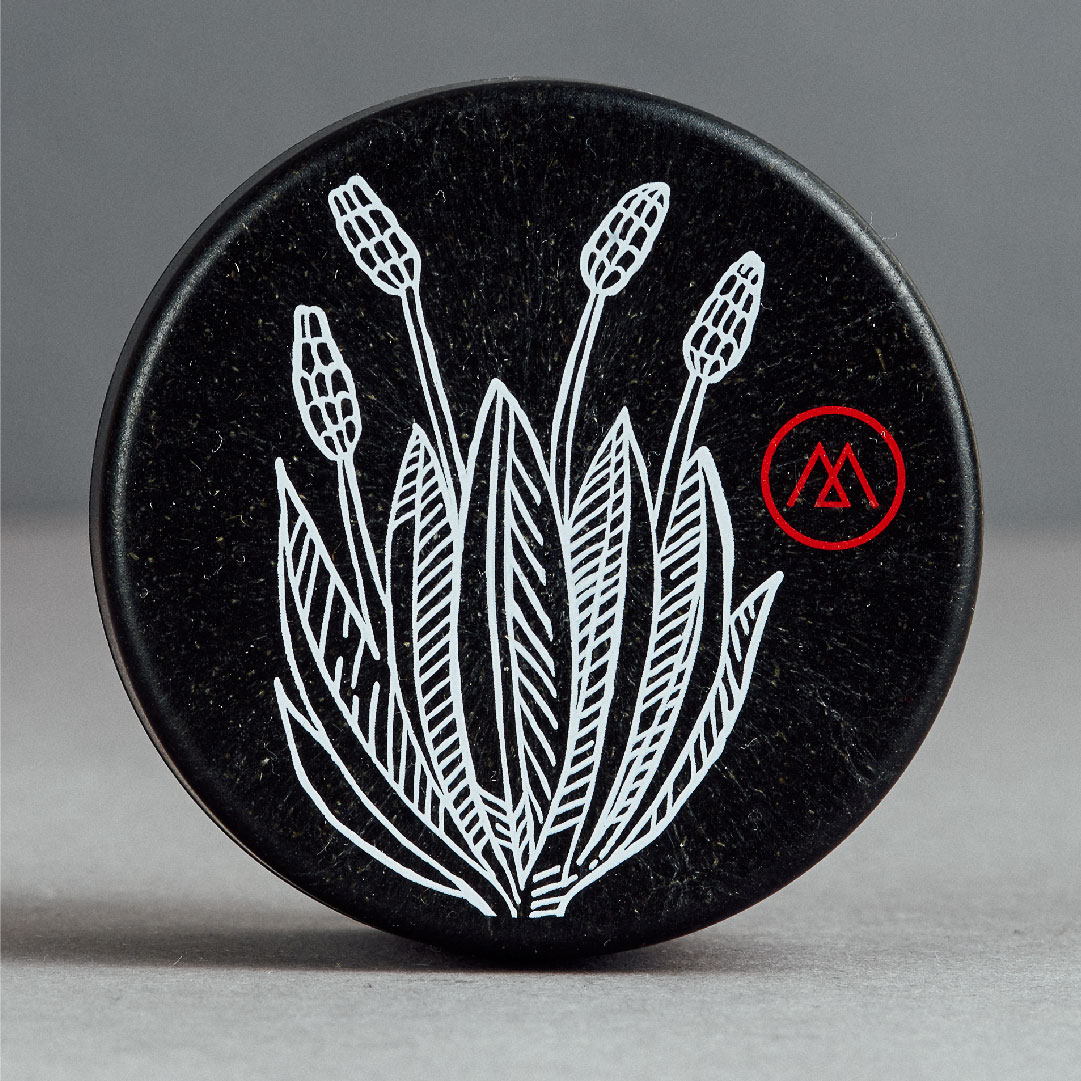
Developed by biochemists Suvi Haimi and Laura Tirkkonen-Rajasalo, the wood- and plant-based bio-plastic Sulapac is designed to biodegrade without leaving microplastics behind. Haimi and Tirkkonen-Rajasalo teamed up with Quadpack to create packaging for tattoo aftercare brand Manik Skincare and the cap for Chanel’s Les Eaux De Chanel fragrance. Sulapac is supposed to be compatible with dry, wax, oil and water-based formulas. Other preferred packaging partners for Sulapac include Nissha, HK Cosmetics Packaging and Toly.
The bio-plastics industry is still in its infancy, and greenwashing has been a concern. Frank and Davis warn that some bio-plastic packaging blends plant-based plastic and petrochemicals, which engenders difficulties for the recycling stream and is not compostable. Frank says, “I know that those solutions are out there. I think they sound good, but, given the analysis and the entire supply chain of recycled material, I don’t think it’s as good as using PCR.”
Bio-plastics are pricier than conventional plastic. They constitute a young market with relatively low demand. Gordon says the price difference can be anywhere from 30 cents to $2 per pound. “Low oil prices make it challenging for bio-plastics to be competitive in price, making conventional plastics more cost-efficient,” he says. “However, prices have been decreasing for more than a decade and, as more consumers and brands begin to switch to bioplastics, production capacities will rise and supply chain processes will be more streamlined, so we will begin to see an even greater decrease in prices. This increase in demand will no doubt push oil prices to increase, making bio-plastics more cost-competitive in future.”
OCEAN-BOUND PLASTIC
An additional plastic alternative still in its early days is ocean-bound plastic. Frank describes it as plastic that’s collected before reaching the ocean primarily from coastal communities where there isn’t recycling or collection services. He says, “Companies are going around, and they’re collecting these PET water bottles or these jugs or different materials and then they’re processing them and they’re calling it ocean-bound plastic.”
Ocean-bound plastic isn’t collected from the ocean. It’s usually collected about 50 kilometers from coastlines. “We should not be using PCR or recycled material from oceans for CPG packaging,” says Frank. “Basically, when plastic ends up in the ocean, it starts to break down relatively quickly, so the molecular integrity of that plastic is breaking down.” He notes companies “were greenwashing the solution or convincing their consumers that they were actually pulling plastic out of the ocean when they really weren’t.”
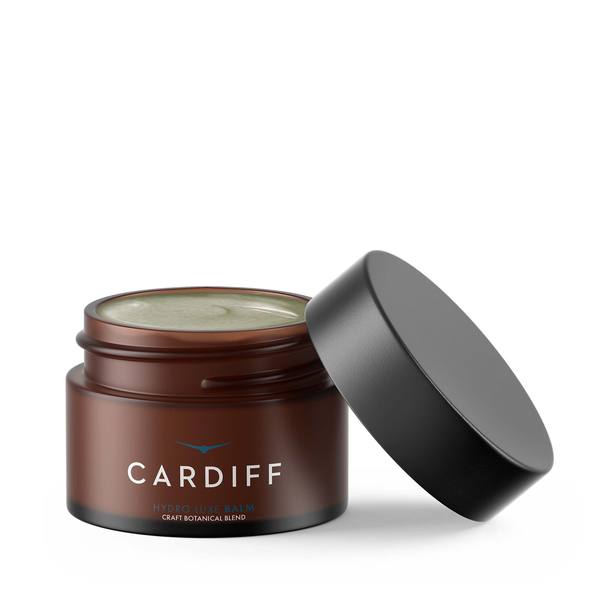
Oceanworks, which promotes itself as specializing in “hard to access ocean and averted plastic,” has partnered with the brands CocoFloss and Cardiff to create toothbrushes and child-proof lids. “Finding more sustainable product packaging options was a must. However, as a small brand, cost and quantity were limiting factors for us,” says Jessie Casner, VP of marketing at Cardiff. “So, instead of throwing in the towel entirely on sustainability, we chose to control what we could, and source and choose more sustainable options when it was available.” The brand’s jars are made out of glass.
Casner didn’t disclose details on the price of ocean-bound versus conventional plastic, but says, “Unless you go through a third party and buy off-the-shelf goods, the cost of repurposing ocean plastics with any degree of customization can be cost-prohibitive. As a new brand with limited capital, that was certainly something we had to be cognizant of.” The brand Captain Blankenship has tapped Envision, another popular ocean-bound plastic supplier, for ocean-bound plastic in its packaging.
Bell doesn’t believe the performance and quality of ocean-bound plastic are where they should be. It’s an iffy option for exterior beauty packaging and parts meant to tackle leaks. “They just have a higher hill to climb because they’re taking all this random plastic and, then, they’re sorting it into piles and, then, they’re hoping they get all the right stuff in the right pile,” she says. “And, then, by the time it comes out, it’s not going to be as consistent and as good of quality if it’s done in a huge industrial facility…I think they have a little ways to go.”
The players
5 mentionedFormulate

Better Being
AS Beauty
Ulta Beauty
Credo