As Yuka Gains Millions Of Users, Beauty Industry Insiders Question The Veracity Of Its Product Ratings
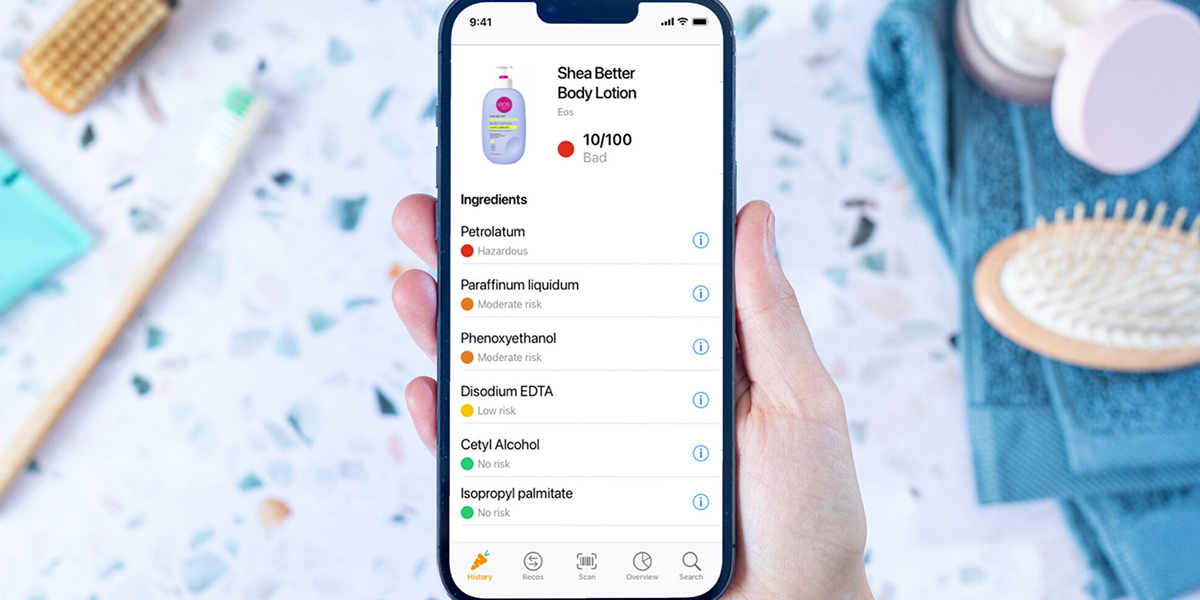
Launched in France in 2017 before traveling to the U.S. three years later, Yuka users scan cosmetics labels to reveal a product score from zero to 100. Products deemed excellent score 75 to 100, products deemed good score 50 to 75, and products deemed poor score below 50. Yuka employs colored dots to indicate the risk of a product: risk-free gets a green dot, low risk a yellow dot, moderate risk an orange dot and hazardous risk a red dot.
The scores are calculated based on Yuka’s evaluation of the risks of the ingredients in the products. For example, 10 points are given to potential carcinogens and seven points for allergens. Yuka has a database of 12,600 cosmetic ingredients it assesses for potential irritants, allergens, carcinogens, pollutants and endocrine disruptors, and it examines determinations from organizations such as the European Chemical Agency and U.S. Environmental Protection Agency, scientific research and international scientific databases.
Started by technology, digital, legal, financial and communications professionals Benoît Martin, François Martin and Julie Chapon, Yuka is in the top five health and fitness apps in the U.S. It covers 2 million beauty products. Better-rated recommendations are provided to users for products that score poorly. In November last year, Yuka introduced a feature allowing users to address the brands behind high-risk products by emailing or posting about them on social media platform X.
The app emphasizes it’s 100% independent and doesn’t take money from brands. Chapon told The Wall Street Journal it generates roughly $7 million in revenues, primarily from its premium users who pay $10 to $50 a year for benefits like customizable alerts for dietary preferences and restrictions and product search capabilities without scanning.
Yuka has increasingly concerned brands across beauty and food due to its growth to nearly 70 million users—it’s especially popular among gen Zers—and high-profile endorser in U.S. Secretary of Health and Human Services Robert F. Kennedy Jr., who said in late April that he and his wife use it.
But apps for scanning products aren’t new and have drawn the ire of brands for years. Similar to Yuka, Think Dirty and the Environmental Working Group’s Healthy Living app have been slammed for improper scientific understanding and misclassifying ingredients. Advocates for the tools contend brands with poor scores are merely trying to save their sales and reputations by renouncing them.
To highlight the range of opinions in the beauty industry on Yuka, for the latest edition of our ongoing series posing questions relevant to indie beauty, we asked nine brand founders, retailers, cosmetic chemists and product formulators the following: How do you see customers using Yuka, and what should they know about it? Is there anything you think the industry should do about apps like Yuka?
The players
4 mentionedFormulate

AS Beauty
Better Being
Veracity