What Buyer Could Reignite Fenty Beauty's Star Power?
Reuters broke the news on Tuesday last week that the world’s largest luxury goods company has hired investment bank Evercore to find a buyer for its 50% stake in the makeup, haircare, fragrance, skincare and body care brand that generated $450 million in sales last year. Its report cites sources pegging the valuation at $1 billion to $2 billion. That’s a discount from 2021, when an estimate in Forbes put Fenty Beauty’s valuation at $2.8 billion.
Amid a global luxury slump, LVMH is cutting ties with Fenty Beauty despite the company’s fortunes turning around, at least slightly. In the third quarter, it registered 1% organic revenue growth and touted improvement “across all business groups and all regions” after two quarters of declines. The company’s Perfumes & Cosmetics division, which contains Fenty Beauty, Benefit, Dior, Guerlain, Givenchy, Maison Francis Kurkdjian, Make Up Forever and Fresh, was up 2% for the period. LVMH added to its beauty roster in September with La Beauté Louis Vuitton, a makeup line spearheaded by creative director Pat McGrath. Its Selective Retailing division with Sephora, Le Bon Marche and DFS Group saw third-quarter revenues up 7%.
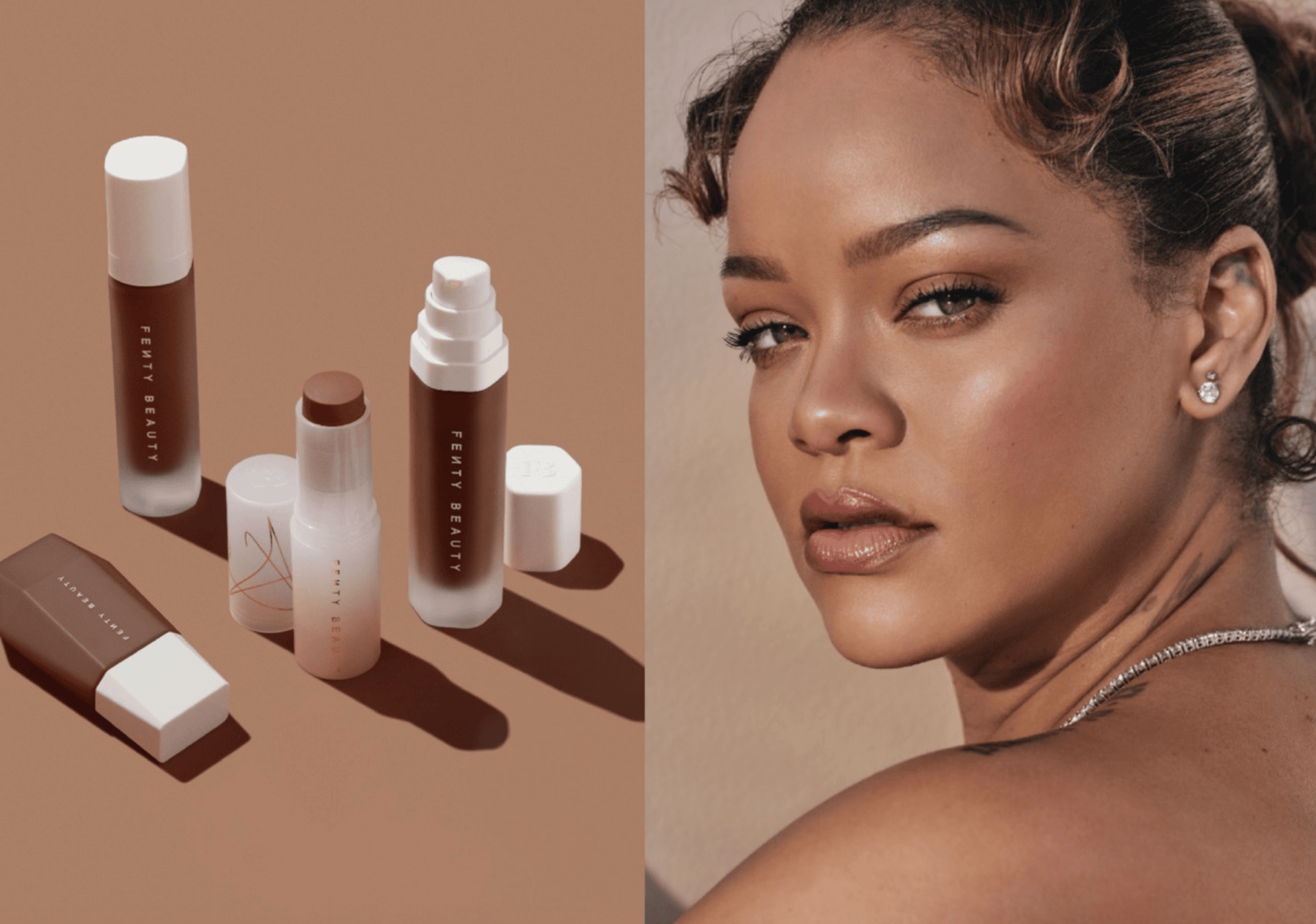
Fenty Beauty is one of the most successful celebrity brands ever conceived, and it’s the most successful brand born at Kendo, the LVMH-owned incubator. Launched in 2017 at Sephora with 40 shades of Pro Filt’r Soft Matte Longwear Foundation, Fenty Beauty set a new standard for shade ranges. With the tagline “Beauty For All,” it sparked a chain reaction dubbed the “Fenty effect,” prompting its competitors to broaden complexion ranges to keep up. Subsequent product hits include Gloss Bomb Universal Lip Luminizer, Diamond Bomb All-Over Highlighter and Match Stix Contour Skinstick. By 2018, Fenty Beauty rung up over $550 million in sales, eclipsing fellow celebrity beauty brands like Kylie Cosmetics and KKW Beauty. In 2022, it entered Ulta Beauty.
Lately, Fenty Beauty’s star has been fading. According to Puck News, the brand’s sales in North America are down double digits from their peak a few years ago. A source told the publication that the brand isn’t a “core asset” for LVMH, which is focused on Sephora and Dior. LVMH isn’t alone in focusing on core assets. Kering, the second largest luxury goods conglomerate in the world, has been pruning beauty to stick to its strengths. On Oct. 19, it revealed it would sell its beauty business to L’Oréal in a nearly $4.7 billion deal.
Beauty conglomerates are making similar moves. Estée Lauder, Coty and Kenvue are exploring offloading underperforming brands. Unilever has sold Dollar Shave Club and Elida Beauty, a collection of brands such as Q-Tips, Caress and TIGI, in recent years. L’Oréal has divested Carol’s Daughter.
With Fenty Beauty on the chopping block, Kendo’s fate is uncertain. Founded 15 years ago by then CEO of Sephora Americas David Suliteanu, the incubator continues to hold Ole Henriksen and Lip Lab. It recently sold beleaguered KVD Beauty to private equity firm Windsong Global and previously retired Formula X, Elizabeth and James, Bite Beauty and Marc Jacobs Beauty.
Fenty Beauty’s possible sale marks a pivotal moment for a brand that transformed the industry. The right buyer could reignite its momentum or dull the last vestiges of what made it burn bright. For this latest edition of our ongoing series posing questions related to indie beauty, we asked six investors, consultants, entrepreneurs and marketers the following questions: What impact has Fenty Beauty had on the industry, and what does it mean to consumers today? What are your recommendations for it under a possible new owner? Who are potential buyers for it?
The players
5 mentionedUnilever

Kendo
Momentous
Fenty Beauty
LVMH Moët Hennessy Louis Vuitton