Target Accelerates Wellness Strategy As Retailers Jockey For Position In The Category
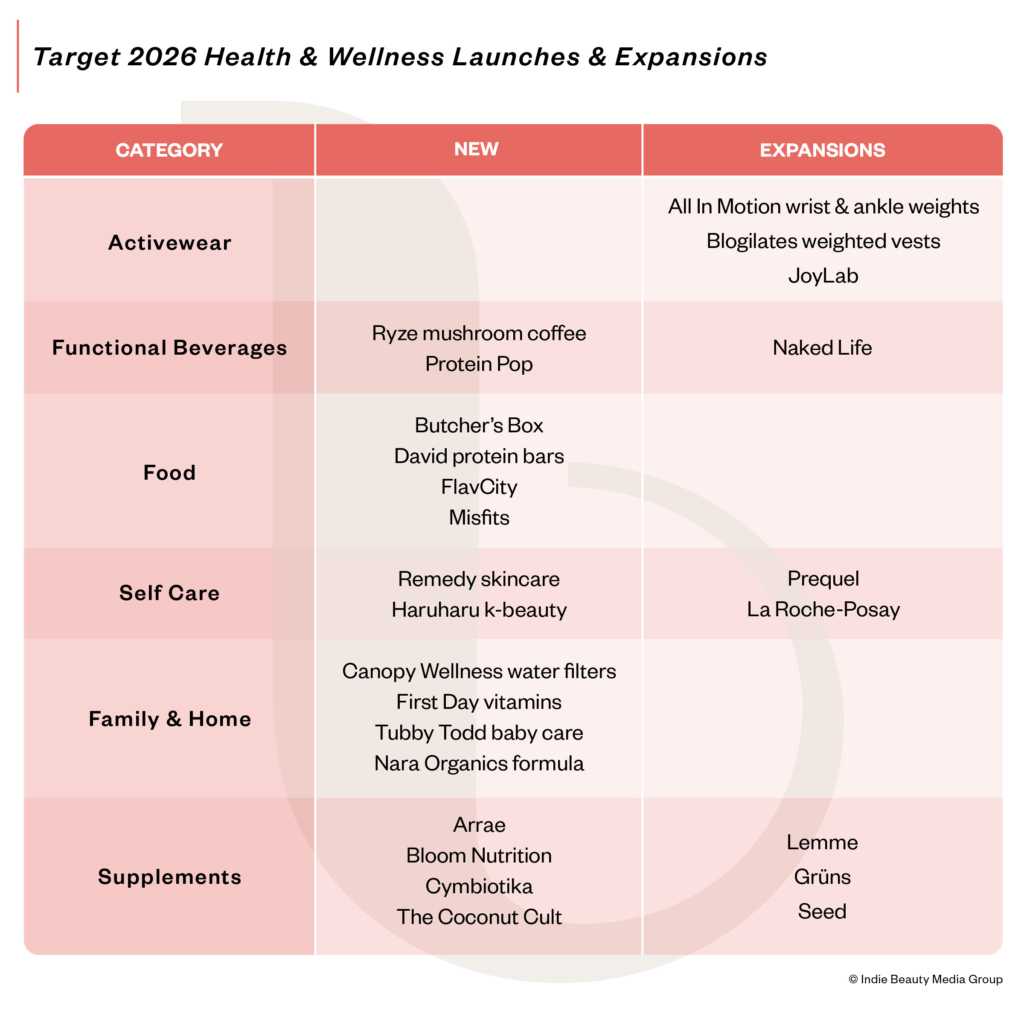
The big-box retailer has announced a 30% increase in its wellness assortment, with dozens of brands, including Arrae, Cymbiotika, Ryze and Canopy Wellness. It’s also cross-merchandising wellness with beauty brands under a self-care subcategory, with recent additions featuring viral TikTok and K-Beauty names such as GoPure, Remedy, Haruharu Wonder and NatureLab Tokyo. New products will be added throughout the year from Target’s owned brands such as All In Motion activewear and exclusive partnerships.
In a statement, Lisa Roath, EVP and chief merchandising officer for food, essentials and beauty, says, “About 70% of guests are already shopping wellness at Target and right in time for the new year.”
Target’s wellness drive isn’t happening in isolation, as wellness has become one of retail’s most contested categories, with mass, specialty and grocery chains racing to define their role in the segment. Ulta Beauty has leaned into wellness after CEO Kecia Steelman last year touted it as a billion-dollar opportunity, while natural and specialty grocers such as Whole Foods, Sprouts and Erewhon continue their efforts to capture the category’s avid adopters. However, Sephora’s pullback from wellness demonstrates that placing wellness merchandise in assortments isn’t enough to convince wellness shoppers to spend.
Target’s latest wellness drive follows similar wellness expansions in January 2024 and 2025, when it brought in 2,000 new wellness products, including more than 600 only-at-Target items. In 2024, it added over 1,000 wellness products. All three years, Target emphasized affordability, and, in 2024, it highlighted items starting at $1.99. This year and last, it mentioned the arrival of “thousands of items priced under $10.”
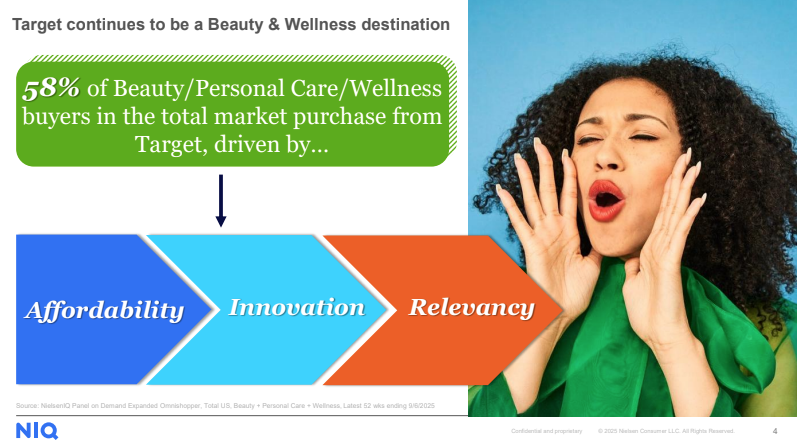
With consumers under financial strain, affordability is a draw for wellness. Market research from NielsenIQ has found that, for 58% of beauty, wellness and personal care shoppers, affordability is the No. 1 reason they buy at Target, with innovation and relevancy rounding out the top three motivators. NIQ also found that Target’s health selection stood out to shoppers.
Neil Saunders, managing director, retail at intelligence firm GlobalData, says that retailers’ amplification of wellness makes sense given consumers’ growing interest in the category. However, he argues Target can’t triumph with accessible prices alone. He identifies newness and style as critical to its wellness proposition.
“I actually don’t think Target should chase rock bottom prices,” says Saunders. “It should be offering value, which is reasonable prices combined with outstanding products. The problem with wellness, of course, is that lots of retailers are focusing on it, so differentiation is key, and I am not sure Target has cracked that yet.”
It’s certainly trying to. The breadth of Target’s new wellness category buildout—extending beyond wellness staples like supplements to encompass items like weighted vests and water filters—shows the retailer’s dedication to establishing itself as a destination for wellness. Rachel Hirsch, founder and general partner of venture capital firm Wellness Growth Ventures, says, “More protein snacks, powders and meal solutions from brands like Misfits, Bloom and David, plus the exclusive ButcherBox grass-fed beef debut, signal a clear prioritization of fueling the body over fixing the face.”
Hirsch explains that Target’s approach to wellness contrasts starkly with how Sephora merchandised the category prior to retreating from it. At Sephora, she says, “Supplements lived adjacent to serums and self-care skewed spa-coded and aspirational. Target’s mix feels more Erewhon-by-way-of-Middle-America, especially with the addition of Cymbiotika. Less ‘buy this to feel elevated,’ more ‘buy this because you need protein and you’re already here.’ It’s wellness as consumption infrastructure, not wellness as identity signaling.”
By pairing higher-priced wellness items like the Oura Ring, Garmin smartwatches and Therabody LED devices with under-$10 consumables, Target is betting on incremental spend fueled by a “you’re already here” mindset. It’s an easy sell for wellness spenders scooping up a big-ticket wellness wearable to throw their favorite protein bar into the cart. A mom grabbing a pair of leggings for yoga class may decide to pull the trigger on the Oura Ring her teen has been clamoring for. (Teen consumer behavior expert Casey Lewis noted in her After School Substack that the $500 health-tracking wearable was a hot gift this past Christmas.)
Hirsch asserts that, if Target succeeds in commanding the wellness category end to end, it gains greater “control over margins, messaging and cross-category behavior.” She points to the recent decision to wind down Ulta shop-in-shops at Target as indicative of that strategy, saying, “Even the move away from Ulta, while disappointing on its face, could be a data-driven acknowledgment that Target doesn’t want to outsource the halo anymore.”
The end of the Ulta shop-in-shops underscores Ulta’s ambitions in wellness and the intensifying competition from elevated grocers, including Erewhon, Sprouts, Whole Foods and Happier Grocery. Those grocers, however, don’t rival Target’s ability to engage consumers across different ages and interests. Target is attempting to exploit that advantage with its first nationwide in-store wellness events replete with product sampling and giveaways.
Hirsch calls the experiential initiative a “quiet masterstroke.” “[Target] aren’t about prestige. They’re about time spent. The malls many of us grew up wandering on weekends are gone, and Target knows it,” she says. “This is a bid to become the new third place, the casual, low-stakes destination where you browse, try, snack and linger, because the retailer that owns how people spend their Saturday afternoon ends up owning their habits.”
She elaborates, “Wellness is the excuse, but dwell time is the goal. Sephora made wellness feel like a ritual you planned for. Target is making it feel like something that just happens while you’re living your life. That’s not sexy, but it’s powerful.”
Saunders agrees that these elements are valuable, but insists they can’t come at the expense of retail fundamentals. “Target needs to make sure that the basics are attended to: things like in-stocks, interesting displays, engaging events and so forth are all really important for converting customers,” he says. “In the past, this has been something of a letdown and has likely diminished wellness sales.”
The wellness brands that made major entrances into Target in the past year report strong sales and are bullish on the big-box retailer’s ability to execute on its ambitious vision for the category. Shahab Elmi, co-founder of supplement specialist Cymbiotika, which launched at 1,900 Target doors in October, says that sales of its liposomal vitamin and mineral products have been “outstanding, with strong velocity and consistent week-over-week momentum.”
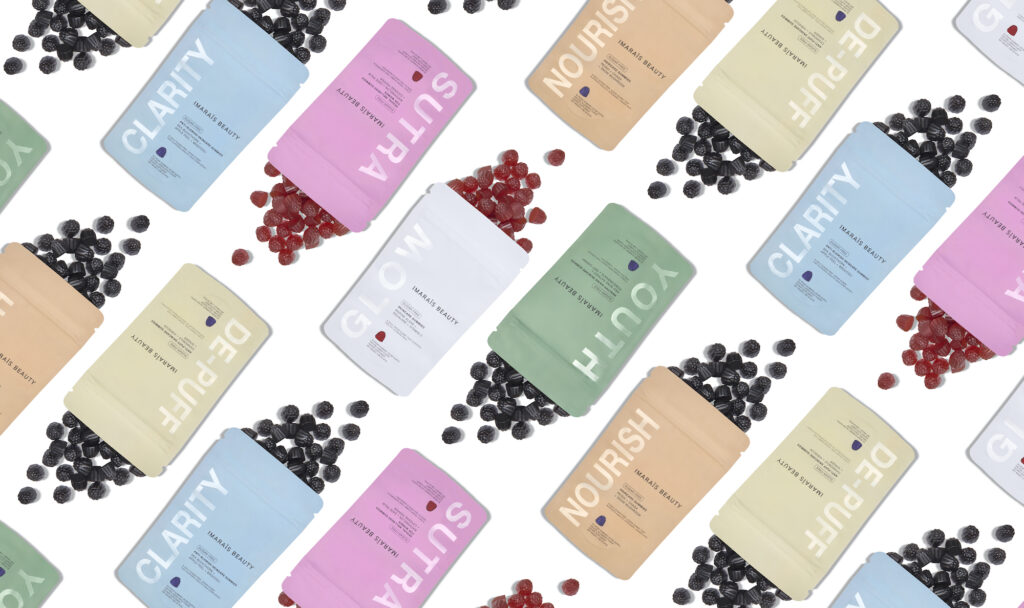
Imaraïs Beauty rolled out nationwide at Target last February as a wellness brand merchandised within Target’s beauty department. With the launch, the ingestible brand unveiled female sexual wellness supplement Sutra. It debuted as one of the first sexual wellness products ever sold within Target’s beauty set.
“The response was immediate, with Sutra quickly becoming one of our top-performing SKUs and helping establish sexual wellness as a credible, fast-growing category within Target stores,” says Imaraïs Beauty co-founder Aaron Hefter. “This cross-merchandising was integral. We are a beauty-centric ingestible beauty brand that lives in the beauty aisle. We do not belong in the supplement aisle next to protein powders or amino acids. We belong in beauty, where our specialized ingestible beauty products can be sold alongside corresponding topical products.”
Elmi views Target’s sustained push into wellness as a bellwether for where the category is heading. “Target’s continued investment in the category reflects a real understanding of how central wellness has become to consumers’ daily lives,” he says. “By curating brands that prioritize quality, science and transparency, Target is helping elevate the category while making better-for-you products more accessible at scale.”