Sunless Tanners Get Their Moment To Shine
The self-tanner and bronzer category is expanding and innovating in response with new offerings ushering in the latest wave of “skinification” featuring improved formulas containing active skincare ingredients, specialized application tools and enhanced format choices. The products are in demand from younger consumers looking for kisses of sun sans damage and skin cancer risk and an all-around skincare approach from their scalps to their toenails.
Penny Coy, SVP of merchandising at Ulta Beauty, says the specialty beauty retailer has seen heightened “engagement from beauty enthusiasts who embrace self-tanning as part of a broader self-care routine, reflecting a shift in consumer mindset from seasonal tanning to year-round, weekly glow ups.”
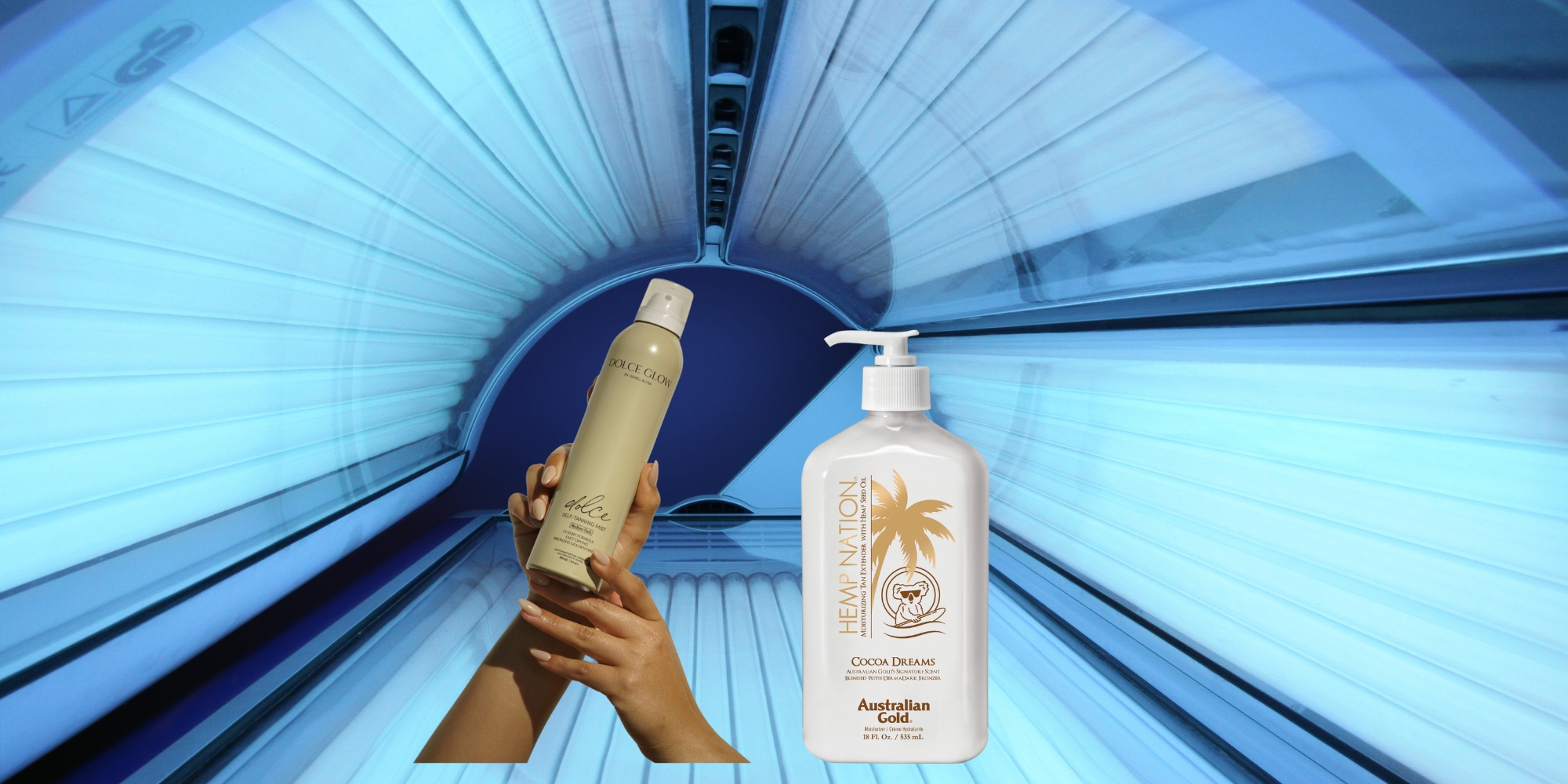
Among bestselling self-tanners at Ulta are St. Tropez’s Self Tan Express Bronzing Mousse, Coco & Eve’s Sunny Honey Bali Bronzing Foam, Bondi Sands’ Salon Quality Self Tanning Foam, Drunk Elephant’s D-Bronzi Anti-Pollution Bronzing Drops with Peptides and Dolce Glow’s Acqua Hydrating Self-Tanning Face Mist and Contour Self-Tanning Sculpt + Glow.
According to market research firm Fortune Business Insight, the global self-tanner market is expected to accelerate at a compound annual growth rate of 7.2% to hit $2 billion by 2032. Market research firm Mintel data shows 25% of American adults use self-tanning products, up from 19% in 2022. Gen Z consumers in particular are category engines, including Black gen Zers, whose self-tanner usage has picked up. Mintel estimates 33% of Black gen Z consumers use self-tanning products, compared to 22% of Black consumers overall.
In a statement, Joan Li, senior analyst for beauty and personal care for Mintel says, “The rise of skin-friendly ingredient inclusions that promote benefits such as skin tone evening and healthy glow has improved self-tanning’s resonance with Black and melanated consumers. These groups have historically been more conscious about their skin health when selecting beauty and personal care products.”
She elaborates, “Convenient formats such as serums and drops that can be added to lotions give consumers more control over their tanning results. With the growing awareness around sensitive skin, dermatological guidance and skin undertones, self-tanning brands have the opportunity to innovate and tailor their messaging to align with these concerns, driving further growth in the category.”
Coy says self-tanners and bronzers are popular with Ulta’s younger customers who “prioritize convenience, ingredient transparency and skincare-infused formulas.” She mentions Sunnee BaeSkin, a brand that launched exclusively at Ulta in March, as a gen Z draw. Celebrity tan artist Isabel Alysa, who founded Dolce Glow, a self-tanner brand started a decade ago that’s carried by Ulta, Revolve, Nordstrom and Saks Fifth Avenue, is behind Sunnee BaeSkin, which is priced from $9 to $28, while Dolce Glow’s products are largely $23 to $49.
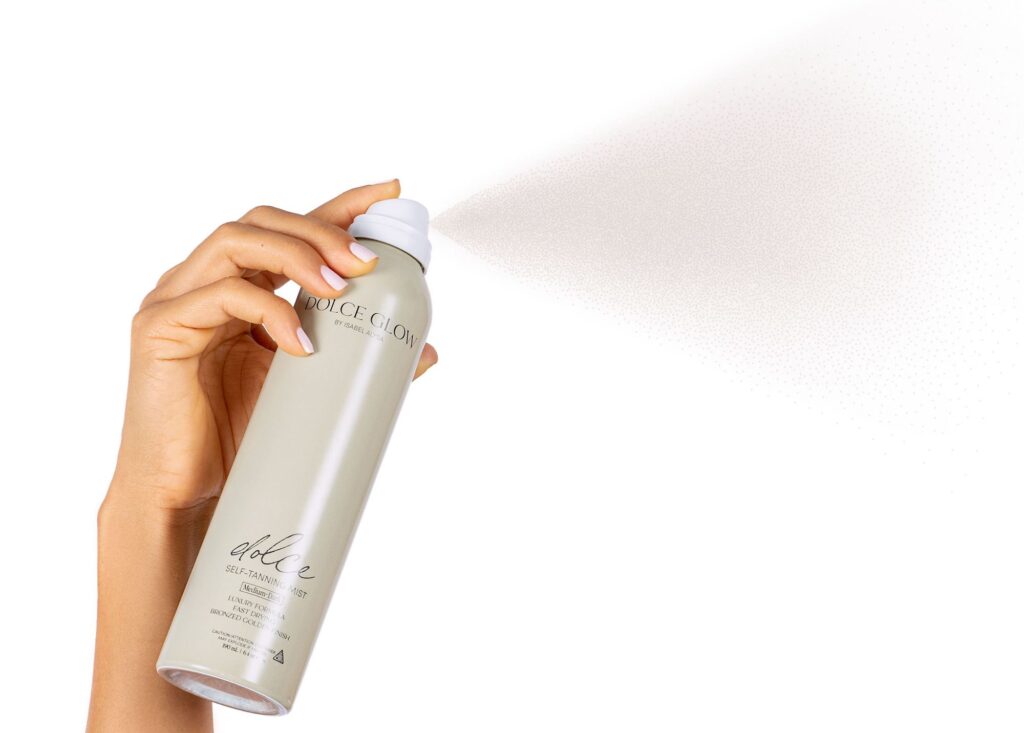
“I noticed a gap for high quality, hydrating and non-sticky self-tanning products at a more affordable price point,” says Alysa. “Sunnee BaeSkin was designed with a younger consumer in mind, someone who may not be looking for expensive skincare, but still wants hydrating products with breakthrough formulas.”
At Ulta, there’s heightened interest in self-tanners offering skincare benefits such as hydration, firming and anti-aging with familiar skincare ingredients like vitamin C and hyaluronic acid. Coy says, “With self-care and well-being continuing to be top priorities for our guests, we anticipate further innovation in multi-benefit formulas that protect, replenish and support skin health while delivering a radiant glow.”
Rachel Harkin, director of marketing at Australian Gold and Hemp Nation, has clocked the skinification of self-tanners, too. She says, “A lot of consumers want to be using clinically proven ingredients in their sun care products such as niacinamide, caffeine and squalene, and they’re treating their sun care routine very much the same as they’re treating their skincare, specifically facial skin.”
Simultaneously with the skinification of self-tanners, Harkin points to a “beautification” of self-tanners trend. As evidence, she highlights Australian Gold’s shimmer-infused bronzers that encompass sun protection. Harkin says, “With shimmer, we were adding that beautification aspect to our products in addition to those good-for-your-skin ingredients.”
Even in the face of the proliferation and enhancement of sunless tanners and greater understanding of the risks of exposure to ultraviolet radiation, some consumers, especially gen Z women, seek the instant gratification of tanning beds. The number of tanning salons is decreasing in the United States—according to research company IBIS World, the American tanning salon industry has declined at a rate of 11.9% between 2019 and 2024—but there remains 20,000 dedicated tanning salons in the country.
Ellen Marmur, the New York City dermatologist and founder of LED device brand MM Skincare, describes tanning bed use a “shock” to the skin. “You get sunburn cells under the microscope, you see the DNA mutations immediately,” she says. “People don’t realize that a tan is a sign of injury, and the body makes melanin to help protect the DNA. It’s like a little melanin shield that’s happening from injury.”
Molly Griffin worked at an on-campus tanning salon during her freshman and sophomore years at the University of Delaware and frequented tanning beds two to three times weekly (they were a perk for staff). The now 21-year-old senior was surprised by how often her peers went to tanning beds. She recalls, “Many of our regulars came in everyday.”
Griffin spotted a multiplication of moles on her skin and decided to stop tanning bed usage, but others have stuck with tanning beds despite the downsides. “I do think there is a lot of pressure to be tan,” she says. “Everyone has this idea that being tan and glowy is the beauty standard. I do think I feel better about myself when I am tan, but truly only because that has been set as a standard for us from society as women.”
According to intelligence firm Spate’s Popularity Index combining Google searches and TikTok views, the “tanning bed” trend has grown over 44.2% from last year to this year and is gaining steam across platforms. On Google search, the trend has grown 41.6% from last year. On TikTok, it’s grown 46.9%. “Tanning bed” receives 8.5 million average weekly views on TikTok, and a scroll through tanning bed content on the platform reveals young women elatedly prepping for tanning bed sessions, displaying dramatic results and sharing products and hacks for deepening and extending tans.
One such tan deepening hack is using nasal sprays with melanotan II, a synthetic hormone that enters the bloodstream through the nasal cavity and stimulates the production of melanin when exposed to ultraviolet light. The sprays are known to cause dangerous side effects and are illegal in the U.S., Australia and the United Kingdom, but there’s a black market for them.
Alysa argues consumer education is key to convert consumers from tanning beds to self-tanners. “The more consumers understand that you can achieve a natural, long-lasting glow without damaging your skin, the less appeal tanning beds will have,” she says. “My goal has always been to create products that give people that confidence-boosting glow without the harmful side effects of UV exposure.”
Griffin has switched to self-tanner since swearing off beds and is a big fan of Coco & Eve’s Antioxidant Face Tanning Micromist. “It gives such an even and natural glow without sun damage,” she says. “I am so happy I stopped using tanning beds because my skin is better than ever now. Just stopping changed my skin so much.”
In an effort to keep people like Griffin in its tanning beds, tanning salons are incorporating wellness equipment such as saunas and red light therapy. New Jersey tanning salon chain Tiki Image has red light therapy packages. Palm Beach Tan, which spans 650 locations in 35 states, has introduced infrared sauna, red light beds, handheld facial devices and red light-cum-vibration therapy treatments. New Sunshine, a manufacturer in the indoor tanning industry with Australian Gold, JWOWW, Designer Skin, California Tan and Swedish Beauty under its umbrella, is developing hybrid topical products that can be used for both UV and red light sessions.
Harkin says, “The new wellness items are meeting the skincare needs and wants of consumers.”
Marmur and Alysa predict consumers will persist in trading in tanning beds for self-tanners. “They might not put on sunscreen and get a sunburn on spring break, but they’re less likely to waste their money and go to tanning salons,” she says. “They’d rather get a spray tan, using self-tanner and even body bronzing makeup, which is having a moment.” Alysa says, “With today’s self-tanners delivering such natural, customizable results, more people are swapping out UV exposure for a safer, skin-loving glow.”
The players
5 mentionediS Clinical

AS Beauty
Topicals
Better Being
Momentous