Smarter, Subtler, Regenerative: 11 Trends Reshaping Aesthetics In 2026
In 2024, Americans underwent more than 28.5 million minimally invasive aesthetic procedures and 1.6 million cosmetic surgeries, according to The Aesthetic Society and the American Society of Plastic Surgeons, reflecting continued year-over-year growth and an aesthetics industry whose momentum shows no sign of slowing.
The traditional beauty sector has taken note of aesthetics’ widening public embrace and is encroaching on its territory to share in the upside. On Monday, L’Oréal announced it’s doubling its stake in Sculptra, Restylane and Dysport owner Galderma to 20%. In July, Milk Makeup owner Waldencast acquired dermal filler company Novaestiq, and Blue Lizard and StriVectin owner Crown Laboratories officially became Revance after it completed the purchase of the aesthetics company in March.
The transactions are accelerating the intertwining of beauty and aesthetics, with beauty borrowing cues from what aesthetics clients want—and those wants, along with what the aesthetics industry can deliver, are changing fast. The era of drastic transformation is giving way to treatments designed to work with the body, not against it.
Below, find out more about the aesthetics trends experts say will define the year ahead.
1. Regeneration Nation
“Regeneration” has moved from buzzword to foundational philosophy in aesthetics. It refers to treatments that repair, restore or regenerate tissue by activating the body’s own biological healing processes rather than simply filling, freezing or camouflaging signs of aging.
Aesthetics clinics are spotting accelerating demand for exosomes, secretomes, platelet-rich plasma (PRP) and collagen-stimulating injectables such as Sculptra and Radiesse as well as regenerative volume restorers like Renuva and emerging fat-derived injectables. Precedence Research puts the global regenerative aesthetics market at roughly $3.76 billion in 2025 and projects it will grow to $7.15 billion by 2034, climbing at a 7.4% compound annual growth rate.
“The science is finally catching up to the regenerative hype,” says plastic surgeon Chris Franco. “This is the beginning of a true regenerative revolution.”
According to data from plastic surgery information platform RealSelf, Endolift was the second-fastest-growing treatment in 2025. The minimally invasive laser procedure inserts a fine fiber-optic filament beneath the skin to tighten laxity and reduce small fat pockets by stimulating collagen and elastin production. Platelet-rich fibrin (PRF), a concentrated gel derived from a patient’s blood containing platelets, fibrin, growth factors and stem cells, ranked fifth, driven by its ability to enhance natural healing, boost collagen and support tissue regeneration for skin and hair.
Cosmetic dermatologist Mariana Vergara, who works with Eva Mendes, Lukas Gage and Miranda Kerr, has detected rising demand for Renuva, which acts as a scaffold for new fat-cell growth with up to 10 years of longevity, and secretomes, which combine exosomes with cytokines, peptides and growth factors for fuller regenerative signaling and improved cellular repair. “Patients want treatments that work with their biology, not against it,” she says.
Plastic surgeon Johnny Franco points to next-gen injectables including LipoDerma and its upcoming sister product DermaClae, designed as natural alternatives to synthetic fillers, as innovations that will further power the regenerative aesthetics market. “This all points to a huge trend toward biologically harmonious volume restoration,” he says.
2. Hybrid Protocols
Patients are no longer sticking to a single modality. They’re opting for curated stacks that deliver synergistic results with minimal downtime.
Skin Pharm founder Maegan Griffin explains, “They still love the quick confidence boost of Botox, but they’re pairing it with regenerative treatments like microneedling with PRP and light-based therapies. It’s less about instant transformation and more about steady, thoughtful maintenance.”
At Formula Fig, the increasingly popular Longevity Treatment blends advanced microneedling with PDRN, peptides, exosomes, cryo lymphatic drainage and LED therapy. Popular stacks at Skin Pharm combine BroadBand Light (BBL) with the Moxi laser and microinfusion or radiofrequency microneedling paired with exosomes to amplify signaling and healing.
“These stacked treatments deliver clinical results with minimal downtime,” says Griffin. “Patients want consistency without putting their lives on hold.”
3. Microneedling Mainstreaming
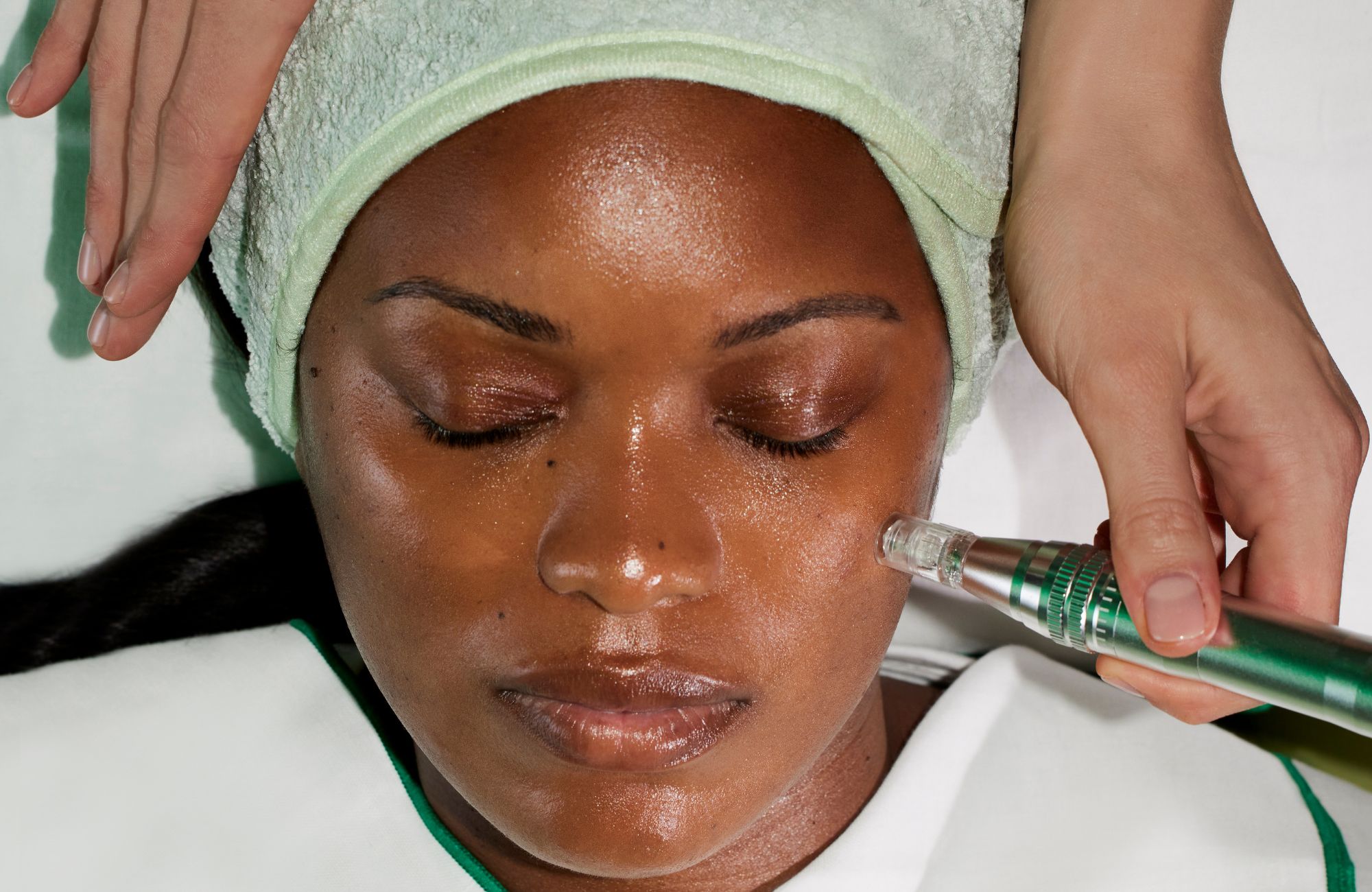
Collagen stimulation with minimal downtime is booming, particularly as GLP-1 users seek tightening and texture refinement. Formula Fig founder JJ Walsh says microneedling is “booming across age groups,” especially when paired with PDRN, exosomes, PRP or peptides.
At Face Foundrié, founder Michele Henry is observing microchanneling, which stamps needles into the skin rather than dragging or rolling them, beginning to eclipse traditional microneedling. “It causes less irritation and less downtime,” she says. “Clients aren’t stuck looking kind of crazy for a couple of days.”
4. Fat Banking
Weight-loss medications have created a new aesthetics patient profile grappling with volume loss, sagging and deflation. Plastic surgeons on RealSelf report surging demand for facelifts, breast lifts, tummy tucks and body lifts among GLP-1 users. One of the biggest areas of growth is fat banking in anticipation of dramatic weight loss and subsequent contouring procedures.
Franco elaborates, “GLP-1 patients can have liposuction before their weight loss, bank their fat and later use their own tissue to treat Ozempic face or butt and breast deflation.”
He anticipates the first wave of fat-preservation technologies will arrive early 2026. “We’re even seeing research exploring how to expand stored fat to create moldable, stable fat implants,” he says.
5. Refined Revisions
In 2026, surgical treatments are poised to become more precise, less invasive and more anatomically respectful, not more extreme. Motiva’s Preservé technique, for example, is set to reshape breast implants both literally and figuratively. So far, only 36 surgeons in the United States are trained in the technique, but a nationwide rollout is scheduled to begin next year. “Preservé is designed to preserve, not disrupt, natural breast anatomy,” says plastic surgeon Urmen Desai. Franco adds, “It aligns breast surgery with the body’s natural anatomy.”
Facelifts that turned back time were all the rage in 2025—notably Kris Jenner’s, performed by plastic surgeon Steven Levine, who charges about $300,000 for his “undetectable” Superficial Musculo-Aponeurotic System (SMAS) facelift. A SMAS facelift lifts and tightens the deeper facial support layer to address jowls and loose neck skin rather than focusing solely on the midface.
Plastic surgeon Daniel Gould says the field has now evolved far beyond the deep-plane approach, which goes deeper still and repositions the entire facial musculature. The shift reflects the desires of younger patients who want smaller incisions, more customized approaches and results that maintain natural facial motion.
“The deep-plane facelift was just the beginning,” says Gould. “We’re now at level five or six in terms of complexity and precision.”
Rib contouring is also gaining traction as a subtle waist-defining procedure. It narrows the waistline by making controlled fractures and reshaping the lower floating ribs to create a more defined, hourglass figure. “It’s about natural, feminine definition, not drastic change,” says plastic surgeon Alex Earle, though Gould cautions that its 2.6% major-complication rate is “high for a cosmetic procedure.”
6. Inside Out
NAD IVs, injections and supplements are increasingly being offered alongside aesthetic services. Their spread parallels broader consumer interest in longevity medicine, mitochondrial health and metabolic optimization, wellness pillars that support and enhance aesthetic outcomes.
“NAD is critical for cellular energy and DNA repair,” says Vergara. “Healthier cells heal better and respond more effectively to procedures.”
7. Aesthetics’ AI Revolution
From practice operations to patient-provider matching, Franco predicts, “AI will change the entire epicenter of aesthetics.” Henry agrees, saying, “It’s going to affect everything…how products are recommended, made, tested, and how we monitor skin health.” Face Foundrié is integrating AI-powered scanning into its app.
Dermatological surgeon Ron Shelton anticipates AI- and quantum-designed peptides with targeted delivery emerging in coming years. He says, “Although we may not see this next year, this computer-assisted science is coming more quickly than most of us would imagine.”
8. Science-First Skincare
In the beauty industry, clinical skincare has overtaken clean skincare, and its upward march is on track to continue in aesthetics. Brands will ramp up their rigor, bettering clinical studies, ingredient sophistication and the results they promise.
Vergara expects greater demand for retinal and estriol creams, citing data showing 61% to 100% improvement in wrinkle depth and pore size after six months of estriol use.
9. Early Entry
Preventive treatments have become the front door to aesthetics for gen Z clients, and even gen alpha clients beginning to visit clinics. According to Hydrafacial’s parent company, The Beauty Health Co., 75% of consumers prioritize improving skin health over correcting issues. A survey from the American Academy of Facial Plastic and Reconstructive Surgery reports a continued rise in patients under 30 seeking “tweakments,” a category of minimally invasive procedures often used for maintenance or prevention rather than correction.
“Younger guests are seeking preventative treatments so that down the line, they require less correction,” says Walsh.
Facial plastic and reconstructive surgeon Kian Karimi’s practice in Los Angeles has clocked the phenomenon, too. “Younger patients increasingly understand that early structural changes—fat compartment descent, ligament laxity, bone remodeling—begin earlier than most realize. In our practice, we’re seeing a significant shift toward early intervention: micro-contouring with energy devices, lower-dose neuromodulators, mild lifting strategies and regenerative support,” says the medical director of skincare brand Bionassay. “Prevention is no longer about skincare alone. It’s about preserving healthy facial architecture over decades.”
Skin clinics are attending to younger clients entering aesthetics through gentle skin-health services. “We get clients coming in with their mom,” says Henry. “That’s why we offer an acne-specific facial. It tapped into gen Z and gen alpha.”
Botox use is shifting, too. “Patients want harmony, natural movement and the minimum effective dose,” says Griffin.
10. Male Memberships
Men are becoming one of the fastest-growing segments in aesthetics treatment memberships. According to the American Society of Plastic Surgeons (ASPS), about 1.6 million cosmetic procedures were performed on men in the U.S. in 2024, a 4% increase from the previous year, highlighting their growing interest in aesthetic treatments.
“Men are getting excited about skincare, and ‘Brotox’ is a growing part of our business,” says Henry, noting that their consistency is fueling membership growth. “Men tend to be really committed to membership models…They find comfort in that routine.”
11. Soft Edges
The pendulum continues to swing away from overfilled cheeks, rigid foreheads and maximalist features. In 2026, the shift is less about subtlety for subtlety’s sake and more about anatomically intelligent restraint. Patients are seeking results that move, age and photograph naturally, and providers say the standard for “natural” has become more technically demanding.
Walsh sees the shift daily across Formula Fig’s seven locations. “Today’s aesthetic is quiet luxury, looking exceptionally well-rested and radiant without anyone being able to pinpoint why,” she says. “Patients no longer want to look ‘done.’ They want to look like the best version of themselves.”
Plastic surgeons report the same recalibration. Daniel Gould sees interest mounting in facelifts that restore form and function without appearing pulled. “We’re seeing more natural results in facelifting because of better anatomical education,” he says. “Straight vertical is not the goal for all faces.”
The appetite for understatement extends to smaller features as well. Henry says that eyelash extension appointments are slipping while lash lifts, tints and brow services are multiplying, aligning with the “enhance, don’t alter” mindset that will dominate 2026 aesthetics.
The players
5 mentionedMilk Makeup

Deeper
Better Being
StriVectin
Too Faced