The Surge In Sexual Wellness Consumer Goods And Where The Industry Is Heading
Propelled by millennials and members of gen Z, the modern sexual revolution has gone beyond the steps the precursor sexual revolution took to push sex into the arena of health and wellness. Not only should people be having good sex regularly, this latest wave posits that pleasure and consensual sex that satisfies all parties involved is critical to mental and physical well-being.
The sexual wellness movement has prodded and been pushed by consumer brands with the attitude, aesthetics and social philosophies of their customers who are interested in shaking off the last vestiges of Victorian sexual taboos.
“Everything starts with the consumer, with gen Z being the most open-minded, sexually fluid audience there is,” says Mitch Orkis, co-founder of lubricant and toy specialist Cake. “Then, founders start to answer consumer needs. Then, there’s funders. The VCs start to have a conversation about, are they willing to take that step or not? Largely, they haven’t been willing to do that. It feels like those tides are turning now.”
It didn’t seem outside the realm of possibility that the pandemic would stop the contemporary sexual wellness wave in its tracks. The lockdowns made it difficult to seek sexual partners, and people could have shied away from intimacy to stem viral spread. Instead, individuals single and not apparently followed New York City’s coronavirus guidelines to masturbate and “make it a little kinky.”
Younger consumers haven’t been shy about purchasing sex toys along with their regular goods, and the pandemic has ended up amplifying global conversations around sex and pleasure, helping to further erode the remaining stigmas attached to them.
Startups offering elevated and sustainably crafted sexual pleasure and care products, from condoms to clitoral stimulators, have benefited. Bloomi, an online marketplace specializing in clean intimate care, reports sales of pleasure-centered products such as arousal oils, lubricants and toys have outpaced sales of other intimate care products by 750% over the last year.
Drawn to the growth, investors have begun to write sizable checks for leading sexual wellness brands like Maude, Dame and Lora DiCarlo. Meanwhile, the wider intimate care and wellness category—period products, family planning, postpartum care, etc.—has been swelling with exciting entrants in the past several years, and saw acquisitions with period product companies Sustain and This is L. getting scooped up by Grove Collaborative and Procter & Gamble, respectively.
How have these disruptive brands navigated this uncharted territory, what challenges do they still face, and what’s next for them and the category as a whole?
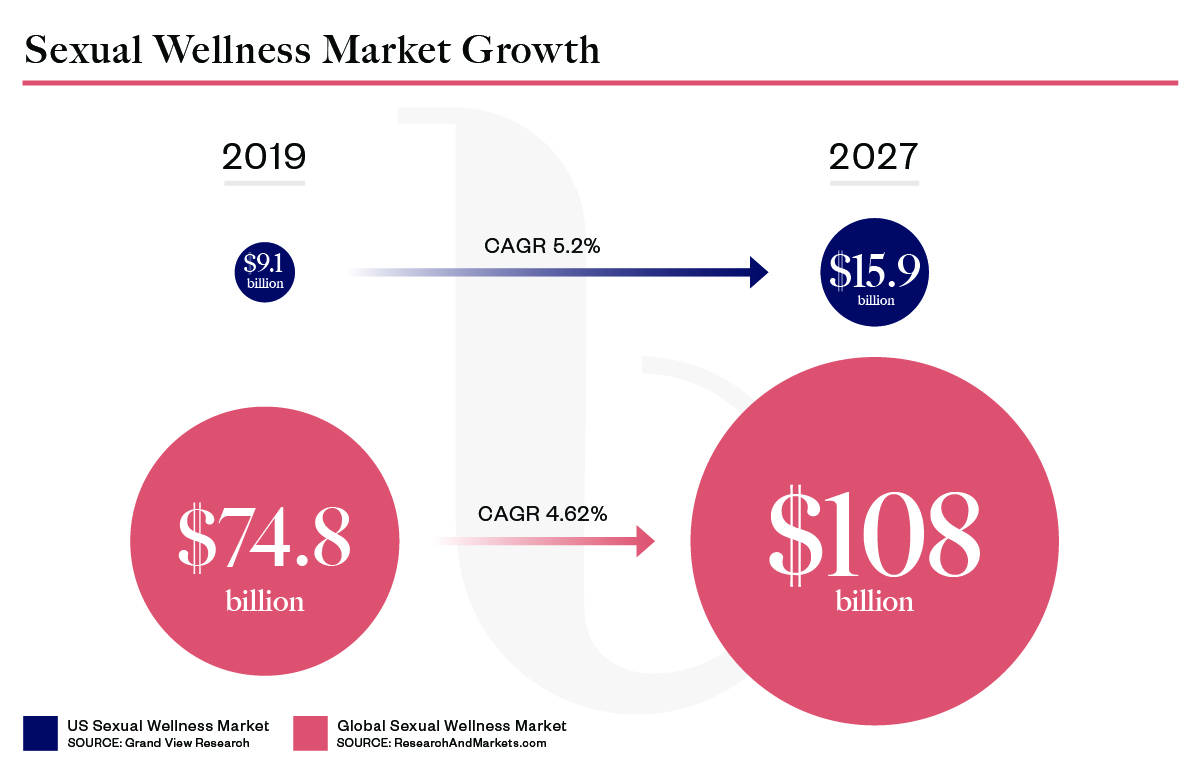
GROWTH OVER THE PAST YEAR
Sexual wellness consumer packaged goods, or CPG, brands registered significant sales increases over the past year, many entering hundreds of new retail doors and notching notable online traction.
Sex Sells: By The Numbers
Awkward Essentials – 40% growth month-over-month in 2021 with one product on the market
Dame – 100%+ year-over-year growth from 2019 to 2020
Foria – 162% year-over-year growth from 2018-2020
Lora Di Carlo – $7.5 million in revenue in 2020, first year in business
Love Wellness – 200% year-over-year growth from 2019 to 2020
Maude – 50% growth quarter-over-quarter in 2020
Momotaro Apotheca – 360% year-over-year growth from 2019 to 2020
Rael – 110% year-over-year growth from 2019 to 2020
The expansion in retail distribution has been noteworthy. While the majority of sexual wellness product sales happen online, a variety of brick-and-mortar retailers have started to play in the pleasure space. Just this year, Nordstrom, Bluemercury, Holt Renfrew and Cos Bar have added permanent sexual wellness collections to their assortment. Bloomingdale’s added the category online.
Niche and mass players have expanded or created their selection of sexual wellness offerings like lubricants and vibrators over the past 12 months as well. Clean beauty specialist Beauty Heroes launched CBD intimacy brand Foria on its website this month, and Walmart added its first-ever vulva care products from k-beauty intimate care brand Rael. Consumers can get Champ’s condoms and lube delivered to their door in two hours or less through delivery apps FastAF and Gopuff.
Lily Garfield, who founded luxury beauty retailer Cos Bar in 1976, brought in the chain’s first sexual wellness product, Vella Bioscience’s Pleasure Serum, this year. She is also an investor in the brand. The involvement of Dr. Harin Padma-Nathan, one of the developers of Viagra and Cialis, caught her attention.
Of Pleausre Serum, she says, “A product being introduced to the beauty space that came from a doctor who had tremendous credibility in the field of sexual wellness for men and now is targeting it for women raised my desire to get to know the product. When it got to market I knew I’d like to be on it. I wanted Cos Bar to have it.”
Research bears out the notion that consumers are interested in purchasing sexual wellness items in a variety of retail settings. A survey of 7,0000 vulva owners in key global markets conducted by vibrator maker Smile Makers in October 2020 found that 56% of all women want to buy vibrators from mainstream retail and 63% of vibrator-curious women would prefer to buy vibrators from a beauty store.
Of course, beauty store associates are trained to sell lipstick, not lubricant. Garfield points out that must be considered for sexual wellness to truly be integrated and flourish in a traditional beauty space. She says, “It’s a very sensitive subject, not for the consumer but for the beauty specialist talking about it. We need to empower our sales force whether it’s at Cos Bar or any other retailer.”
Vella‘s marketing team will lead the Cos Bar associates’ training to ensure that employees are equipped with the science, product pay off and directions to use. “Of course, sensitively navigating their comfort with the category will be key,” adds Garfield. “I feel that people should not be embarrassed. I’m 72 years old. I can talk about it. It’s OK to talk about [women’s sexual wellness] and not put a taboo on it.”
AN INFLUX OF FUNDING
Investment has also driven the sector’s growth. Institutional funding has been flowing into the sexual wellness space in the past year. Previously, and still today in some cases, vice clauses have hindered investors from investing in certain industries including sex-related companies, alcohol, and cannabis.
”It comes from the investors in the limited partnership. It’s like a broad blanket unless you carved out the capital,” explains Caitlin Strandberg, principal at New York City-based venture capital firm Lerer Hippeau. Strandberg says that Lerer Hippeau is not restricted by vice clauses, allowing it to invest in cannabis and sexual wellness brands, both in tech and consumer goods. Lerer Hippeau participated in hemp brand Prima’s recent $9.2 million raise. “I think we have a very modern view of the future,” she adds.
Strandberg says Lerer Hippeau is excited by the sexual wellness space because of its place and purpose within the wider wellness movement. “You have to meet consumers where they are and make it accessible and comfortable, and also bring down the taboo piece of it,” she says. “These types of companies are going after and enhancing that space, but also unwinding what’s been known, bringing us forward in a really compelling way. Not only are they disrupting businesses, but they’re also cracking open our worldview of something that is so critical to our wellbeing. I think that’s powerful and I’m glad we’re able to invest in the space and have those conversations and help people with something that, one, can be really fun, but two, is fulfilling and important to living a satisfied life.
Investment in the sexual wellness consumer goods space has exploded in the last year.
The players
5 mentionedPrima

The Center
Grove Collaborative
Cos Bar
Counter