Sex & Well & Rock & Roll: How Wellness Brands Are Trying To Elevate The Festival Experience
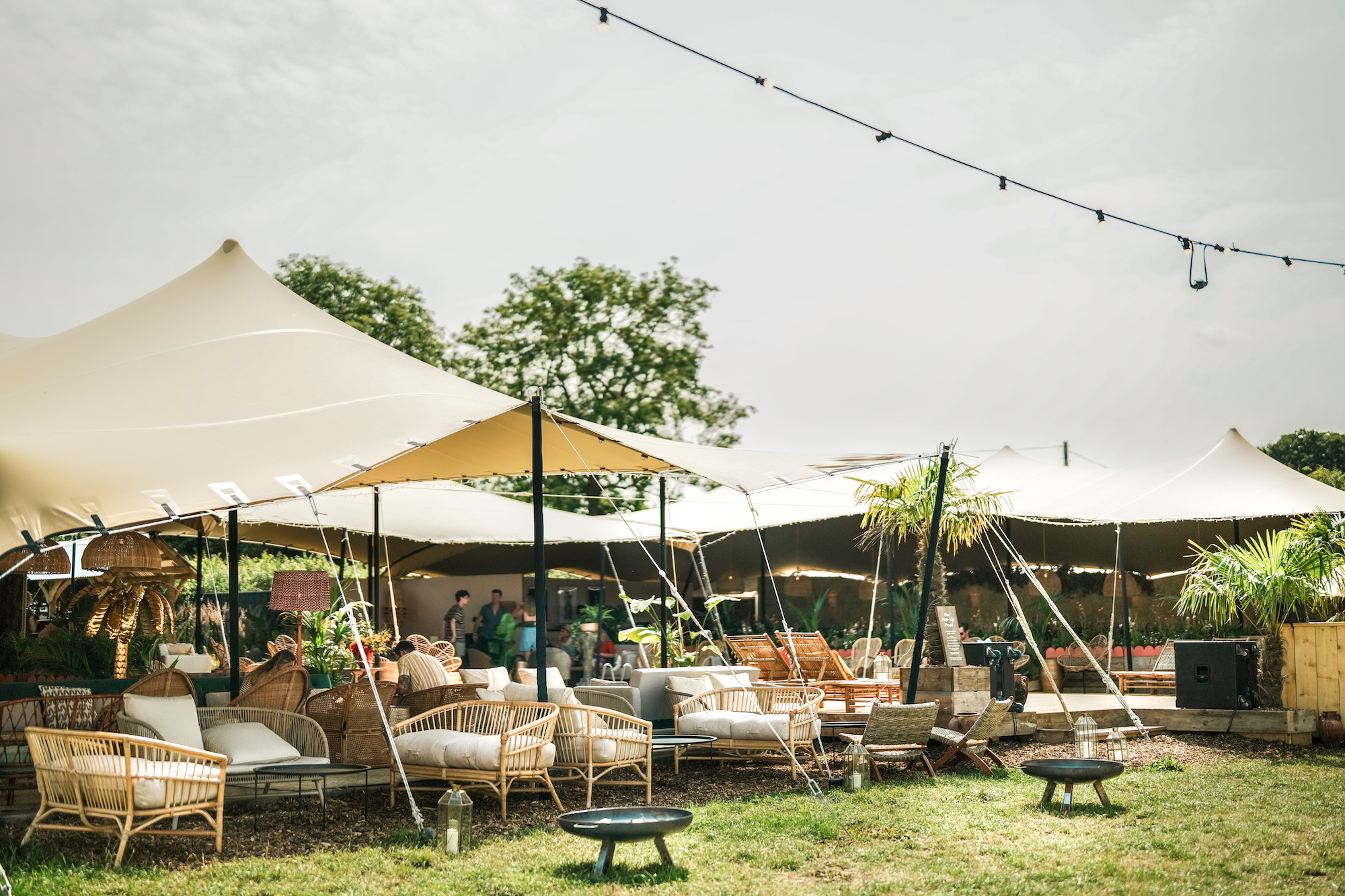
When they weren’t dancing to LCD Soundsystem, Dua Lipa or any of the other 200 or so musical acts on the bill, festival goers that splurged for The Pop-Up Hotel‘s luxury “glamping” accommodations near the festival site could revive themselves with a dip in a wood-fired hot tub, a stint in the sauna, a cold plunge, sound bath, oxygen therapy, yoga or pilates class, reiki session or a selection of face and body treatments featuring Grown Alchemist’s skincare products.
While The Pop-Up Hotel has been setting up its luxury accommodations—2024 prices started at £2,999, about $3,858, for five nights, which doesn’t include the price of the festival ticket—since 2011, this year was the first time it added The Wellness Space to the Glastonbury campsite’s amenities. This inaugural The Wellness Space was presented by clean beauty brand Grown Alchemist.
According to The Pop-Up Hotel’s press release on the launch, The Wellness Space was created to be “the ideal destination to energize ahead of a long day or unwind at the end of it,” and to deliver “a beauty and wellbeing experience that supports both skin and soul from the inside out…a mindful moment when it’s needed most.”
You don’t have to travel across the pond for a festival wellbeing experience. In April, cold plunge tub maker Plunge created Recovery Rodeo on the final day of Stagecoach Festival in California’s Colorado Desert, an activation where guests got to enjoy a cold plunge and decompress—literally—with the help of Hyperice’s Normatec 3 boots, all while sipping cannabinoid-infused non-alcoholic craft beers.
Other better-for-you brands like kanna specialist Ka! Empathogenics, sexual healthcare provider Wisp, plant-based non-alc beverage maker New Brew and more are making moves, from grandiose to guerilla-style, to elevate the festival experience from a non-stop substance-fueled frenzy to something somewhat healthier and safer—but still plenty fun.
Alexandra Van Iden, co-founder of Los Angeles-based marketing and public relations firm Prismatics, works with a cohort of cool consumer brands across wellness, cannabis, psychedelics and beverage that have forged exciting partnerships with festivals like Desert Daze in recent years. She witnessed the genesis of this trend almost a decade ago, starting with intimate events.
Prismatics produced cannabis-focused activations in California, including yoga classes, sound baths and infused dinner parties that were expressly booze-free. She says, “These were some of the first branded marketing events that didn’t rely on alcohol, and were a huge success.” She notes that now, brands like Optimist and The New Bar have partnered with Coachella to serve non-alc cocktails at the festival attended by about 200,000 people over two weekends. “People are realizing how many great herbal, non-toxic products are out there that actually make you feel good and are good for you,” she says.
The sentiments that were driving people towards sober dinner parties nearly 10 years ago have only grown among conscious consumers, creating a market for larger scale activations like The Wellness Space at Glastonbury. According to market research firm Circana, the people clamoring for healthier partying options have money to spend on such lavish experiences: wellbeing-focused consumers have $1.1 trillion in purchasing power in the U.S. alone.
Van Iden explains, “There is a desire to connect more at IRL social events versus disconnecting with alcohol. When people go to festivals, they want to feel. Feel the music, feel the love for their friends, etc. Alcohol doesn’t do that, but Ka! Empathogenics does.” Ka! Empathogenics, a client of Prismatics, has done guerrilla-style activations at festivals like handing out free samples of its kanna chews at the infamous week-long desert arts event Burning Man, which draws about 80,000 people to the Nevada desert every August.
Wellness brand Good Psyche, which, similar to Ka! has a kanna ingestible offering, a mouth spray dubbed Sidekick, did a product sponsorship at the Lightning in a Bottle festival, giving away its Blue Lotus Pre-Rolls, which offer a myriad of wellness benefits thanks to their marquee ingredient. Founder Trish Mock details, “Blue lotus is the perfect festival companion because it has that anxiolytic property. It has the relaxation, the euphoria and it’s mild. It’s not going to get you high and have you blast off, but it’s going to make you feel good and mellow and even out.”
But the benefits of toking blue lotus joints go beyond providing a safer high than other substances you might find on the fairgrounds. For party goers who are trying to abstain from vaping or smoking cigarettes or cannabis, the pre-rolls can help you avoid giving into those hand and mouth-focused habitual temptations.
Mock says, “One of the big pieces of feedback that I’ve heard from customers is that either they were former smokers or vapers or they smoked weed, and so they have this oral fixation. They want to have the feeling of something being in their hand, but they don’t want the negative side effects. This has been the perfect anti-vice replacement for that.” Mock adds that, due to its anxiolytic—or anti-anxiety—properties, if you do happen to smoke weed and experience heightened anxiety or paranoia as a result, consuming blue lotus can help counteract that undesired effect.
Anna Teal, CEO of Grown Alchemist, sees the value of meeting people where they are in the world, literally—whether its working out at Equinox or partying at Glastonbury. Immersive partnerships like The Wellness Space at The Pop-Up Hotel is a coveted opportunity to build brand awareness among key consumers.
Research conducted by the brand revealed that the Grown Alchemist consumer “has a number of different passion points that fall outside of traditional beauty spaces,” Teal shares. “We understood that they have deep interests in the world of music and the world of fitness, the world of art, and that’s really helped us to tailor a broader, more holistic engagement and activation strategy.”
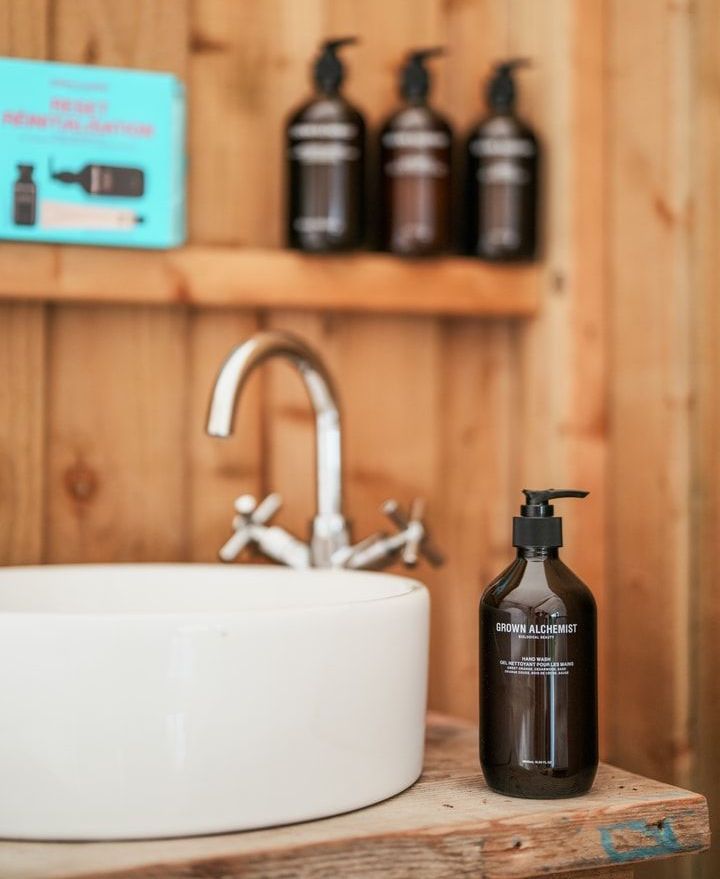
While there is a product component to the activation—The Pop-Up Hotel rooms featured Grown Alchemist body cleanser, shampoo, conditioner and other offerings, the wellness treatment and skin service integration was key for Teal. “This is about building awareness of our brand and what we stand for in the wellness and skin health space and bringing that to life in a way that isn’t just about placing a product in somebody’s hands,” she says. “It’s about talking to them about the holistic aspect of what we stand for, hence why offering the fitness classes and why having the treatments is important.”
Teal sees the partnership as an organic outgrowth of the wellness movement, an ever-evolving tidal wave that has become less binary (you’re no longer either a health nut or a heathen with no in between) and more nuanced (you can microdose mushrooms recreationally as well as medicinally) over the years.
“People who are committed to living well may not want to compromise enjoyment by fully abstaining from something that could be potentially bad for them physically or psychologically,” Teal offers. “There are alternative ways and means for people to still live life to the fullest without necessarily that health compromise.”
Intimate wellness brands are getting in on the festival wellness fare, too. Any female festival goer knows that many aspects of the experience—tight clothes, hot weather, hookups, long bathroom lines, etc.—are not conducive to optimal vaginal health, and brands are putting boots on the ground and product on shelves to help consumers feel their best and maximize their fun.
Nadya Okamoto, founder of period care brand August, attended music festivals this summer donning an oversized clear backpack full of August menstrual products and her tampon string deliberately visible. When other attendees tried to alert her that her string was showing, she told them it was on purpose to spark conversation and then offered them samples of August products.
As part of its sampling strategy, intimate skincare brand Luna Daily was on the streets of London this summer handing out mini versions of its best selling The Everywhere Spray-To-Wipe, a pH-balanced and probiotic-powered cleansing spray that can be used all over the body, including intimate skin, as well as sprayed onto toilet paper for a more complete clean on the go. The compact spray is a useful item to have when you’re in the desert or on a muddy field and your only toilet option is overrun porta potties.
Founder Katy Cottam says the brand is also activating with U.K. retailer Boots over the summer months. “It’s not just our own channels, but retailers as well are really leaning into festival season,” she says, adding that the intention of the activation is to “raise awareness before those events [like Glastonbury] when people are shopping and thinking about what they’re going to take with them.”
Inspired by members of its marketing team who are fervent festival attendees, sexual telehealth specialist Wisp created a $70 Festival Bundle with travel sized UTI, yeast infection and bacterial vaginosis prevention medicines, as well as the brand’s Original Harmonizing Lube. CEO Monica Cepak says that vaginal health isn’t something that everyone thinks about going into a festival, “but if you invest in some preventative health options as part of that experience then you could hopefully avoid that really painful UTI or herpes outbreak or whatever the case may be,” she shares.
Wisp has activated at festivals like Lollapalooza by showing up with someone dressed in a vulva costume, which Cepak says usually grabs people’s attention. “It’s a fun way to remind people that they shouldn’t be ignoring their health as part of the festival experience,” she notes.
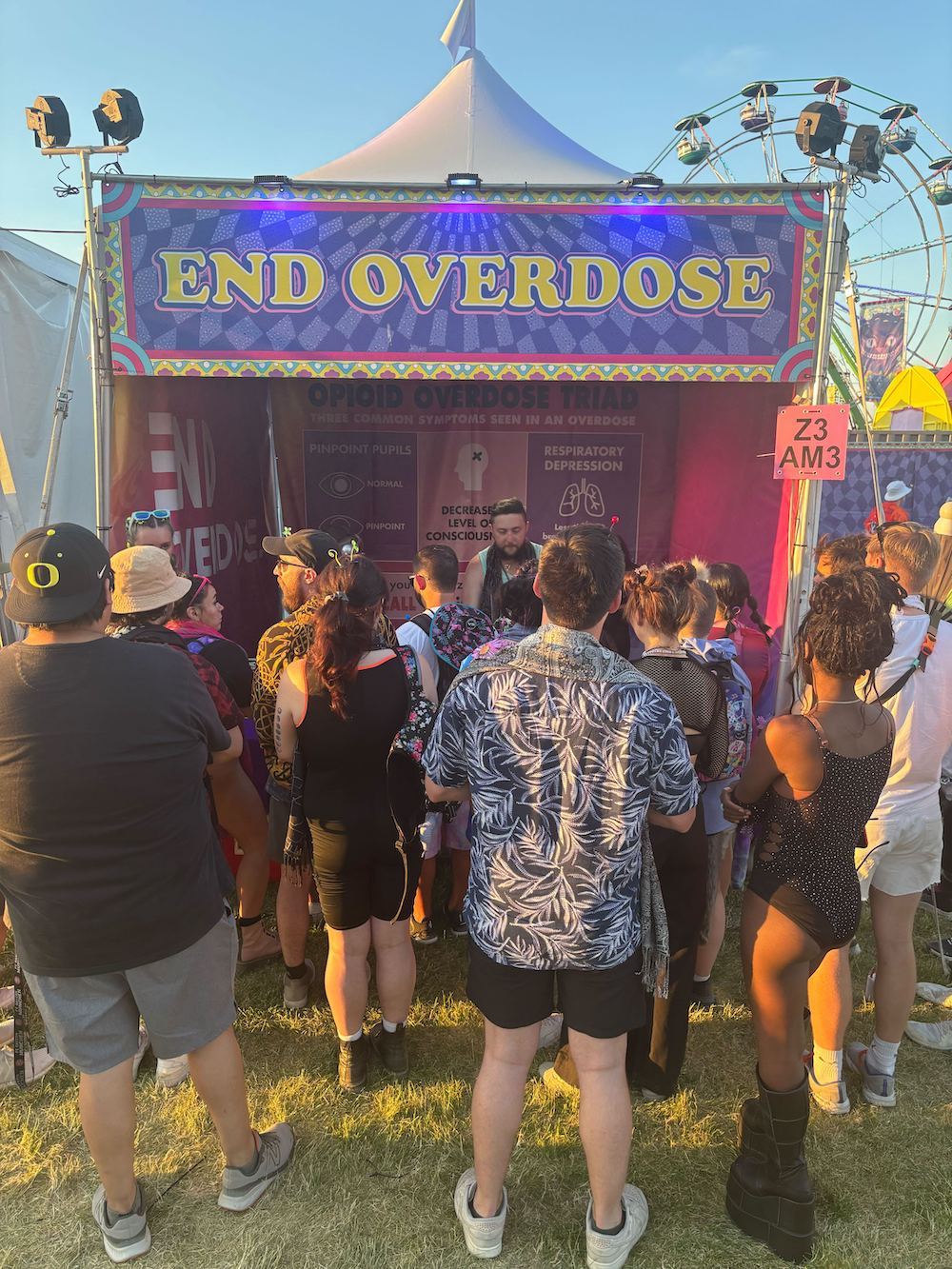
Perhaps the strongest indication that the music festival scene is entering its wellbeing era comes not from increased consumer brand activations but the near ubiquity of non-profit End Overdose on the electronic dance music—or EDM—event circuit. The organization, whose mission is to “end drug-related overdose deaths through education, medical intervention and public awareness,” has seen exponential growth since its founding in 2017, but especially in the past two years.
In 2022, End Overdose was on the ground training attendees at a 700-person live music event in Los Angeles. This year, at Electric Daisy Carnival, commonly referred to as EDC, the largest electronic music event in the U.S., End Overdose distributed 20,000 doses of naloxone, a medicinal nasal spray that rapidly reverses an opioid overdose, and trained 20,000 people in opioid overdose response.
End Overdose’s growing popularity evinces a sentiment shift among scenesters from a constant drive to experience the bleeding edge of altered states to embracing harm reduction measures that prioritize safe partying—even among those who dabble in different substances. Mike Giegerich, End Overdose’s director of communications, says the organization is expressly drug-neutral, meaning it’s not in the business of judging substance use, just making those experiences safer.
“I think people see us now as kind of a friendly face,” offers Giegerich. “In terms of our EDM festival outreach, we’ve been able to synthesize with PLUR [peace, love, unity, respect] culture and now it’s become cool to say, ‘I got trained at the End Overdose booth,’ or ‘here’s my End Overdose kit.’ We’ve integrated into festival culture to the point where, now, one of [attendees’] stops when they’re planning out their festival is the End Overdose booth.”
While a luxury glamping-cum-wellness festival experience can cost the consumer a pretty penny, it’s not cheap for the brands, either. For companies that want to activate on the festival circuit, the cost of forging an official partnership is usually the biggest barrier. Van Iden estimates that sponsorship fees typically start around $10,000 for a major festival and can easily exceed six figures, depending on the robustness of the activation.
As such, for emerging brands unofficial guerilla-type efforts like handing out free products on site are the only option. When making the investment in an official festival partnership, Van Iden suggests doing your due diligence on things like attendee demographics. “We are really careful when suggesting a brand get involved with an event, especially a festival, since it’s always a big investment—sponsorship fees, product and time,” she says. “We want to make sure the crowd is right to really understand the product.”
While the long term trend is towards increased integration of wellness experiences at large-scale festivals, economic uncertainty may be suppressing partnerships this season. Van Iden notes that, after doing a fair amount of event sponsorship outreach this year, she’s found that a lot of brands have cut back on their event budgets. Still, she’s bullish on the future of wellness and better-for-you partying options being an integral part of the elevated festival experience. She emphasizes, “The demand on the consumer-side is there, waiting for the brands to show up.”
The players
5 mentionedAugust

Luna Daily
Momentous
Too Faced
Better Being