RoC's Renaissance: How A Near-Forgotten Heritage Brand Became A Private Equity Growth Driver
Six years later, it had tripled global retail sales from roughly $100 million to approximately $300 million, delivered 21 consecutive quarters of market share gains and reclaimed the No.1 position in eye cream in the United States, according to data from market research firm NielsenIQ. It had also more than doubled its earnings before interest, taxes, depreciation and amortization (EBITDA) margins and secured an estimated $500 million exit to new ownership.
The transformation didn’t stem from aesthetic reinvention, celebrity alignment or aggressive line expansion. It was the product of something less visible but far more powerful: disciplined focus, deliberate sequencing and the construction of a leadership team capable of executing both.
RoC’s resurgence stands as one of the clearest case studies in modern mass skincare, not because it disrupted the category, but because it reactivated a brand whose core equity had remained intact. Under aligned private equity ownership, RoC didn’t attempt to become something new. Instead, it intensified what it already was and rebuilt the operating engine required to scale it.
The result was not simply growth, but controlled, margin-accretive growth in a highly competitive category. What follows is the anatomy of that transformation.
The Asset: Strong Equity, Evolving Priorities
Founded in 1957 by French pharmacist Jean-Charles Lissarrague, RoC built its reputation on dermatological rigor and stabilized retinol long before clinical skincare became mainstream positioning. For decades, its authority rested on scientific credibility rather than marketing flash.
That credibility never disappeared. What shifted was prioritization within a very large portfolio.
Under Johnson & Johnson, which purchased the brand from LVMH Louis Vuitton Moët Hennessy in 1993, RoC operated as a smaller component inside a nearly $14 billion consumer business that included global franchises such as Neutrogena and Aveeno. As the company concentrated resources on scaling billion-dollar brands, RoC’s relative size limited the level of sustained investment and organizational focus it received.
By the late 2010s, several trends emerged:
- U.S. sales, representing roughly 90% of revenue, were declining by approximately 3% annually.
- European operations were contracting following an earlier relaunch effort.
- Dedicated internal resources had become more centralized.
- Innovation cycles lengthened as investment was prioritized toward larger brands.
- Marketing support slowed.
RoC wasn’t structurally broken. It remained a clinically credible brand with meaningful consumer recognition, but within a scale-driven organization, a roughly $100 million franchise wasn’t positioned as a primary growth engine.
For Johnson & Johnson, RoC was a logical divestiture as the company streamlined its portfolio around larger strategic priorities. For private equity, that same dynamic signaled opportunity: a scientifically grounded brand with established distribution, significant awareness and clear headroom for focused investment.
The Acquisition Thesis: Value In Strategic Refocus
In 2019, the San Francisco-based private equity firm Gryphon acquired RoC. The investment thesis was analytical. Gryphon identified several enduring strengths.
Brand equity remained intact. Awareness in core markets exceeded 50%, according to an internal survey, and the brand retained authentic French pharmacy heritage alongside a strong association with retinol efficacy. RoC possessed meaningful intellectual property, including 26 patents related to retinol and 35 patents in total since its inception. The scientific platform was defensible. The economics were sound. The business was profitable and carried attractive gross margins, even in decline. Distribution infrastructure was already established across U.S. mass, drug and specialty retail.
Taken together, these attributes suggested that the brand’s erosion was operational rather than existential. RoC didn’t require reinvention. It required leadership, capital and focus.
Rebuilding The Foundation: Governance Before Growth
The first critical move under new ownership was leadership. Fernando Acosta, a veteran of Unilever and Avon, joined as CEO in 2019 and effectively became employee No. 1. What he inherited wasn’t a functioning growth organization, but a carve-out in progress.
Within months, RoC had to establish a new headquarters in New York, rebuild a management team across marketing, research and development, finance, supply chain and sales, and shore up retailer confidence. Simultaneously, it had to preserve supply continuity while disentangling itself operationally from its former parent.
Between 2019 and 2024, headcount expanded from one person to approximately 50. The growth wasn’t about scale for its own sake. It was about reconstructing governance, accountability and speed of decision-making. Before RoC could grow, it had to regain control.
The Carve-Out: Operational Independence As Prerequisite
Separating from J&J required approximately 18 months and consumed an estimated 60% of executive bandwidth in the early stages. At acquisition, roughly 90% of RoC’s formulas were still manufactured within J&J facilities. Although the brand retained its patents, it didn’t yet control its supply chain.
Technology transfers were necessary to preserve clinical efficacy claims outside of the former parent’s infrastructure. Transitional manufacturing agreements had to be negotiated, new laboratory partners sourced and pricing structures renegotiated, all during the volatility of COVID-era supply chain disruption.
Carve-outs are rarely glamorous, but they’re foundational. Without operational autonomy, sustainable value creation is impossible. Only after completing this separation could RoC fully shift from defensive stabilization to proactive growth.
The People Platform: Building An Execution Engine
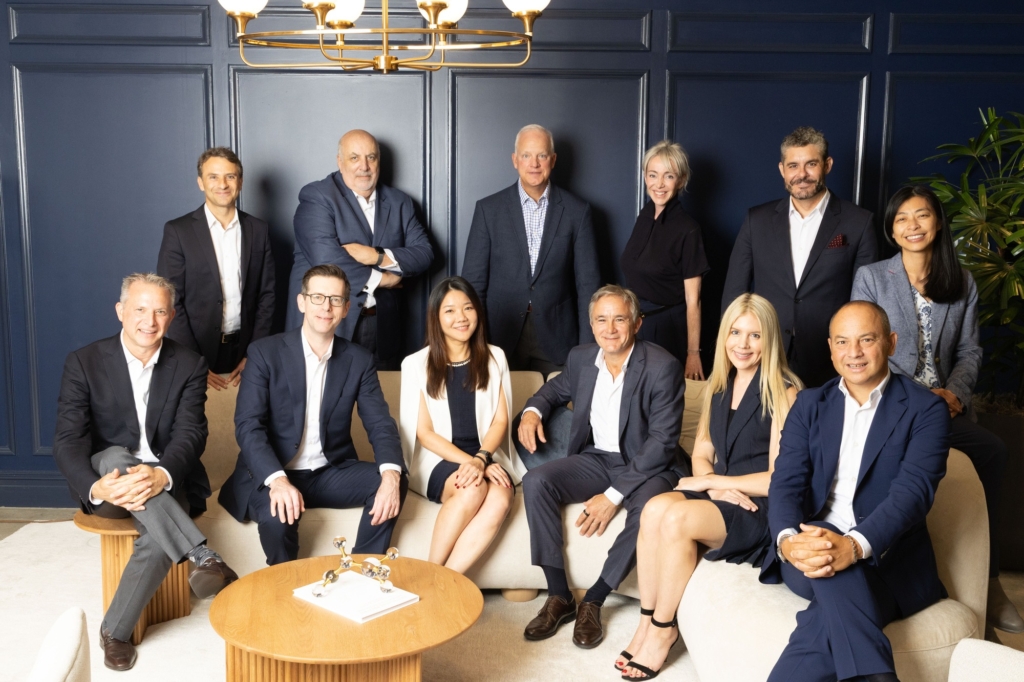
Capital may enable a turnaround, but leadership executes it. What followed Acosta’s CEO appointment wasn’t incremental hiring, but the deliberate construction of a cross-functional leadership team capable of operating independently and scaling with discipline.
Early hires were strategic and role-specific. Hillary Hutcheson, formerly of L’Oréal and No7, joined as CMO to restore clarity and rebuild a marketing engine anchored in clinical credibility. Art Pellegrino, who had led research and development initiatives at J&J and had been involved in stabilizing retinol for consumer use, ensured scientific continuity through the carve-out and later assumed the role of chief scientific officer.
Financial and commercial rigor were strengthened through leadership with experience at global consumer companies. Supply chain expertise was installed to manage the complexity of transitioning manufacturing away from J&J during COVID-era volatility.
The team wasn’t a collection of opportunistic hires. It was a coordinated executive build across marketing, science, finance, retail and operations designed to restore operating rhythm and accountability simultaneously. RoC evolved from a neglected brand asset into a fully integrated operating organization with clear functional ownership.
Leadership depth expanded further after RoC was acquired in 2024 by London-based investment firm Bridgepoint for around $500 million, according to the publication Reuters, particularly in key functions including product innovation, strategy and legal. It also extended across European markets, with local general managers and field teams installed to support disciplined international scaling.
RoC’s renaissance illustrates a broader principle. Brand equity attracts acquisition interest, but execution capability determines whether that equity compounds. Private equity ownership didn’t simply inject capital. It built a management bench capable of translating focus into sustained performance.
Focus As SKU Strategy: The Power Of Subtraction
RoC’s growth strategy didn’t begin with expansion. It began with subtraction.
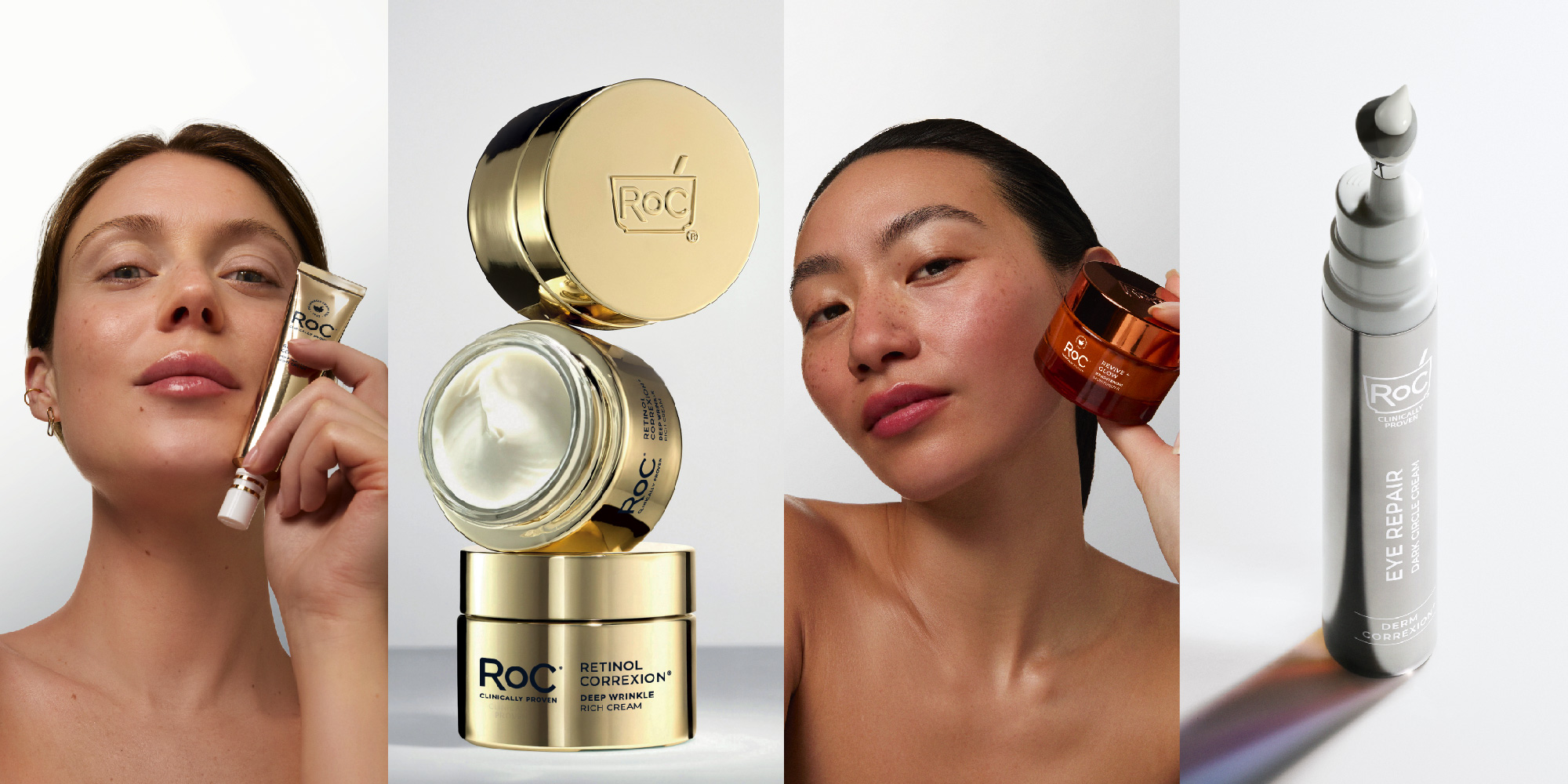
Approximately half of inherited stockkeeping units (SKUs) were eliminated. The rationale was straightforward: increase velocity per SKU, concentrate marketing spend, simplify operations and restore retailer confidence. At the center of this rationalized portfolio stood one unmistakable anchor: clinical retinol.
Rather than chasing emerging ingredients or repositioning around transient trends, RoC chose to reinforce its authority in the category it had helped define. From that foundation, the brand organized its assortment into six clearly delineated franchises: Line Smoothing, Deep Wrinkle, Revive + Glow, Hydration+, Even Tone + Lift and Derm Correxion.
Today, the portfolio comprises fewer than 40 core products. In a beauty environment frequently characterized by proliferation, RoC embraced concentration. This decision would prove catalytic.
Channel Recalibration: Investing Where Returns Compound
At the time of acquisition, approximately 90% of RoC’s revenue flowed through physical wholesale and retail partners. Mass, drug and specialty chains were—and remain—the backbone of the business. Less than 10% of sales came from Amazon, and there was no direct-to-consumer channel.
Crucially, RoC didn’t pivot away from wholesale. Brick-and-mortar retail continued to represent the majority of revenue and remained central to scale and visibility. What changed wasn’t the importance of retail, but the sophistication with which the company approached each opportunity.
Rather than treating distribution as a simple presence strategy, management began evaluating channels through a capital allocation lens. As Acosta explains, “For me, it was clear that, while we needed to win everywhere we had decided to play, we also needed to better calibrate our investments.”
Within wholesale, this meant concentrating on SKU productivity per door, improving velocity through targeted marketing support and avoiding marginal placements that diluted turns or required disproportionate trade spend.
At the same time, management identified e-commerce, particularly Amazon, as a structurally underleveraged growth engine. While physical retail remained the largest contributor to revenue, incremental capital increasingly flowed toward channels offering stronger data visibility, marketing efficiency and margin leverage.
By 2025, Amazon and direct-to-consumer collectively accounted for almost one-third of sales, with website repeat purchase rates exceeding 35%. Digital didn’t replace wholesale. It strengthened the overall economic model.
Channel strategy evolved from distribution expansion to disciplined capital deployment: competing everywhere RoC chose to play, but investing asymmetrically where returns could compound most effectively.
Scaling the Platform: From U.S. Turnaround To Global Expansion
The transition to Bridgepoint ownership marked a shift in emphasis. Gryphon had engineered the U.S. turnaround and rebuilt the brand’s economic engine. Bridgepoint brought expertise in scaling European consumer assets.
International expansion targeted France, Italy, Spain and the United Kingdom, with pharmacy channels playing a central role consistent with RoC’s heritage. Local field teams were installed, and assortments were customized to reflect market-specific white space.
Importantly, this expansion occurred only after the U.S. business had been stabilized and margins strengthened. International growth was layered onto an already healthy foundation. Today, international markets account for more than 15% of revenue and continue to expand.
Performance: Share Gains In A Competitive Environment
Between 2020 and 2024:
- Retail sales increased from approximately $100 million to $300 million;
- Net sales grew at a compound annual growth rate (CAGR) of roughly 20%;
- EBITDA expanded at approximately 25% CAGR;
- EBITDA margins more than doubled;
- Brand awareness improved from roughly 50% to above 60%, according to an internal survey;
- The brand recorded 21 consecutive quarters of market share gains in the U.S., according to NielsenIQ.
Between 2024 and 2025, RoC achieved high-teens growth in both revenue and profit, while the broader mass skincare category grew 6%, according to market research firm Circana.
RoC is not merely participating in category expansion. It’s capturing share. Its business model now resembles a classic 80/20 structure, with a concentrated cluster of hero SKUs driving a disproportionate share of revenue and profitability.
Why RoC’s Renaissance Matters
RoC’s resurgence challenges several prevailing assumptions in beauty. First, it demonstrates that heritage brands don’t necessarily require reinvention to remain relevant. When equity is authentic and clinically grounded, it can be intensified rather than replaced.
Second, it shows that growth doesn’t always emerge from breadth. In RoC’s case, narrowing the portfolio and concentrating investment increased both velocity and margin.
Third, it underscores the importance of sequencing. The transformation followed a deliberate order: carve-out, stabilization, portfolio rationalization, core amplification, channel recalibration and only then geographic expansion. Each phase built upon the structural integrity of the one before it.
Fourth, it highlights the often-underestimated role of leadership density. Capital and strategy provided direction, but it was the deliberate construction of a cross-functional executive team across marketing, science, finance, operations and retail that converted focus into measurable results. Governance maturity enabled discipline. Discipline enabled compounding.
Finally, RoC illustrates the power of ownership alignment. Both Gryphon and Bridgepoint paired capital with strategic patience, empowering leadership to prioritize durable margin expansion over short-term optics.
Brands rarely decline because consumers stop believing in them. More often, they decline because focus dissipates and execution fragments.
RoC’s renaissance wasn’t a reinvention. It was a reassertion of identity, discipline and leadership capacity. In an era defined by noise and acceleration, the combination proved decisive.
To learn more about the history of RoC Skincare, read the first white paper in our series here.