Pubic Hair And Public Norms: How Beauty Brands Are Navigating Changing Personal Grooming Attitudes And Practices
“We have seen media push that having pubic hair is normal and that we shouldn’t be ashamed of it,” says sexologist and sociologist Marla Renee Stewart. That push has been compounded by the pandemic, which led to many consumers skipping waxing services and not adhering to public pressure to be shorn. However, there’s a counter push happening with a group of consumers expected to shed their “coronabush” or at least a portion of it this summer as they flock to beaches and pools.
What do the morphing pubic hair perceptions and practices mean for brands selling products for pubic hair removal, particularly newer brands catering to those with hair down there? Is there an acceptable way to promote the products in light of an emerging appreciation for an array of pubic hair preferences?
Beauty brands have long played a role in what consumers do with pubic hair. It was uncommon for American women to remove body hair until razor companies, which previously marketed exclusively to men, seized an opportunity to target women in the early 20th century. Their early ads mostly focused on underarm and leg hair.
It wasn’t until the 1980s that pubic hair removal became common due in part to changes in porn conventions for both vulvas and penises. As with beauty trends affecting women generally, politics and power are integral factors. The distaste for body hair that emerged in the 1980s could be wielded as weapon for those interested in undermining “hairy feminists” and even infantilizing women. In a piece on the disappearance of female pubic hair, Roger Friedland, a professor of religion at University of California, Santa Barbara, writes, “The female teen fetish went mainstream after feminism rose to challenge male predominance.”
Still, it wasn’t until the 2000s that pubic hair removal became as popular as it is now, says sexologist and sociologist Sarah Melancon. She points out that the great majority of Playboy centerfolds displayed full bushes through the 1990s. “Fully shaved centerfolds began rising in 2001, and after 2003, centerfolds were twice as likely to be shaved bare as trimmed,” says Melancon, noting that bare vulvas gained traction along with Brazilian waxing.
Currently, pubic hair removal is not only common, but the norm for women and men. In a survey chronicled in a 2016 JAMA Dermatology article, 84% of respondents reported they removed some or all of their pubic hair. A 2017 study in the American Journal of Men’s Health found that 50.5% of men did the same. Women’s motivations for removing pubic hair include cultural beauty ideals and notions about what kind of person has or doesn’t have pubic hair (e.g., women without pubic hair are cleaner), per an Australian BMC Women’s Health study from 2019.
Yet today, people are pushing back against the assumption that removing pubic hair is a necessity as evidenced by the #freethebush hashtag on Instagram in more than 4,200 posts. Bel Olid, author of the book “Hairless: Breaking the Vicious Circle of Hair Removal, Submission and Self-Hatred,” stopped shaving their pubic hair several years ago following interactions with queer women less constrained by patriarchal stereotypes and then coming to identify as genderqueer. Olid used to view hair removal products as solutions to the “problem” of body hair, but began to find the products’ marketing offensive.
“In my early 20s, I was very programmed to keep everything bald because that’s what I thought guys wanted,” echoes Ashley L., a 28-year-old writer in Los Angeles. “But, as I got older, I was hooking up with guys who told me they thought it was so hot when I had hair, and it started a total shift in my mindset, and now I’m much more into doing what makes me feel good rather than worrying what a guy is going to think.”
It’s not just women who are questioning whether they need to remove their pubic hair. Daniel Saynt, 39, founder of the club NSFW in New York City, went from shaving to trimming seven years ago as “presentations of more masculine men became the norm and twink culture died down.”
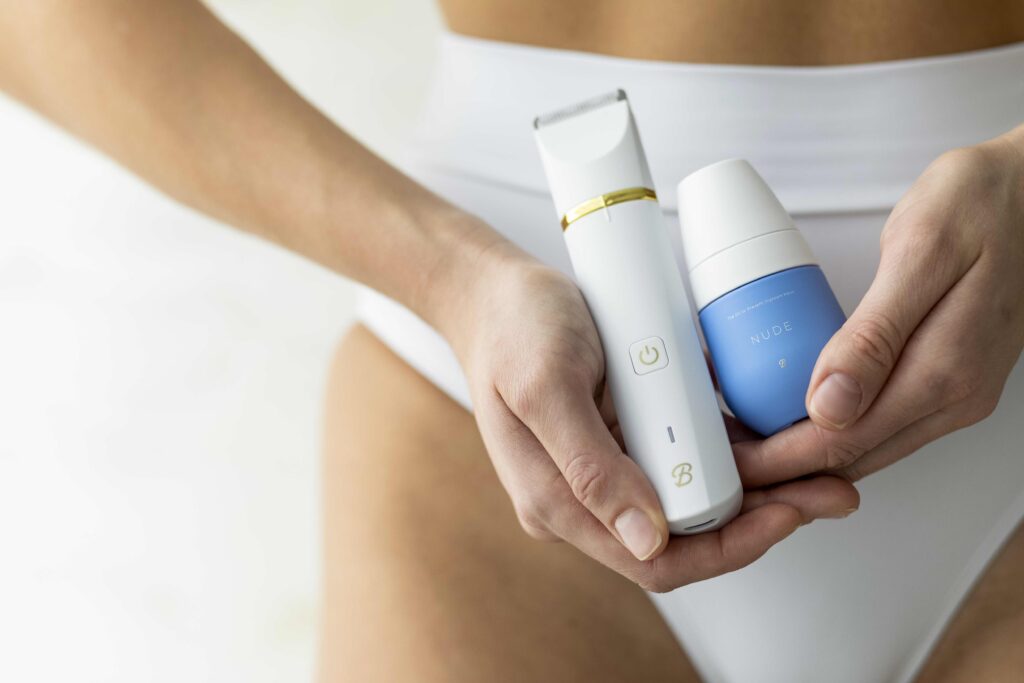
Amid this era of critically examining beauty norms and combating stigma, brands are thinking about how to accommodate changes in pubic hair styling expectations and choices. Bushbalm, which sells trimmers as well as oils and creams to soothe shaved skin and ingrown hairs, launched in 2016 “on the premise that skincare needed to evolve for your bikini line and pubic area,” says Rachel Kerr, the brand’s director of brand and marketing.
In 2021, Bushbalm’s annual survey discovered that 30% of its customers trimmed their pubic hair. “Since the strong majority of our customer base is female, this number surprised many,” says Kerr. “Throughout the pandemic, those who traditionally saw a waxing professional looked to trimming.”
Pubic hair grooming is different among different people. Aesthetician Alison Angold, a waxing service provider, has observed that mainly older women retain pubic hair. Accordingly, the 2016 study on women’s pubic hair grooming found that women aged 45 years old and above were less likely to remove pubic hair than women aged 18 to 24 years. In addition, the study found that white women were more likely to groom pubic hair than women of any other race.
It’s possible that more men are removing their pubic hair than before. A 2011 Sex Roles study found that roughly equal numbers of college men and women practiced pubic hair grooming, though women groomed more often. “In Google trends, you’ll often find ‘manzilian near me’ [a Brazilian wax for a man] as a breakout search term,” says Kerr. “We supply thousands of waxing salons with retail and backbar products and have increasingly seen this as an offered service.” John, a 51-year-old real estate agent in Utah, started shaving his genitals after his wife began getting Brazilian waxes two years ago. “It finally occurred to me that she might really appreciate it, too,” he says.
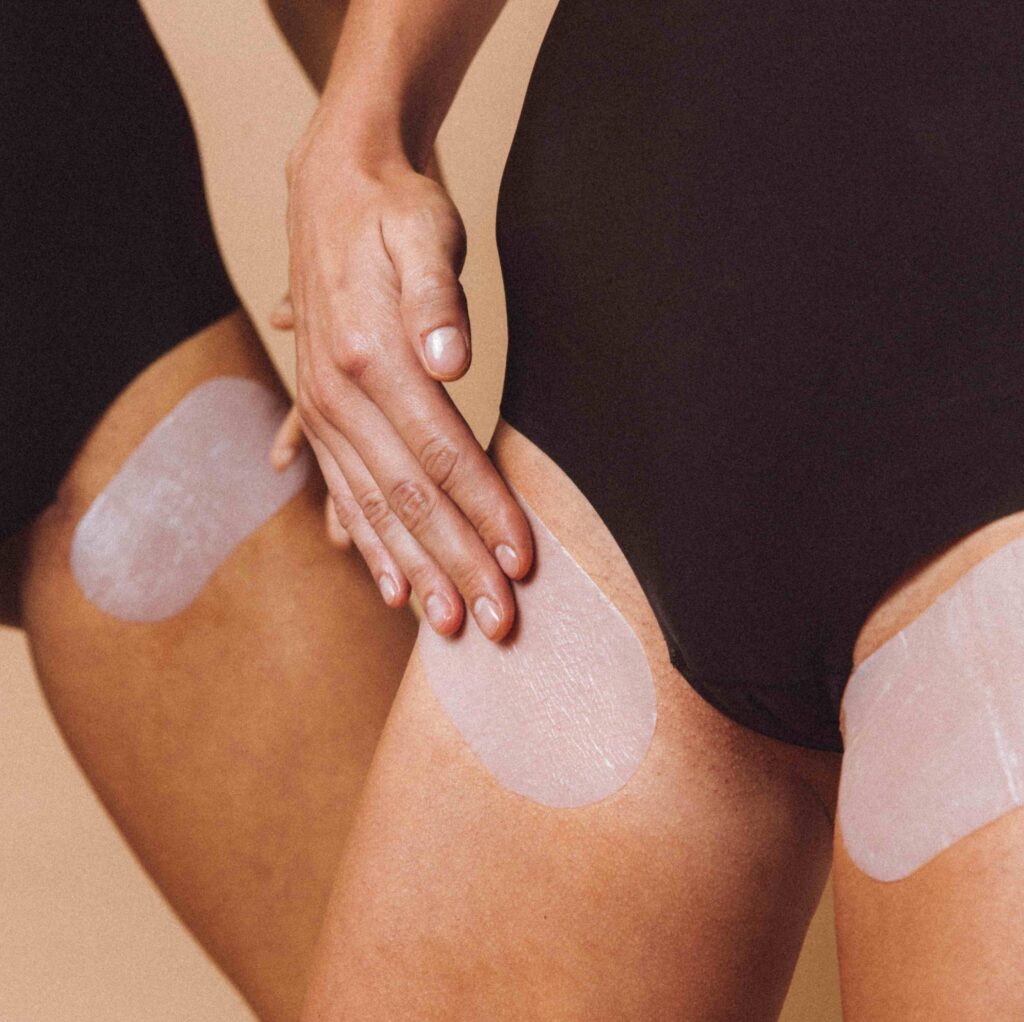
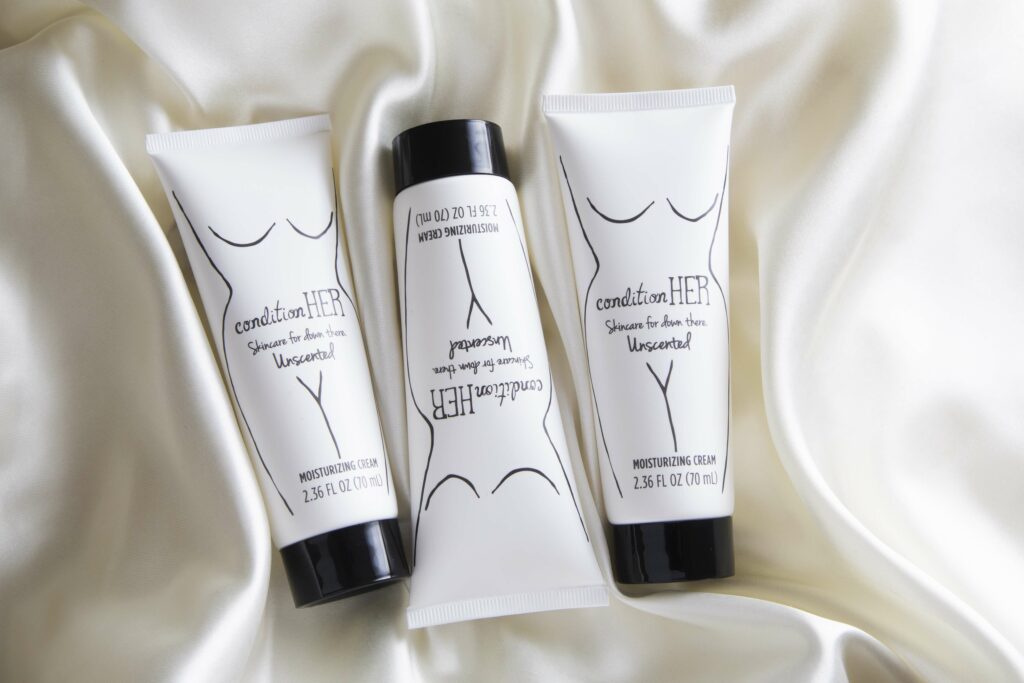
To cater to people making variety of pubic hair choices and combat unrealistic ideals, Bushbalm’s site shows unedited before-and-after photos, and sells exfoliating scrubs and pubic area oils for people with or without pubic hair. ConditionHer, a vulva moisturizing cream, takes a similar approach. Its formula is designed to address irritation, reduce the appearance of razor burn and ingrown hairs, and soften hair, says brand co-founder and CEO Wendy Rose Berry. Berry developed the product in 2013 because she felt she “needed a way to soften [her] pubic hair.” She says she’s seen more people use it for this purpose with the advent of the “coronabush.”
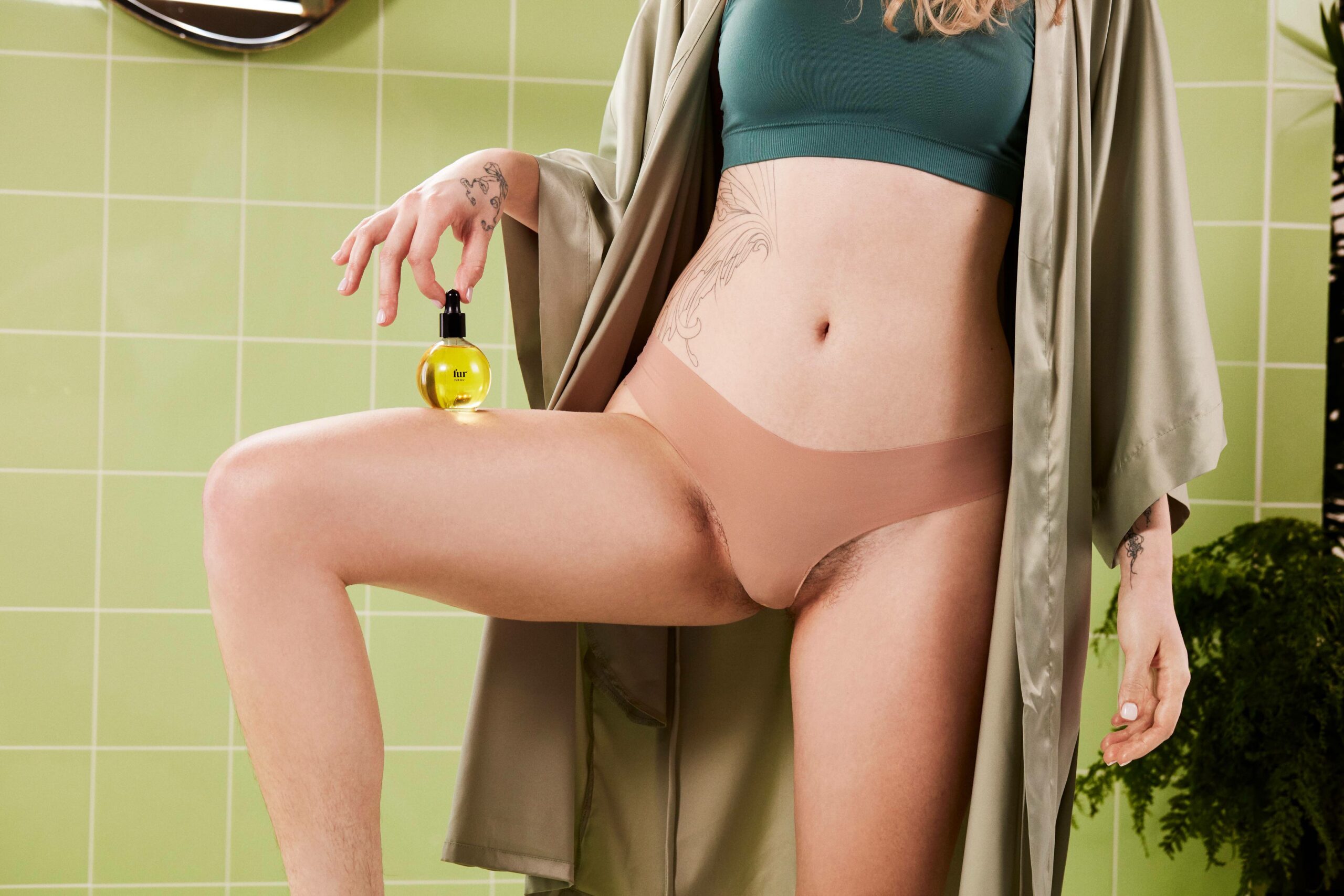
Fur Oil, a softening oil that launched in 2016, is explicitly marketed to consumers with pubic hair, though it works on hairless skin. It was created in response to “trends in beauty toward natural products and defining your own beauty, and away from prescribed standards,” says Sara Jane Emmons, branding manager at Fur. Initially, the brand encountered criticism that having the word “pubic” on its packaging was too risqué. While the market has evolved since then, Emmons says, “We do still continue to see pushback whenever people choose to celebrate having body hair, so there is very much to be done in terms of dismantling the stigma.”
Resisting the stigma, Joani DiCampli, founder of Boobalicious, expanded her brand’s line of deodorants formulated to manage under-boob sweat with For Your Lady Parts in 2018. “As a middle-age woman going through menopause, not only did I sweat under my breast; I was sweating through my panties and was uncomfortable,” she says. “Pubic hair gathers the sweat, which makes the pubic hair sweaty.” The product allows her customers to “feel fresh and odorless all day,” she shares.
Angold predicts products such as For Your Lady Parts and Fur Oil will face growing competition. She says, “We will see more products on the shelves specifically for treating pubic hair, specific shampoos and conditioners to treat the delicate area and keep the hair soft and manageable.” Among her clients, Angold has seen fewer women removing all their pubic hair. She says they want to remove “overgrown” hair to stay “clean, neat and tidy.”
The removal of hair deemed excess is usual. Angold defines excess pubic hair as hair that grows below the panty line. With most swimsuits leaving women’s pubic hair uncovered, the pressure to remove hair along in the bikini area clearly hasn’t vanished. Reflecting the trend toward trimmed or partially removed pubic hair, a search for the term “full bush” on popular porn sites usually yields videos of women with present, but pared-down bushes.
But could pubic hair that’s “soft,” “manageable,” “fresh” and “odorless,” as brands are promising, become beauty ideals? If women must remove some of their pubic hair to be considered “clean, neat and tidy”—and a portion of that hair is regarded as “overgrown”—how far have beauty standards budged? And might images of partial bushes claiming to be “full bushes” promote unrealistic ideas about what people’s natural bodies are like?
“I worry that, in the absence of a true understanding of healthy vaginal biology, the existence of products [to remove or manage pubic hair] perhaps unintentionally creates a problem that doesn’t exist,” says Melancon. Reviews for vulva deodorants on Amazon, for instance, cite concerns about odor. “I can’t help but wonder about their perception of normal or healthy scent,” says Melancon. “A wide range of scent is normal, especially if you’ve been sweating, unless it is markedly off-putting, which indicates an infection. In fact, pubic hair is hypothesized to retain scent to transmit pheromones, so an increase in smell may actually be a good thing in the bedroom.”
The broader issue involves brands claiming to offer liberation or empowerment. “Norms are by definition constraining,” says Lisa Wade, a sociology professor at Occidental College. “It seems to me that true freedom would be no one talking about my pubic hair at all. If freedom has a price tag, a time commitment and a definition—a look—then it’s not free.” Stewart is skeptical that businesses can help people become comfortable with pubic hair. “Consumerism thrives on making you feel insecure about yourself,” she says.
Brands haven’t stopped offering tools to remove pubic hair and won’t soon. But, in response to contemporary attitudes toward pubic hair, they’re making an effort not to be overly prescriptive about people’s grooming choices. Oui the People founder Karen Young says her razor and body care brand concentrates on skincare rather than hair removal in marketing to avoid furthering pubic hair shame.
“Beauty and personal care brands were often the ones to create the stigma around having pubic hair anyway, so I do think the responsibility is ours as an industry to lift it,” she explains. “We’ve all got pubic hair, we get it, but since we’re a brand that champions skin health, if you choose to remove any of your body hair, we focus on how we can deliver your very best skin in the process.”
Fur likewise attempts to avoid shame-inducing marketing. “In every campaign we do, we make sure that there’s someone with visible body hair, as well as someone who trims or removes their hair,” says Emmons. “We also don’t treat it like a binary. Our models may have hair in one place but shave it in the other. There’s also power in the language brands can use as well. When we choose to say ‘pubic hair’ over outdated slang, it helps normalize it as something we can freely talk about rather than something that’s too taboo for direct discussion.”
At a minimum, businesses should avoid inadvertently denigrating consumers opting to not use their products. “Companies should understand that their marketing can easily trigger women’s appearance anxieties and intend to be part of the solution instead of the problem,” says Melancon. “For beauty brands to be responsible, they should ideally educate consumers about what’s healthy. Consumers may actually appreciate knowing their body is fine as it is and associate those positive feelings with your brand.”
The players
5 mentionedToo Faced

Under Your Skin
Formulate
Counter
AS Beauty