Pivots, Obstacles And Opportunities: How CBD Beauty And Wellness Brands Are Evolving
Brands in the cannabis space are used to dealing with roadblocks in almost every facet of their businesses, but the unpleasant surprise felt especially egregious. “With sex, hate, alcohol, firearms and tobacco? CBD doesn’t belong in any of those categories,” says Jessica Assaf, co-founder and chief education officer of Prima, which had relied on the SMS channel as a significant revenue driver and medium for customer communication. “Being a brand in the space today is exhausting. You get through one thing and you expect to now be able to use momentum to push forward and, then, you hit another wall.”
In response to the CTIA’s move, over 20 brands and e-tailers with CBD products, including Prima, Plant People, Foria, Quim, Recess, Miss Grass and Onda, formed a coalition and initiated a petition to influence laws and regulations in order to make it easier for companies to sell hemp-derived CBD products, as well as provide clarity around compliance and standards.
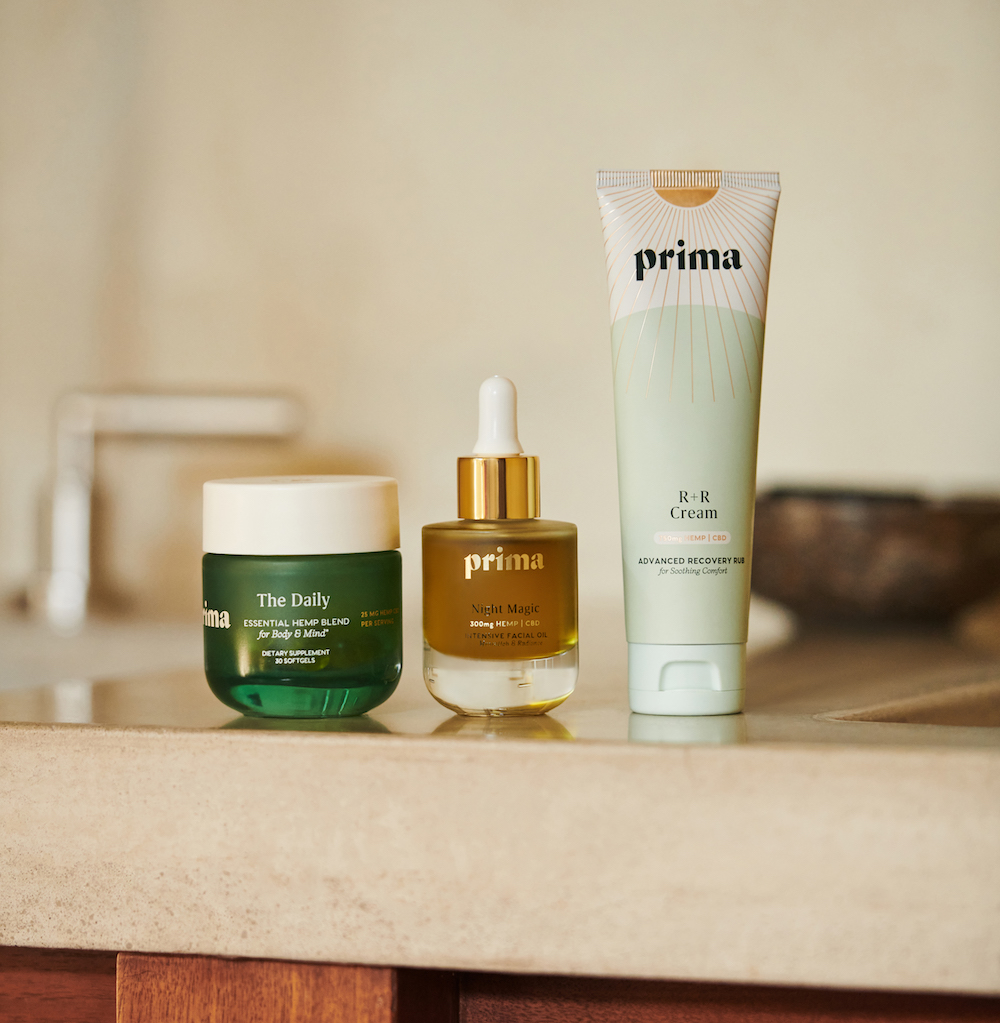
Foria co-founder Jon Brandon didn’t mince words in criticizing CTIA’s move. “The fact that there are these prohibitions against a particular compound or plant-based ingredient just highlights the hypocrisy, the absurdity of our world where, if you’re selling pharmaceutically developed erectile dysfunction products, yay for you,” he says. “If you want to talk about plant-based female sexual wellness content, oh, no, no, no, can’t have that.”
To mitigate customer relationship damage from the CTIA decision, Prima introduced a commerce app called Shop Prima. The app initiative appears to be paying off. Assaf reports that sales through it accounted for 38% of Prima’s direct-to-consumer revenue in September. Three-fourths of app users have turned on notifications, and the monthly churn rate for subscriptions is 10%, below a health and wellness industry benchmark of 18%, according to Prima.
Even if the CTIA reversed course today, CBD companies’ woes wouldn’t vanish. Although the 2018 Farm Bill legalized the distribution of hemp-derived CBD products containing less than .3% THC at the federal level, murkiness in the regulatory environment remains. Laws governing CBD vary from state to state, making it tricky for companies to serve consumers nationwide. Many credit card payment processors still won’t touch sales of CBD products, which blocks brands formulating with CBD from selling on e-commerce platforms like Shopify. Processors deemed “high risk” that will handle cannabis brands can often be prohibitively expensive for emerging brands.
Brands committed to working with cannabinoids have had to get creative. Recently, skincare brand BeautyStat removed references to CBD from its award-winning product Universal C Eye Perfector’s copy and packaging. It now just refers to “hemp oil.” Founder and CEO Ron Robinson says the shift allows for smoother merchant processing. “‘CBD’ was flagged by the processors and could get us shut down,” he explains.
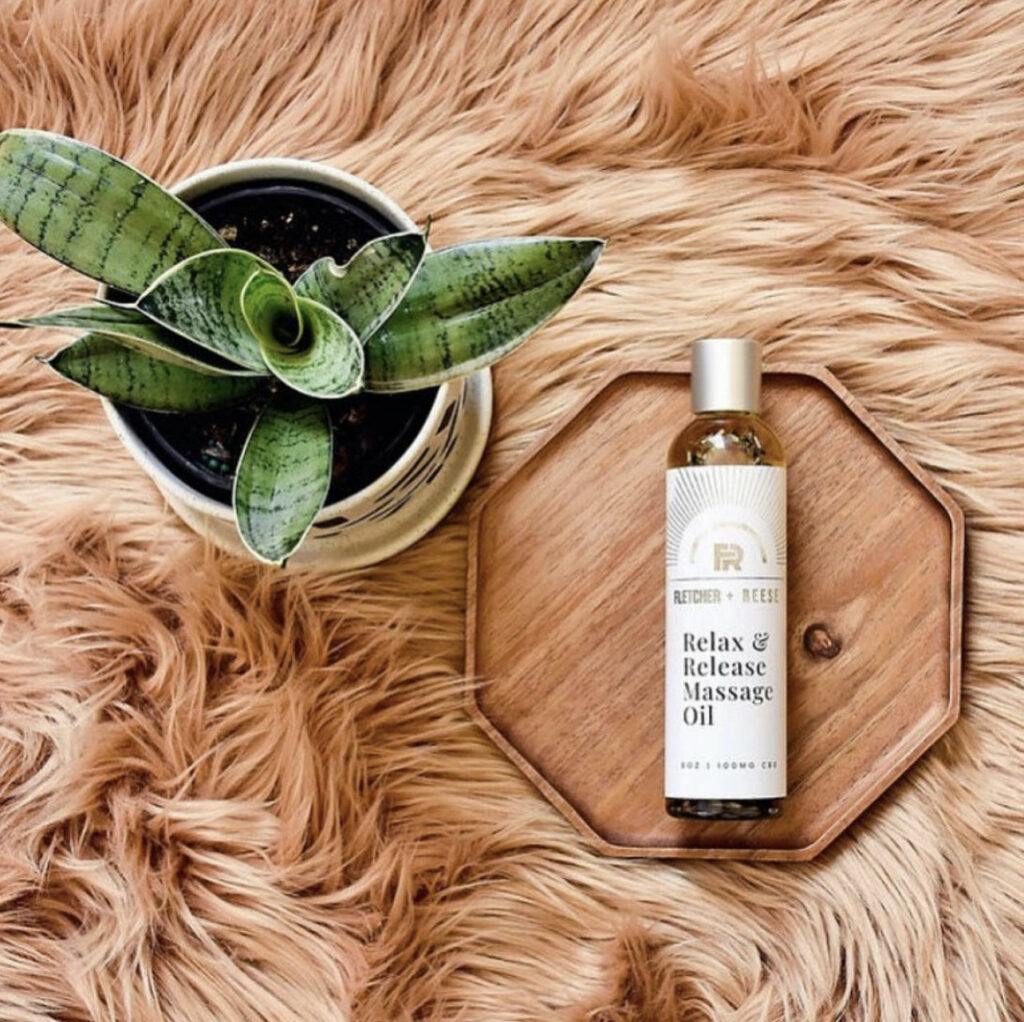
Among cannabis brand founders, scary payment processing stories abound. “I learned my lesson quickly during my soft launch,” says Tish Fletcher, founder of CBD beauty and wellness brand Fletcher + Reese. “In January, I allowed friends and family to purchase using a password. Within days, I was notified by Shopify that I could not use their payment system for CBD. They held the funds from that soft launch and, as a new business, I was petrified of things to come.”
Fletcher has since been connected to payment processor ActPay through a CBD manufacturer. ActPay also gave her business access to a mobile system for payments, but Fletcher knows she has several hurdles yet to face. She says, “As I start to enter local retail spaces, I am concerned.”
The retail landscape for hemp and cannabis brands is difficult to navigate due in part to persistent retailer reluctance to carry CBD products until there’s legal assurance. Additionally, the green rush of beauty and wellness brands featuring CBD that came in the wake of the Farm Bill flooded the market with brands of disparate quality, leaving consumers confused and overwhelmed. Today, nearly three years later, while there seems to have been a culling of brands looking to cash in on the CBD trend or “weedwashing,” it seems consumer demand for CBD beauty has waned.
CBD e-tailer and wellness brand Fleur Marché has strategically scaled down its beauty offering in the past two years with declining customer interest. “It wasn’t totally surprising as we believe that CBD is a valuable ingredient like hyaluronic acid rather than a category all in itself,” says Fleur Marché co-founder and CEO Ashley Lewis. “While CBD can be particularly beneficial for specific skincare needs, acne-prone or irritated skin most specifically, it isn’t a silver bullet. This position was solidified during the pandemic when we saw a massive influx of new CBD customers who primarily came to us for help with issues that fall more squarely into the wellness category: sleep, anxiety, pain usually manifested from said anxiety, and even sexual wellness.”
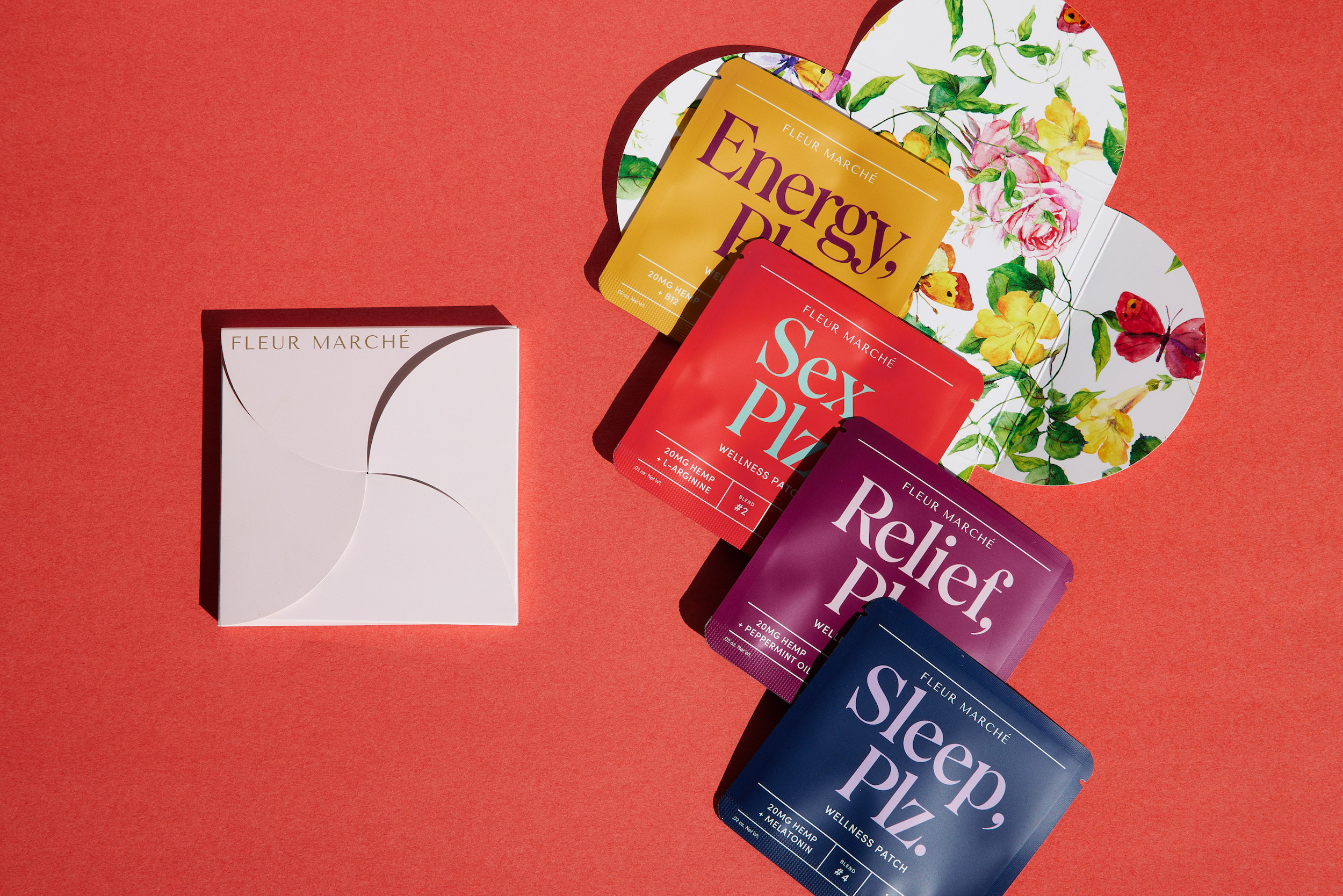
At the beginning of 2021, Fleur Marché launched a branded line of therapeutic transdermal patches with targeted solutions for customers’ wellness concerns. Lewis says, “Our line of patches combines CBD with other powerful plant-based ingredients to help with a host of wellness issues that plague modern women on the daily.”
Other industry experts agree that wellness solutions are mostly likely to thrive going forward. “CBD brands should focus on wellness first then go to traditional beauty,” instructs Roseann Fernandez, VP of marketing at cannabis company Tilt Holdings. “Consumers are seeking true wellness from the inside out, this is where the holistic benefit of the cannabis plant will be able to show consumers the power of CBD and the up-and-coming cannabinoids, CBN and CBG. Additional categories I would focus on from an innovation perspective would be sexual and female wellness and immunity products.”
Natasha Goldberg, who heads Adit, the retail division of Beauty Independent parent company Indie Beauty Media Group that works with retailers such as Ulta Beauty, Whole Foods, Asos, Credo and Verishop, has observed that some retailers can’t sell CBD products because of their payment processors, and others are limited to selling topical rather than ingestible CBD items.
A general sentiment is that the category is saturated. Therefore, retailers aren’t hunting for CBD brands to inject into their selections. There are retailers that have discovered CBD doesn’t resonate with their customers or that the customers aren’t convinced of the efficacy of the compound, notably in skincare.
“Retailers are being more selective than ever when reviewing CBD brands, and we have definitely noticed a decline in demand across skincare, especially,” says Goldberg. “Those brands that stand a better chance usually have formulas that can stand on their own and don’t put CBD to the forefront in storytelling, branding and packaging. CBD brands need to do more in terms of education so that their value proposition is clear and has a better chance of resonating with consumers. Having something else that is unique about the brand also helps.”
Kimberly Dillon, founder of cannabis beauty and wellness brand Frigg, agrees people were largely left simultaneously overwhelmed and underwhelmed with the deluge of CBD brands that arrived on the scene following the Farm Bill. “Customers were so inundated with CBD, but weren’t inundated with fun and relevant education and evidence like they might be with another ingredient,” she says, elaborating, “The retailers I’m chatting with are not really supporting CBD-only brands.”
Cannabis industry veteran Dillon, who was CMO of leading brand Papa & Barkley before launching Frigg last year, is pivoting her brand away from CBD-infused topical beauty products for hair and skin to THC- and CBD-infused ingestibles. She says consumers “want to ‘feel’ CBD.”
Frigg joins a growing group of brands rethinking formulation. Clean beauty brand WLDKAT debuted at the beginning of the pandemic with CBD skincare and personal care offerings. Timed with its launch in Ulta Beauty this year, the brand eliminated CBD from its formulas and focused on other plant-derived ingredients, including ginger, adaptogenic mushrooms, saffron and kombucha. Similarly, as reported in Beauty Independent in August, the brand Undefined has “diversified” its ingredient mix to include adaptogenic mushrooms and, in the California market, has plans to branch out to THC. In June, we reported on Women’s wellness range Winged creating its first CBD-free product collection and scoring global distribution at Whole Foods with the adaptogen-powered five-product range.
“We were a brand that happened to have CBD in some of the products, but even the last two launches haven’t had it,” Amy Zunzunegui, founder of WLDKAT, previously told Beauty Independent. “There are so many awesome ingredients from the earth that we use and CBD was one of them. I think possibly we’ll revisit it in a year and a half, two years when things start to get a little bit easier.”
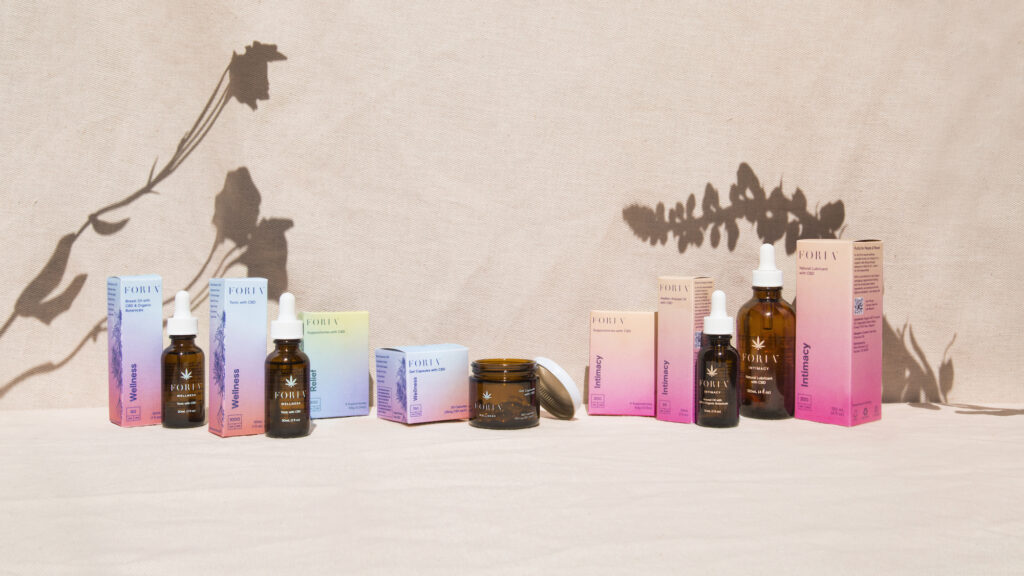
Similar to CBD brands that are realizing that their formulations need to feature several key active ingredients beyond CBD and other cannabinoids, Foria realized they could create effective sexual pleasure enhancing products without THC, the inclusion of which limited the products’ sale to California only. Upon launch, all of Foria’s products contained the psychoactive cannabinoid. Brandon recalls of the decision, “Is THC the linchpin to what we’re doing? And the answer was no. It is the impact of different cannabinoids or different botanicals that we can harness into products that have these outcomes for people, enhancing pleasure, diminishing pain, all the intimacy related product attributes that we have been able to enjoy and tout to people.” Brandon says the decision to branch into CBD was also based on the brand’s desire to bring its product offerings to a wider audience outside of California.
The brand’s first CBD product was its now best selling Arousal Oil. The launch was a massive success. “That was really the most important inflection point for the company, because we could then start to create the connection more directly with our consumers and our community, both in social channels and certainly from an e-commerce perspective.” Brandon adds that the last few years, since expanding into CBD, have been ones of extraordinary growth for Foria. The brand’s revenue is up over 700% from 2017 to now. Sales for Q3 2021 were up 75% from the previous year.
Perhaps because of that success, Brandon add that the company would not shy away from also removing CBD from its products if market headwinds endure. “CBD is less constrained than THC, but it still has its own significant challenges associated with it. We’re not beholden even to that. So, part of our looking forward from a growth and strategic perspective, if CBD is inhibiting our ability to get efficacious products to people, then that will be scrutinized as such as well. We don’t want to be held back on account of our ingredients from a regulatory or business standpoint.”
There are some bright spots, especially for cannabis-infused wellness products, and, globally, CBD beauty is still on a growth tear that’s expected to continue. According to recent report from Million Insights, the global CBD skin care market is expected to reach $1.7 billion by 2025, growing at a rate of 32.9% over the forecast period. Earlier this month, California passed Assembly Bill 45, officially approving the sale of hemp-derived CBD products.
Prima, whose skincare products are sold at Sephora, Revolve and other retailers, just doubled its physical retail footprint through the launch of its ingestible and topical wellness offerings at 575 Vitamin Shoppe stores nationwide. The Prima partnership is part of the retailer’s “CBD HQ” initiative, a commitment to taking a leadership position in the ingestible CBD wellness category. CBD HQ encompasses an assortment of over 20 vetted CBD brands, including Winged, Garden of Life, Charlotte’s Web, Irwin Naturals, Uncle Bud’s, SoulSpring, and Martha Stewart, as well as Vitamin Shoppe’s own in-house brands.
Founders in the space are a passionate and optimistic bunch, and they believe strongly in the myriad benefits of cannabinoids, so many plan to stay the course, no matter how rocky the waters.
Fletcher says, “CBD has literally changed my life and I am on a personal life mission to share it with more people. Come hell or high water, I will keep going. I have decided to engage in a mission that is bigger than myself and I will let nothing and no one stand in the way. There are people in pain, suffering from anxiety and more, and we have a healthy, plant-based solution that must be shared.”
The players
5 mentionedFormulate

The Vitamin Shoppe
Prima
August
Papa & Barkley