How Brands Are Reframing Anti-Cellulite Products And Treatments With Wellness And Body Confidence Messaging
“I was like, ‘Oh my gosh, I’ve got cellulite. How do I navigate this?’” she recounts. A former aesthetician who worked at L’Oréal, Oscar Blandi, HydraFacial, Sephora and NuFace after transitioning out of the spa, Lopez turned to three tools she’d previously used to help soften the appearance of cellulite: coconut oil, a silicone cup and massage. She saw results in two weeks.
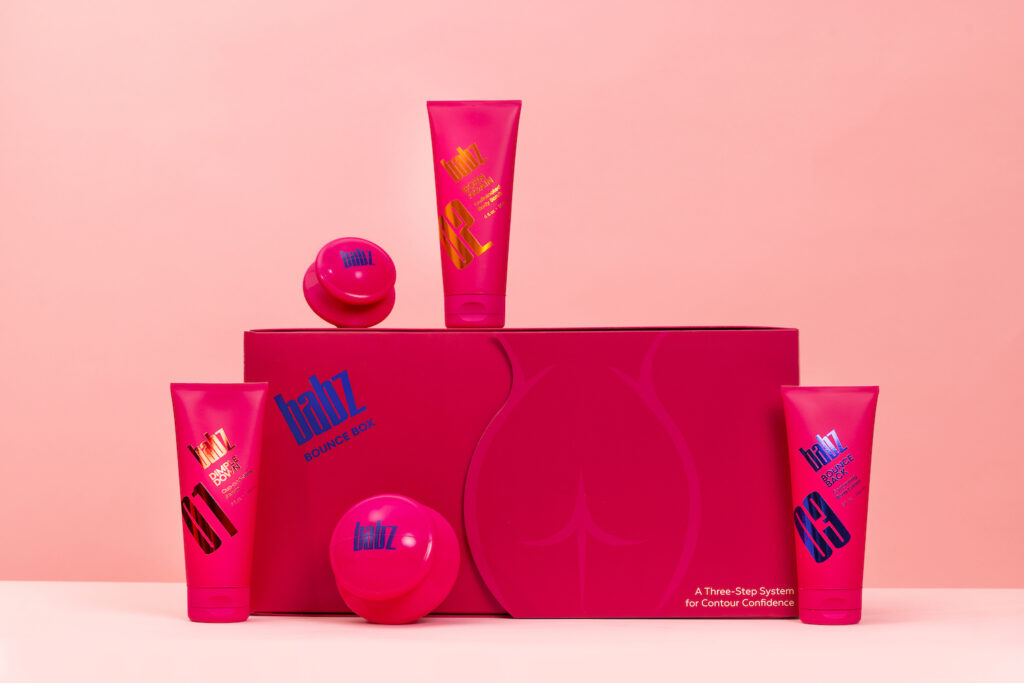
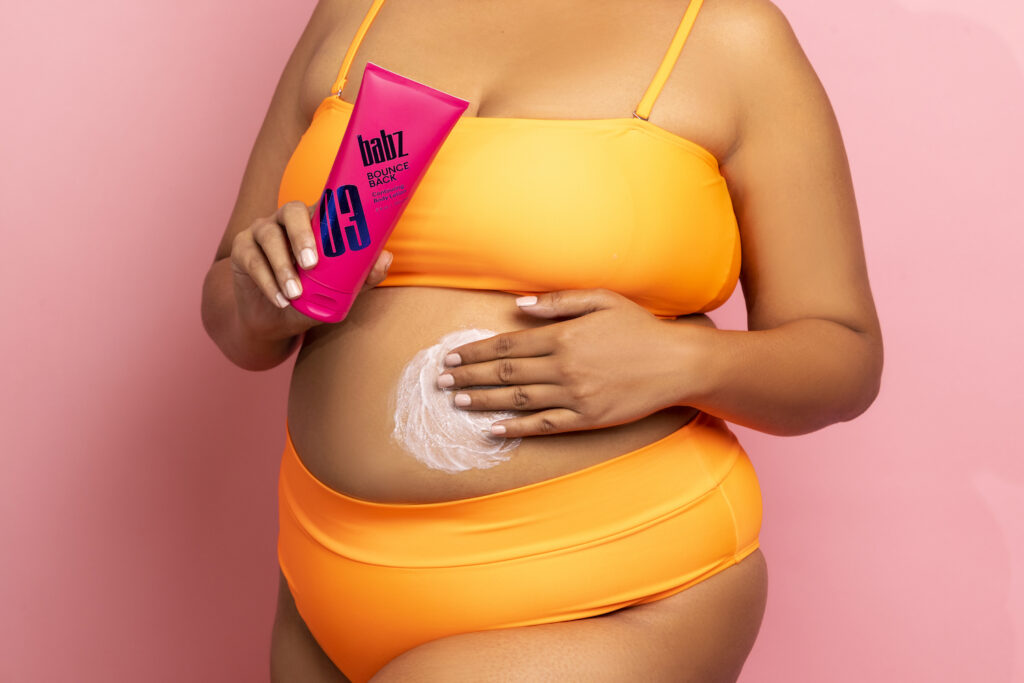
The three cellulite busters became the foundation for Babz’s $149 Bounce Box, the encapsulation of its so-called cup-and-slide system that it describes as a “three-step system for contour confidence.” It consists of a Dimple Down Cup-And-Slide Serum, Born Again Caffeinated Body Scrub, Bounce Back Contouring Body Lotion and a set of silicone cups. Each product is priced at $48 individually.
Lopez teamed up with Lauren Zappin, a growth consultant and business developer, during the pandemic to start Babz, which stands for “born again bunz.” After hearing about Lopez’s quick DIY fix, Zappin told her, insistent, “How many women struggle with body confidence? We make millions of dollars for other people, and it’s really time that we do this for ourselves.”
Babz is entering a burgeoning segment of anti-cellulite body products and treatments. Alongside increased demand for body care generally, the segment has been abetted by a pandemic-era shift toward wellness and consumers flocking to self-indulgences as stress relief during a rocky period. In an age in which body positivity has become a rallying cry, though, anti-cellulite products can be viewed as a step backward. The brands that specialize in them are countering that view by speaking to contemporary consumers’ interest in wellness and empowerment.
Monitoring the growth of body skincare sales, market research firm The NPD Group estimates they hit $819.3 million in the last 12 months, and anti-cellulite products accounted for $118.6 million—or about 14.5%—of those sales. Body skincare sales climbed 36% from January to September, and anti-cellulite treatments notched a similar bump, at 35%.
Larissa Jensen, VP and industry advisor for NPD, says, “The body care category has been one of the strongest performing areas of the prestige skincare market since the pandemic in 2020. Prior to that time, sales were in decline. With the shift toward wellness and the desire to treat themselves, consumers have regained and maintained interest in luxe body care.”
Technavio projects that the anti-cellulite market will add $437.37 million in sales as it advances at a compound annual growth rate of 4.75% from 2021 to 2026. Europe is predicted to account for 33% of the segment’s growth, and key players in the segment include Beiersdorf, Clarins, L’Oréal and Unilever.
Europe’s command of the plurality of cellulite product sales growth tracks with the history of cellulite. Cellulite is reported to have first appeared in a French medical dictionary in 1873. Back then, it was defined as an “inflammation of cellular or laminar tissue.” Rossella Ghigi, a professor at the University of Bologna who wrote a thesis on the history of cellulite, chronicles that the “condition” went mainstream in France in the 1930s thanks to French fashion magazines. The notion of cellulite arrived in the United States in the 1960s.
In her thesis, Ghigi writes, “From the start, [cellulite] was meant to be a mark of both bodily and moral ugliness, as it represented the negligence and carelessness of those who ‘let themselves go,’ abandoning their bodies to their natural evolution.”
The body positivity movement has tried to challenge beauty ideals and untangle morality from supposed bodily flaws such as cellulite. Personal care brands such as Love AnyBody, a brand launched in 2019 that has since closed, Megababe and Zone Naturals, maker of Chub Rub, embraced the movement with products fashioned to address the issues of consumers with larger bodies, but not stigmatize them. Affiliated with Love AnyBody upon its launch, influencer Loey Lane told Beauty Independent at the time, “We use language that isn’t shaming or trying to ‘fix’ your body.”
Today, in an environment cleaved between body positivity and the resurgence of the ultra-thin heroine chic aesthetic, anti-cellulite brands like Babz have changed their language and incorporated a wellness angle into their messaging and merchandise. Babz promotes its system as a detoxification or lymphatic drainage option. Zappin says, “It’s more about wellness and being accepting, but still saying, ‘Hey, if you don’t like your cellulite, why not try to do something that does make you feel better and that’s going to boost your circulation and boost your energy?’ It’s a home care wellness regimen technically.”
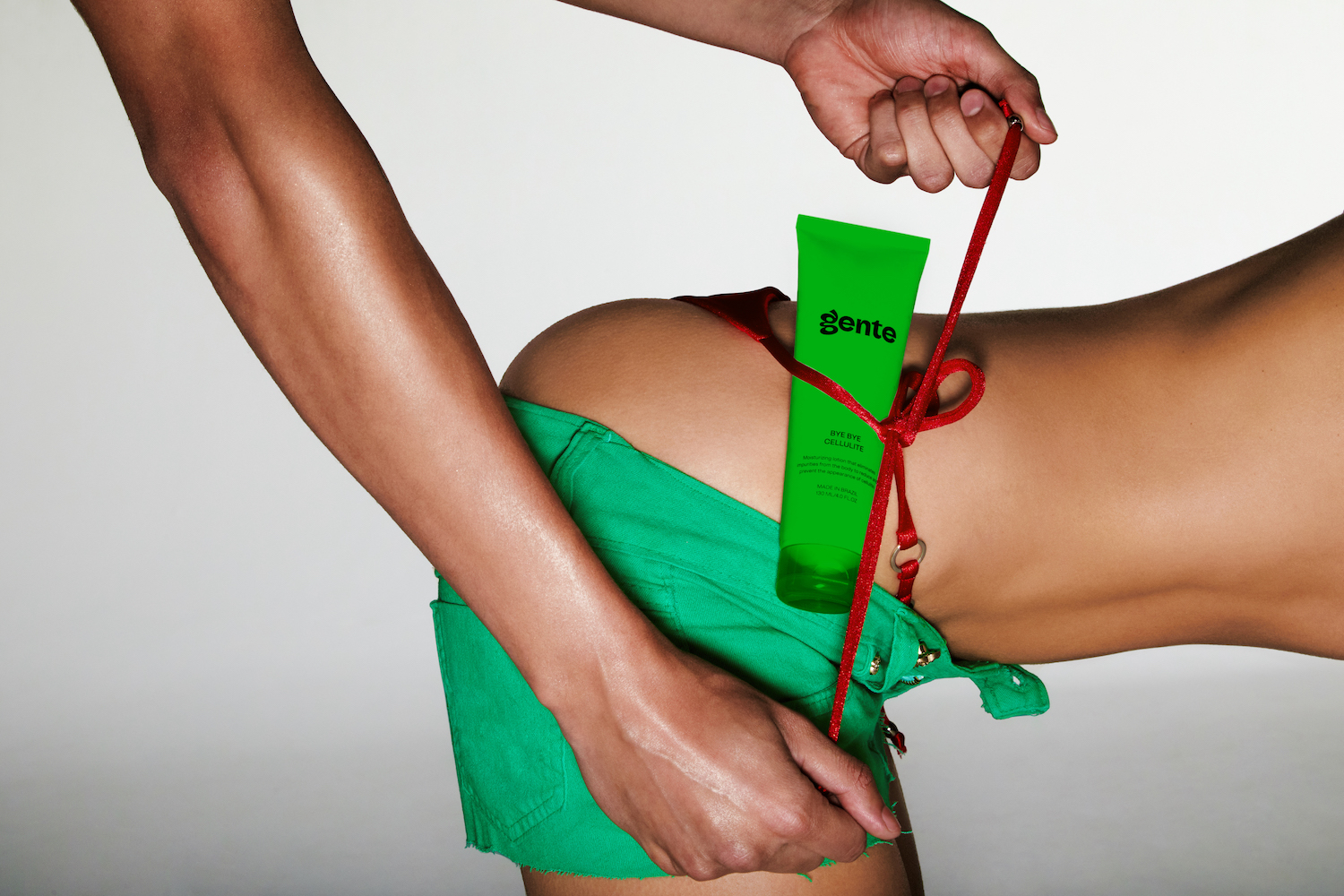
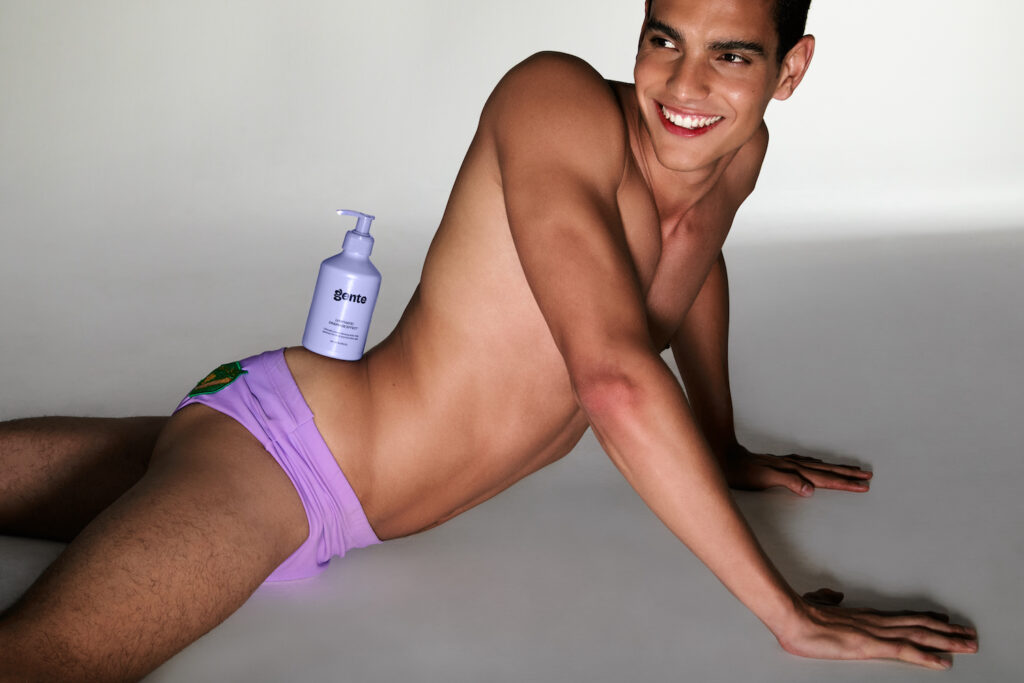
Gente Beauty leans into the concept of lymphatic drainage, too. Launched in September, it offers two lotions: $34 Lymphatic Drainage Effect and$32 Bye Bye Cellulite. The brand’s Instagram feed features videos on how to manually perform lymphatic drainage massage with the products. Co-founder and model Marianne Fonseca says, “It’s a beautiful combo between the beauty results and also the health benefits as well.”
Gente was inspired by the Brazilian heritage of co-founders Fonseca and Nathalia Maia, who worked in marketing at beauty conglomerate Natura for eight years. “The most important thing about the brand is that we wanted to talk about Brazil and we wanted to highlight Latinas and how we take care of ourselves in Brazil,” says Maia. “Brazilians are very vain, and they focus a lot on their body care.”
Another Brazilian-inspired brand, Sol de Janeiro, demonstrated that cellulite products can be market winners. One of its popular products, Bum Bum Cream, has caffeine-rich Guaraná with the purpose of tightening the skin on the butt. In other words, it’s designed to bust cellulite. Last year, Sol de Janeiro was acquired by L’Ocittaine for $450 million.
Ghigi isn’t persuaded that anti-cellulite products’ wellness angle divorces them from feeding consumers’ insecurities. “Any treatment against cellulite would remind women that, just because they are women, they can have it. No woman is free of cellulite, sooner or later,” she says. “As I showed in my research, the history of cellulite is the history of induced feelings of guilt, and this the opposite of true body positivity and self-esteem.” And she notes the lymphatic drainage tie-in suggests women’s “natural drainage is not enough by default.”
Christina Meyer, VP of marketing for Revelle Aesthetics, the company behind Avelï, a minimally invasive device cleared by the United States Food and Drug Administration to reduce the appearance of cellulite long term, pushes back against anti-cellulite treatment critics. She argues that the body positivity movement isn’t entirely positive.
“While the body positivity movement aims to help women embrace themselves the way they are, it can also make women feel even worse for wanting to do something for themselves,” says Meyer. “This adds to women’s silence about cellulite and the shame and embarrassment surrounding it.”
Guided by Meyer, the marketing approach for Avelí revolves around a “no more nonsense” take on cellulite that’s intended to urge women to decide what’s best for them. “It is 100% OK to have cellulite and not do anything about it,” she says. “And it is 100% OK to have cellulite and want to do something about it if that will make you feel more confident.”
Of course, much of the beauty industry fuels and is fueled by perceived flaws. But Lopez believes that cellulite treatments can live outside that paradigm. She asserts that, just because certain people don’t like the appearance of cellulite, it doesn’t mean they don’t love their bodies. She equates it to people who wear makeup, but aren’t preoccupied with presumed imperfections.
It could be that a coat of mascara, a swipe of blush or the application of an anti-cellulite product act as confidence lifters. That’s what the purveyors of anti-cellulite products and treatments are promoting, and consumers are seeking more than ever, according to market research firm Mintel. In a 2020 report, it writes, “Positioning products as a way for consumers to boost confidence and self-esteem through skin health, while still embracing their flaws, will resonate with today’s modern consumer.”
“Brazilians are so related to being sexy and exotic, and it’s a lot about how we feel, the confidence, it’s not so much about the looks,” says Maia. “So, Gente is not just for you to eliminate cellulite because that’s kind of impossible, but, in a way, it’s just for you to feel better about yourself because, even though there’s all of this body positivity, I believe that everybody aims to look better and feel better in general.”
The players
5 mentionedUltra

Counter
Gente
Under Your Skin
AS Beauty