Move Over Cleanical: Medical-Grade Organic Products Could Be The Next Big Wave In Skincare
To help differentiate and substantiate products that are both proven and stay away from synthetics, Europelab, a formulator and manufacturer of premium skincare, is leaning into formulas that are simultaneously certified organic and medical grade. If they’re well-delineated and stick to well-established principals, they can provide clarity in a market that tends to be cloudy.
Survey data from market research firm Mintel conveys consumer demand for products at the intersection of organic and medical grade. According to it, 82% of consumers report they’re using more clean/organic products compared to last year, and 72% share that clean/organic beauty is more important to them this year than last. Mintel found that 72% of adults in the United States believe beauty brands should provide greater scientific evidence to verify the claims they make.
While the descriptor “medical grade” has been thrown around for purely marketing purposes, we delve into why Europelab believes it, if properly executed upon in products, goes beyond mere marketing, how the manufacturer classifies medical-grade products, the ingredients effective for them, and a brand that’s skillfully pairing medical-grade and organic-certified ingredients in its formulas.
What Constitutes A Medical-Grade Product?
According to Sara Turchetta, VP of private label at beauty manufacturer Europelab, a product is deemed medical grade when it makes a therapeutic claim to diagnose, treat, cure or prevent a medical skin condition like acne or eczema. She underscores that medical-grade products are drugs as categorized by government agencies, and they typically feature regulated active ingredients to enhance effectiveness. Stringent regulation of medical-grade products is crucial to ensure the safety and efficacy of such products.
Medical-grade brands or products adhere to strict standards set by government agencies and medical authorities. In the U.S., the U.S. Food and Drug Administration (FDA) is the regulatory agency in question, and Health Canada is the oversight agency for products sold in Canada. The agencies have different regulations for different types of products, including over-the-counter (OTC) drugs, prescription drugs and medical devices. Products can be subject to clinical testing and quality control to validate their safety.
Turchetta notes that obtaining a Natural Product Number (NPN) license to sell and make a claim for natural OTC products in the Canadian market involves more than simply meeting a specific percentage of active ingredients. It requires conducting clinical tests to corroborate the product’s efficacy and obtaining approval from Health Canada.
The need for clinical testing depends on active ingredients and claims made by a product. Many ingredients have been clinically proven and approved by regulatory bodies for OTC products, including salicylic acid, retinoids, arbutin and colloidal oatmeal, to name a few. When it comes to formulation, it’s the synergy of combined ingredients that will impact the overall product’s efficacy and safety. Turchetta advises brands to conduct clinical trials on the final product to confirm safety and effectiveness as well as gain consumer trust.
Sarah Jindal, senior director of beauty and personal care for Mintel, points out that consumers are increasingly seeking products prioritizing efficacy and functionality. “Today’s consumers are looking for transparency,” she says. “They are more inclined to seek justification for premium pricing based on tangible results rather than superficial factors. Research, clinical studies or certifications to substantiate their claims of effectiveness will gain credibility and trust.”
If brands release a medical-grade product with an OTC claims—anti-acne, for example—but skip over requirements before it’s available for sale, they could be fined and forced to remove the product from the market. Brands need to figure out how they will fulfill the requirements prior to the product development phase. Turchetta recommends they work with a reputable laboratory to make sure their formula is compliant in advance of the development phase. The lab can navigate specific requirements when it comes to regulatory affairs. Europelab has a consulting program that guides brands through product development, innovation, regulatory compliance and beyond.
Turchetta says a reputable lab “can help to ensure compliance with regulatory bodies to determine the appropriate classification and pathway for your product before it graces the shelves. The FDA or Health Canada’s guidance and regulations can change, so it’s essential to stay updated with the latest information.”
Although not an exhaustive list, below are some commonly used ingredients in medical-grade products that are tailored to various skin concerns. The ingredients marked with * are ones that have been regulated and drug claims can be made against. We don’t list ingredient concentration levels and the types of claims that can be made as those are subject to change depending on the regulatory body. The other ingredients listed below were chosen by Europelab because they can be paired with OTC ingredients for great effect.
The Organic Landscape
The lack of an official definition of “clean beauty” has caused wariness among informed beauty consumers. To hold themselves accountable to consumers and gain credibility, more and more brands are turning to verifications and certifications to back up product claims. Organic certifications are an important vehicle for backing up claims.
Europelab holds one of the most extensive catalogs of organic certified formulations in North America. It adheres to natural and sustainable processes and meets criteria related to ingredient sourcing, farming practices and the absence of certain chemicals. The manufacturer has been certified organic by Ecocert Greenlife for the last 15 years, which is one of the most stringent certifications worldwide and is recognized in over 130 countries.
The certification process is a thorough procedure overseen by an independent body that dives into everything from ingredient sources and farming practices to packaging and labeling. In addition, it involves annual site audits at manufacturing plants to ensure standards are met. The certification is granted to a product that fully complies with the standards and meets a required minimum percentage of organic ingredients.
Organic products aren’t without challenges, but those challenges are getting easier. “Formulation challenges include finding synergies for optimal results with natural ingredients, achieving a similar skin feel as non-natural products and managing costs due to the higher expense of organic-certified ingredients,” says Turchetta. “Innovation over the years has allowed for the replacement of silicones and petroleum-based products with organic and or natural ingredients that rival conventional products.”
CASE STUDY: Nelly de Vuyst
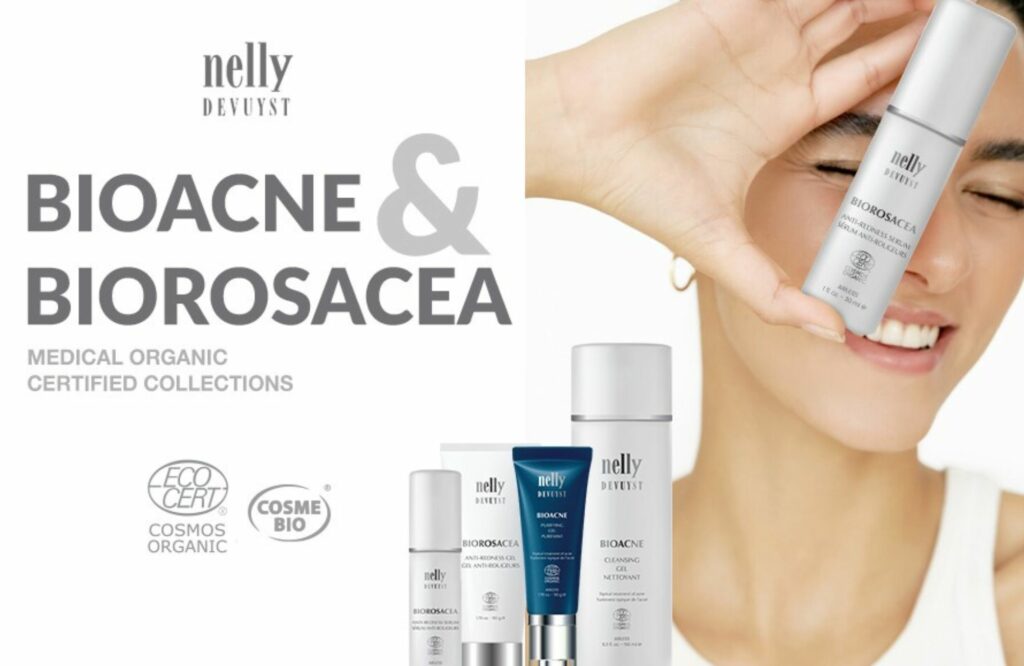
Producing certified-organic, medical-grade skincare products isn’t for brands that want to speedily churn out the cheapest of products. Nelly de Vuyst, a premium skincare spa and med-spa brand, uniquely straddles both realms and has over decades solidified a reputation for effective products. Founded in the 1950s by Belgium-based Madame Nelly de Vuyst, the brand is now owned and led by its president Manon Pilon, who encountered it 45 years ago while working at a spa and was captivated by its effectiveness.
Driven by a commitment to results, Pilon joined Belgium based, Nelly de Vuyst laboratory and offered to work there for free. Ultimately, she became the brand’s R&D director in 1991. In 2008, she acquired Nelly De Vuyst, centralized its operations in Canada and in 2013, focused on innovating COSMOS Organic and medical-grade formulations.
“I was obsessed when it came to results,” says Pilon. “I was the type who couldn’t just sell a product that didn’t deliver visible results.”
Today, Nelly de Vuyst provides an extensive range of professional skincare that spans body care and feminine hygiene products. Notably, Pilon highlights the brand’s distinctive technology, the Diadermic Method, is a key factor setting it apart. She explains the method “optimizes the synergy of active ingredients, efficiently delivering them to target cells, from the superficial to the deeper layers of the skin.”
The Diadermic Method is frequently complemented by the incorporation of plant extracts, tested actives and essential oils. They collectively work to achieve noticeable transformations in the skin in a safe manner using natural ingredients.
The brand honors founder Nelly de Vuyst’s legacy by emphasizing plant studies and essential oils that are safe for cosmetic use. For instance, in its medical-grade COSMOS Organic anti-acne collection, it obtains salicylic acid through a willow bark extract, going directly to the source for a medical-grade designation backed by clinical studies using synergies of plants to yield safe and effective results.
Nelly de Vuyst’s assortment contains more than 70 products, and some are medical-grade and organic certified. Pilon recommends aspiring beauty brand founders to start with certifying a single product and expanding the number of products certified organic over time. She emphasizes the importance of hiring a professional consultant and working with experienced manufacturers like Europelab.
Pilon says, “At the end of the day the art of understanding the skin, respecting its integrity and not compromising its microbiota is the ultimate goal.”
The players
5 mentionedFormulate

Under Your Skin
Counter
AS Beauty
iS Clinical