The Most Important Beauty Deals Of The Past Decade
Before the French conglomerate snapped up the groundbreaking cosmetics brand, huge beauty deals were far and few between. Estée Lauder’s buyout of MAC Cosmetics, L’Oréal’s pickup of The Body Shop, now owned by Natura, and Procter & Gamble’s acquisition of Richardson-Vicks are rare examples of pre-Urban Decay industry-shaking transactions.
By contrast, in the past decade, a flurry of beauty mergers and acquisitions activity has remade beauty, built empires, transformed lives, and propelled some unlikely brands and entrepreneurs into the beauty stratosphere.
“The beauty industry has changed dramatically over the past 10 years, and M&A has had a big role in the changing landscape,” says Vennette Ho, managing director, head of beauty and personal care at financial services company Raymond James. “Acquisitions help companies make fundamental changes in their profiles, allowing them to immediately enter a market or sector or target a new customer in a meaningful way practically overnight.”
The plethora of deals that have occurred since 2021 makes parsing out the purchases with the most significance a daunting task. Billion-dollar blockbusters aren’t always powerful moves. Many deals that seemed monumental at the time they were done later look like misfires (e.g., Coty’s 2015 swallowing of 43 P&G brands), while several that were head-scratching when announced are considered strokes of genius today.
Big companies have gotten bigger. Founders have cashed in on their hard work. Investors and buyers have paid multiples that raised eyebrows. The decade crescendoed with Estée Lauder’s $2.8 billion 2022 purchase of Tom Ford.
At its core, dealmaking is an expression of corporate strategy. Therefore, when Beauty Independent set out to create a definitive list of the transformative beauty deals from the last 10 years, the idea was to examine and identify the thought process and roles the deals played in implementing corporate strategies.
What makes a deal transformational? We decided deals worthy of the list had to be of a certain size, affect the broader industry and innovate structurally. If a deal doesn’t have a certain size, it tends to go unnoticed and fails to have ripple effects in the beauty universe. We drew the line at $250 million, an amount that’s fairly modest by today’s standards.
To determine if a deal affected the broader industry, we considered whether it shifted the competitive environment, caused major channel or segment disruption and rejiggered how companies or assets in a category are valued. For structural innovation, we pinned down deals that reimagined who’s involved with beauty acquisitions and how they’re done. For example, they could have an unorthodox deal structure or atypical buyer.
Below, we outline deals we believe have had the largest consequences for the beauty industry and dealmaking based on our criteria as well as the strategies behind those deals.
As beauty dealmaking becomes increasingly complex, exploring what motivates it and its implications for the industry as a whole is crucial to understanding the market. Beauty Independent will gather influential beauty and wellness dealmakers for its seminal Dealmaker Summit in New York from May 22 to 23 to reflect on salient subjects facing them today and long term.
L’Oréal—Urban Decay, NYX Cosmetics, It Cosmetics
In hindsight, this tranche of acquisitions is a textbook example of corporate strategy being executed via dealmaking. L’Oréal made a conscious decision to pursue the color cosmetics segment because it detected high growth potential and an opportunity to present products in the expanding specialty beauty retail segment, an area that had traditionally been shunned by large strategics. The result? Walk into a Sephora or Ulta Beauty store now, and one of these brands inhabits prime real estate.
In four years, Carol Hamilton led L’Oréal’s M&A team to build a lasting cosmetics franchise hitting upon a variety of consumer touch points across class and mass. Importantly, these transactions were the opening salvo in a wave of industry-wide strategic dealmaking that’s persisted since.
“These transactions really represented a big push into U.S. color cosmetics for L’Oréal,” says Lauren Leibrandt, director and beauty and wellness practice leader at investment bank Baird. “While Maybelline had been part of L’Oréal’s portfolio for a long time, these brands offered bolder shade statements and edgier marketing messages that really helped L’Oréal become more relevant to a younger demographic.”
A star at Sephora, Urban Decay sparked interest in the emerging specialty retail channel. NYX Cosmetics delivered the “MAC of the mass” brand to complement L’Oréal and Maybelline on mass retailers’ shelves. Ashleigh Barker, head of beauty and personal care at investment bank Lincoln International, thinks L’Oréal was smart to bet on It Cosmetics.
“It Cosmetics was one of the first brands to truly harness color and skin categories with highly efficacious formulas that did exactly what their founder evangelized,” she says. “She [founder Jamie Kern Lima] was the target consumer of the brand she built, a brand ambassador when it came to advocating product efficacy and a true brand influencer that helped put It on everyone’s radar, both consumers and potential acquirers alike.”
^ Back To The Top
Estée Lauder—Le Labo, Frédéric Malle, By Killian
As much of the beauty market was zeroing in on big names with mass-market potential, Estée Lauder went in a different direction. The company doubled down on luxury and banked on artisanal authenticity as the way to go in luxury fragrances. It bought a trio of fine fragrance brands over the course of two years that established its foothold in the niche fragrance business, a feat that continues to pay off handsomely.
The niche fragrance segment saw little M&A action before 2014, but premium offerings were nothing new for Estée Lauder. Wendy Nicholson, managing director at Baird, says, “While Estée Lauder had been very successful in the super-premium skincare category with La Mer, these three acquisitions extended Lauder’s reach into the super-premium fragrance category.”
Le Labo’s Santal 33, which costs $220 for a 50-ml. size, was a cult sensation with the fashion flock. It garnered headlines like “The Scent You Smell Everywhere is Santal 33” and still spawns dupes. Frédéric Malle’s perfumes can run shoppers $295 for a 50-ml. size, and By Killian’s perfumes topping out at $385 for that size have no problem finding takers.
Nicholson says, “These were each small brands at the time of acquisition, and they remain relatively niche, but they each have a differentiated positioning in a very crowded fragrance landscape.”
^ Back To The Top
Coty–Procter & Gamble, Wella
There are two chapters to an M&A saga that forever altered Coty. The first began in 2016 when the conglomerate acquired 43 brands, including heritage lines like CoverGirl and perfume licenses such as Gucci and Dolce & Gabbana, from P&G for $12.5 billion. With a single agreement, Coty executed the biggest deal of the decade, doubling its size to become the third-largest global beauty conglomerate by sales.
The deal caused four years of turmoil. Financially, the company was burdened by billions of dollars of debt it had raised to fund the deal. Operationally, the acquisitions were an integration nightmare, sucking time and resources. Strategically, several of the acquired brands were tired and struggling in markets increasingly shifting to younger brands.
By 2020, Coty was in serious trouble. Enter Peter Harf, former CEO of Coty and chair. He championed a series of rapid-fire deals to save the company. He streamlined the portfolio and improved the balance sheet by selling 60% of what used to be the P&G professional division containing Wella, Clairol, OPI and GHD to private equity firm KKR for $3 billion at a 50% loss. And he put chips on the first family of reality television, buying 51% of Kylie Jenner’s Kylie Cosmetics for $600 million, then buying 20% of Kim Kardashian’s KKW Beauty for $200 million.
Barker says, “It is an undisputed landmark transaction. Once P&G formally announced they’d be divesting their non-core brands, it became a race for us on the buy side to determine which acquirers would be the strongest contenders to buy all or a subset of the portfolio. Coty was really the only strategically qualified buyer who not only had the buying power, but whose existing portfolio was already complementary to the P&G assets across hair, color and fragrance categories as well as distribution in the mass, prestige and professional channels.”
“Overall, Coty’s approach to dealmaking has been different from the other strategics who mainly focus on acquiring assets that fill targeted gaps in their portfolio. Coty has taken riskier bets, either going after market share by purchasing the P&G portfolio or placing a big bet on the power of celebrity and investing in the Kardashian/Jenner entities,” Barker says.
^ Back To The Top
Unilever—Sundial Brands, Tatcha, Paula’s Choice
Unilever set its sights on dominating the high-growth, premium skincare segment. Along with Tatcha and Paula’s Choice, its prestige skincare stable has Dermalogica, Murad, Ren and Kate Somerville. The company embarked on an initiative to diversify its brand reach, too. It nabbed SheaMoisture owner Sundial Brands to cater to consumers of color.
The Sundial deal gave Unilever entrée into the underserved multicultural market, and the Tatcha and Paula’s Choice transactions delivered cult favorites into its basket of brands.
“Unilever loves the founder story in particular,” says Lindsay Carlson, managing director of investment bank William Blair. “They led the way in the multicultural beauty world with the acquisition of SheaMoisture, which has championed inclusive beauty. It’s a great example for other strategics, look at P&G’s recent Mielle acquisition.”
Tatcha has beautiful branding, an expertly crafted Japanese heritage story and hype around ingredients like green tea, rice powder and algae. Founder Vicky Tsai is an early example of a founder that resonated. Its initial product launch, $47 blotting papers, became a must-have in makeup bags. Unilever’s takeover of the brand underscored an appetite for premium natural skincare brands.
Under the stewardship of TA Associates, the private equity firm that acquired Paula’s Choice in 2016 along with Bertram Capital, the skincare brand’s sales surpassed $300 million in 2021, nearly a quarter century after it debuted, and it became among the largest DTC beauty players on the planet. Transparency and digital prowess have been essential to Paula’s Choice and are what distinguishes brand even from competing entities in Unilever’s portfolio.
^ Back To The Top
Colgate—PCA, EltaMD
Colgate, best known for toothpaste and deodorants, entered the professional beauty world with a bang thanks to its purchase of skincare stalwarts PCA Skin and EltaMD. The brands bring roomy margins to the company’s less profitable household staples in a professional skincare business that’s on an upward swing. Purchasing Filorga, a premium-priced French skincare brand, in 2019 reinforced its stronghold in premium skincare and gave entry into the fast-growing travel retail channel.
“The acquisitions came as a surprise to many folks as historically Colgate’s presence in skincare has been limited to mass,” says Nicholson. “But Colgate has a track record of working well with the professional channels—with the dentists in oral care and veterinarians in pet care—such that working with dermatologists in skincare has been a natural extension for them.”
^ Back To The Top
Unilever—Dollar Shave Club
Unilever was the victor in a showdown with P&G for Dollar Shave Club, a disruptor in the shave category, and an early direct-to-consumer phenomenon. Its annual sales hovered at nearly $200 million when it was acquired.
The deal was clear validation of DTC as a distribution channel. Leibrandt says, “This was a high-profile transaction, not only because it signaled that Unilever was entering shaving, but also because it signaled that Unilever was eager to learn more about how to be successful with a DTC strategy.”
Unilever’s deal for Dollar Shave Club looked scruffy not too long after it happened. Although by 2018 the brand and rival Harry’s commanded 14% of U.S. razor blade sales, Dollar Shave Club has failed to live up to its promise. Leibrandt says, “Unilever paid a high price for this asset, but, unfortunately, the return on that investment has been disappointing.” Other DTC brands have hit speed bumps in trying to draw buyers in the aftermath of the bloated deal for Dollar Shave Club.
^ Back To The Top
Shiseido—Drunk Elephant
Shiseido’s purchase of Drunk Elephant gave it a strong founder story—Tiffany Masterson, formerly a stay-at-home mom of four kids created its skincare to avoid ingredients she dubbed the suspicious six: essential oils, drying alcohols, silicones, chemical sunscreens, fragrances/dyes and sodium lauryl sulfate—clean positioning, fervent fans and the distribution muscle of Sephora.
Shiseido’s acquisition of Drunk Elephant was the opening shot of the company’s broader strategy to refocus its portfolio and become the largest skincare company by 2030. Following Drunk Elephant, Shiseido proceeded to sell mass personal care brands to CVC Capital Partners for $1.5 billion and a trio of color cosmetic brands to Advent International for $700 million before buying microbiome-friendly skincare line Gallinée in 2022.
At a sales multiple greater than eight, the deal has been aspirational for many skincare brand founders. Rich Gersten, co-founder and managing partner at early-stage beauty and wellness investment fund True Beauty Ventures, says, “It was the first to bring clean beauty to the forefront. The multiples were huge and any brand that trades at those multiples deserves to be on the list.”
Cristina Nuñez, co-founder and general partner at True Beauty Ventures, says, “Drunk Elephant’s growth and acquisition was the ripple that set the wave of clean beauty in motion, starting first with skincare and now encompassing most categories in beauty. The brand’s success clearly signaled to the market that clean beauty had the potential to go from niche to mainstream.”
^ Back To The Top
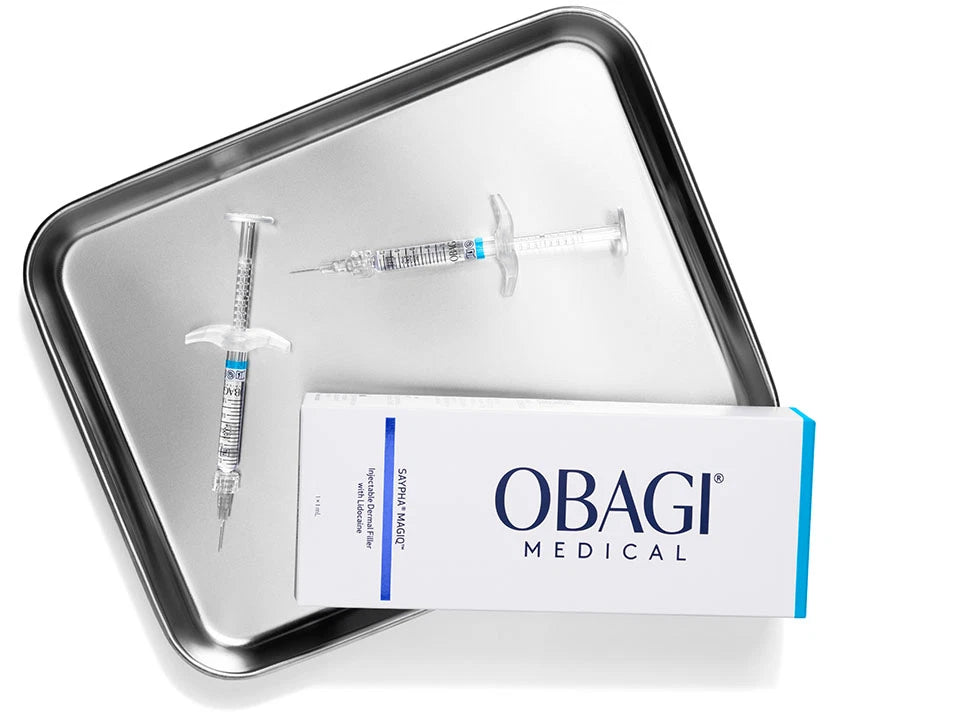
Waldencast—Milk Makeup, Obagi
Founded in 2019 by ex-L’Oréal executives Michel Brousset and Hind Sebti, Waldencast is out to be a new breed of strategic that combines the scale and discipline of a large organization with the vision and management philosophy of founder-led startups. The two started in 2019 by launching a $100 million venture firm, which has invested in Kjaer Weiss, Manual and Sallve, and incubated Glaze and Whind.
In 2021, Brousset and Sebti formed a separate special purpose acquisition company (SPAC) to buy and build beauty brands, and go public. In several rounds of SPAC funding, it raised roughly $1 billion, and purchased the brands Obagi and Milk Makeup.
In 2022, Waldencast successfully began trading on the Nasdaq stock exchange. It’s the only company in the beauty industry to have successfully used the SPAC route to conduct strategic dealmaking. Since it landed on the Nasdaq, its net revenues are up 18.2% and profits are up 126.3%.
In general, SPACs haven’t fared well. “SPACs in the beauty space are rare, and [Waldencast] management hopes to acquire other brands to help expand its portfolio,” says Leibrandt. “What they buy, how much they pay, and how successfully they can grow the brands they have acquired all remains to be seen.”
Waldencast’s acquisitions came at the close of a strong year for clinical skincare sales, which increased 13% from 2020 to 2021, according to The NPD Group, contributing the highest revenue gain in the skincare segment and surpassing natural as the largest slice of the segment based on revenue.
^ Back To The Top
Olaplex—IPO
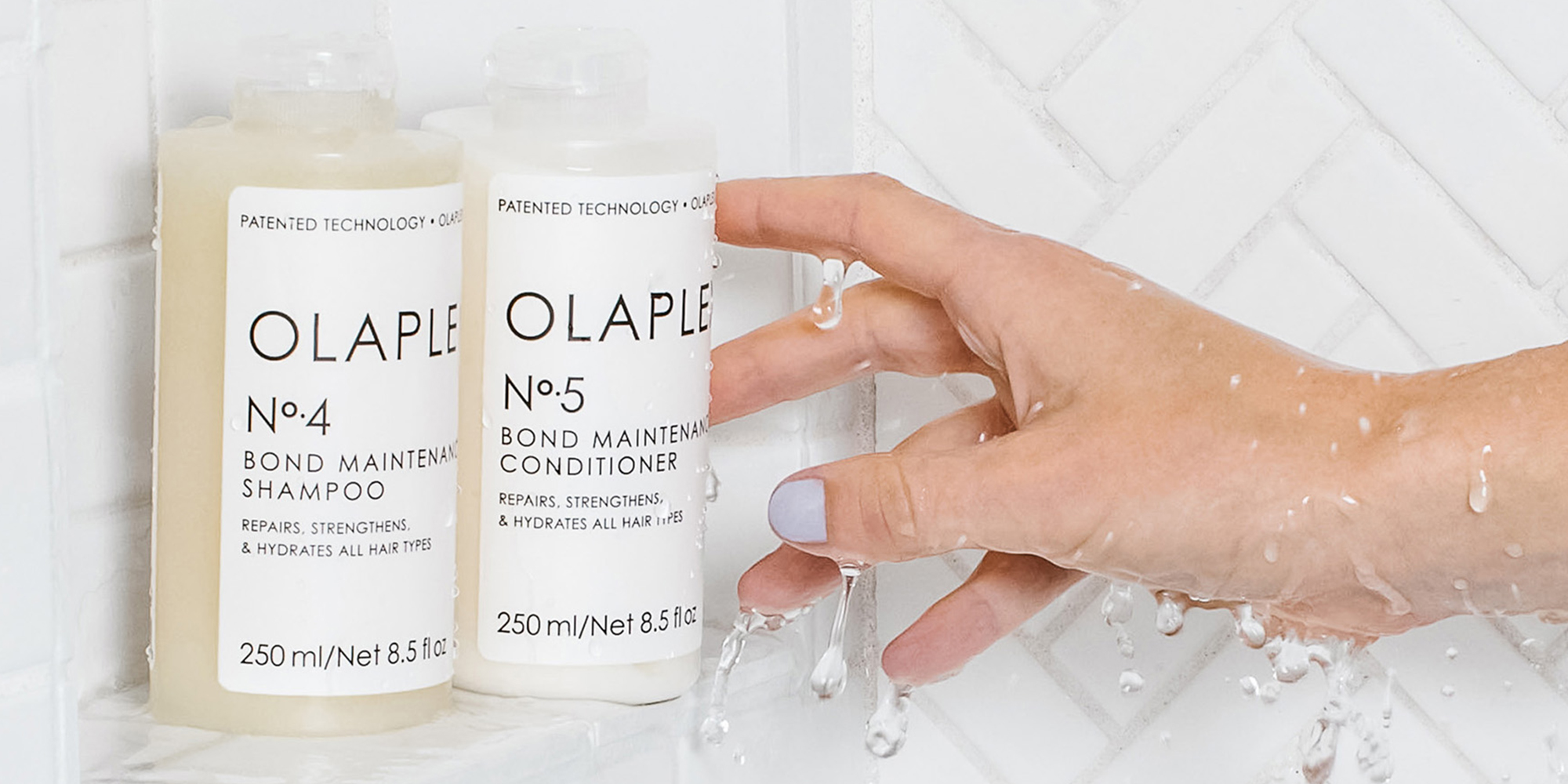
There’s a laundry list of reasons why Olaplex is a game-changer. It started in a garage less than a decade ago and became a beauty industry unicorn. It garnered lofty earnings and a very high valuation, and its rise established the strength of science and premiumization in the haircare sector.
“Haircare as a beauty category has always been a little bit of a stepchild,” Olaplex CEO JuE Wong told the publication Forbes in 2021. “Through the pandemic, it really had an opportunity to shine. Today, we see hair care almost like skincare with the ritualization of haircare. Women are willing to pay a premium.”
Olaplex is credited for creating the bond-building craze in beauty that’s wooed others to join it such as buzzy K18. And the brand demonstrated that professional salon distribution in advance of Sephora is a winning recipe.
In a beauty industry that sees few IPOs, its public market exit is rare. Even with its stock dipping 38% last year, Advent International, the private equity firm that acquired it in 2019, tripled its investment in just over two years. The IPO was more than 10 times the value of Advent’s original deal, making the deal one of the most lucrative U.S. private equity transactions, according to data from financial information resource Pitchbook.
^ Back To The Top
L’Occitane—Sol de Janeiro
Terms of L’Occitane’s purchase of 83% of Sol de Janeiro surprised beauty industry insiders. Its founder and CEO Heela Yang kept a stake in the brand and has stayed on to run the business to date. L’Occitane was clear about its desire to fortify its premium beauty brand roster. Upon acquiring Sol de Janeiro, the company praised the brand’s name recognition, profitability, digital presence and established body care business as “complementary” to its other brands.
Aside from the unique deal terms, L’Occitane’s Sol de Janeiro buy marked the breakthrough of body care as an attractive M&A target. The brand’s signature product, Brazilian Bum Bum Cream, promises to tighten and smooth the appearance of skin. It’s sold at Space NK, Dermstore, Revolve, Bloomingdale’s and Sephora.
^ Back To The Top
Church & Dwight—Hero Cosmetics
Known for its hydrocolloid pimple patches called The Mighty Patch, Hero Cosmetics truly went from zero to hero and propelled Church & Dwight into the beauty business. The Mighty Patch bowed on Amazon in 2017 before stretching to physical retail with partners like Target and Ulta Beauty. A box of The Mighty Patch currently sells every two seconds. Hero’s annual sales as of June 2022 were about $115 million.
With its purchase of Hero, mass-market authority Church & Dwight is hoping to lure gen Z consumers that haven’t been gravitating to its fleet of personal care companies like Nair, Batiste, Trojan, Waterpik, Arm & Hammer and Flawless, a hair removal specialist it purchased for $429 million in 2019.
Hero’s surge proved Amazon has power in brand building in a break from the prevailing opinions of the giant e-commerce platform prior to Hero. “There is less activity in mass in general and the rapid growth of this brand in such a short time is impressive,” says Gersten. “In addition, it represents the first beauty brand sold to a strategic buyer with a large Amazon business.”
^ Back To The Top
Estée Lauder—Tom Ford
Estée Lauder reportedly outbid Kering for luxury fashion brand Tom Ford. The deal represents a fundamental change in luxury fashion and beauty because, traditionally, fashion has reeled in the highest premiums. Estée Lauder’s Tom Ford deal revealed that beauty is Tom Ford’s biggest asset rather than sexy apparel.
Gersten says, “An acquisition of a fashion brand by a beauty strategic was so unusual, and its scale was also quite large. Strategics generally prefer simple to complex, and the Tom Ford acquisition appeared very complex.”
The Tom Ford deal was defensive on Lauder’s part. Taking control of the brand ensured it didn’t lose it. The company had been producing Tom Ford makeup, skincare and scents under license since 2006. Post-acquisition, Lauder is licensing out non-beauty categories. Gersten says, “That creates a nice royalty stream for them, but this does not feel like a plug-and-play acquisition.”
^ Back To The Top
Edgewell Personal Care—Harry’s: Edgewell’s acquisition of Harry’s collapsed after the U.S. Federal Trade Commission sued to block it in 2020, setting off concern that’s impacted other deals. The FTC also halted P&G’s purchase of Billie.
Estée Lauder—Deciem: Lauder bumped its ownership in Deciem, the parent company of The Ordinary, to 76% in May 2021. The transaction valued the company at $2.2 billion, making it the largest deal in Lauder’s history.
Puig—Byredo, Charlotte Tilbury: In 2020, Puig seized sizzling cosmetics brand Charlotte Tilbury. Two years later, it bested L’Oréal to add covetable brand Byredo to its fragrance portfolio.
Famille C—Ilia: The first clean color cosmetics brand sold to a strategic, Ilia was a hot commodity when Famille C, the Courtin-Clarins family holding company, bought it last year. It represents Famille C’s first major acquisition.
Estée Lauder—Too Faced: When Lauder purchased Too Faced for $1.45 billion in 2016, it was its biggest deal ever.
L’Occitane—Elemis: L’Occitane’s $900 million purchase of Elemis was a catalyst for an industry-wide skincare buying frenzy.
Hims & Hers—Apostrophe: Telehealth platform Hims & Hers deepened its dermatology investment with its Apostrophe play in 2021.
Click here to learn more about Dealmaker Summit happening June 8 & 9 in New York.
The players
5 mentionedCommodity

Urban Decay
Wella
CoverGirl
Olaplex