Leading Beauty Investment Bankers On The Changing Landscape, Hot Categories And Top Deals: Part 1
Especially in today’s uncertain market in which beauty brands can be difficult to value, investment bankers act as liaisons between founders and investors to propel transactions over the finish line by making sure the road doesn’t get too bumpy along the way. They assess the risks and upsides of transactions to understand what needs to be disclosed by buyers and sellers. “We are a full-service advisor and really lead our clients through whatever they’re looking to achieve from a capital raising standpoint,” explains Lindsay Carlson, managing director for William Blair.
Having an advisor to guide founders through nuanced agreements can be the difference between a good deal and a great deal. Vennette Ho, managing director, head of beauty and personal care at Raymond James, says, “When I first started, there were very few bankers in the space because there were a certain number of deals, but as the deal activity picked up, there are more options and more things to sort through. There are more unique business models, and so it is more important than ever to have an advisor by your side to help you navigate through all of it.”
Adroit investment bankers have the ability to paint a complete picture of an asset, tout successes that may not be obvious in the bottom line and lay out the potential clearly. Ho says Raymond James’ knack for gauging companies from various points of view was crucial to securing Paula’s Choice’s $2 billion sale to Unilever in 2021. A previous sales process wasn’t fruitful for the brand.
“Nobody really shined a light on what this company is and how it had completely transformed customer’s expectations with regards to transparency, with regards to efficacy,” says Ho. “It was really the largest personalization platform in the world because it was an education platform that opened up this world to everyday consumers and helped them navigate personalized solutions. They had amazing technology and they had amazing products, and they were really, really global. We just saw the company differently and were able to communicate that story in a fresh light.”
For a brand, an investment banker partnership can be a tight relationship. Ho notes there are times when she talks to her clients more than she talks to her family. Michael Toure, founder of Toure Capital, says, “Doing a transaction is an emotional rollercoaster. Things don’t happen according to plan, and having someone in your corner that you can call pretty much anytime, that’s sitting next to you, that can discuss and brainstorm with you, holds a lot of value.”
Hero Cosmetics co-founder and CEO Ju Rhyu, who sold her brand to Church & Dwight for $630 million last year, felt having an investment banker on her side as she explored strategic options for her business was pivotal to its lucrative outcome. “Ideally they will lean on their past deal experience to help inform the strategy for how you go out,” she says. “They will be thoughtful storytellers able to express all the things that make your company special, and they will have the relationships and a strong reputation to put your company in front of the right people. In addition to all that, they will do an enormous amount of behind-the-scenes work with financial models, meetings and dinner organizations, PowerPoint presentations, negotiations, etc.”
Nader Naeymi-Rad, founder of Beauty Independent parent company Indie Beauty Media Group, chimes in, “Do you absolutely need a banker to either buy or sell a beauty asset? The answer is no. However, the larger or more complicated the asset, the more likely it is that it’s worth working with one.”
Firms in the investment banking industry are commonly classified into three categories: bulge (large) bracket banks such as Goldman Sachs, JP Morgan and Bank of America that work on the most sizable deals, usually near $1 billion or above; mid-market firms that generally operate in a deal range between $50 million to $500 million, and boutique banks that handle deals smaller than $50 million.
Ilya Seglin, managing director of Threadstone, says much of the activity in beauty has transitioned to emerging, smaller brands over the last several years. He sees fewer multibillion-dollar deals relative to the number of hundred million-dollar deals or even sub-hundred million-dollar deals. “From what I would call large cap deals, the ship has shifted from those into middle market and lower middle market transactions,” says Seglin. “From the category perspective, we’ve seen consumers navigate toward emerging categories like wellness, supplements, body care and to a large extent the M&A activity follows where the consumer activity is.”
Big firms have large networks and more hands on deck, but mid-market and small firms are showing their worth by emphasizing the quality of investors they have close ties to. “When you really boil down what bankers bring to the table, No. 1 on the list is their network. On the sell side, it’s the network of investors that they can go out and shop the brand to. Both the breadth and quality of their relationships is really important,” says Naeymi-Rad. “Talk to as many bankers as you can to really find the one you have the best connection to. You need to be able to trust them and trust their counsel. “
Ahead, we highlight nine influential investment bankers. Read on for their insights into changes in the investment landscape, beauty categories they anticipate taking off and deals they’re most proud of.
Lauren Leibrandt Director, Baird
How has the M&A investment landscape changed, and what are contributing factors to the changes?
The velocity of M&A deals has increased dramatically over the past five to 10 years. When you think about some of the most influential deals over the past decade (e.g., L’Oréal’s acquisitions of Urban Decay, NYX and IT Cosmetics, Shiseido’s acquisition of Drunk Elephant, Estée Lauder’s acquisitions in the fragrance category, Colgate’s acquisitions of PCA Skin and Elta MD, etc.), they have really set the tone and pace to show how attractive and lucrative exits can be.
The universe of buyers and investors in the beauty and wellness landscape is now larger and broader than ever. Beauty companies often demonstrate high growth with a very compelling margin profile. The exit opportunities for private equity investors are tremendous as strategic acquirers have been very active and willing to pay high multiples. Valuations have been climbing to sky-high levels, but have recently started to moderate, even though there is still probably overhyped expectations for companies that wouldn’t necessarily be considered premium assets.
More and more venture capital has poured into the space, which hasn’t always been a positive dynamic if growth expectations are out of whack. Beauty companies don’t scale like technology companies. Yes, they can grow very quickly, but significant capital is required to do so, especially when building out a brick-and-mortar presence and in a landscape of heightened competition and rising customer acquisition costs.
What are categories that are of interest to you moving forward?
Many categories interest me in the beauty and wellness landscape, and perhaps one of the most interesting dynamics is how quickly that landscape is shifting and evolving. What has been well documented by now is the shifting focus from outer beauty to inner wellness and the holistic approach of it all.
I still believe there is tremendous runway in haircare and skincare, and it’s been nice to see the rebound that the color cosmetics space has had recently. Plus, fragrance represents another interesting frontier for M&A activity. Part of the growth in fragrance is being driven by choosing to wear fragrance for yourself, even if you don’t leave the house that day, versus choosing to wear fragrance for other people. I love that it’s become more of something you do for yourself versus others as many beauty categories have trended in recent years.
We’ve seen a surge of interest from the investor world in med-spas and beauty services. It’s because the unit economics of these models can be incredibly attractive: High sales volumes per location, strong profitability profile, repeat nature of services, ability to grow and scale, etc. There are still relatively few standalone concepts of scale, and many brands are trying to prove out that they can be successful in markets that are not New York or LA, where there is a high density of customers that utilize their services.
More broadly, I’m interested in categories that were once considered taboo like hair loss, skin conditions, acne, fillers/injectables, menopause, period care, sexual wellness, for example. There is a gender gap in our healthcare system, and I’m excited to continue watching the brands that have been created to fill the void in the market for women’s health and wellness products. There is tremendous runway ahead for brands that can successfully combine product or service with education, community and mission-based principles. It’s no longer just about what you buy, but why you buy it and what that says about you and your world views.
Lastly, women’s categories are not niche categories. When we advised Knix on their Series B raise in 2021, one of the pioneers in the leakproof/ period underwear space, one of the most common questions we got from mostly male investors was about the total addressable market size for leakproof/period underwear. The incorrect assumption is that these are really small sectors. Products addressing stages that women go through like menstruation, menopause or fertility are far from niche categories. These represent really large markets with tremendous growth potential. I expect to see more traction and more investment in categories that predominantly affect women going forward.
Deal Highlight
Fragrance platform CURiO Brands’ 2021 sale to York Capital.
Team Members
Wendy Nicholson joined Baird in 2022 after spending more than 30 years at Citibank.
Dealmaker Summit Panel
^ Back To The Top
Luc-Henry Rousselle Managing director, DC Advisory
Where do you predict the future of beauty M&A is heading?
Despite the current slowdown, I believe the future of beauty M&A is bright as strategic buyers continue to build their portfolio of brands through acquisitions and a powerful ecosystem of investors at all stages, which can support entrepreneurs on their path to scale. The demonstrated resiliency of the industry, opportunity to scale in the U.S. through distribution expansion and the emergence of the Gen Z consumers are powerful drivers.
Furthermore, the deep and broadening pool of acquirers make for attractive exit opportunities. When the market comes back, we expect valuations to remain robust, but buyers to set the bar higher in terms of their requirements to pay top multiples in particular with regards to brand strength, portfolio fit and profitability.
What are categories that are of interest to you moving forward?
It will be interesting to see if there is renewed interest in the makeup category as we emerge from the pandemic. Clarins’ acquisition of Ilia and recent growth capital raising activity in the space are early signs of a potential pickup in M&A activity.
Deal Highlights
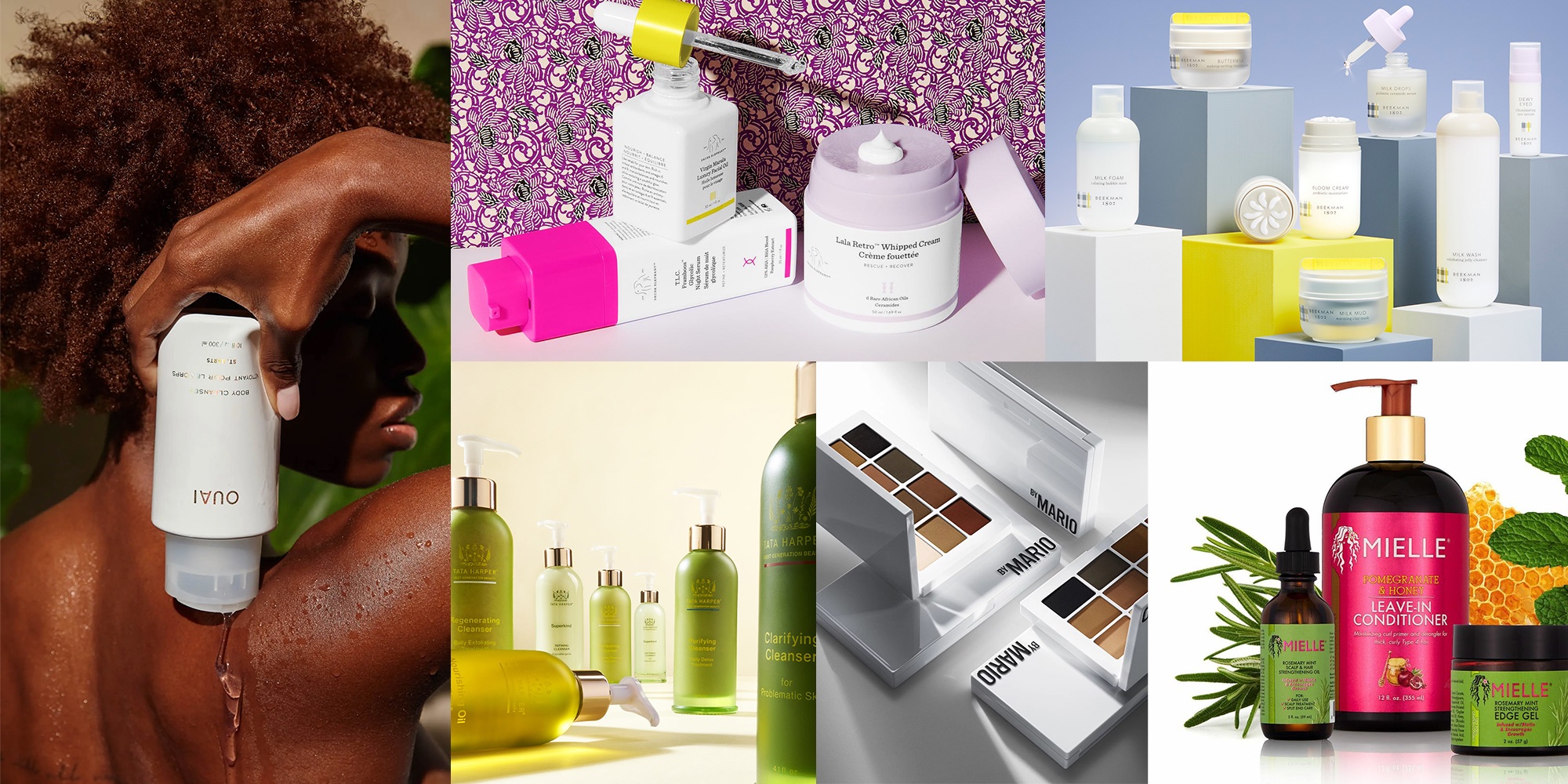
The recent sale of a majority stake in Beekman 1802 to Eurazeo Brands. Rousselle also served on the team advising Estée Lauder on its acquisition of color cosmetic brand Smashbox in 2010.
Dealmaker Summit Panel
^ Back To The Top
Ashleigh Barker Director, Lincoln International
How has the M&A investment landscape changed, and what are contributing factors to the changes?
There are significantly more active players in beauty M&A today versus 10 years ago. The biggest driver of this is twofold: The barriers to entry are low for emerging indie brands, and DTC distribution has enabled these brands to launch without established points of sale, underpinned by social media serving as a point of discovery and customer acquisition. Over time, many of these brands have scaled to achieve tremendous success and have sparked an uptick in M&A.
There has also been an emergence of new buyers seeking to participate in the upside for this resilient, high-margin category. New private equity (PE) funds and PE-backed portfolio platforms executing buy-and-build strategies are now positioned alongside their strategic counterparts. Strategics have also evolved their corporate strategies to capitalize on new disruptive categories and innovation, capture incremental market share on the shelf and other capabilities or technologies that were simply easier and more cost-effective to buy versus develop in-house.
Where do you predict the future of beauty M&A is heading?
If you had asked this question five or 10 years ago, the answer remains the same today: There will be no stopping the forward trajectory of the beauty category, which continues to serve as a catalyst for M&A among both private equity and strategic acquirers.
The beauty industry has showcased its propensity to evolve with the changing mindset of consumers and has demonstrated a prevailing willingness to adapt over time. Since extending beyond traditional categories into new territories such as “beauty from within,” beauty is no longer a category of simple lotions and potions. I’m excited to see where the industry takes us as consumers, which will ultimately shape the strategic direction of M&A in the future.
What are categories that are of interest to you moving forward?
Seeing the emergence of makeup artist-led color brands and color with skincare benefits has helped reinvigorate a category that, for many years, saw little innovation beyond color palettes and influencer collaborations. Skin and the “skinification of hair” category and trend also lend themselves to disruptive innovation with the development of new ingredients and formulas, which are of great interest to both consumers’ wallets and strategic acquirers pursuing M&A.
I’m also personally excited by the renewed interest in body care. There was little newness in this category for some time, but with the destigmatization of taboo body care topics, i.e., odor concerns, acne, feminine hygiene, etc., there’s a new wave of brands that are leading the narrative on how to be comfortable in your own skin. These brands speak to consumers in a unique and authentic way and are paving a path forward for how we define beauty and personal care, especially among younger generations.
Team Members
Former Allure beauty editor Jessica Chia joined the firm’s beauty and personal care practice in 2022.
Dealmaker Summit Panel
^ Back To The Top
Ilya Seglin Managing director, Threadstone
Where do you predict the future of beauty M&A is heading?
It’s hard to predict the future. I think we would all be a lot wealthier if we could predict the future. From the major categories, whether it’s color, skincare, haircare, fragrances, I think there are always cycles. There’s definitely a focus on color cosmetics now and to a certain extent haircare and fragrance, but I think that cycle will play out. Then, there’s going to be some innovation in skincare that we can’t even think about today that’s going to come en vogue.
I think there’s going to be a greater focus on beauty on the inside, beauty on the outside. That’s always been around, I think we are just going to see more innovation. The biggest challenge, particularly for large strategics, with brands and the products that focus on beauty on the inside has been efficacy. The more there is innovation and focus on where you can prove efficacy of whatever supplements or other sort of treatments that you’re doing that are not just topicals, I think you’re going to see more interest to follow from larger strategics because they’re fundamentally the most risk averse companies.
The other area is technology. You can now go into Boots and get a great skin assessment, that didn’t exist in stores five years ago. The more technology allows you to do that, the more retailers and brands are able to customize products for you or customize your purchases. Some retailers do it well now and it’s only going to improve with time. There are some really interesting tech companies and some mediocre companies, but there’s always innovation.
Team Members
Billy Susman founded and operates Threadstone.
Dealmaker Summit Panel
^ Back To The Top
Lindsay Carlson Managing director, William Blair
How has the M&A investment landscape changed, and what are contributing factors to the changes?
The M&A landscape is ever-evolving based on the broader macro climate, but continually proves to be remarkably resilient. Just look at what happened after COVID, a flurry of deals ensued with both strategics and financial sponsors in the mix, marking one of the most active periods.
Now as the market remains more clouded by recession fears and rising rates, we’re seeing a flight to quality in 2023. Deal creativity is key. But the good news is the sponsor community has capital to deploy and strategics have attractive balance sheets, so deals will get done.
The changing landscape is always a catalyst for opportunity and that is where having a great advisor comes into play. William Blair is one of the last private partnerships on Wall Street founded nearly 90 years ago. Our team has been through these cycles, and we know how to advise clients in dynamic markets.
Where do you predict the future of beauty M&A is heading?
I’m very optimistic about the future of beauty M&A. At its core, the category checks a lot of boxes for investors: Large and growing market, recession-resistant and non-discretionary with a high repeat nature. Also, the definition of beauty continues to expand as well as we’re seeing so much convergence with health, leading to interest in new product categories such as women’s wellness. And the beauty services market is booming from these same factors too as seen by growing interest in med-spas.
To get deals done and capital raised in this category, there still must be a track record of strong and steady top-line growth, healthy margins and, most importantly, profits. Those that prove omnichannel success, demonstrate strong communities of fans and truly have a point of differentiation that stands the test of time will continue to drive attractive valuations. The buyer/investor landscape continues to evolve as well with more capital flowing into the space at all stages with the goal to build brands for the future.
Deal Highlight
Carlson helped multicultural haircare brand Mielle Organics bring on Berkshire Partners in early 2021.
Team Members
VP Maggie Wilmouth and associate Katharine Stodghill are also a part of the all-female execution team.
Dealmaker Summit Panel
^ Back To The Top
Sasha Radic Senior vice president, Jefferies
How has the M&A investment landscape changed, and what are contributing factors to the changes?
In the last couple of years, we’ve seen the evolution of technology really impacting how independent brands can compete with incumbent brands in the category across all sub-sectors of beauty. I think the first wave of that was in color cosmetics, where the Too Faceds, Urban Decays and IT Cosmeticses of the world were able to use new marketing channels like Instagram to really connect with consumers, provide educational content, provide community, create a lifestyle around their brands that was different than anything that had been done before, and speak directly to consumers in a way that really hadn’t been a blueprint previous to 2016.
All of these were a reflection of that first wave of independent brands that were showing that there was a new way to market, consume and create a lifestyle around individual brands. That fueled M&A because, frankly, strategics needed this next generation of brands that had this marketing engine that understood the new wave of technology within their portfolios and had those kind of capabilities to support their own growth and elevate their own brands that they already had.
Starting from those initial indie brands in color, we’ve seen that shift fall into other categories like skincare, where we sold Elemis to L’Occitane, Filorga to Colgate, and we helped Shiseido acquire Drunk Elephant. These were brands that were ingredient-focused, that were creating community around their brands, that were selling in different retail channels, mostly in specialty beauty and direct-to-consumer. And they were modernizing the approach to community development in a way that had never happened in the past.
Now we’re seeing that similar kind of skinification of hair, body and other categories. This consumer, who’s been educated in a way that they never were before, is looking to take care of themselves in ways that they haven’t before. They’re looking for efficacy, they’re looking for better ingredients, and that is translating in other categories.
We sold Charlotte Tilbury to Puig, which I think is one of the most beautiful and special color brands that has really taken an authority in makeup and skincare, and showed how educational content, great product and a community that’s built around this kind of luxury appeal and easy to understand routines. So combining great product, great brand, great marketing and global distribution, the next wave within this category is now truly omnichannel, winning across specialty, legacy retail and DTC, and providing a better product for its consumer because there is so much two-way dialogue than there ever has been before. It’s really elevated the experience within beauty.
I take it back to how that’s gone into other categories. We sold Ouai to P&G. That’s a brand that is built around daily care and styling products in hair, but has a complete modernized brand that creates a luxurious, modern experience and a beautiful fragrance that tracks across the entire brand in a way that hasn’t really been experienced in prestige haircare before. This trend in prestige hair has been a huge one in the last few years, and it’s not one that I expect to abate.
The most recent deal we did that is probably the culmination of all of these things that I’ve just mentioned is we sold Nutrafol to Unilever. It was initially a VMS [vitamins, minerals and supplements] product to help support and strengthen hair health that has now been expanded into topicals as well. That showcased the strength of clear community, differentiated ingredients and a strong science-backed product that was delivering a result for the consumer and that created incredible loyalty.
Where we sit today in the market is that there’s a huge focus on technologically differentiated and science-backed products because the consumer, over all of these years, has been so thoroughly educated. They are so discerning. They are looking for results in the products that they’re buying, and that is leading to a focus on creating more science-backed products, delivering and showcasing clinical results in products that are brought to market, but they should still have underlying tremendous authenticity in the brand pillars that they’re putting forward and a community that allows the brand to differentiate in a crowded marketplace.
All of these characteristics have always been at the center of beauty. I don’t expect them to change, but I think, over time, what we benefit from is a stronger connection to the consumer and a deeper understanding of what their needs are. The brands that cater to that are going to be the ones that win.
Team Members
On the global side, Muriel Petit is the EMEA head of consumer products. Nick Barnes is a partner in Asia mergers and acquisitions, and Brian Wood works in the health and beauty space.
Dealmaker Summit Panel
^ Back To The Top
Vennette Ho Managing director, Raymond James
How has the M&A investment landscape changed, and what are contributing factors to the changes?
I think that the environment has gotten more busy and much more competitive. There are more people interested in this category than ever before, and that’s great for brands, but it also requires more navigation and positioning. Because there have been so many successes and great stories in this space of exits, people have more options than ever, but also the hurdle is higher than ever because people have very high expectations as to what they expect an investment or a sale to look like.
When I first started, there were very few bankers in the space because there were a certain number of deals, but, as the deal activity picked up, there’s more options to sort through. There are more unique business models, and it is more important than ever to have an advisor by your side to help you navigate through all of it.
What are categories that are of interest to you moving forward?
Every category has a change and a nuance, so I can’t pick just one category that is interesting. I think there’s the evolution of categories and how people see them, and each subcategory continues to have different dynamics. I think that’s the other element of investment banking. That’s really why it’s good to have an advisor because the industry itself is changing.
Trying to stay abreast of and understanding what the priorities are of investors and strategics, it’s hard to know when you’re just executing your own business every day and you don’t see it from an M&A lens, but that’s literally all we do is look at everything from an M&A lens. So, we’re always really on top of what the priorities are of the various groups.
Deal Highlight
Paula’s Choice’s $2 billion sale to Unilever.
Team Members
Directors Kevin Kim and Jon Tenan, and managing director Marko Horvat. Evan Merali is a managing director in Europe.
Dealmaker Summit Panel
^ Back To The Top
Olga Lewis Partner, Centerview
Where do you predict the future of beauty M&A is heading?
Long term, beauty M&A will remain one of the busiest categories. It is an innovation-driven sector where creative founders are disrupting existing brands every day and expanding the TAM [total addressable market] with new products. It is also a category where strategic buyers are large, well-capitalized and can capture meaningful synergies from acquisitions when the fit is strong and the transactions are well-priced and structured.
What are categories that are of interest to you moving forward?
Skin is always interesting, and I don’t see that changing. Hair is having a moment now with innovation and technology and some great new brands bringing excitement to the market. Cosmetics/makeup are more cyclical, but I expect there will be a lot of activity in the segment in the next few years as authority-led brands with great products have proven to be scalable and successful.
Deal Highlight
Tata Harper’s sale to SPAC Amorepacific in 2022.
Team Members
Amy O’Donnell and Nicole Swaney.
^ Back To The Top
Nini Zhang Managing director, Bank of America
Where do you predict the future of beauty M&A is heading?
Acquisitions of high-quality, innovative and relevant brands remain a critical part of the growth algorithm for strategic platforms in beauty and personal care. Each will assess opportunities differently based on their own unique portfolios and areas of focus.
In the current environment, some of the common characteristics buyers look for are brands with a strong identity, sustainable profitable growth profile, true differentiation—on the product side and/or the community which it serves—and potential to scale in key channels and regions.
What are categories that are of interest to you moving forward?
We are seeing investment and M&A activity across multiple beauty and personal care categories. In skincare, there is continued interest in brands that focus on skin therapy and skin health. Because of the “skinification” trend, scalp health and solution-oriented treatments have been at the forefront of conversations in haircare.
In both skincare and haircare, brands that can substantiate claims and have proprietary formulations and molecules remain top of mind. In addition, we are seeing an uptick in interest in select color cosmetics brands as well as niche fragrances.
Dealmaker Summit Panel
The players
5 mentionedBetter Being

AS Beauty
Momentous
Drunk Elephant
Tata Harper