Eight Key Insights From The Beauty Investors At BeautyX Capital Summit
1. Why Investors Are Interested In Beauty
A great serum is awesome, but it’s not the reason money is pouring into the beauty space. Anu Duggal, founding partner of Female Founders Fund, an early-stage specialist that’s funded Winky Lux, Billie and Live Tinted, explained, “What beauty has which is particularly compelling for VC investors is high growth, high margins and high repeat rates, which are similar to what you want to see in a good software business. The multiples in the industry I think are very healthy.”
Strategic acquirers’ appetite for disruptive concepts impacts the entire M&A food chain in the beauty industry. Duggal said, “They just have not been able to really replicate the innovation and the authenticity of the brands that we are seeing on social that are really resonating with consumers.” Brandon Ford, chief accelerator director at The Lubrizol Corp., an ingredient company backing the brand One Ocean Beauty, elaborated strategic players are “getting rid of businesses that don’t represent their core competencies, and they are focusing in with more precision on those categories that really make sense for their brand and, then, they are hypertargeting companies—indie brands—that match that core business.”
2. The CaPITAL Courtship Can Be Lengthy
Brands should avoid reaching out to investors at the moment they’re desperate for money. Investors frequently prefer to familiarize themselves with the personalities of the people and companies they will ultimately underwrite over a prolonged period. Robert Rosenberg, partner in Prolog Ventures, a venture capital firm that participated in BioClarity’s recent funding round, said, “We like to start the conversation whenever you want to start the conversation. We don’t screen out people who aren’t there yet and say, ‘Call us when you get there.’”
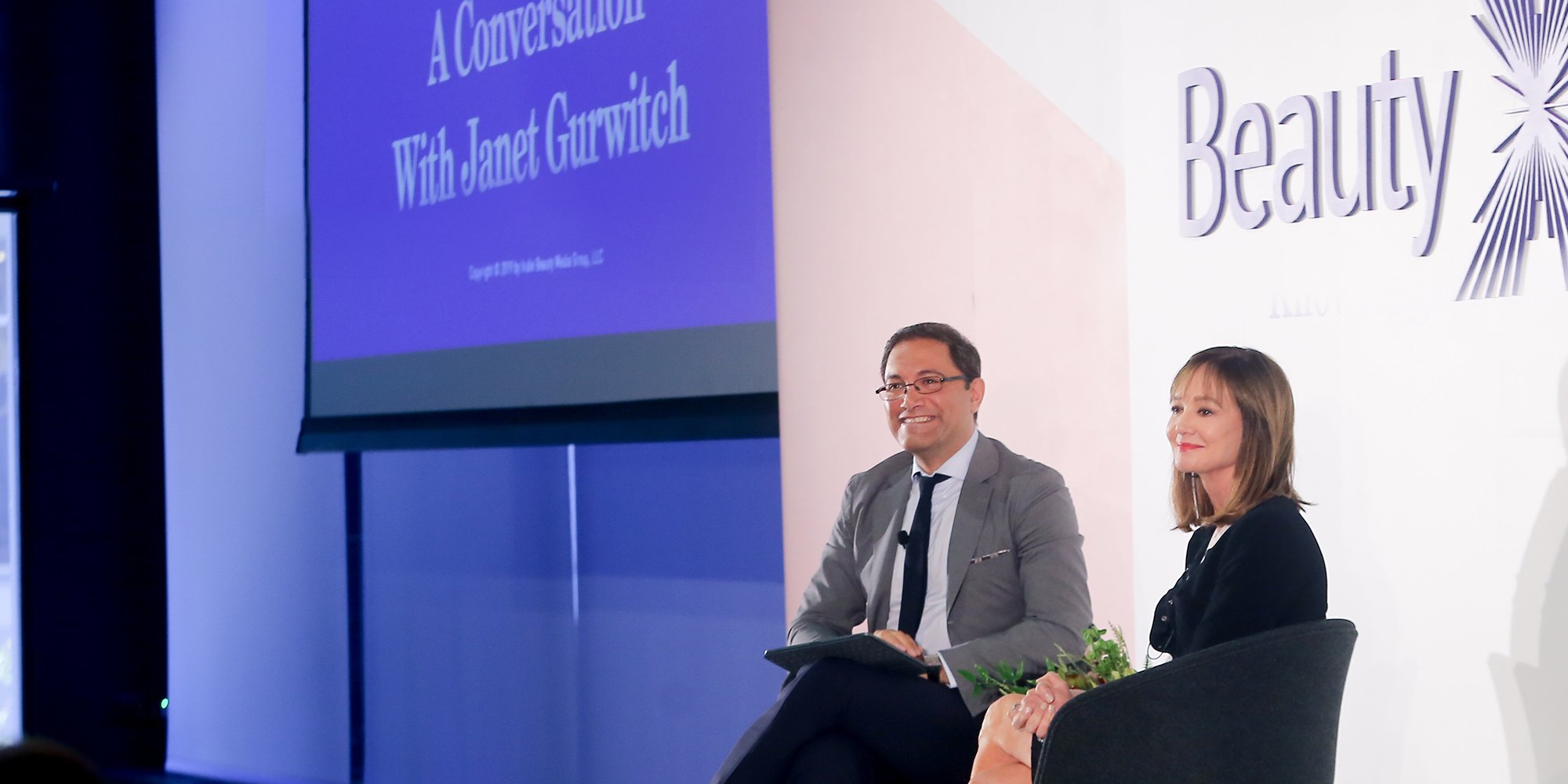
Janet Gurwitch, operating partner at Castenea Partners (pictured above), a private equity firm that previously had Tatcha, First Aid Beauty and Urban Decay in its beauty stable, begins assessing brands at nascent stages of their life cycles. “Not startup, but once you’re starting to cook,” she said of when she jumps in. “You’re at Sephora, you’re at Ulta, I start to meet you, start to understand your business. I date you for a long time. Then, when it [is] time, the brands [go] through a process and, luckily, we [may have a] winner. It takes years to build those relationships.”
3. Passion Doesn’t Pay The Bills
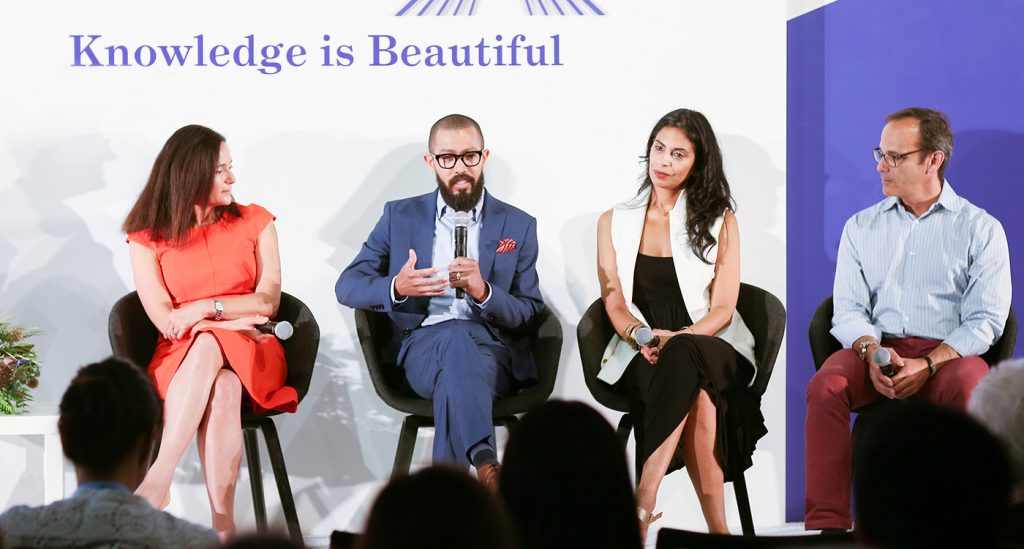
Investors tend to gush about the passion of the founders they finance, but passion alone doesn’t convince wise investors to fork over funding. At BeautyX, the panelists dove deeper into the qualities that persuade them to support a brand. To Duggal, brand concepts have to be grounded in efficient business models. She said, “You need to understand your basic unit economics and what are the levers that are important as you scale the business.” Duggal emphasized the centrality of social media, too. She said, “The first thing we do is check Instagram. We want to understand the story that you are telling. We want to understand how you are engaging with your customer and how they are engaging with you.”
A consumer goods brand is nothing without its audience, and the panelists recognized the bonds between businesses and their customer bases. “What we really try to find is brands and products that become inseparable from their target consumer,” says Pat Robinson, managing director of CircleUp Growth Partners and Kosas Cosmetics board member. “We are more attracted to brands that start out narrow with a specific product with a clearly defined value proposition to their consumer. We’d rather find a brand with 500 or a thousand initial passionate consumers and, then, we figure out how to scale that larger.”
Tina Bou-Saba, founder of CXT Investments, a seed fund with a portfolio that includes beauty and personal care brands Curie, Kinfield, Mented and Ellis Brooklyn, agreed that an avid following is a vital signal of a brand with the ability to stick around. “At the end of the day, what really matters is, are you building a sticky brand? Are there 200 to 500 people who love your brand? That is what matters,” she says. “A smart investor will see that and see the power to amplify that over time.”
4. Know What IT Takes To Get Your Brand To The Next Level
In the beauty industry, product pricing is a major market signal. Bargain basement prices can make a brand appear cheap even if its merchandise is top notch. Analogous principles apply in investor pitches. If a brand is lowballing itself, it can harm its chances to open pocketbooks. “Don’t haircut your projects or sell yourself short,” says Bou-Saba. “The mindset of the private-equity world is, ‘How do we manage the downside?’ The early-stage world is about what’s possible, what could be. More investors would be excited to participate in a $2 million seed round than a $300,000 seed round. Founders will think they just need $250,000, but that’s not enough to really pour fuel on the fire.”

Sonya Brown, general partner in Norwest Venture Partners, a venture and growth equity investment firm with investments in Madison Reed, Ritual, Smilo and Kendra Scott, runs across companies achieving many millions in revenues before nabbing institutional funding. She says, “It’s ideal if a brand can bootstrap to $8 million to $10 million in revenue. It’s at least a great goal, but that may likely require some friends and family. Scaling to $50 million may take more expertise and a capital partner. I have seen brands scale from $5 million to $50 million in six to eight years.”
5. Find An Investment Partner On The Same Page As You
Certainly, securing the right amount to push a brand forward is crucial, but it’s not the only consideration. Gurwitch and Robinson stressed that an investor and founder should be aligned on their vision for the future of the brand. “We write a two- to three-year strategy [plan], and we all agree on it,” said Gurwitch. “It can change, [but] it’s important that we work together with the founder. We’re hoping to sell this very profitably and that everyone wins.”
Robinson urged founders to examine the connections they have with their backers. As they decide on an investor, he suggested they ask themselves, “Can you view this person equally in good times as in bad times as your partner? Can this person really be a value add? You don’t want to think about hard times, but, when they get tough—these things will happen—do you feel like you will have a partner that will run away?”
Ethical concerns can be a compelling rationale for partnership in the current environment. Speaking about One Ocean Beauty and its founder Marcella Cacci’s commitment to ocean preservation, Ford said, “She was very passionate about this idea and about giving back to that cause so much so that, as a part of the agreement when we invested, she wanted to give $250,000 to Oceana before she had even made money. She has baked it into her operations. She gives the money whether or not the business makes money. She says it’s the right thing to do. That’s something that really rang true to us because we have been pushing really hard to create a sustainable program that will allow us to be a good global citizen.”
6. Think About The Anticipated Payout
Investors don’t support brands for the emotional payoff. The panelists at BeautyX gave attendees information on the returns they anticipate. Elizabeth Edwards, founder and general partner at H Venture Partners, a seed, venture and early-growth equity fund injecting initial investments of $500,000 to $5 million into consumer brands, detailed a 10-year investment term is common. She said, “For the first three years, we quickly deploy capital. We’re looking for a 5X cash-on-cash return minimum. For a seed-stage [investment], we’re looking for 10X or 20X cash-on-cash return. That’s over the 10-year year period. We’re hoping, down the line, the business will be acquired.” Edwards continued, “Beauty brands can be acquired for 5X to 10X revenue.”
Gurwitch’s expounded on M&A expectations for more mature brands. “We hope to get unicorn valuations, but that’s not our goal. I hate for a founder to go in thinking they’re getting a [billion-dollar valuation] because you rarely are,” she said. “We feel [a multiple of] 2.8 to 3.8 is a very good return. Time is money, too, so we do try to turn [a brand] very quickly. Top-line growth has been something we’ve sold on, but the higher your EBITDA, the much better your price. It impacts it a lot.” Gurwitch mentioned Castenea’s typical investment horizon is three to five years, but it sold Tatcha in 19 months. The firm held onto First Aid Beauty and Urban Decay for three years each.
7. THE CHANGING PERSPECTIVE ON DIRECT-TO-CONSUMER BRANDS
If the summit had taken place a few years ago, investors would have likely had different opinions of DTC companies. Now, most of them aren’t overly bullish on digital-only strategies, but maintain brands can’t complete without a strong digital component. Brown said, “If you are starting a brand today, it’s almost a must because you want to be viewed as a digital-first brand, but the acquisition costs of customers will get high and, ultimately, all brands will be omnichannel.” Duggal pointed out brands are experimenting with offline initiatives as a result of the rising expense of social media advertising. Winky Lux, for example, has branched into physical locations that combine Instagram-oriented activations with commerce.
Rosenberg indicated that DTC-driven brands shouldn’t be completely written off. He said they should be evaluated within the context of their individual attributes. “The cost of acquisition in isolation is not a meaningful number. What’s really meaningful is the relationship between that and the lifetime value of the customer,” he asserts. “If your lifetime value is very, very high, you can stay pure-play DTC longer even as the channel becomes less efficient. So, it’s really a relative thing. DTC is the primary reason why this industry got disrupted and why large companies failed to grow. They weren’t good at specifically that. That’s the reason why there’s opportunities for exits. You have to start DTC, and you have got to stay DTC because there’s more than just money [involved]. There’s also the strategic [element] that goes with it.”
Validating Rosenberg’s argument, Carol Hamilton, group president of acquisitions at L’Oréal, was upbeat about the prospects of DTC beauty businesses. “I love DTC brands. Why? Because they talk directly to the consumer,” she said. “There’s something so powerful about the DTC space. You have all your data, and you’re so much closer to your consumer. I don’t see these brands going away. This channel will continue to grow and will be a more powerful part of the beauty mix.”

8. Go Easy On CBD
CBD is everywhere, but that doesn’t mean investors believe it’s a sure bet. Brown and Ford noted that Norwest and Lubrizol avoid putting money into categories that may bring undesirable baggage. Ford said, “People who are interested in entering that space should tread very, very carefully. It’s not a space to enter without education.” Duggal is currently sitting on the CBD sidelines. “It’s still a little early in terms of being able to establish efficacy,” she said. “We’ve heard great stories from brands that I think have proven that their customers truly value the products. I think, for us, we are still waiting and watching.”
To the chuckles of the BeautyX crowd, Rosenberg shared an anecdote to illustrate the CBD mania. “In a hurricane, even a pig can fly. This is something my first boss told me. I first thought he meant we should look for pigs, but he said, ‘No, we should look for hurricanes,’” he relayed. “I think CBD is a hurricane. It’s dangerous [for investors]. A lot of people are going to make and a lot of people are going to lose a lot of money. It’s not a panacea, but it’s not a fantasy either.” L’Oréal seems to be hesitating on CBD until the hurricane calms down. Hamilton said, “From a strategic standpoint, we are conservative on CBD. We think it’s a trend that will be here to stay. When we do it, we want to do it right.”
The players
5 mentionedTatcha

Kosas
Urban Decay
Live Tinted
Madison Reed