K-Beauty’s Resurgence Has Been Remarkable. Now, J-Beauty Seeks Its Own.
From the men’s skincare line Kizen, created by 127-year-old conglomerate Suntory Group, to Cosme Co.-owned popular drugstore haircare brand &Honey and first-time beauty entrepreneur Hina Mian’s Deau, the recent stateside J-Beauty launches are trying to break through a crowded market by emphasizing innovative technology, active ingredients and a minimalistic approach curtailing multi-step routines.
“Seeing the K-Beauty success recently, it seems that there is strong demand for Asian beauty brands. So, this also inspired us to think about [our] global potential seriously,” says Morio Ueda, CMO of &Honey, which launched on Amazon in late January ahead of its debuts in TikTok Shop and Costco this month. “Now is the right time for us to tap into the U.S. market.”
Boosted by unabating interest in Japanese culture and record-breaking tourism in the archipelago, J-Beauty companies are readying themselves for the international spotlight. Last fall, skincare label Onshindo Osaka extended distribution to Romania, on the heels of entering the Spanish market.
Rèphr, which began selling its Japanese-made brushes in 2019, launched a new e-commerce website in time for Black Friday. Founded by industry insiders who’ve worked at Shiseido, Kate Somerville and other companies, Shikō Beauty aims to be an online destination for discovering Japanese brands, including Ishii Clinic Beauty Labo and Dr. Medion.
Investors spot the potential in J-Beauty, too. This month, private equity firm Bain Capital announced an agreement to acquire FineToday Holdings, gaining ownership of Japanese personal-care and beauty brands such as Tsubaki, Uno and Kuyura. Spun off from Shiseido in 2021, FineToday has consistently grown sales and profits by approximately 10% annually, fueled by a strong presence in Japan and a broadened footprint across key Asian markets, including China and Southeast Asia.
Last year, Tokyo-based clean beauty brand Damdam raised $3 million in seed funding from investors such as Silas Capital and Habitat Partners. Cofounded by Giselle Go and Philippe Terrien in 2019, Damdam began selling on Sephora’s site in the U.S. in 2021 and landed in the retailer’s brick-and-mortar stores in New York, Los Angeles, San Francisco and Seattle in 2024.
“Lengthy, complex regimens are out, simple rituals are in,” says Habitat Partners partner Daniel Faierman in a statement on his firm’s investment. “We are eager to support…as the business approaches some big expansion milestones.”
J-Beauty’s earlier boom peaked around 2018, following rapid growth in the U.S. from leading brands like SK-II and Shiseido. Tatcha, which Taiwanese American Vicky Tsai started in 2009 with geisha-inspired blotting papers to treat her acute dermatitis, posted over $125 million in sales before being acquired by Unilever for a reported $500 million in 2019.
This time around, J-Beauty can pick up helpful tips from K-Beauty, which is breaking barriers with massive momentum. Market research firm NielsenIQ estimates K-Beauty sales in the U.S. crossed $2 billion last year, up 37% year over year. According to trade data, South Korean cosmetics exports reached roughly $10.2 billion in 2024 and climbed to a record $11.4 billion in 2025, making the country the world’s third-largest beauty exporter.
The U.S. has emerged as a key growth engine, with imports of K-Beauty products nearing $2 billion in 2024, nearly triple 2020 levels, and South Korea briefly surpassing U.S. cosmetics exports during early 2025. In comparison, Japan exported roughly $266.7 million worth of cosmetics and related beauty products to the U.S. in 2024, according to United Nations trade data.
Operating in K-Beauty’s shadow poses a challenge, specifically “the lack of knowledge around J-Beauty,” says Damdam’s Philippe Terrien in the podcast “Founder Friday.” He laments that Japanese companies aren’t “aggressive [enough] on the promotion of their own products, which are really top-notch to be very honest.”
Consumer demand for simple skincare routines could benefit J-Beauty. “Korea always had that 10-step regimen they were always famous for,” says beauty brand builder Tom Winarick, who brought a biotechnology-based line called Ubuna from Japan to high-end retailers such as Saks Fifth Avenue, LuisaViaRoma and Net-a-porter in 2018. “In Japan, it wasn’t like that at all. It’s like cleanse, moisturize and then treat.”
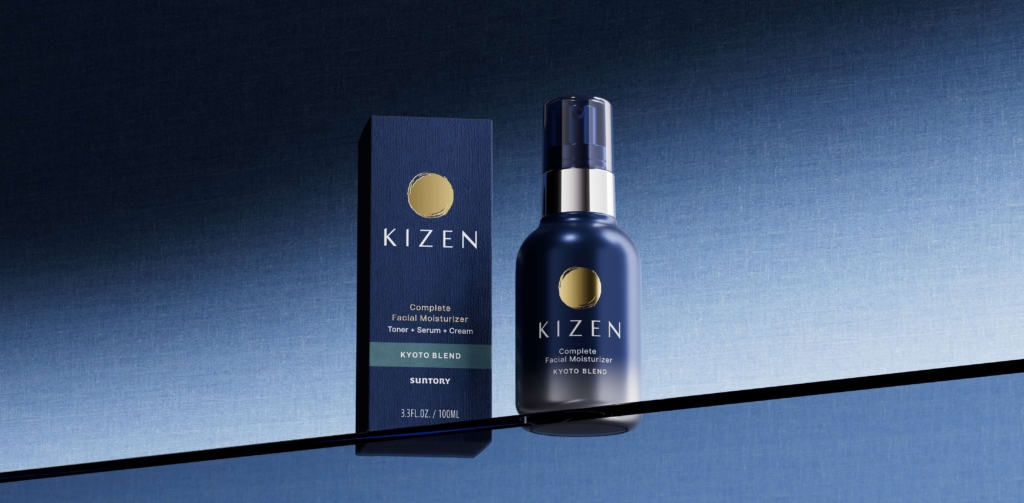
In the men’s category, Kizen takes minimalism to another level with a three-in-one moisturizer featuring active ingredients like squalene, Spanish oak extract and oolong tea-derived polyphenols. Integrating a patented water bond technology, the formulation consists of a water-based toner that envelops an oil-based cream, which then surrounds a water-based serum.
Though a newcomer in the U.S., Kizen capitalizes on distinct advantages of its parent company Suntory, which generates over $20 billion in annual revenue through businesses selling whiskey, tea, food and other products. Prior to the U.S. launch last June, it spent two years conducting consumer research and recruited executives in Suntory’s New York office to test the formula.
In addition to Suntory’s expertise using ingredients and techniques gleaned from its beverage-making heritage, the company leverages research and development from another men’s skincare line, Varon, in its portfolio. A year after launching in 2022, Varon became the top-selling men’s skincare brand in Japan, beating Uno and Shiseido Men. In 2025, Varon’s sales grew 41% to around $40.5 million from the previous year.
“The insight behind Varon was very clear: Men care about their skin, but they don’t know what to use and multi-step routines feel too complicated,” says Makoto Sakamaki, CEO of Suntory Wellness America. “We believed an all-in-one solution would resonate strongly in the U.S. as well.”
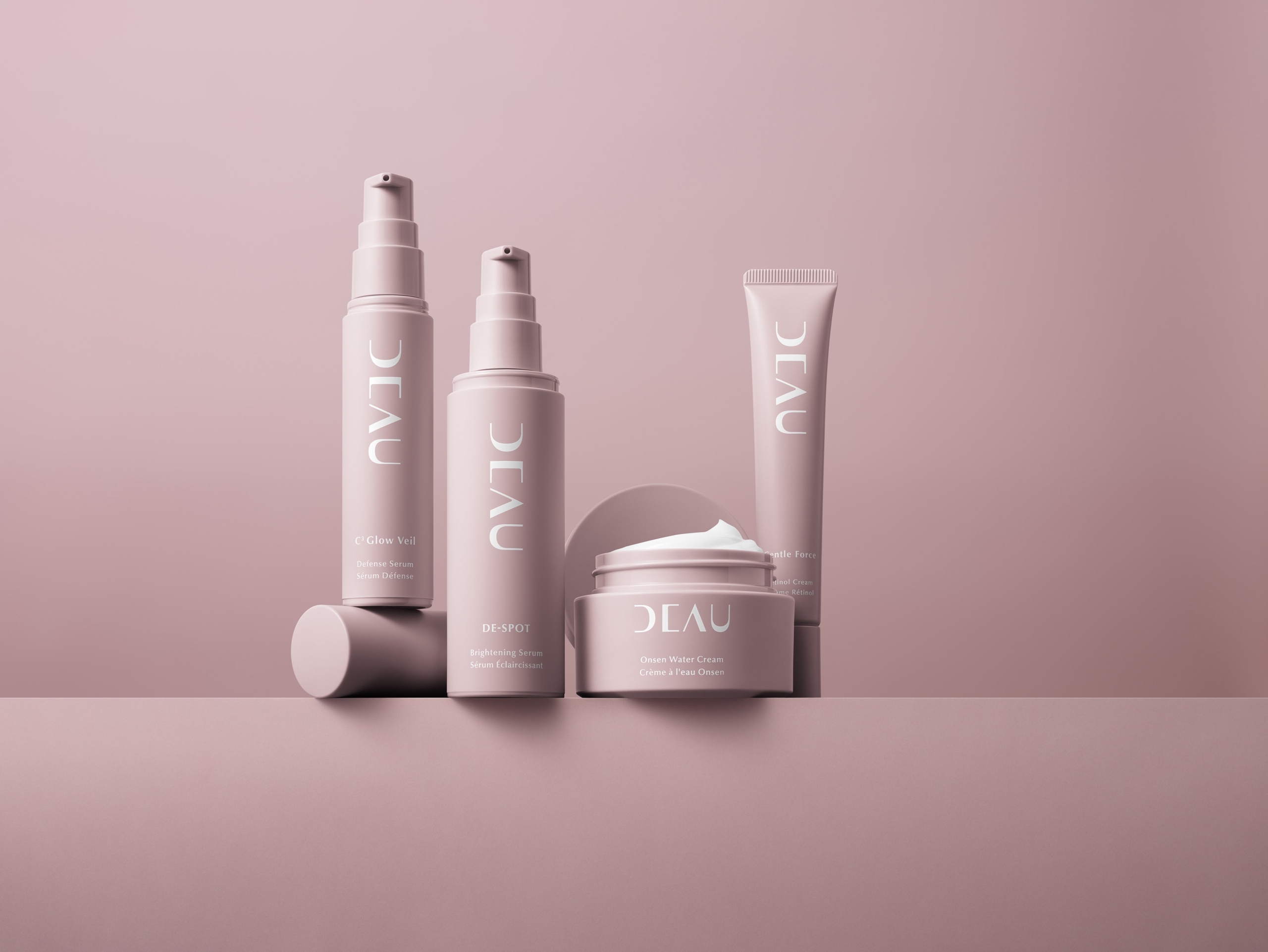
A multitasking ethos appealed to Deau’s Mian, who developed and produced a four-piece capsule collection exclusively in Japan to treat hyperpigmentation. The 34-year-old, who was born in Pakistan, raised in Florida and made frequent trips to Japan for her dad’s auto business, chose Japanese laboratories over those in the U.S., South Korea and Italy because the Japanese companies were willing to create custom concoctions for her. Deau uses common skincare actives like azelaic acid and unique-to-Japan materials such as mineral-rich hot spring water.
Mian says, “I was asking for highly effective clinical formulations with the best textures.”
Mian spent five years developing a brightening serum, vitamin C serum, retinol cream and moisturizer before launching Deau last April. Collaborating with Hinako Sugioka, Deau’s Tokyo-based marketing head, who previously worked at Shiseido and Nars, Mian says her retail strategy starts with direct-to-consumer sales and will extend to TikTok Shop by March and later introduce luxury retailers from a list Sugioka’s compiling. With prices ranging from $55 to $120, she’s set a sales goal of $1 million in 2026.
Deau is directed at busy 30- and 50-year-old women. It’s aiming for repeat business from at least a third of the customers. Mian says the core customer “doesn’t have time for so many products, yet she doesn’t want to compromise on her experience and her results.”
Winarick observes that J-Beauty’s current phalanx of brands breaks from the past due to lower price points. He says, “A lot of them are fitting in the masstige space.”
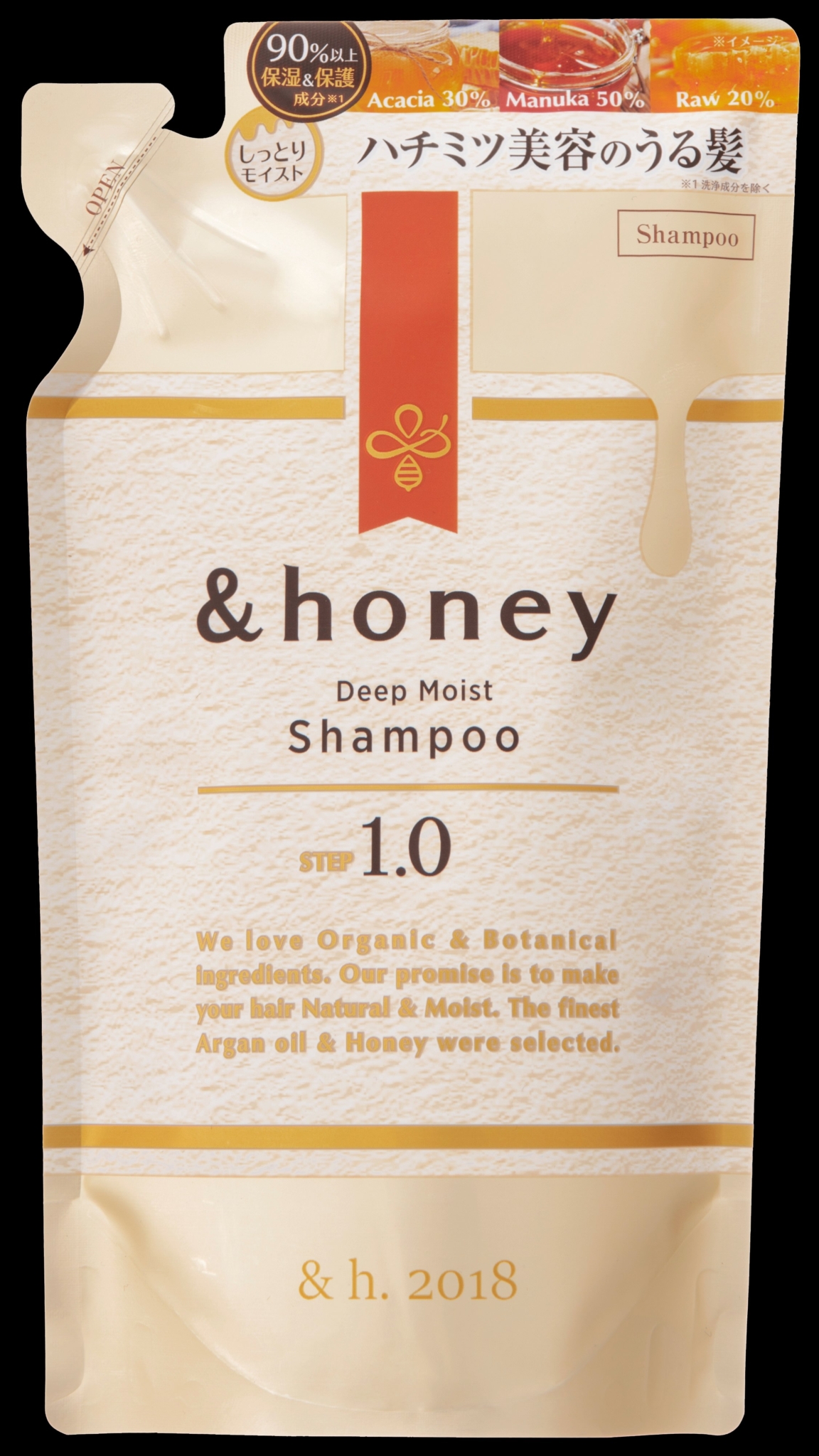
A hit with tourists at Japanese discount chain Don Quijote, the 8-year-old &Honey brand is pursuing American masstige shoppers. Having introduced its Manuka honey-infused hair collection Honeyque on Amazon and in Costco last fall, Cosme is following a similar path for &Honey’s ultra-hydrating shampoo, conditioner and hair oil, which draw a younger customer and retail for under $45.
Available in all of Costco’s 620 warehouses nationwide, &Honey views the retailer as a strategic partner. Costco has leaned into K-Beauty’s popularity, stocking over 50 K-Beauty brands, including Cosrx, Skin1004, Numbuzin and Missha. In contrast, the membership-based retailer’s much-smaller J-Beauty section is anchored by SK-II, Shiseido and Shu Uemura.
“The consumer in the U.S. is seeing Costco as one of the go-to trendsetting channels,” says &Honey CMO Morio Ueda.
Ueda adds that &Honey plans eventually to develop new products specifically for the American market and to spread to the European Union, Latin America, the Middle East and India. Ueda says, “In the long term, I think the U.S. will be more than 50%” of the brand’s sales.
While NIQ figures almost 50% of beauty sales in the U.S. occur online, J-Beauty brands prioritize in-person connections and sensorial experiences. &Honey is lining up guests in late February for complimentary blowouts spotlighting its products blended with honey and royal jelly at New York-based luxury salon Majesty’s Pleasure.
Even with Kizen’s online-first model on Amazon and its DTC website, the brand is seeking partnerships with gyms, spas, golf clubs, barbers and more venues frequented by its target customers: active, style-conscious men in their 30s and 40s. In addition to the 100-ml bottle retailing for $90, the brand also offers a 20-ml size for $25. Plus, it plans to give out 1-ml samples to potential customers at events in San Francisco and New York.