23 Bold Indie Beauty Predictions For 2022
Like those brands, McKinsey suggests global beauty sales could be raring to go next year—it forecasts they will climb 8%—but that “macroeconomic and geopolitical uncertainty” could continue to dampen the fun. “These stresses point to a need for prudence, especially for companies with very niche or limited ranges, those who lack a clear purpose-driven story, and those who are over-reliant on offline distribution,” writes the consultancy in a report about the state of beauty and fashion. “At the heart of the mission for the most successful players will likely be a commitment to listen to customers, and to engage with them in a variety of authentic ways across a wide range of platforms.” To make beauty players successful or, at the very least, informed, we have compiled 22 predictions for where the indie beauty segment could head in 2022.
Paula’s Choice founder Paula Begoun is a stalwart advocate of synthetic skincare ingredients and critic of natural skincare ingredients—essential oils are a huge no-no for her—that can damage the skin. During an interview with Elle India, she proclaims, “There are so many brilliant ingredients that are manufactured in a lab.” She compares lab-manufactured skincare ingredients to effective pharmaceuticals. “If an antibiotic or antiviral drug helps you [and] it’s synthetic, I don’t want you not taking that drug if it’s going to help you,” says Begoun.
Unilever’s acquisition of Paula’s Choice demonstrates that Begoun’s pro-synthetic chemical message has plenty of followers. Now, many other brands are among them. In a recent tweet, Vow Beauty, for example, touts its use of tripeptide-29, which it happily describes as a “synthetic peptide” that “encourages collagen synthesis and reduces skin coloration.”
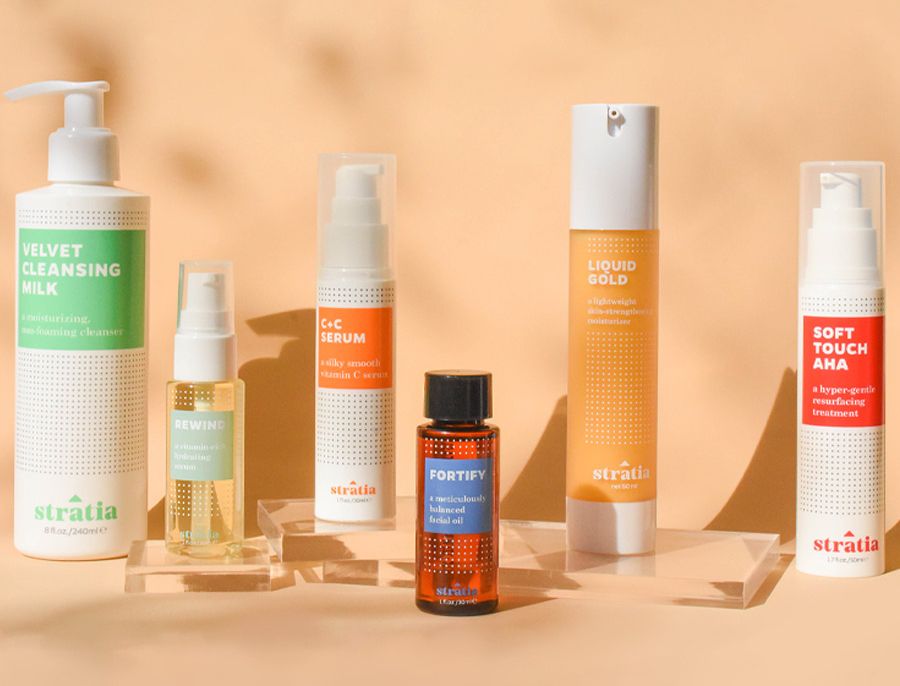
Alli Reed, founder of Stratia, which recently received a $2 million investment from Fable Investments, is vocal about the inclusion of parabens, preservatives non grata in the clean beauty segment, in her skincare brand’s formulas. Talking with Beauty Independent earlier this year, she said, “Parabens are effective in smaller percentages than modern replacement preservative systems.”
The synthetic pride comes in the wake of science showing a path forward in the coronavirus crisis with vaccines and drugs, and the backlash to clean beauty that has questioned its denigration of various synthetic compounds. Brands such as Synth Labs Intl. and Build (Skincare) have embraced the synthetic ingredient cause as an antidote to clean beauty positioning. On its website, Build (Skincare) asserts it “unapologetically exploits synthetic ingredients.” Synth Labs Intl. co-founder Sasha Andreev explains to Beauty Independent, “We are championing synthetic ingredients. It’s a brand that uses synthetic and natural ingredients as opposed to synthetic versus natural ingredients.”
In 2021, beauty brands and consumers took to livestreaming in a big way—and platforms like Supergreat, Flip and Shop Lit Live benefited. The platforms introduce people to the entrepreneurs and executives behind brands, provide product reviews from folks just like them and offer worry-free entertainment amid a pandemic period when stepping outside the door of your house can be disconcerting. One of the next steps in the development of livestreaming is platforms partnering with more traditional beauty players like retailers interested in energizing their business.
“If I were Sephora or Ulta, I would be livestreaming and have live selling going on all day,” says Summers. “Flip is going crazy right now. Everybody has joined it.” Ulta Beauty has jumped on the Supergreat shuttle. In July, it embarked on a three-month partnership with Supergreat. Throughout the partnership, Supergreat creators hosted daily livestreaming events to showcase various tutorials, products, topics and brands, and there were opportunities to click to purchase items available on Ulta’s website.
A spokesperson for Ulta says, “Our team has seen that this form of entertainment engages and gets guests to consider spending an average of 35 minutes on a live show, and we see over one-third of participants adding products to their wish list during lives, indicating users enjoy and value the experience.” Ulta has teamed up with Supergreat again this month with a focus on what the spokesperson says are “frictionless checkout experiences that enable guests to purchase directly within the live with some of our new and exclusive brands, including Rizo’s Curls and Live Tinted.”
At the beginning of the pandemic, it seemed as if there was a possibility of a raft of beauty brand closures due to an economic collapse. That didn’t happen. Instead, beauty brands proliferated as people realized their dreams of beauty entrepreneurship, and consumers, buoyed by government financial support, shifted their spending from services to goods. At the end of this year, the tide appears to be turning, and beauty brand closures are popping up. In recent weeks, Steel Birch, Hush + Dotti and Woodlot have announced they are shuttering.
In an Instagram post, Woodlot co-founders Fouad Farraj and Sonia Chhinji explained, “The journey of building Woodlot has been a defining experience of our lifetime, and yet, with our growing family we know our life’s journey is still only getting started. So it is with optimism that we have decided to close Woodlot and focus on the next chapter of our life’s story, creating new rituals and traditions for our family.”
Woodlot’s fellow indie brands may increasingly be making similar decisions to close or perhaps exiting their businesses gracefully rather than face uphill battles to keep them alive. “It might just the natural evolution. When you have thousands of brands started in a three-year period, eventually some of them are going to start to look for exits. They can’t all become Drunk Elephant,” says Chris Hobson, president and CEO of Rare Beauty Brands, parent company of Patchology, Dr. Dana and Plant Apothecary. “It might be a boom-bust cycle of brand creation, but it also might be what is going on in the economy. The PPP money has run out and supply chain issues make it more difficult to operate on a shoestring. The person who started out bright-eyed and bushy-tailed in 2019 might be exhausted in 2022.”
Elena Severin, senior director of merchandising at The Detox Market, points to massive competition in the beauty market and supply chain issues as particularly difficult for smaller brands. While bigger brands can stockpile a huge number of components, that effort is too costly for smaller brands that already suffer from not having the scale that leads to lower costs. On top of the supply chain hurdles, lofty digital marketing costs are crippling smaller direct-to-consumer brands that will have to chase alternative means—retail among them—to gain customers and drive sales. If they don’t have success via those alternative routes, their future is certainly suspect.
“The market is pretty flooded at the moment, so it will come down to, how much are you willing to fight for market share?” says Severin. “The brands that know their why and couldn’t do anything else other than create and build a brand, those are the ones that will be around. The ones that jumped into it because they thought it might be fun and easy are learning lessons as they deal with supply chain and shipping issues with containers being four times what they were. They will lose their enthusiasm.”
Whenever brands claiming to be sustainable put out new stuff, they encounter questions about the wisdom of putting out new stuff as they supposedly attempt to do better by the environment. With eco-consciousness becoming table stakes, beauty brands are going to have to figure out how to drum up sales without bombarding the market with earth-impairing newness and hopping on every trend. Severin believes they’re giving it a shot by reducing product launches from as much monthly to as few as two major launches or even one major launch per year. Rejiggering an existing product with improved ingredients or packaging is almost the new launch.
“Yes, it’s my job to sell product, and we would all be out of business if we didn’t, but, at the same time, it’s our belief that we want people to purchase one or two great products that they fall in love with versus 10 products and not care about half of them. That doesn’t help anybody, and it doesn’t build a brand. It doesn’t build loyalty,” says Severin. “All of the brands that used to do so much NPD, they would have a burst of huge sales for a month during the launch campaign. Then, it would die down. The key is to create a product that builds over time.” She highlights Ilia’s Lip Wrap treatment as a product that started out reasonably strong with its January debut, but has persistently gained strength month over month.
Brands should think about taking a page out of Clinique’s Black Honey playbook and angle to supercharge an older star product. “It’s a great time to reinvigorate those bestsellers from back in the day. Younger consumers have never met those OGs before,” says Summers. The problem, she acknowledges, is “that the retailers don’t do a good job of that, unfortunately. Legacy brands find themselves being exited, and that’s why you have to continue to fuel the awareness and marketing engine, but I would do that.”
Bathing and aromatherapy products have perennially been associated with well-being benefits (e.g., stress relief, calm and mood stability), but now that those sorts of non-beauty benefits are being embraced throughout the beauty industry, brands promoting them are going to have to step up their games to differentiate themselves. That differentiation can be aided by expert validation and studies showing product usage is tied to desired emotional responses.
Anne Silsby and Michael D’Arminio, co-founders of the brand Act of Wellness, which features monk pepper berry extract, a so-called phyto-endorphin, in its Euphoric Exfoliation product to boost happiness, have met with University of California, Riverside professor Sonja Lyubomirsky, author of “The How of Happiness: A Scientific Approach to Getting the Life You Want,” to discuss how skincare-related touch and massage can inspire happiness.
“Through the pandemic, humans were touch- and connection-deprived because we have been so isolated and separated,” says Silsby. “So, there’s this whole of idea of using skincare treatments that can boost your mood. Because you are massaging and touching, you are positively impacting neuro-connections in the brain.”
Robyn Watkins, founder of Holistic Beauty Group, says consumer testing can help brands verify their emotion-based claims. She emphasizes the testing has to be done with a minimum of 30 to 50 people who aren’t friends and family members. She also emphasizes that consumer testing for emotion-based claims is harder than consumer testing for beauty-based claims. “Sometimes people don’t want to be told that they are stressed. If you say, this product is going to make you feel less stressed, some of them will be like, ‘Who said I’m stressed out?’” says Watkins. “I do believe in consumer testing, but it’s very tricky. It’s going to take a targeted focus in terms of who you are testing and what protocol you are putting them through.”
When Charlotte Chen Pienaar, CEO and founder of Everyday Humans, geared up to launch two collaborations this year—with Blume and Bae World—she wanted to do them with brands led by women of color that shared a similar diversity mission. “From a brand perspective, collabs help to engage customers in a new, refreshing way and build brand awareness and engagement with a different audience base that shares similar values,” she says. “And, for the customers, we believe that gen Z’s attitude towards brands can be as close to a friend’s recommendation, discovering new brands to love based on a shout-out from the ones that you follow and trust already.”
Valdé founder and former Sephora chief merchant Margarita Arriagada anticipates more intra-cultural collaborations will happen in 2022 and beyond. In particular, she believes partnerships between Latinx-owned brands and their founders’ support for each others’ businesses will amplify awareness for those involved. “We need to unite as a beauty community to ensure the narrative is told the right way, and we can lift the tide,” says Arriagada.
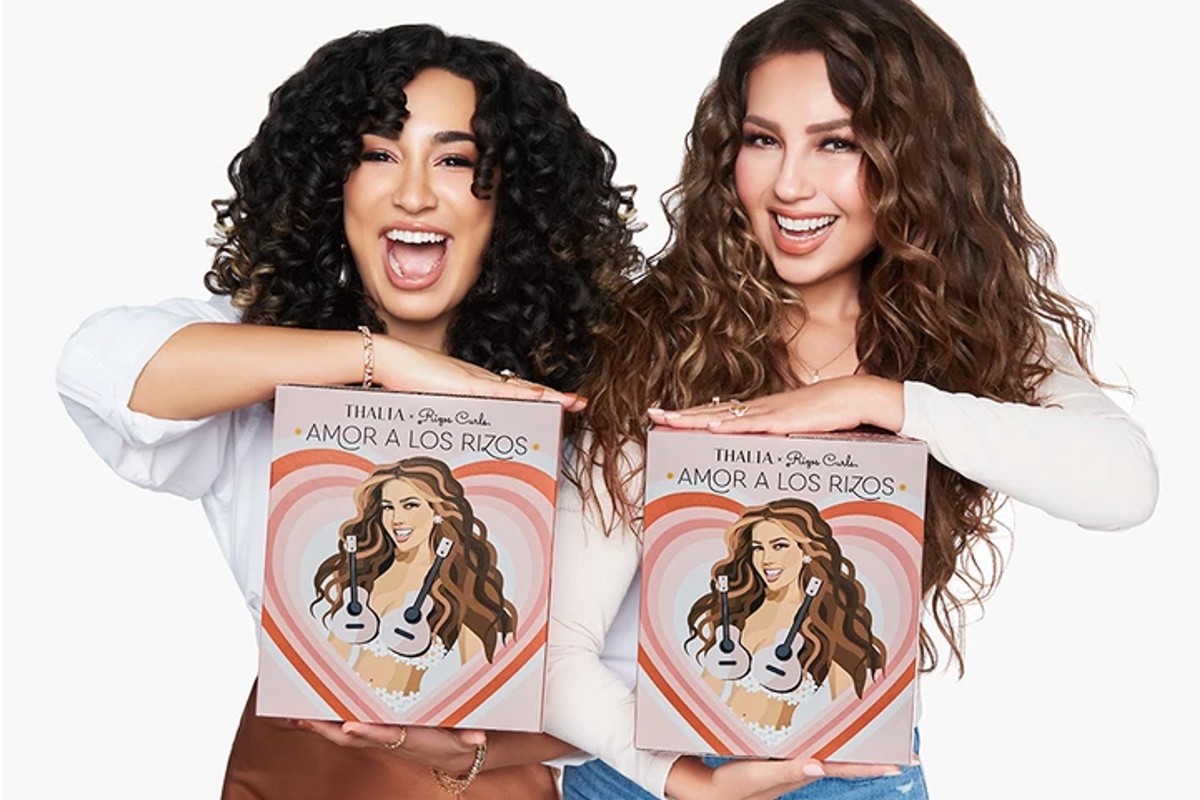
Examples are mounting of Latinx beauty brands that have risen in popularity lately striking partnerships. Disney collaborated with Alamar Cosmetics on a makeup collection timed with the release of the Colombian-inspired film “Encanto.” Earlier this month, Rizos Curls unveiled a partnership with Mexican telenovela superstar Thalía on a limited-edition VIP box of products. Founder Julissa Prado says the star reflects her haircare brand’s consumers and their culture, and hopes to do additional partnerships that “uplift and inspire our community.”
It’s no secret that sustainability is impacting consumer goods commerce. According to Nielsen, sales of beauty products with reusable packaging are registering growth rates above products with merely clean ingredients. Refillable packaging has become an integral sustainable beauty strategy, but it’s impinged by persistent barriers to entry.
In an examination of refill programs, Aubri Thompson, founder of skincare brand The Rebrand, discovered mail-back programs are daunting for consumers and participation rates are only around 10%. “Most folks don’t have the time or energy to locate and print a shipping label, find a shipping box, and take it to a carrier,” she says. “It is really only the folks who are highly concerned about their personal waste who are making this effort.”
For brands, selling both an initial product and a refill product can be a logistical headache. The Rebrand settled on a system that works with a refill program offering aluminum-encased refills twice the size of its initial products at a minimum of a 15% discount on the price of two products. “This system reduces packaging and shipping costs, which I can pass on to customers who are incentivized to refill at a discount,” she says.
Alana Bell, founder of packaging design company CaliPak, thinks customers’ lack of loyalty to products makes the refill model hard. She predicts brands may start to hone in on products with a relatively fast turnover like foundation, deodorant and shampoo rather than have widespread refills.
Bradley and Jonina Skaggs, co-founders of creative studio Skaggs Creative, say “high-end” refillable products “with smart looking and clever packaging” such as glass containers will trend. They add, “As for creams and serums, they’ll be filled in silicone or biodegradable pouches that can be inserted into glass jars that are part of the original purchase.” They also foresee more brands encouraging consumers to push the envelope on packaging reuse. The Skaggs duo points out that Diptyque has released a line of “second-life” accessories for empty candle jars. They say, “Not only are they pushing a reuse strategy, but also creating a new revenue stream.”
If 2021 was marked by more opportunities for multicultural brands, including retail partnerships and funding opportunities, Corey Huggins, founder of beauty industry think tank Ready to Beauty, forecasts that 2022 will be marked by refinement in the segment. “I predict 2022 will exceed that strong base and take it to another level, only with a greater sophistication in everything from marketing mix to retail collaborations,” he says. “No longer willing to settle for mere inclusion, multicultural beauty in 2022 will seek a change in come-to-market strategies and support.”
Inclusive brands will seek out partners they feel truly care about and champion them. Bossy Cosmetics founder Aishetu “Aisha” Fatima Dozie has methodically grown distribution. She’s opted for retailers that have overlap with her brand’s customer base and align with its purpose. Bossy Cosmetics entered J.C. Penney as part of Thirteen Lune’s partnership with the retailer. Dozie says Thirteen Lune’s diverse e-commerce approach was a key reason why. “I particularly love the idea of working with Black and brown-founded beauty companies that make products for all people,” she says.
The brand 54 Thrones launched with Sephora in September. Founder Christina Funke Tegbe says she was motivated by Sephora signing on early to The Fifteen Percent Pledge initiative to pursue the partnership. Okoko Cosmétiques launched on Goop in March. Speaking with Beauty Independent earlier this year, founder Oyeta Kokoroko says the e-tailer’s dedication to supporting and investing in multicultural businesses was a big selling point. She elaborates, “I love the fact that the values that they promote are not just done for marketing purposes, but it’s true because I can see it in their team, I can see it in the fact that they’re really trying to bring on more brands that are diverse, and they’re not afraid to actually show it.”
Huggins also prognosticates that “rockstar-level collaborations and brand new economy styles of community funding” will come to the multicultural segment. CurlMix turned to crowdfunding to raise money via WeFunder, which allows individuals to back startups and receive equity in return. The company amassed nearly $3.7 million. Founder Kimberly Lewis chose the WeFunder raise as a way to give back to her community of primarily Black women. “I like J.Cole’s lyric: ‘What good is first class if my homies can’t sit?’ And that’s truly how I feel,” she says. “I really want my customers to be able to come up with us.”
The wig, weave and extension segment has seen a number of brands like Rebundle, Glam Seamless, RadSwan and Waeve making moves. Both Rebundle and RadSwan were recipients of grants from Glossier’s grant program for Black-owned beauty businesses. Waeve has raised $2 million in seed funding and so has RadSwan. The momentum isn’t expected to fade.
Greater accessibility is poised to further the growth of wigs, weaves and extensions. The Renatural founder Aasiyah Abdulsalam thinks accessibility has been a problem. Her brand’s Wig Fix product, which helps to secure customers’ hair to their wigs, recently launched in J.C. Penney. “Most people can’t just go into a local store and buy a wig cap,” she says. “Accessibility is a major, major pain point in the industry.”
Abdulsalam provides an estimate that 150 million people wear wigs at least three times a month, and sales in the category are growing 14% yearly. She says, “It’s kind of the ugly sister of beauty that no one talks about, so we want to get on the radar of more people so that they can feel more comfortable wearing them.”
Curls founder Mahisha Dellinger has created a new line catering to the health of hair hidden under weaves, wigs and extensions. “In order for protective styles to be truly beneficial, the hair and scalp must be properly cleansed, conditioned and hydrated, prior to any long-term installations,” she says. Looking ahead, Dellinger sees the category focusing on restoration, repair and hair growth. Specifically, she foreshadows that there will be “more organic and sustainable materials created for the installation process. In addition, broad base education on the proper techniques and takedown.”

Before the pandemic, many big retailers gutted customer service at their stores, diminishing their allure. For stores to be attractive to consumers that have become more accustomed to e-commerce since the pandemic, they should consider rekindling the customer service they largely abandoned. “If people are going back into stores to purchase beauty, they’re looking for a human interaction and something they can’t get online as well as to be able to touch and feel products,” says Wizz Selvey, former beauty buyer for Selfridges and founder of consultancy firm Wizz&Co. “Retailers need to focus on providing an added level of experience, and allowing customers to learn about the products and brands in a different way to how they can online.”
Kokoroko opened a flagship Okoko store in its hometown of Vancouver earlier this year. At the flagship, customers can receive personalized consultations from trained beauty staff, attend workshops on topics like DIY beauty or simply browse and relax. The location stocks supplements, nail polish, wellness teas and additional products from an array of natural brands that complement Okoko. Kokoroko says, “This personalized, customized experience is what people seek nowadays because it allows you to just do something good for you that makes you feel good in your skin,” she says.
Expertise on the shop floor is critical, argues Selvey. At beauty stores, staff can act as IRL versions of “genuinfluencers,” which are defined by WGSN’s Cassandra Napoli as influencers spreading “important information that can keep people informed” and have been big on social media this year. If they do, Selvey says the customer “will be rewarded with expertise another level up from shopping or searching on their phones or laptops.” Stores that cultivate staff expertise will “ultimately carve out more market share for themselves.”
Creating events with experts and brands will be important, says Selvey. Opened in July, Allure’s New York store has held over 200 events. The store is dotted with tablets brimming with details about the brands and products available. Smart mirrors are set up to invite customers to take selfies and film tutorials. Sonny Gindi, creative director and co-founder of Stour, which was hired by Condé Nast to create the retail space, describes the brick-and-mortar spot as “a retail store and a community playground for our brands and shoppers.”
Pienaar predicts a more inclusive assortment will accompany better customer service. “The in-store retail experience will need to fit the fast-changing needs of customers, no matter their age, gender, race, beauty regime or budget,” she says. “By championing and leveraging the speed and agility of indie and digital-native brands, legacy retailers can bring in a new set of young digital native customers’ that are looking for brands and products that celebrate authentic beauty. As buyers identify the underserved demographics and gaps in the market, bringing in indie brands will result in a more inclusive and diverse product assortment that will delight, excite and address new gen customers of today.”
The fragrance category has had a robust year. For the third quarter, The NPD Group estimates prestige fragrance sales advanced 36% to reach $1.1 billion. On top of hosting in-store beauty events, Bluemercury has responded to the interest in scents by recently launching a new fragrance experience in certain stores. Of the installation, Tracy Kline, senior vice president of merchandising, digital and marketing, says, “Clients’ reaction and demand [are] exceeding expectations.”
Kimberly Waters, founder of fragrance destination MUSE, an acronym for Modern Urban Sensory Experiences, says she’s never seen scents as coveted before—and she’s worked in fragrance since 2012. “I believe the pandemic has shifted our behaviors, our relationships to scent and our appreciation for it,” she says. “For those who caught COVID and lost their ability to smell, I believe a greater appreciation was garnered once that ability came back. We take smelling for granted and COVID presented the ‘what if’ question to many.”
On the future of in-store purchases, Waters says, “What we’re experiencing is an uptake in folks desiring experiences around fragrance and scent, not just purchasing them on a whim. Consumers are desiring connections because, for almost three years, we’ve been disconnected from ourselves, our families and our realities.” Discussing trends within fragrance, she says, “The desire for ‘clean’ fragrances will not subside. I do believe, however, the desire for true standout fragrances and scents will continue to be requested, maybe fragrances that are fruity or citrus in composition. Folks are coming out again, and they have something to share with the world.”
With sunscreen claims and ingredients under fire, brands have to work overtime to assuage customers’ concerns and prove they’re legitimate. Sara Dudley, CEO of The Sunscreen Company, says, “Brands need to be buttoned up in terms of how they are using terminology, avoid misnomers and continue to report on the significant science that backs this up in a credible and professional way. Gone are the days where brands can call filters ‘toxic chemical’ or to say they only use ‘physical’ ones.”
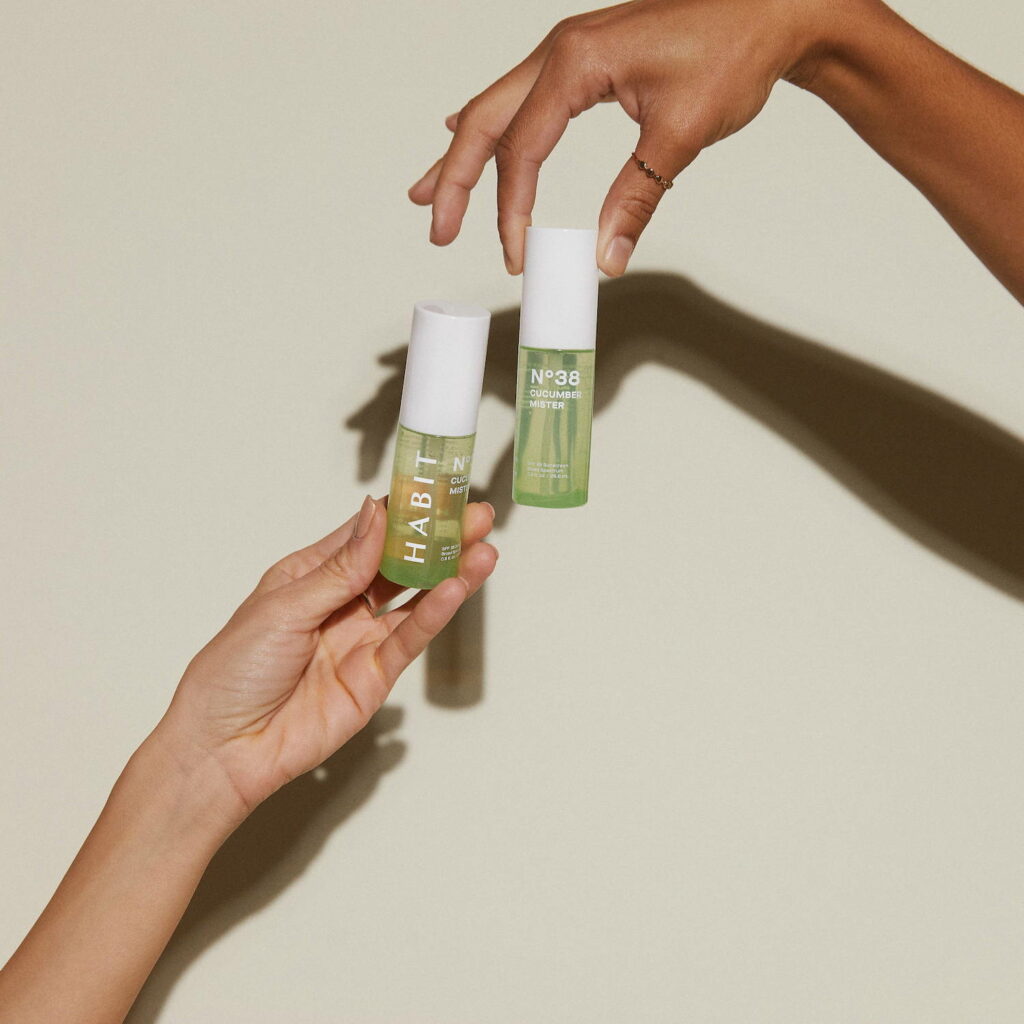
Going forward, Habit founder Tai Adaya, who’s about to launch her brand’s second SPF product, says the category will be centered on “effects, science, health and longevity.” Chen Pienaar conjectures the debate over formulas being clean or not clean will continue to confuse and divide customers. In reaction, she says, “Brands will need to allocate more resources to educate consumers and react faster to changing consumer preferences.”
Inclusive formulas will be essential for sun protection brands. Companies like EleVen by Venus Williams, Black Girl Sunscreen, Habit and UnSun Cosmetics have been catering to customers of color seeking sun protection products that don’t leave a white cast, and others will follow suit. Bluemercury’s brand M-61 Skincare is preparing to launch two mineral sunscreens that VP Julie Kelly says blend “seamlessly with zero white cast.”
Newness isn’t enough, Dudley contends. She remarks customers will want evidence that, when a sunscreen product claims it’s “for all,” it actually is. Dudley says, “They are going to have to pass an Instagram challenge of a person of color applying them without a white cast.”
Microdosing, the practice of taking sub-hallucinatory amounts of psychedelic substances, often “magic” mushrooms, exploded in 2021, likely because of its purported ability to reduce stress and anxiety, as well as improve mood and creativity. Adults who had never seen a bag of weed in their lives were procuring psilocybin and trying to figure out how to create microdoses from the stash of ‘shrooms they bought. Add the recommended act of “stacking,” mixing in other medicinal mushrooms, herbs and minerals at certain amounts with psilocybin, to that endeavor and would-be microdosers were left bewildered and searching for turnkey solutions.
Where there’s a white space, there are ambitious entrepreneurs ready to fill it. Companies like Jovie, Psilo, Happy Caps and Golden Euphorics have come to market with ready-to-use microdosing capsules and gummies in stylish packaging that looks like it would fit right in at Clean Market. Since psilocybin is still illegal in most states, getting the products isn’t as easy as placing a bottle in an online cart or stopping by a local wellness shop. Potential purchasers are usually referred from existing customers. Vetting is done over Instagram DM and payment via Venmo.
Expect this stylish microdosing gray market to expand in 2022, and brands in the space to get bolder. Psilo, maker of microdosing gummies, already does extensive influencer gifting, allowing recipients to post the products on Instagram. Its main account, @psilo.delic, is often shut down, a common occurrence for brands in the microdosing space. Psilo is unflappable, though. It has an active backup account and recently debuted the first episode of its docuseries #NormalizePsilo all about the benefits of microdosing. Episode one features NFL veteran Kenny Stills.
As the decriminalization movement continues in the United States, the hope of industry insiders is that supplements containing psilocybin will sit on store shelves next to similar bottles filled with chaga, lion’s mane and other popular mushrooms. Lou Sagar, founder of New York City wellness destination and elixir bar The Alchemist’s Kitchen, where everything from Anima Mundi ingestible mushroom powders to Tulipe Fievre perfume oils is available, believes that day is sooner than some may think. And as a believer in the magic of mushrooms, he looks forward to it.
“I would say by 2024. Its acceptance is going to develop through decriminalization,” he says. “Once you have that acceptance then, it’s having a conversation, not necessarily making it really mainstream, but so that there’s more of an awareness [of the benefits of psilocybin]. Let’s talk about it rather than hiding from it. Our intent is really to be comfortable having those conversations.”
Thus far, the beauty industry’s web3 initiatives have consisted of varied NFT projects like Nars’ recent NFT artworks by artists Sara Shakeel, Azéde Jean-Pierre and Nina Kraviz. They were commissioned by the brand to celebrate its iconic Orgasm blush. The digital art is intended to suit gen Z’s interest in self-expression through the creation of exclusive digital “looks” that can be donned in digital spaces.
Jorge Cosano, head of GBI, an incubator arm of creative agency Great Bowery, says brands should avoid the temptation to use NFTs as an IRL commercial tool. Instead, they should view them as a digital community engagement tool. Cosano instructs, “Don’t give discounts, don’t give promotions. Create limited editions, offer things that create that exclusivity and sense of uniqueness.”
He gives the example of brands developing makeup for video game avatars that allow players to display self-expression within a game. “Even if I’m in a video game, I don’t want to look like all the other characters, I want to create my own identity,” says Cosano. “That is what this is about. I think that people are going to be willing to pay $10 for digital makeup they get to use for the next three weeks.”
Now that TikTok has eclipsed Instagram as the premier social media platform for beauty brands, the type of content and the type of content creator that garners the most engagement has shifted dramatically. Thanks to TikTok’s infamous (and enigmatic) algorithm that serves users content that seems tailored to them from seemingly random accounts with meager followings, anyone can go viral almost instantly.
“What we’re seeing is people who have a couple of really interesting pieces of content all of a sudden have amazing views, thousands of likes, and then the followers come because they’re able to leverage it,” says Bilal Kaiser, principal and founder of public relations and influencer marketing firm Agency Guacamole. He notes the challenge is that not everyone sets out to be an influencer or even knows what being an influencer entails, but brands will reach out to these individuals the same way they would an established influencer, which isn’t effective for either party.
“Where it used to be like on Instagram, if you’re a content creator, you need to have a look, a vibe, a voice, have a media kit, build your presence and then one day L’Oréal will come knocking, and you’ll be able to charge money for your content, not so much anymore with TikTok,” says Kaiser. “It’s literally upside down in that you could never ever want to be a content creator, but now you’re being approached as one.”
The “overnight influencer” phenomenon is a chance for brands to work with emerging and what Kaiser calls “pre-emerging” talent. They may not have millions of followers, but they can thrust significant awareness and sales. On Instagram, that might only be attainable with content creators far out of most indie brands’ price ranges. In that way, TikTok has slightly leveled the playing field for the time being.
“I contact people I would never have heard of otherwise, which makes it more social media versus this enclosed ecosystem of Instagram. Instagram isn’t over, but it’s old school now,” says Kaiser. “When I talk to gen Z, especially emerging influencers, it’s all about TikTok. It drives culture and sets the tone.”
People have spent a ton of money on skincare—and they don’t want their foundation to mess up the canvas they’ve perfected with it. Severin says a litany of new foundations will break into the beauty market next year, and they’re all designed with skincare benefits at their core to be an extension of consumers’ skincare routines. “People aren’t launching foundation to cover anymore,” she says. “They are launching foundation to enhance and treat.” In general, Severin comments, “I’m going to stay bullish on makeup. I think that the playfulness and what’s happening in fashion is going to translate and keep the trend going.”
The barely-there foundation flooding the cosmetics category fosters a good backdrop for vivid color across the eyelids or lips. Dubbed “girl gaze” makeup in a story by Rachel Strugatz published last week in The New York Times, the emerging makeup style is encapsulated by a “metallic pink shadow over the entire lid or blue eye ‘paint’ used as liner.” Makeup artist Sébastien Tardif, CEO and co-founder of Veil Cosmetics, says, “You have to fresh, superb skin in order to have that graphic eye or that really bright lip or play with eyeshadow. You choose one focus as opposed to having everything on your face, which we saw with all that contouring, baking, highlighting, big brows and shimmer.”
With inflation surging, consumers are having sticker shock when they visit gas stations and grocers, but they have to continue to shell out for staples. They don’t have to continue to shell out for discretionary beauty products, especially if their wallets are being drained more by the heightened prices of staples and the end of pandemic-stoked government financial support. In that broader context and in the context of beauty brands rolling out price increases next year to cope with swelling costs, Severin is actively hunting for accessibly priced beauty brands and products for The Detox Market. “Price sensitivity is top of mind for us,” she states.
Severin’s hunt for accessibly priced beauty brands and products is also rooted in her beliefs that wellness should be democratized and quality products don’t have to be exorbitant. “A couple of years ago, we all started championing the saying, ‘Health is the new wealth,’ but I don’t like that saying anymore because health shouldn’t be expensive,” says Severin. She expounds, “The message has been that, if you want the best of the best, you have to spend money, but that’s just not true. I don’t think that’s the message the world needs now, and I think there are plenty of ingredients and formulations out there that can be made affordable.”
For the last few years, powered by Amazon and Google search engines, hero ingredients like vitamin C, hyaluronic acid, retinol and niacinamide have been crucial vehicles for skincare sales. But skintellecuals that salivated over the latest product with high concentrations of a hero ingredient are getting smarter about their skincare purchases. They’re compelled to know more about the hero ingredients in skincare products than merely that they’re in them. The kinds of hero ingredients skincare brands incorporate in their formulas are becoming significant factors in purchasing behavior.
The new brand Matter of Fact, for instance, spotlights a version of ascorbic acid it promotes as stabilized and potent in its Ascorbic Acid 20 Brightening C Serum. Glossier markets the retinyl sunflowerate in its Glossier Universal Pro Retinol as gentle for younger consumers dipping their toes into retinol skincare.
Medik8 has created its own version of retinol or vitamin A called retintyl retinoate. Daniel Isaacs, director of research at the skincare brand, explains it’s “the only form of vitamin A that can be used during the day because it doesn’t break down in sunlight.” He’s adamant the type of vitamin A in a product can make a real difference—and consumers should recognize that. In addition to retintyl retinoate, Medik8 uses retinaldehyde, which Isaacs says is “a next-generation form of vitamin A that is proven to deliver results up to 11x quicker than retinol.” The brand doesn’t use retinyl palmitate and retinyl acetate common in mass-market retinol products. Isaacs says studies show “they have very little effect.”
Isaacs continues, “There are so many different types and that has caused confusion for quite a bit of time. What is also a bit of a challenge is that some of these different forms are useless, they just don’t do anything at all, whilst others are really, really effective, but can be very irritating and, then, there are some that are prescription-only.” He says, “As more and more people have heard about its incredible effects on the skin, the demand for more sophisticated vitamin A formulas has increased.”
Climate change. COVID-19. Rampant racism. School shootings. The news hasn’t been chipper over the past two years. Brands aren’t ignoring the doom and gloom. Instead, a burgeoning group of them are rebuking the role of customer cheerleader or the premise that some consumer item is going to demonstrably alter reality for the better. Forget trippy floral stickers and love bomb messaging. A dark wave of branding is coming.
When the pandemic arrived, mother and daughter Mary Lopez and Maxine Lopez-Keough were quarantining in rural Vermont, where Lopez-Keough says it was “very, very cold and dark.” The world felt like it was ending. The pair were also feeling exhausted by what Lopez-Keough calls the self-defeatist marketing undertones of female wellness and self-care goods. “When you purchase things because you’ve been programmed to constantly seek to transcend negative thoughts and experiences, it doesn’t actually fix things. It just means you become less and less tolerant for negative thoughts and experiences,” she says. “When the things we buy for indulgent reasons are rebranded as necessary aids to escapism, suddenly our lives are incomplete without them.”
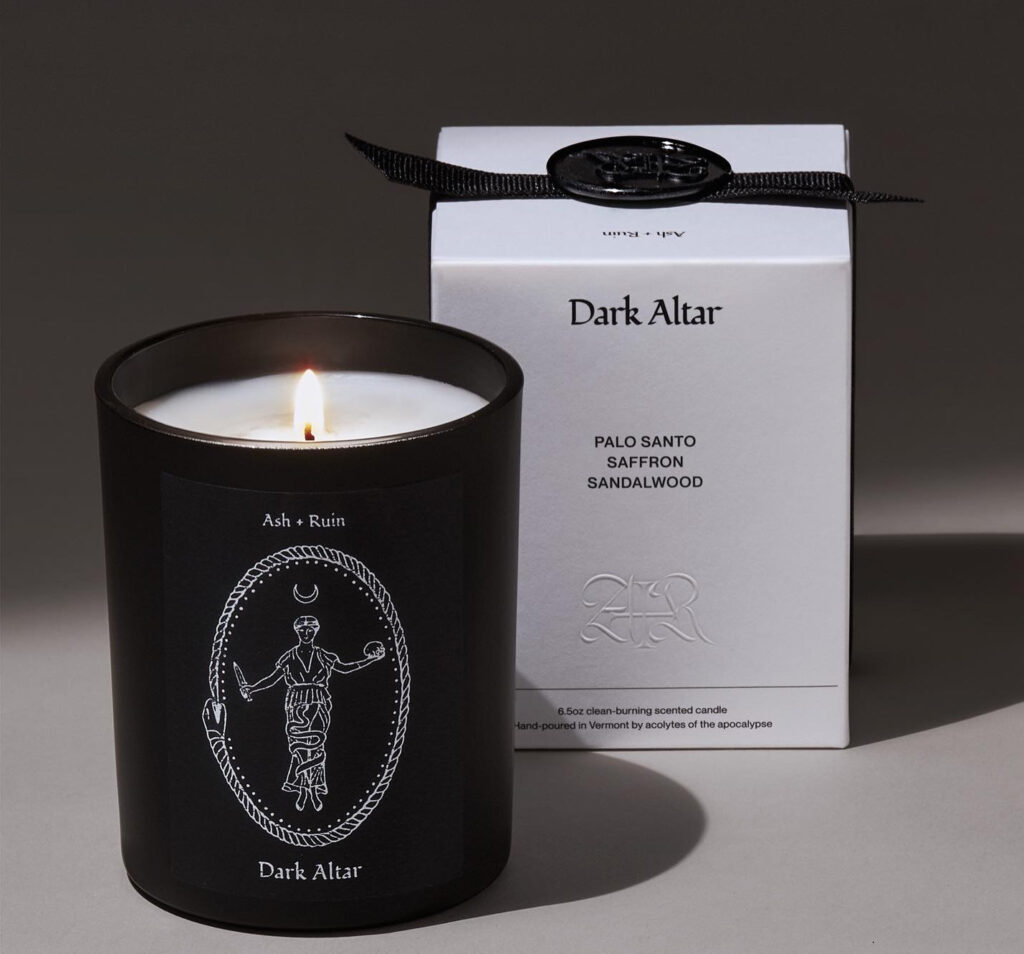
Lopez and Lopez-Keough created candle brand Ash + Ruin as a way to turn the tables on the obsession with escapism and controlling the uncontrollable. With their black vessels, gothic lettering, foreboding names The Void, Blood Wedding and Dark Altar, and tagline, “candles for the end of the world,” Ash + Ruin’s candles reject the narrative of constantly striving for happiness.
“When you acknowledge the uncomfortable and chaotic and, instead of trying to escape, dig in your heels and ritualize the experience of feeling those things, you take control of your narrative and widen the overall spectrum for happiness. The A + R candles became a little ritualistic moment to do this, a tongue-in-cheek way to acknowledge the inherent pain of life and, instead of fleeing from that uncertainty and fear, feel empowered by that,” says Lopez-Keough. “Don’t light a candle to escape your pain. Light a candle to honor it. Make that pain your servant to do all your dark bidding.”
Not many indie brands can afford to buy a Malibu beach house like hair accessory brand Kitsch did, but creating a curated brand experience in a controlled, coronavirus-compliant environment will be an investment medium-to-large brands will want to make. Agency Guacamole’s Kaiser sees the experience as the evolution of the pop-up. “Imagine that model, but as a branded content environment, really only for influencers to even potentially come and do residencies, create content for a while in a branded space that addresses COVID safety, but also meets all the brand parameters,” he says. “It’s like the Hype House on TikTok meets pop-up meets content studio, all in one presented by one brand.”
Invited creators will try products and, of course, churn out a ton of content to get pulsed out throughout the year. “Brand guidelines will be around,” says Kaiser. “It’s can’t say this word, it has to use this ingredient term, there’s a lot of things to worry about, but, if it’s a safe space that is self-contained, a lot of those risks are mitigated because, no matter what photograph is taken, we don’t have to worry about how the logo will look or anything like that. This is a super turnkey, immersive experience that allows for really good content.”
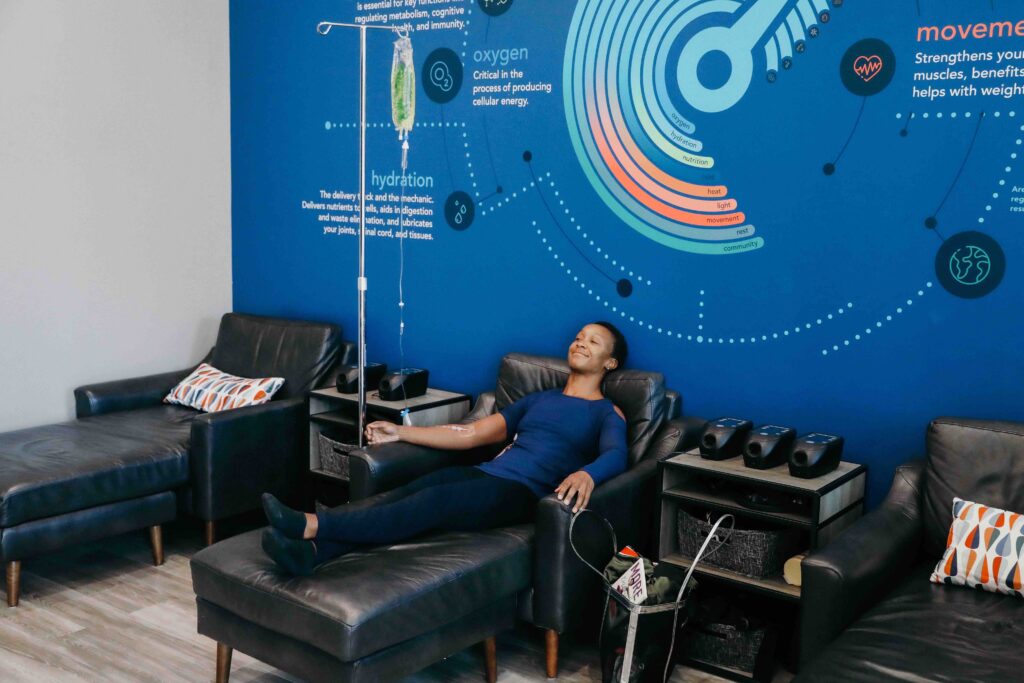
Coastal city dwellers with even a passing interest in wellness have tried healing modalities like IV drips and cryotherapy, but Americans across the country are also now taking a more proactive, preventative approach to their health. They’re spending outside of the traditional health system to get data about their health and taking action to minimize their risks of sickness.
As smaller, independent service providers have struggled to stay open amidst pandemic closures, wellness franchise businesses like Restore Hyper Wellness and Bulletproof founder Dave Asprey’s growing chain of biohacking clinics Upgrade Labs are making proactive wellness available to the masses. This week, the former closed a $140 million investment led by global growth equity firm General Atlantic. The 6-year-old company will employ the cash infusion to further its already rapid expansion. Restore has around 115 locations in 34 states.
“We have found that Restore’s concept works just as well in Wichita, Kan., as it does in New York City,” says CMO David Fossas. “People typically start with IV drips and cryotherapy. With our modern diet, most people are either insufficient or deficient in at least a few micronutrients. IV drips help to supplement those micronutrients. And, we offer biomarker assessments that give us an understanding of what those insufficiencies might be, so our medical team can help customize what goes into a client’s IV drip.”
Restore anticipates being in 46 states by the end of 2022 and plans to be within 15 minutes of 80% of the U.S. population in the next five years. “We see our members four times per month on average in a cash pay model, which is very different from a doctor who may only see their patients once a year,” says Fossas. “Restore’s model of hyper wellness gives these consumers access to proactive health modalities in an effective, transparent and fun experience.”
The sexual wellness movement is going global in a real way as stigmas around women’s wellness are being shed around the world. Asia is emerging as a hotbed of innovation and commerce. Historically, regions like Southeast Asia have had a lack of comprehensive sex education and gender biases in medical care that have left the consumer goods market bereft of contemporary sexual wellness merchandise. However, the future is looking more women- and sexual wellness-friendly. In an effort to be progressive, the Singapore Ministry of Education this year updated its sex education curriculum to go beyond abstinence and teenage pregnancy to be more inclusive by teaching topics such as consent and the influence of online media.
“Compared to western culture, Asian culture tends to be conservative around the issue of sexual wellness, and many topics are considered social taboo,” details cycle care brand Rael co-founder Yanghee Paik. “In recent years however, with the rise of the more ‘uninhibited’ and health-aware Millennials and Z generation, we are seeing more openness around the discussions and product/market development related to women’s health issues.”
Companies to watch are Fermata Inc., Japan’s largest femtech company, which launched in October 2020. Its sister brand is Fermata Singapore. Fermata does pop-up shopping activations across Asia, bringing international sexual health and wellness brands to the bustling market. Fermata Singapore published this report last year covering the sexual wellness landscape in South East Asia. Their research found that there are 41 femtech and sexual health companies based in the region, many having launched in the past two to three years.
The pelvic floor training system Kegelbell entered Asia in 2019 through its partnership with lifestyle retailer B8ta, which stretched to Japan, and has since partnered with Fermata as well as new sexual wellness retail concept Vira in Bangkok, Thailand, started by Kegg alum Viracha “Pear” Poolvaraluk. Period care brand Rael is carried at Fermata and Vira as well.
“The market is definitely growing,” says Kegelbell founder Stephanie Schull. “There is a real need on the ground. What I’ll hear from someone from Cambodia or Vietnam, they’ll talk about some of the dangerous practices that women are doing to try to stay ‘tight and right’ out of anxiety and fear for their husbands mostly. So, there are some really compelling reasons that I hear that kind of are heartbreaking that make me concerned to get out there sooner rather than later.”
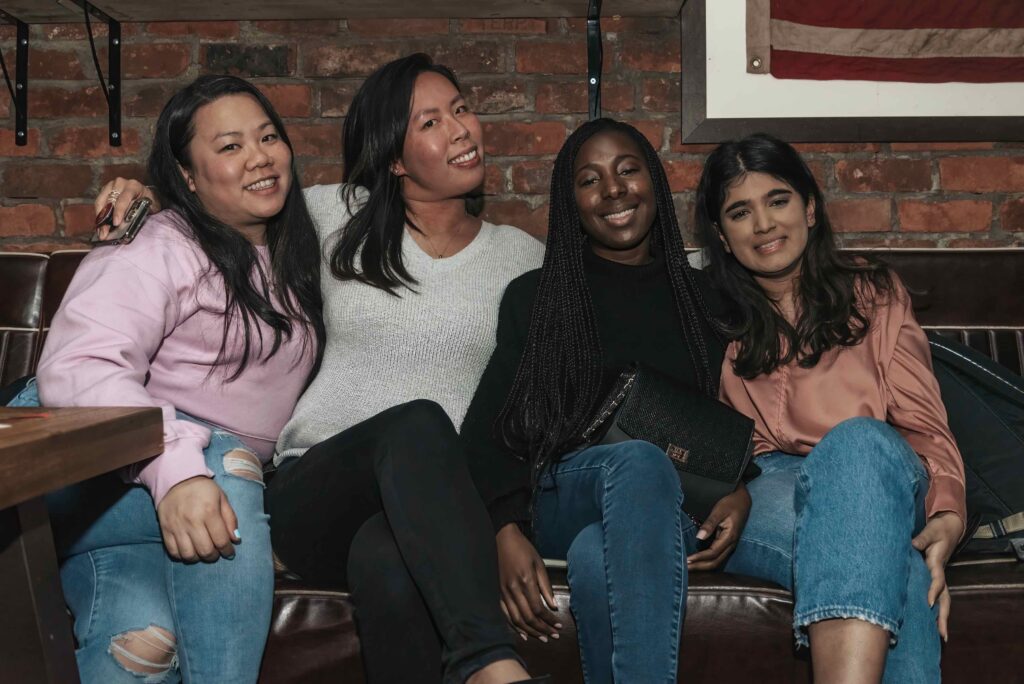
Community has been an inescapable buzzword over the past few years. Many times, when beauty brands and retailers speak about community, what they’re really speaking about is their customer base. True community requires members to interact with each other, not just with brands and retailers. In the age of COVID, that true community has been cut off for tons of people. Beauty brands and retailers can help foster true community by testing ways to forge ties between their customers that have similar interests.
This year, the beauty e-tailer Beautyocracy hosted three game nights at bars with 70- to 100-person capacities in New York, San Francisco and Washington, D.C. The events, which included beauty bingo, happy hours and trivia, sold out and had waiting lists. Attendees were required to be vaccinated. At the conclusion of the event, Beautyocracy took surveys of attendees that revealed a 90 net promoter score.
“We had a highly diverse group of women of color in each city. People were making new friends, sharing stories with us about their struggles in beauty and their excitement for the product, and asking to be brand ambassadors,” says Beautyocracy founder Auja Little. “We think of ourselves as a community of women of color united through a shared beauty experience rather than a beauty brand with a community component. Game night was our way of showing that in a low-key, fun way, and creating a space to connect authentically and build trust.”
Next year, she details Beautyocracy will host a balance of IRL and virtual events such as expert panels, skincare education sessions, yoga classes and game nights. Little says, “IRL are going to be central to make us different as beauty community.”
The players
5 mentionedGlossier

Medik8
Kitsch
Clinique
Mirror