Indian Beauty Steps Onto The World Stage
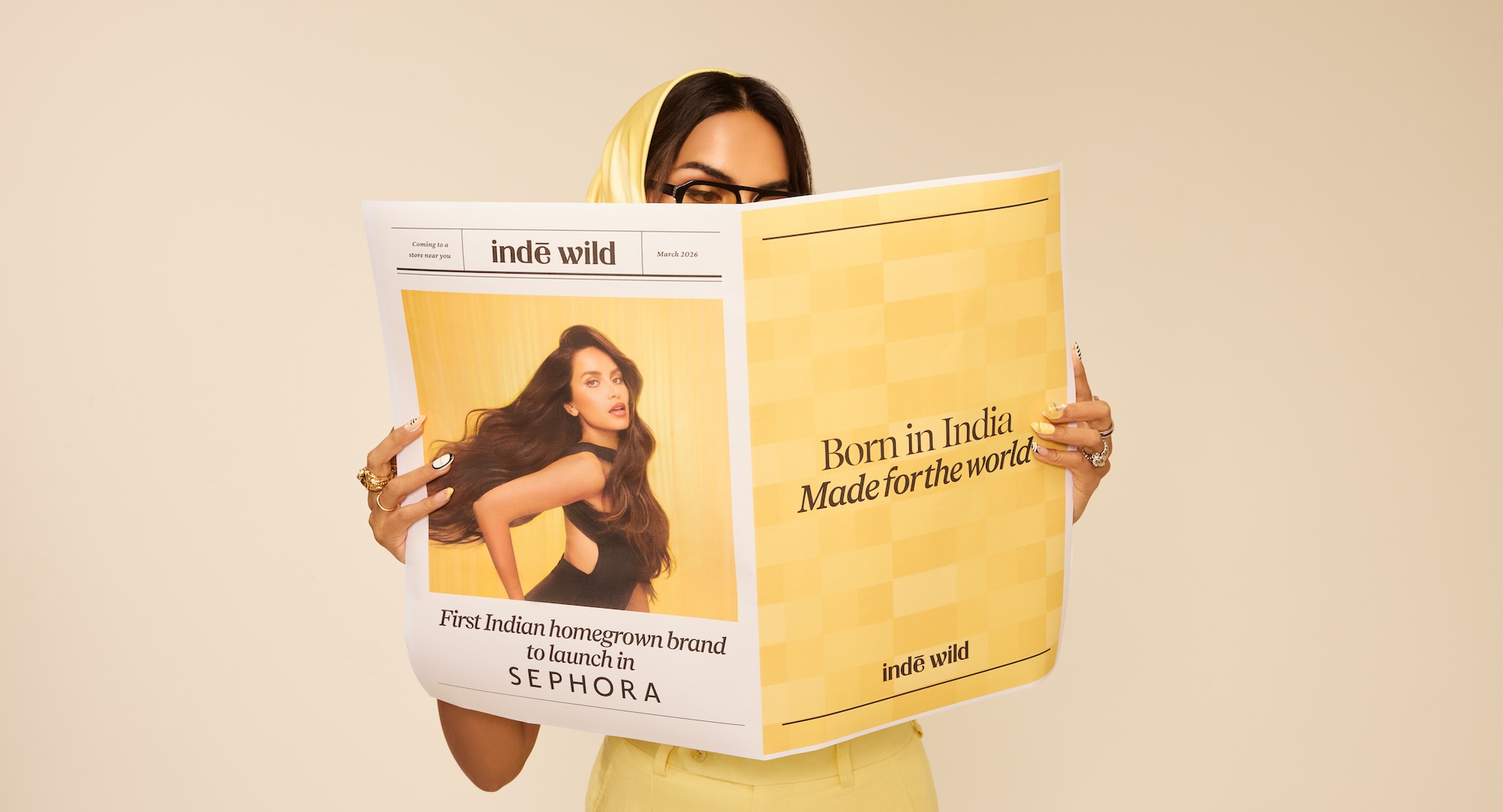
The scene was a marked reversal from two years earlier, when Indē Wild drew around 10 to 12 people to a New York community meet-up. Founded in 2021 by fashion and lifestyle influencer Diipa Buller-Khosla, who has roughly 3 million Instagram followers, the brand’s turnout offered backers of India-born beauty brands a strong indication that a breakout in the United States may be nearing.
“The U.S. consumer is really ready for it and the world is ready for it as well,” says Buller-Khosla.
Indē Wild, with the tagline “Born in India, made for the world,” is one of a growing number of Indian beauty brands making global moves. Minimalist recently launched at Target and Ulta Beauty in the U.S., while Forest Essentials and Kama Ayurveda are broadening their international reach following deals with Estée Lauder and Puig, respectively.
As global retailers take notice, founders, analysts and investors believe Indian beauty is emerging as a category in its own right, powered by a dynamic domestic market, venture-backed startups, increasing strategic investment and a global diaspora eager to see its culture represented in beauty. Publicly disclosed transactions indicate Unilever has committed more than $360 million to Indian beauty brands since 2023, including its acquisition of Minimalist last year.
That rise of Indian beauty worldwide is happening against the backdrop of a rapidly expanding domestic market. According to beauty retailer Nykaa, India’s beauty and personal care sector is projected to grow to more than $34 billion by 2028 from $21 billion in 2024, fueled by mounting disposable income, social-media-driven beauty consumption and a young population.
United Nations Comtrade data shows India’s exports of essential oils, perfumes, cosmetics and toiletries climbed 23.5% to $2.68 billion in 2024. Despite the acceleration, India sits outside the world’s top 20 beauty exporters, a group led by France at roughly $24 billion annually. The global Ayurvedic cosmetic products market is forecast to grow from $1.83 billion in 2025 to $2.09 billion in 2026, reflecting rising demand for heritage-led wellness and herbal beauty products, according to The Business Research Company.
With more than 377 million gen Z consumers, India has the largest cohort of young shoppers globally. It also surpassed China to become the world’s most populous country last year, with a population of over 1 billion people. Additionally, India’s overseas diaspora is the world’s largest, at around 35 million people.
Paayal Mahajan, strategic advisor and founder of House of Amrit, who splits her time between New Delhi and Dallas, asserts global interest in Indian beauty was inevitable. “There are so many of us on this planet, we’re everywhere,” she says. “Of course our brands were going to travel the world with us.”
Investors have increasingly backed that thesis. Over the past decade, global conglomerates have steadily widened their exposure to Indian beauty. Last month, Estée Lauder Companies took a majority stake in Forest Essentials after initially investing in 2008 and lifting its ownership to 49% in 2020. Puig acquired Kama Ayurveda in 2022 after taking a minority stake three years earlier. The deals suggest strategic players view Ayurvedic beauty as a category capable of supporting scaled premium brands, not merely an ingredient story.
Top Knot Ventures founder and beauty investor Manica Blain, backer of Toronto-based Ayurvedic skincare brand Sahajan, points out that Western beauty brands have cherry-picked individual Ayurvedic ingredients such as turmeric, neem, saffron, ashwagandha and bakuchiol for years to put in products, but rarely acknowledged Ayurveda as a complete skincare system. That’s changing. She says, “From an investor perspective, it’s one of the few heritage beauty systems that still hasn’t fully broken out globally, even though many of the ingredients are already everywhere in skincare.”

Buller-Khosla notes that, historically, there’s been a lack of education surrounding Indian beauty rituals. “Many Ayurvedic or Indian brands have been very traditional or too niche,” she says. Growing up with a mother who was an Ayurvedic doctor and dermatologist, she saw the importance of merging both traditional and scientific worlds through “Ayurvedistry,” a term Indē Wild coined to sum up its philosophy. Buller-Khosla says, “We help bridge that gap so it’s easier for the global consumer to understand.”
The approach has resonated. Indē Wild secured $5 million from Unilever Ventures with participation from SoGal Ventures and True Global Ventures to support its expansion at Sephora in the U.S. The brand entered around 170 doors on March 20 after growing 677% in Sephora in the United Kingdom from the first quarter to the second quarter last year, according to Buller-Khosla. Indē Wild premiered in India via Nykaa in 2022 after initiating direct-to-consumer distribution in North America and the U.K. The brand anticipates global annual recurring revenue of $20 million by the end of 2026.
Priced largely under $10, Minimalist took off during India’s pandemic-era DTC boom. Many Indian beauty founders, often with backgrounds in technology and e-commerce, applied startup growth playbooks to beauty, leaning heavily on performance marketing and rapid product iteration to grow. The strategy worked. India’s DTC beauty segment surged alongside greater internet penetration, now above 950 million users, and the explosion of platforms such as Flipkart and Nykaa. Simultaneously, a multiplying network of white-label manufacturers made it faster and cheaper to churn out products.
Hundreds of millions of dollars flowed into Indian beauty and personal care brands during the DTC boom, and capital has remained active since, particularly in skincare. Unilever Ventures has been among the most visible backers, with investments in SkinInspired, RAS Beauty, Arata, Secret Alchemist and Indē Wild. The influx has intensified competition.
“Every day there’s a new brand because people are seeing an opportunity,” says Mahajan.
That competition is shaping the next phase of the category as Indian beauty brands look outward to the U.S., where brand congestion is already a major hurdle. Mahajan says, “They’re vying for customer attention along with Charlotte Tilbury and Westman Atelier and Korean brands that are stepping up.”
She adds that the beauty game currently belongs to “anybody who has the money to pump into marketing,” but the brands that will endure are the ones “who pivot, who focus on customer retention not just acquisition, and the ones who can outlast investor interest by creating a solid foundation.”
Blain emphasizes the Indian brands that last will be those that approach the space with depth and credibility rather than simply borrowing ingredients. Clinical trials and proven effectiveness will be key.
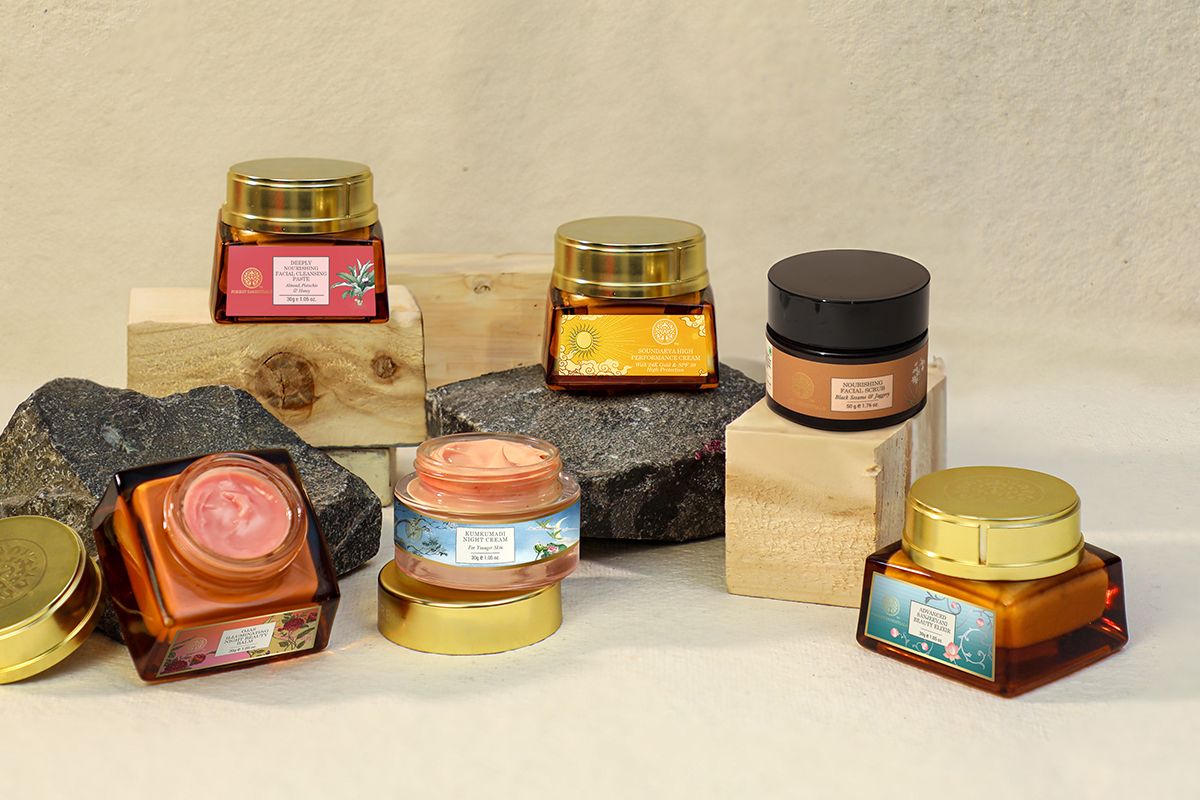
One beauty expert based in India says early movers such as Forest Essentials and Indē Wild are well situated because they moved quickly to address diaspora demand and innovation gaps. While India was once a market that favored international brands, that narrative is shifting as younger consumers seek brands that reflect their identity. The expert points to Indē Wild’s “Ayurvedistry” positioning and use of South Korean manufacturing expertise for select products.
Industry insiders identify wellness and fragrance as sectors gaining momentum for Indian beauty. Buller-Khosla singles out haircare as an area Indian beauty can own. “When you think of Indian women, you think of the most insane hair because, generationally, haircare has been deeply rooted in our culture,” she says. “There’s just so much of a haircare credibility piece to India.”
Still, the expert cautions that investors and retailers may be overestimating the long-term opportunity and predicts enthusiasm could begin to plateau around 2030. She says, “The Indian market is growing extensively, and it will continue to grow, but when it translates to the West, I’m like, ‘You have everything already, why will you need more?’”