How Private Equity Is Remaking Beauty Manufacturing
“When you are looking to scale, that’s when we can be a good partner to you,” explains Lorne Lucree, chief innovation officer at Voyant and head of its Atelier division. “What we are not ideal for is brands that are going to stay at 5,000 and order one or two orders a year. We are just too big.”
Opinions on Voyant’s decision to eliminate entry-level quantities rest on a beauty brands’ vantage point. Established brands can take advantage of the emphasis on them to try to reduce costs. For some smaller brands, the decision represents the materialization of a fear that private equity takeovers will shut them out. For quickly scaling brands, it shows Voyant is doubling down on their growth.
It’s not as if the contract manufacturer has abandoned indie brands. In fact, it introduced the Atelier division last year specifically designed for them. Atelier, though, is zeroing in on a subset of them that have funding and could progress to join the beauty powerhouses that underpin its operations.
“Truly, indie brands have fueled the rise of contract manufacturing,” says Lucree. “You don’t have to be L’Oréal or Lauder to start your own thing, and then as a contract manufacturer you start to understand how to meet the demands of brands as they are popping up.”
Voyant Beauty is among several contract manufacturers sharpening their processes amid an intensification of private equity participation in beauty production. It’s difficult to calculate the extent of deals in the under-the-radar contract manufacturing space, but tens of them have occurred in the the last few years primarily propelled by private equity. The deals are consolidating an assorted landscape of factories still predominantly independently owned.
Beginning to be widely felt in the beauty industry, the effects of the consolidation are complicated. Proponents of it consider private equity funding to be constructive for updating a contract manufacturing sector that hasn’t kept pace with innovative brands, bankrolling capacity to service surging brands, and professionalizing back offices, sales and marketing. Lucree says, “What we are seeing currently is contract manufacturers becoming brands onto themselves, mirroring the brands that they are working with, but also consolidating to better offer for where the market is heading.”
Eric Korman, CEO of clean beauty manufacturer The Goodkind Co, says, “Overall for brands and customers, I don’t view consolidation necessarily as a bad thing. Certainly if you only had one or two players, that could be highly limiting. In general, what we see is a more mature service offering that will drive more consistency for all the stakeholders.”
Warren Becker, CEO of Lee Equity-owned contract manufacturer Cosmetic Solutions, says, “As bigger and less suppliers start to emerge, pricing becomes a little tougher as more transparency in pricing becomes the norm. I think it becomes a little bit of a different industry than it was 20 years ago. Also, it’s becoming more stable. You are having larger, more stable businesses that are better partners for the brands.”
Detractors worry about underserved small brands, dampened creativity and the potential fallout if beauty sales cool. Private equity-backed companies are 10 times likelier to wind up in bankruptcy than their peers with no private equity investment. Anthony Standifer, chief brand architect and co-founder of mSEED Group, a contact manufacturer without MOQs, says, “The majority of [brand] businesses that start and then grow and scale tend to be small, so them having access to solid resources is critical to their success. If everybody is big, it shuts down a significant portion of people that could experience growth. They don’t get the opportunity to be on the playing field if the minimum order quantities are 10,000 to 15,000 units.”
Matt Stearn, CEO of clean beauty contract manufacturer Innovative Cosmetic Labs, says, “Private equity companies know P&Ls and balance sheets, but what doesn’t show up on the balance sheets and P&Ls is the human element. People love what they do and making products. I watch when the directives change, and it’s all about EBITDA. Don’t be surprised if service starts going down, and people are leaving. I don’t know if it always works out as planned in theory.”
Robyn Watkins, founder of product development consultancy Holistic Beauty Group, believes the impacts of private equity’s involvement in beauty production aren’t cut and dry. “Sometimes it’s good, sometimes it’s not good. It depends on who the PE firm is and if they have experience in this space and can actually add value like at Elevation Labs. Their PE firm adds value. I work with them, they are great, and they deliver. It’s incredible,” she says. “However, I will talk candidly, I’ve had a lot of brands really suffer when KDC started to consolidate. They strategically wanted to focus on bigger players. They weren’t as responsive to the smaller players.”
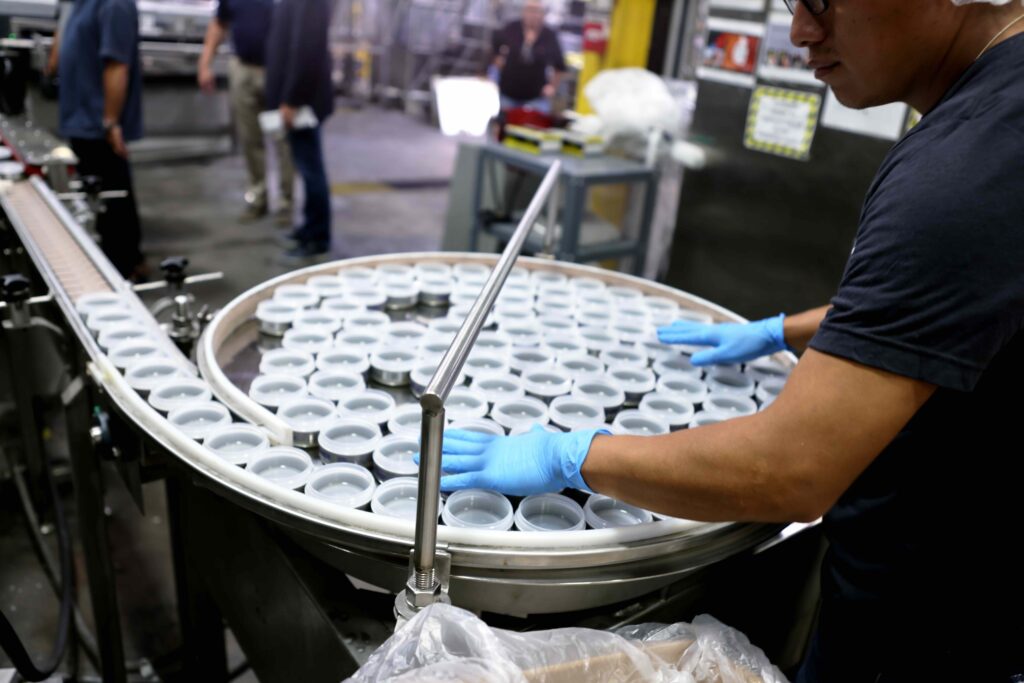
Knowlton Development Corp., known as KDC/ONE, is the leading catalyst of private equity-sparked manufacturing consolidation. The result of at least 10 acquisitions, the Cornell Capital-controlled company secured a minority investment from private equity firm KKR last year. Private equity firm Knox Lane acquired Elevation Labs, a contract manufacturer formed from the merger of Northwest Cosmetic Laboratories and Dream Team Beaute, in 2022. John Bailey, former president and CFO of E.l.f. Beauty, is managing partner at Knox Lane.
Estimates vary on the number of contract beauty manufacturers in the United States. Korman has been tracking them and figures there are 100 to 200 mainly ringing in less than $100 million in revenues. Becker identifies large contract manufacturers as generating $100 million-plus, mid-sized as generating $30 million to $100 million, and small as generating less than $30 million, mostly less than $10 million. Private equity usually becomes interested in beauty manufacturers once they’re mid-sized.
While financial information S&P Global company characterized private equity as moving from exuberance to uncertainty in 2022, private equity’s haul in the preceding years pushed it into beauty. Korman says, “There is simply so much private equity dollars at work today versus 20 years ago, and there is a limited number of sectors to put money to work in, and money has to be put to work for private equity to have a return.”
Korman highlights that beauty is attractive because “it has a very big total addressable market, not only in the U.S., but globally. It has been growing significantly relative to other mature categories over the past 10 years. Generally, there are strong economics throughout the supply chain. Gross margins are high in the category all the way from selling to the consumer back down to raw material suppliers.” He pegs beauty contract manufacturers’ earnings before interest, taxes, depreciation and amortization (EBITDA) margins at 8% to 10% at the low end and in the 20% range at the high end.
Luc-Henry Rousselle, managing director at investment bank DC Advisory, agrees that the health of the beauty industry, which management consultancy McKinsey & Co. projects will advance 6% a year globally from $430 billion in 2022 revenues to $580 billion in 2027 revenues, has been a huge draw for private equity firms. For them, beauty manufacturing isn’t as risky as a single brand. Rousselle says, “It’s heated up in the last three to four years, and it’s been a very competitive space to be in.”
Despite being hot commodities, beauty manufacturers’ performance hasn’t matched the beauty industry’s performance. Market research firm IBISWorld approximates that the value of U.S. beauty manufacturing dropped 2.9% in 2022 to $49.7 billion. From 2017 to 2022, it registered 1.5% yearly declines on average. IBISWorld ranks beauty manufacturing 37th in terms of manufacturing segment market size in the country.
Long term, beauty manufacturers catering to indie brands could benefit from a persistent hunger for entrepreneurship and consumer fascination with upstart brands. According to a 2020 to 2021 survey by corporate responsibility initiative EY Ripples and nonprofit JA Worldwide, 65% of gen Zers in the workplace anticipate running their own business in a decade. Gen Zers are enthralled with beauty and willing to experiment with it. A McKinsey 2023 survey discovers 45% of gen Z consumers try new brands every two to three months. For consumers on the whole, a 2022 by market research firm NielsenIQ survey finds 48% plan to buy from smaller brands.
Six or seven years back, Rousselle mentions investment banks active in the beauty industry wouldn’t typically touch contract manufacturing deals because they traded at paltry EBITDA multiples. Rousselle says, “Now for a high-quality business that is well-diversified in terms of the client base and category and that has a good growth and margin profile, we are seeing more and more double-digit EBITDA multiples and sometimes into the high teens. That is a big change.”
Lindsay Carlson, managing director for consumer and retail at investment bank William Blair, says, “In the past, a lot of these businesses were viewed as relatively unsophisticated and providing basic outsourced functions for brands. They tended to trade at lower valuations and that has significantly evolved, and now you are seeing much more advanced capabilities and expertise. Sales and marketing efforts have become more sophisticated and professionalized, and these groups are adding true value to the brand they work with. It’s much more of a collaborative approach, and that’s helping on both ends. That’s helping brands drive innovation to consumers, and it’s helping the CMs be more integral to their customers’ success.”
In manufacturing broadly, Joseph P. Quinlan, head of CIO market strategy at Merrill and Bank of America Private Bank, has concluded that the U.S. is in the early stages of supercycle due to escalating manufacturing investment and construction. The comparable muscle of the U.S. economy, responses to pandemic conditions and geopolitics are contributing to the nascent manufacturing supercycle. Beauty factories benefited from the pandemic prodding brands to onshore their manufacturing.
Mary Berry, founder of contract manufacturer Cosmos Labs, recounts, “China was super locked down, so beauty brands started wanting to make sure that their supply chain wasn’t going to be interrupted just like every other industry. That led to a spike in interest in beauty manufacturing domestically. So, multiples have gone crazy. I’ve heard 8X, 9X and 12X EBITDA, which is a crazy amount for manufacturing. You get those multiples when you are brand.”
Korman outlines that the beauty contract manufacturing business model lends itself to consolidation. “The more volume you pour through the equipment, the more contribution margin you are throwing off that equipment,” he says. “For example, if you spend $3 million on equipment doing 20 million units a year versus 10 million units a year, the incremental profit when you’ve paid for your equipment is very high. There’s a reason why as they get bigger, they start raising MOQs. It’s really inefficient to run low volumes.”
There’s a dip in beauty manufacturing deals at the moment as private equity contends with the pressures of elevated interest rates, but they’re expected to pick up. There remain plenty of family-owned businesses that could sell, and private equity firms that have assembled rollup platforms are hunting for targets. “I would expect to see more consolidation over the next seven to 10 years,” says Korman. “It will be harder for folks to compete who are not part of a platform.”
Frank Papa, founding senior partner at CORE Industrial Partners, the private equity owner of contract manufacturer Cohere Beauty, an amalgamation of the co-packers Marianna Beauty, Arizona Natural Resources, HealthSpecialty and Contract Filling, concurs that there are deals on the horizon. “The beauty and personal care contract manufacturing space remains highly fragmented, creating significant opportunities to increase geographic footprints, expand into new product categories, add new R&D and formulation resources and increase production capacity through acquisitions,” he says. “In addition, consumer trends continue to accelerate the personalization of beauty brands, spurring innovation and exciting new products and features.”
As bigger manufacturers stop taking entry-level orders, existing smaller manufacturers are scooping them up, and new ones are opening to do the same. Standifer reports that mSEED Group has 50 to 70 brand clients and a couple hundred on a waiting list. He says, “There is a ton of opportunity for small-scale manufacturers in the marketplace because there is a community of people that desire to go to market that just can’t get to market fast enough.”
Cosmos Labs is among a group of newer beauty contract manufacturers as are Indie Beauty Lab, Bluebeauty Lab and Natural Contract Manufacturing. Kyle LaFond, founder of Natural Contract Manufacturing, says it has about 30 clients and receives 10 to 15 requests from client aspirants weekly. He receives regular requests from manufacturer buyers as well.
“I must get an unsolicited inbound phone call every four to eight weeks from somebody who is actively looking for their next target and they think we might be interesting in having a get-to-know you conversation for when we are ready,” he says. “Anecdotally, I don’t see any slowdown.”
Berry, who founded and sold contract manufacturer Texas Beauty Lab prior to establishing Cosmos Labs in 2022, says Cosmos Labs will reach $12 million to $15 million in revenues this year. The manufacturer has around 10 brand clients and another 30 in the pipeline, per Berry, and it was already profitable last year. She says, “It took me probably eight years to make a profit the first time.”
A major hurdle for smaller manufacturers is the Modernization of Cosmetics Regulations Act (MoCRA), federal legislation passed last year heightening the U.S. Food and Drug Administration’s authority over cosmetics. The legislation enacts Good Manufacturing Practice (GMP) requirements for cosmetics manufacturing facilities presumed to lift the costs of doing business.
Becker says MoCRA is “going to make cosmetics more like OTCs, and if you don’t have robust quality departments and GMP procedures—all of that requires people, processes and systems—and if your business doesn’t have the profitability or scale to be able to fund that, that’s going to be a challenge.” He adds, “This industry will always have a diverse supplier base. There will always be new ones popping up, even with increased regulations.”
Facing regulatory burdens and monied rivals, Sara Dreamer, founder of innovation commercialization consultancy Beauty Msfits, foresees smaller and bigger manufacturers leaning into their specialties with louder voices to set themselves apart. Smaller manufacturers can promote their flexibility and personal service, and larger manufacturers their scope, rigor and ability to handle substantial orders. “They will be purposely nestled in with their specialties, and they will emulate behaviors from the new brands that we see,” says Dreamer. “They will have a point of view.”
On top of contract manufacturers having defined points of view, she foresees them further solidifying relationships with an array of suppliers such as raw ingredient suppliers and perhaps acquiring them. Lucree foresees larger manufacturers diversifying internationally and across beauty categories. “They more diversified you can be, you can hedge your bets,” he says. “If you are working with everyone from mass to prestige, and one is down and the other might be up, you might be agnostic to a specific brand or category, assuming that beauty overall is on the up and up.” Diversification outside of beauty is a possibility, too.
Chasing profits, private equity-backed beauty manufacturers could build their own brands. In January, Taglich Private Equity-owned manufacturer World Product Solutions unveiled the brand incubator Evoq Brand Lab with fermentation-centered skincare brand Cacaye. It has role models in the beauty manufacturing arena. Swiss American, a manufacturer owned by private equity firm Prairie Capital, launched sunscreen specialist EltaMD in 2007 and sold it to Colgate-Palmolive in 2017. Manufacturer Cosway Co. Inc. developed Hempz, and the haircare brand is in private equity firm TSG Consumer Partner’s portfolio. Seed Beauty, an offshoot of manufacturer Spatz Laboratories, incubated ColourPop and Kylie Cosmetics. Coty bought Kylie Cosmetics in 2020.
But there’s a myriad of instances of manufacturer-built brands failing or being divested. At Voyant, Lucree says, “When we acquired KIK, they had a sun care brand, and we said, ‘Listen, to have our own brands is a distraction.’ We are a partner to brands. We are not a brand owner. We quickly divested that. It’s not a core business.”
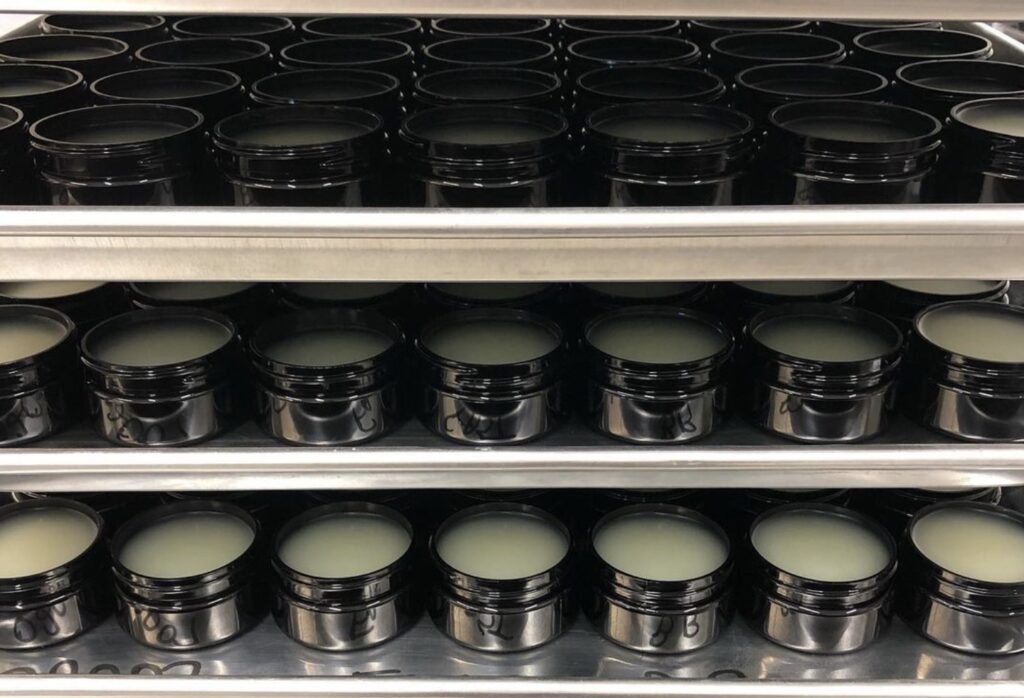
Conversely, brands could vertically integrate by acquiring contract manufacturers. Korman says, “They want more certainty around their supply chain and to recapture margin that’s today being generated at the CM, so they’re going to bring manufacturing in-house by buying a boutique CM and the surrounding business that isn’t relevant will go away.”
E-tailer and brand holding company The Hut Group has chosen the in-house production route with the acquisitions of Bentley Laboratories in 2021 and Acheson & Acheson in 2018. Recently, color cosmetics and skincare brand Beauty Creations acquired a makeup manufacturer to improve its makeup formulations.
The strategies private equity-backed manufacturers pursue have to carve paths to exits. Carlson predicts, “There is going to be more capital deployed in this space. You have so many family-owned businesses in the manufacturing space that have been in the business for multiple generations. You are definitely going to see continued consolidation and, ultimately, depending on the size of the business, the public markets will be a very likely option.”
The players
5 mentionedCost Of Doing Business

Too Faced
Elevation Labs
Momentous
KDC/ONE