The “Hairification” Of Skincare
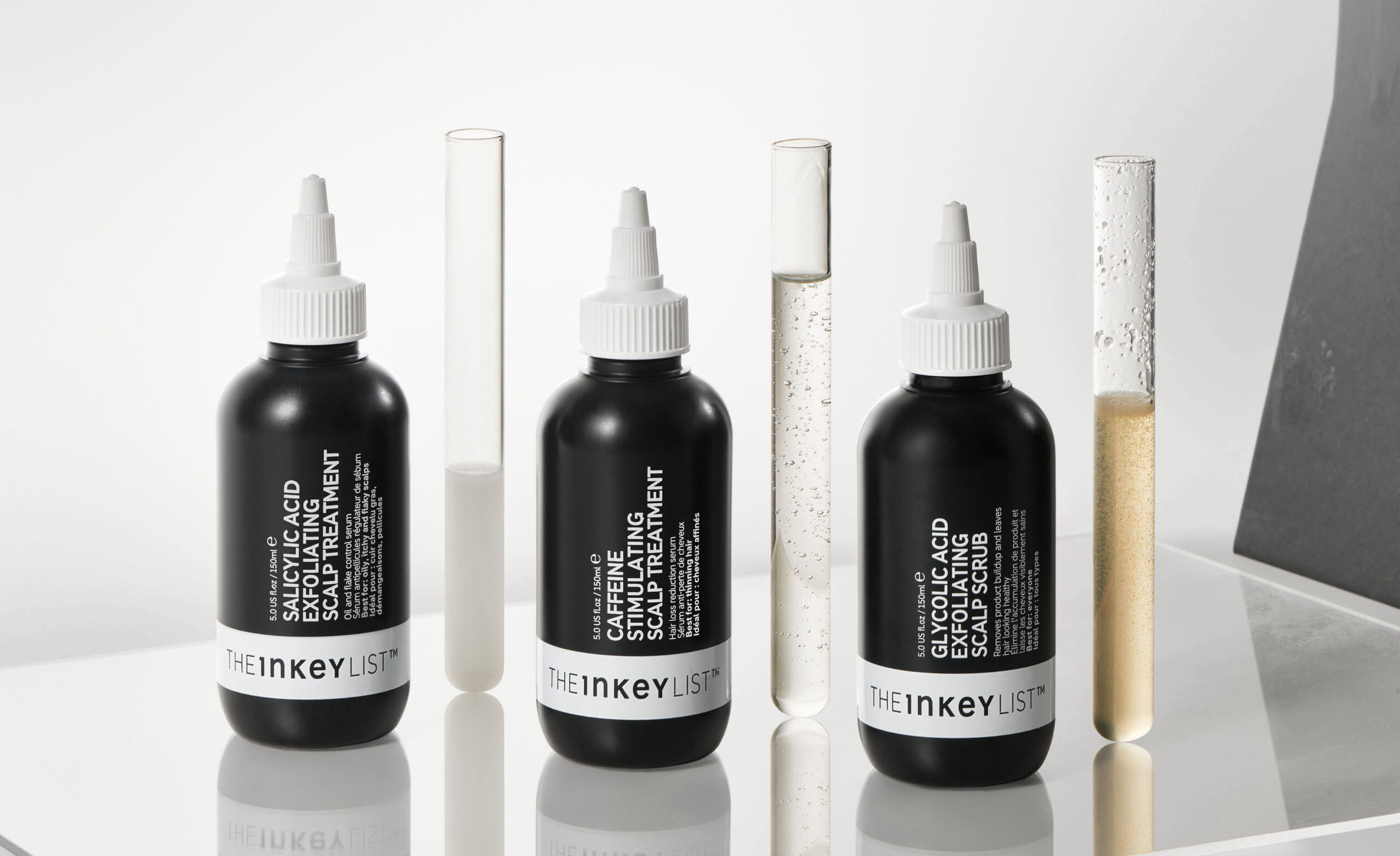
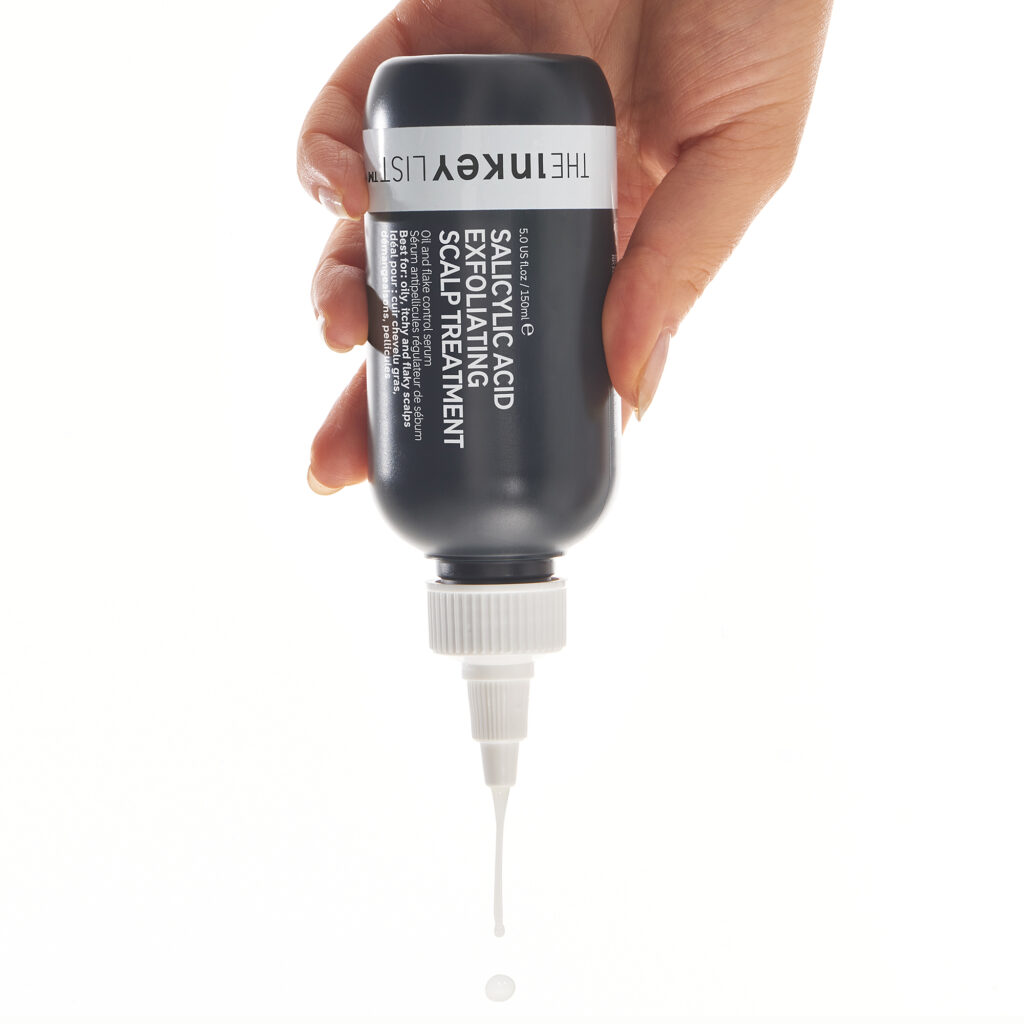
The rollout is a significant milestone in the brand’s more than two-year project to build its haircare business that began with the introduction of hair and scalp products in its direct-to-consumer channel. Eventually, Mark Curry, who started The Inkey List in the United Kingdom with Colette Laxton in 2018, told Beauty Independent earlier this year that hair and scalp products could account for a third of the brand’s sales.
“On our DTC, we expected skin customers to add hair to their basket, but we’ve been shocked to see a whole new customer base entering the brand and cannot believe the pull we have had from North America customers in particular,” says Laxton, noting the scalp product Glycolic Acid Exfoliating Scalp Scrub is The Inkey List’s highest-converting product on TikTok. “From the data we have seen, they appear to be very interested in scalp health.”
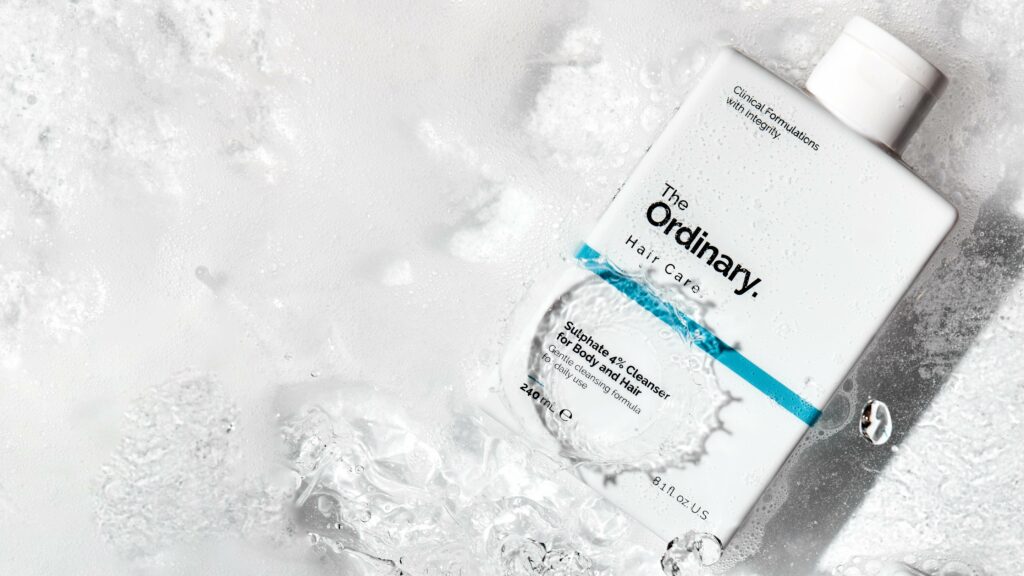
Interest in scalp health is one of several trends colliding to cause the “hairification” of skincare or a swelling flood of skincare brands expanding into the haircare category. Drunk Elephant, Agustinus Bader, Dr. Barbara Sturm, Derma E, Monday Muse, The Ordinary and Sunday Riley are among the skincare brands that have pushed into the haircare.
“With scalp being susceptible to the same issues as your skin—flakiness, oiliness, pimples and wrinkles—it’s no wonder that skincare brands have seen an opportunity to add new products to their assortment,” says Kristy Engels, founder of beauty marketing consultancy HTH Consulting. “Health is now a root issue for consumers who want the best for their skin from head to toe.”
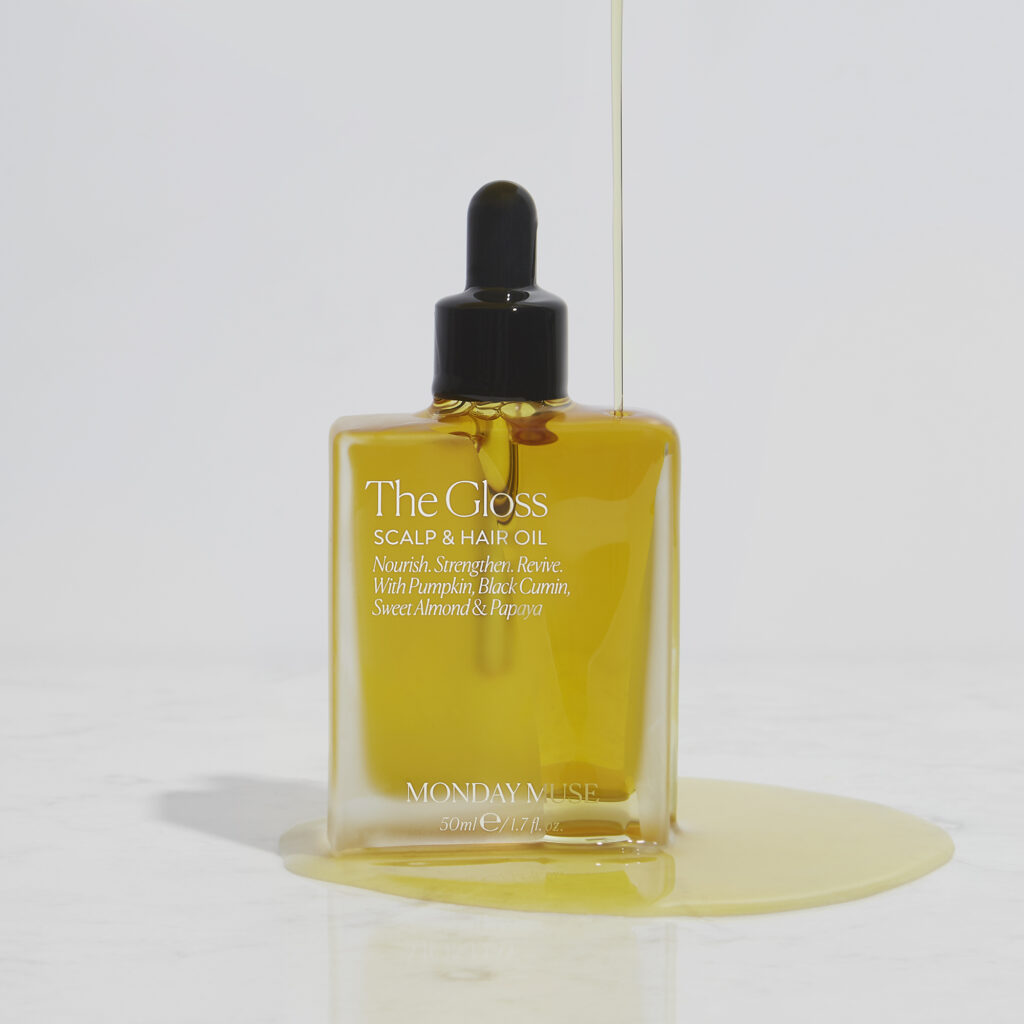
As scalp care comes to the fore, Lune Martens, founder of Monday Muse, a brand that hit the market in 2020 and recently launched The Gloss Scalp & Hair Oil, a pre-wash treatment shown in clinical testing to reduce dandruff, senses taboos around scalp and hair conditions like dandruff and hair loss are fading. “Now, it’s a conversation that people are having more and more,” she says, predicting, “The scalp care market is only going to grow because people are going to take care of their scalp more.”
Robin Albin, founder of branding and innovation consultancy Insurgents, asserts the pandemic completely upended the haircare category as hair and scalp conditions intensified, and people sought out hair and scalp solutions they might have regularly not tried, widening the opening for skincare brands to participate in it. “There was a major shift from simple shampoo, condition and style products to the ‘skinification’ of haircare inspired by the connection between scalp health and hair health,” she says.
Albin experienced the shift personally. “During COVID, my hair literally began evaporating,” she recounts, sharing she incorporated hair supplements from Viviscal into her routine as a consequence. “Turns out hair loss or alopecia was common issues during the pandemic, especially among women. I expect to see more trichologist-backed brands, scalp-specific formulas, science-based actives like hyaluronic and amino acids as well as peptides and pre and postbiotics to continue becoming haircare essentials.”
The “hairification” of skincare is a corollary to the “skinification” of haircare, a movement characterized by consumers constructing multistep haircare routines similar to skincare routines and zeroing in on ingredients in haircare formulas. Facilitating skincare brands’ plunge into haircare, the movement was formidable heading into the pandemic as skincare dominated the beauty industry and “skintellectuals” poring over INCI (International Nomenclature Cosmetic Ingredient) lists changed beauty buying habits.
Distinct from the “hairification” of skincare, the “skinification” of haircare encompasses brands born in haircare like Ouai, Virtue, R+Co, Oribe, Briogeo and JVN spotlighting and releasing products integrating aspects of skincare such as ingredients (e.g., hyaluronic acid and niacinamide) and product names (e.g., serums and scrubs). The rush of skincare-born brands into haircare arrives as skincare’s dominance is diminishing, sending skincare brands outside of their native category in pursuit of sales.
Laura Belsley, retail director at beauty and wellness brand agency Constellar Consultancy, thinks skincare brands stretching into haircare makes a lot of sense because the scalp is skin. She says, “It’s a great strategy if executed well. Brands can continue to shape their brand loyalty, drive sales and collect new market share when growing product categories adjacent to their core offer.”
Despite her support of skincare brands engaging in haircare, Belsley instructs them to carefully deliberate on the proper path into haircare. Partnering with a haircare expert and trialing haircare with deluxe samples are ways to carefully go down that path. Engels recommends skincare brands consider collaborations with haircare brands.
Kelly St. John, founder of strategic growth consultancy KSJ Collective, says haircare products are easier for skincare “brands who are established and in growth phase with their skincare. For these brands, they have proven success in skincare and so the expansion into haircare can seem like a natural evolution of their product innovation pipeline.”
The hair and scalp are different from the face. So, developing haircare products for skincare brand isn’t as simple as slapping skincare ingredients into a product labeled haircare. As a result, Engels counsels skincare brands to stick with haircare products like scalp serums and scrubs that are the closest to skincare products, at least at first. “They start to tread into more unknown territory with less credibility when they start to crossover into shampoos and conditioners. The scalp is a unique neutral territory in the consumer mindset,” she says. “Both the hairstylist and skincare professional can claim expertise and authority.”
Belsley isn’t a huge fan of skincare brands merely dabbling in haircare. “This can leave the consumer a bit uncertain and confused to explore the new offers. Some beauty customers enjoy having the option to build their regimens within the same brand family,” she says. “So, if a skin care brand only launches one to two haircare products, the shopper may wonder if the item will be here to stay and/or question if it will be compatible to use with their existing hair care items that sit outside of the skin care brand’s novelty hair care launches. They’d be more keen to explore the skin-to-hair line extensions if it offered a complete wash, rinse, treat, prep and style regimen of goods to help credential the brand’s entrance into a new category.”
Not a huge fan of the “hairification” of skincare on the whole, Cristina Nuñez, co-founder and general partner at True Beauty Ventures, backer of brands including Aquis, Crown Affair, K18, Maude, Moon Juice and Cay Skin, argues it leads to skincare brands marketing products that lack authenticity. Still, she’s not stunned it’s mounting. “The haircare category, particularly prestige hair, has grown tremendously over the last few years. It’s no surprise that brands have adjusted their sails in this direction,” she says. “Under the guise of ‘skinification’ of what seems like everything these days, more and more brands are using this justification as permission to enter and play in hair.”
To be precise about the growth of prestige haircare in the United States, market research firm The NPD Group estimates sales in the category jumped 47% last year to reach $2.6 billion. In contrast, sales of fragrance, makeup and skincare lifted 49%, 23% and 18% to $6.3 billion, $7.1 billion and $6.3 billion, respectively. NPD foresees prestige haircare registering average annual growth of 15% through 2024, when it’s forecast to double in size.
In 2021, prestige haircare accounted for less than 12% of the entire prestige beauty segment. However, haircare is the largest beauty category generally. Data-informed marketing strategy firm Tarakeet reports it held 24% market share in the U.S. beauty industry last year. Skincare is the second-largest market share holder, at 23.7%. Haircare’s command of the beauty industry indicates prestige haircare could benefit from customers willing to trade up. NPD has discovered that willingness exists. In a survey of U.S. consumers, it found 49% would pay more for haircare, and 90% demonstrated strong haircare purchase intent.
Melinda Salvoza, director new product development and product marketing at 38-year-old brand Derma E, explains the premiumization of haircare, an occurrence intertwined with the “skinification” of haircare along with consumer preferences for clean haircare that tends to be pricier, has aided skincare brands’ leaps into haircare. Previously, she indicates a skincare brand breaking into haircare would be faced with competing at the commodity level with brands like Pantene and Suave, certainly a tall order.
Sold at Target and Ulta Beauty, Salvoza says Derma E ventured into haircare about four years ago with shampoos and conditioners. Last year, it premiered three hair and scalp treatments: Scalp Relief Treatment, Bonding Hair Repair Oil and Keratin Thickening Spray. The brand’s full-size haircare products are priced primarily from $9.99 for shampoos and conditioners to $13.95 for treatments.
“We are not at where the Suaves or the Pantenes are in terms of price point, but we are also not at Olaplex or Fekkai price points. We are right in the middle, where it’s an affordable luxury you can have for your hair if you don’t want to spend that much money,” says Salvoza, elaborating, “Our positioning is being clean and effective, not just in our face care, but in our haircare as well. If that’s what you are looking for in your overall regimen, it can be a seamless transition.”
For Derma E, retailers have assisted with its transition from skincare to haircare. At Ulta, the brand has separate presences in the haircare and skincare assortments. Because of the traditional division between beauty categories at retail and the buyers handling them, it can be tricky to erect a presence crossing categories. St. John says, “For a new brand launching products in both categories, my recommendation is to lead the outreach in a way that is positioning for the category where they have the strongest chance, where their formula integrity is paramount and the white space they fill is clearly identified.”
Crossing categories to achieve lifestyle brand status has been popular of late in the beauty industry—and the “hairification” of skincare can be a jog in the lifestyle direction. In a crowded market, brands are trying to take up greater wallet, mind and shelf shares with assortments spanning categories that provide multiple gateways into their business. Nuñez, though, warns brands away from traveling into the lifestyle arena if it’s not warranted. She says, “Lifestyle brand status is not something you launch with, it is earned. I caution emerging brands on trying to create this too early in their life cycle as excellent execution in one category is hard enough to do.”
No matter the reason for skincare brands embarking into haircare, Jillian Wright, VP of business strategy at beauty brand management company Willow Beauties, former co-founder of Beauty Independent parent company Indie Beauty Media Group, an aesthetician at Jillian Wright Facials and founder of Jillian Wright Skincare, a brand that shuttered in 2017, isn’t convinced it’s worthwhile. “I believe brands should stay in their lane and focus on one category. It gets confusing when a brand spreads themselves too thin,” she says. “A brand should know who they are and focus on their core collection and mission.”
After a period of cross-category brands accumulating, Nuñez anticipates a reset happening soon. “I’m increasingly seeing consumers looking for brands to be an expert at what they do, not a jack of all trades,” she says. “My hope is that brands stay true to their positioning and that will build longer-term brand equity and longevity in the end.”
The players
5 mentionedAugust

iS Clinical
Under Your Skin
Too Faced
Sunday Riley