The Global Wellness Institute Declares 2023 The Year Of Science-Backed, Social And Sensory Wellness Trends
Bringing attendees to the present, she declared, “The wellness market of just three years ago suddenly feels archaic. Wellness in 2023 and beyond will be more serious and science-backed, but also more social and sensory.”
Elaborating on where wellness is this year and beyond, the Global Wellness Institute (GWI) unveiled 12 wellness trends at the event from “The Future of Wellness 2023,” a report laying out the ways in which wellness practices and protocols are shifting, and how the expansive wellness industry currently valued at $4.5 trillion globally is shaping travel, medicine, urban planning, sports, hospitality, beauty, mental health and more.
Below, we highlight five key insights from GWI’s research.
1. The relationship between happiness and wellness
Is all the money being poured into wellness, from wellness tourism to biohacking, actually resulting in people being more well? First-of-its-kind research conducted by GWI with Shun Wang, a professor at KDI School of Public Policy and Management and co-author of the “World Happiness Report,” says yes.
The research showed a positive relationship between 11 elements of wellness such as spas, personal care, workplace wellness and wellness tourism, and five health outcomes such as life expectancy and infant mortality. In addition, wellness expenditures were found to be correlated with happiness. For every $844 increase in wellness spending per capita, happiness based on the Cantril Ladder of life satisfaction rose 6.7%.
The research doesn’t pin down the reasons for the positive relationship between wellness and happiness, but GWI asserts the existence of the positive relationship validates institutions investing in wellness activities to improve health outcomes. Katherine Johnston, senior research fellow at GWI, said, “For wellness businesses, this report can be used to educate potential partners in the public sector about the importance of wellness and to advocate for public resources to support and expand wellness practices.”
2. Wellness as a loneliness antidote
One of the biggest trends in wellness today involves new concepts focused on nurturing social connection. GWI research director Beth McGroarty said the wellness industry is transitioning “from solo to social self-care, from buying to belonging, from URL to IRL, from ego to empathy, from SoulCycle to soul circles and from Goop to group.”
As examples of the trend she singled out The Confess Project of America, an Atlanta organization training barbers to help Black men and boys find mental health resources, and the app 222, which curates dinner parties of strangers. She also pointed to “empathogens” like MDMA and plant botanicals like kava and kanna that have served as social elixirs for millennia. There are a number of kava bars in Brooklyn.
Remedy Place was an apt setting for this conversation on wellness as a community activity. As previously reported in Beauty Independent, founder Jonathan Leary trademarked the phrase “social wellness club.” At the GWI event, he shared how the idea for Remedy Place was rooted in a desire for quality interpersonal connection revolving around wellness rather than reckless abandon.
“When you’re trying to build new connections or strengthen existing ones, it’s usually around drinking, which can be a depressant,” he says. “Why is everything we do when we socialize either filled with temptation or toxins? People have these false connections and they wonder why they feel so lonely. I think when you’re putting the body in a better state and you’re enhancing its physiology and you’re also interacting with somebody, not only is it impacting your health, but it’s also strengthening the relationship with who you’re with.”
3. Wellness’s inaccessibility and appropriation reckoning
“Gentrification is a wellness issue,” declared Robbie Hammond, a surprising source for such a statement as co-founder of New York City’s High Line, at the GWI event. Hammond is now president and chief strategy officer for Therme Group US, a division of urban well-being resort developer Therme Group. Therme Group US is developing a $350 million “wellness theme park” in New York City set to open in 2025.
Framing gentrification as a wellness issue cuts to the heart of a huge problem with wellness: It’s largely a luxury sector catering to rich white people. Can wellness leaders mold the multitrillion-dollar juggernaut to be more accessible? Many speakers at the event concluded wellness can and must head in that direction at least in part. City governments can play a key role by erecting urban wellness infrastructure and using business and programming initiatives to address social, mental and physical health.
“What I think is going to be necessary is how do we do this on a huge scale. Therme’s doing it on a private scale,” said Hammond. “Companies need to see this as profitable, as mass market, not just the luxury market. We also need to see it at a nonprofit level. What is the relationship between the private and public sector coming together to do this?”
Wellness has been a “profound cultural appropriator, ” The New York Times columnist Elaine Glusac underscored via video presentation at the GWI event. However, people are recognizing that and trying to change appropriation to appreciation thanks to the growing political power of Indigenous people.
Glusac said the change is sparking “travel where you learn ancient healing practices from Indigenous populations around the world. You do it on their land with their wellness traditions on their terms.” She mentions that the California Tourism Board is promoting 109 different tribal community experiences this year.
In Japan, Indigenous-led travel programs explore shinrin-yoku or forest bathing at traditional ryokans or hot springs inns. The ancient practice of yoga has been divorced from its roots through decades of appropriation at the hands of white wellness culture vultures. Now, its birthplace India is partnering with the World Health Organization on a forthcoming knowledge center, Global Centre for Traditional Medicine, in Jamnagar, Gujarat showcasing global traditions and modern scientific advances in traditional medicine.
4. Water, water everywhere
Sorry heat seekers, the ice plunge trend isn’t going anywhere anytime soon. In fact, wellness enthusiasts are looking beyond the plunging tubs found at the likes of Remedy Place and taking their chilly practice into the wild, going beyond the Polar Bear plunge. Cross-country swimming, a practice that combines hiking and swimming, isn’t new, but it’s popularity has skyrocketed among non-athletes over the pandemic.
Jane Kitchen, editor at large for Spa Business, spotlighted so-called “wild swimming” groups like United Kingdom-based Bluetits Chill Swimmers, a group that boasts over 100,000 members worldwide, organizing large group swims—confirming people’s interest in wellness as a social rather than solitary exercise. Travel destinations offering wild swimming programs include Stockholm’s Hotel J and Upstate New York’s Mohonk Mountain House.
There’s a wellness phenomenon heat seekers can love, too. Thermal springs, enjoyed by humans around the world for centuries are hot, and destinations centered around them are set to multiply. Among those attracting attention are Peninsula Hot Springs, which features hot springs amphitheaters 90 minutes from Melbourne where guests can take in live bands. Visitors to Hokkaido, Japan’s ESCON Field will soon be able to watch a baseball game while soaking in hot springs.
5. Science and sensory experiences
The signs of science entering the wellness sphere are ubiquitous, including the spread of pharmaceutical-grade ingredients in beauty formulations like antimicrobial hypochlorous acid found in products from Tower 28 and S’eau Prima. “The beauty industry is on the cusp of a new era, and science and technology will play a crucial role in creating effective, sustainable and trustworthy innovations for consumers,” said brand consultant Jessica Smith.
In the future, Smith expects beauty products to harness expressive biology. She explains, “This is where biology will be used in the future as a means of self-expression. Imagine our microbiomes being able to create natural protective elements that are reactive and adaptive to our environment or shampoos that create waves or curls as you wash your hair.”
Neuroscientist and sensory designer Ari Peralta predicts multisensory experiences will proliferate in wellness. He said, “In the past, we looked at one sense at a time, but a multisensory effect gives a deeper result and amplifies the wellness experience.”
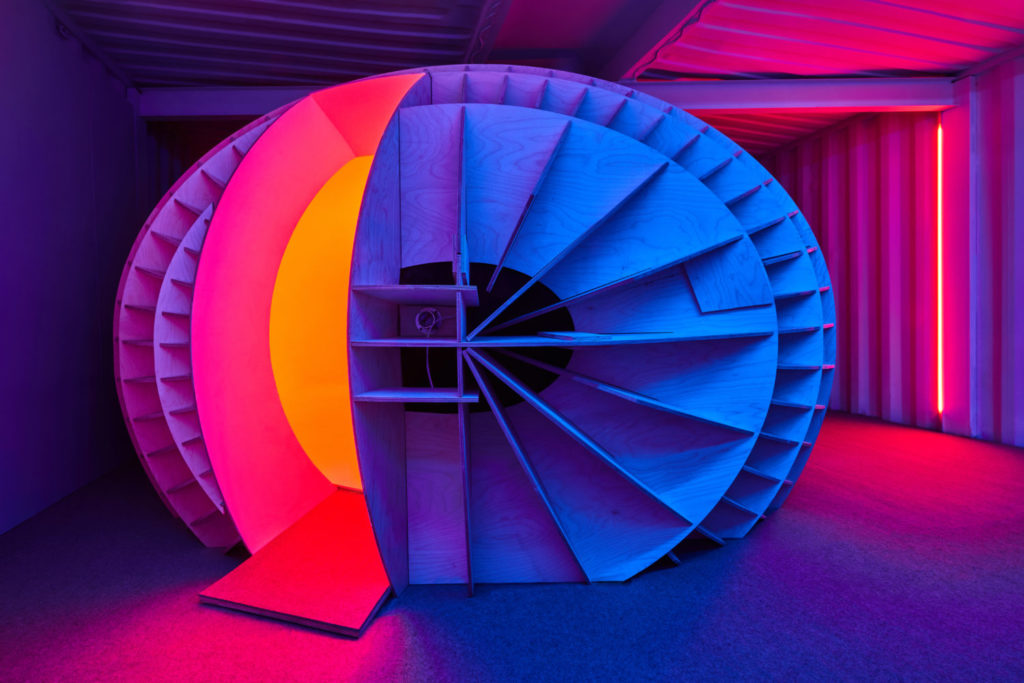
Mycoocoon’s color sensory “resets” are examples of multisensory experiences making their way into wellness. Luxury destination specialist Six Senses has teamed up with the company to create synesthetic dining events that enable guests to “taste” color and sound. “Our senses talk to each other, they interact with each other,” said Peralta. “Sensory wellness is another layer of wellness.”
The players
5 mentionedThe Center

AS Beauty
Better Being
Prima
Tower 28