The Future Of Dermatology Is Intertwined With Beauty And Aesthetics
Now, dermatologists are regarded as skincare stars with influencer, if not almost celebrity, status and the driving forces behind multimillion-dollar transactions, TikTok virality and major brand deals. While private practices and solo practitioners remain, they’re declining as private equity firms gobble up dermatologists’ offices, with significant implications for their relationship with patients, products and services.
Vying for attention and lucrative practices, dermatologists’ ties to the beauty and aesthetics industries are only expected to strengthen. They’ve increasingly been leaping at the chance to create their own skincare brands or partner with existing ones, particularly in a post-pandemic market that values medical expertise, and are diversifying revenue streams by ramping up skincare products and aesthetics procedures in their offices.
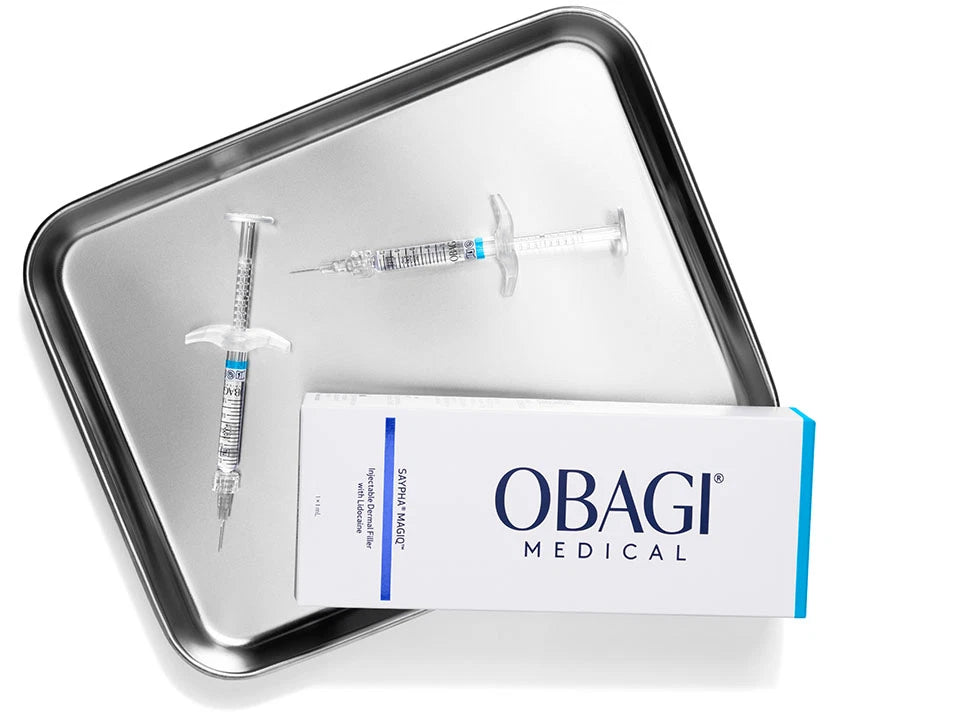
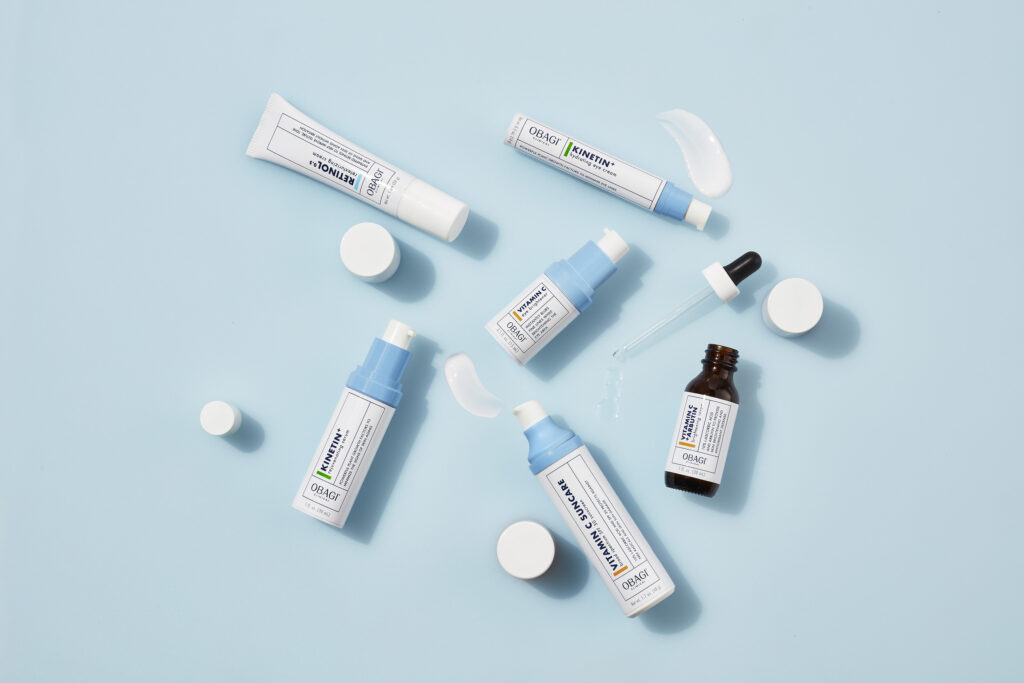
“As we see the continuous rise of science-led and -endorsed solutions and products as consumer seek more performance and efficacy, derms will continue to play a key role in advising the right protocol for best results for each of their patients,” says Hind Sebti, founder and chief growth officer of Waldencast, owner of professional skincare brand Obagi. “So, the opportunity within the channel is big and growing.”
Discussing the future of dermatology at Beauty Independent’s Dealmaker Summit conference in May, Elana Drell-Szyfer, CEO of the skincare brand RéVive, says, “Dermatologists are really recognizing that their competition is the med-spa, and I think they are making themselves into larger and larger, more credible med-spas and employing aestheticians to be able to offer that those services to their clients.”

An article from March this year in the Journal of Drugs in Dermatology and an article from July 2019 in the Journal of the American Medical Association chronicle the growing involvement of private equity in the dermatology field. From 2012 to 2018, they track a 349% spike in private equity transactions in dermatology. Nearly 185 dermatology practices were bought by private equity players during that span. In 2022, there were 87 transactions.
Today, 10% to 15% of dermatology practices in the United States are owned by private equity. Private equity firms Partners Group, Abry Partners and Zenyth Partners own dermatology chains Forefront Dermatology, U.S. Dermatology Partners and Schweiger Dermatology Group, respectively, that have 225-plus, 100-plus and 90-plus locations. Overall, there are roughly 5,330 dermatologist businesses in the U.S., according to market research firm IBISWorld. The number of individual dermatologists is more than double the number of dermatology businesses.
A dermatologist practice can sell for upwards of six times annual revenue. A survey from pharmaceuticals company Allergan and BSM Consulting shows that the median U.S. medical aesthetics practice generates about $3.3 million annually. Private equity firms centralize and streamline costs at dermatology offices and expand their businesses in profitable segments like skincare. Within three to seven years, a period in which dermatologists are incentivized to stay on board, the dermatologist practices purchased by private equity are slated to be sold at loftier valuations than they were purchased at.
Lily Talakoub, a dermatologist and founder of skincare e-commerce destination Derm to Door, explains, “Adding thriving dermatology practices to a large private equity portfolio helps build up these businesses, which are eventually sold to bigger organizations.”
A crucial reason why dermatology practices are attractive to private equity is they can have multiple sources of revenue. Aside from appointments, revenues from out-of-pocket services and products funnel to the bottom line. Extensive dermatology operations can promote and sell those services and products across their myriad of locations.
With private equity firms attempting to make dermatologist offices as profitable as possible, Corey Hartman, a dermatologist at Skin Wellness Dermatology, says, “That usually comes with an impact on the patient experience and outcome and the doctor-patient relationship…It’s all a numbers game, and the people giving out the money are seldom concerned about patient outcomes, but rather the bottom line.”
For dermatologists who started in private practice years ago, Ava Shamban, dermatologist and founder of Ava MD, shares that private equity acquisitions are a big topic of conversation. She says, “As small-based entrepreneurs, there has been a real shift in how businesses are run, and a lot of that mom-and-pop feeling has been replaced by larger conglomerates.”
Shamban notes that private equity’s involvement in the medical arena isn’t restricted to dermatology, and private equity investors began rolling up dentist offices some two decades ago. Physician Growth Partners, an investment bank working in the dermatology space, reports that the first private equity deal in dermatology was in 2011.
For dermatologists, having a controlling entity manage insurance and business functions like accounting is a huge draw for private equity buyouts. “That headache is taken away. That’s the No. 1 advantage,” says Talakoub. Shamban says, “Insurance companies don’t want to negotiate with 25 practices, they’d rather negotiate with one.” And then there’s the marketing muscle that comes with a cash injection from private equity, allowing private equity-backed dermatologists to get a leg up on the competition.
It’s hard for dermatologists in private practice to resist compelling private equity offers as their colleagues in the field accept them—and it’s hard for residents to skip job offers from private equity-backed dermatology businesses. “Many residents do not believe they can make it alone,” says Hartman. “They think their only option is to take a job within a practice owned by private equity where they are promised all this money, which has to be paid back somehow.”
Inside the dermatology field, views on selling to private equity are complex. Demand for services and products at dermatologists is there regardless of whether a practice is owned by private equity or not, and dermatology practices with or without private equity investment are betting on them. And operating in the American health care environment is exceedingly tricky and dictated by costs notwithstanding private equity.
Talakoub says, “If you don’t sell your practice, you likely think private equity is the devil, but those dermatologists who have sold and wiped their hands clean say they should have done it 10 years ago.” Hartman says, “It’s just weird that all these doctors are now ‘owned’ by people who aren’t doctors. I built my practice and everything I have from nothing. It was me and a loan from the bank. I probably have 10 years to go in my practice, so why would I give that all way now?”
On the whole, growth in the dermatology market hasn’t been explosive. IBISWorld pegs its size in the U.S. at $8.7 billion in 2022 and annual growth at 1% between 2017 and 2022. In 2022, the firm estimates growth in the market at 3.2%. In a markedly different appraisal, Emergen Research forecasts the global dermatology market will grow at a compound annual growth rate of 6.9% through 2030. In 2021, the market research firm measures its global size at $1.1 billion.
But long-term trends favor dermatology as millennial and gen Z patients, not to mention members of gen alpha, turn to it, and it encompasses aesthetics treatments more and more. The firm Allied Market Research estimates the size of the global facial aesthetics market was $6.23 billion in 2021 and projects it will hit $25.76 billion by 2031 by advancing at a CAGR of 15.5%.
Talakoub says younger dermatology patients recognize the importance of preventative skincare far earlier than patients in the generations before them and are familiar with interventions. They dabble in in-office procedures younger to help stave off the hands of time. “We’re seeing patients as young as their 20s,” says Talakoub, pointing out 40- to 60-year-old patients have historically been at the heart of dermatology.
Social media is partly responsible for the influx of younger patients. It’s paving the way toward acceptance of aesthetics treatments and transparency into who’s doing what. It’s also instigating the misuse of products, necessitating dermatologist visits. Talakoub says, “Consumers mix acids with retinol because of overpromotion and a lack of education, and that’s been a huge problem because they end up with skin problems and breakouts, which further drives that younger population into the dermatologist’s office because they’re confused by the market.”
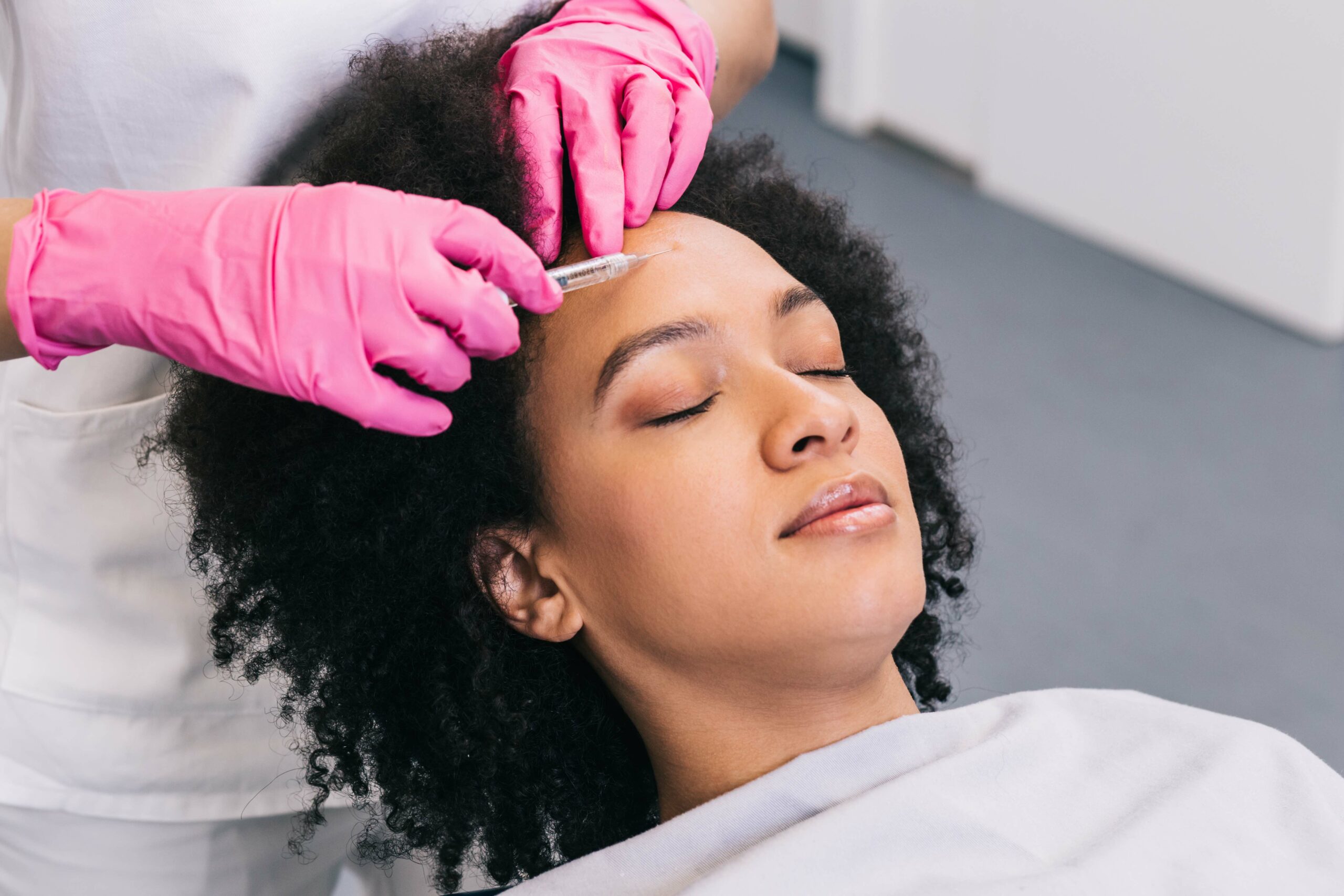
Along with the acceptance of aesthetic treatments and associated pressures prompted by social media, the companies behind treatments have proliferated them—and amplified their marketing correspondingly. “Today, there are about 15 or 20 fillers, bio-stimulatory products, five different neurotoxins and new things on the horizon,” says Hartman. “All generations want to participate in prolonging their youthful skin.”
The lines between med-spas and dermatology offices are often blurry, triggering ambiguity that may not be understood by consumers. Aesthetics concepts like Ject and Alchemy 43 provide services comparable to what’s available at a dermatologists’ offices like Botox and fillers. Dermatologists oversee med-spas, and dermatology offices are incorporating aestheticians. The American Med Spa Association figures there were 8,841 med-spas in 2022, up from 7,430 in 2021 and 5,431 in 2018.
At med-spas, Talakoub says, “Nurse practitioners and physician assistants administer the cosmetic treatments, while the dermatologist is running multiple locations rather than bearing the brunt of patient care and acting as a practicing physician. The doctor takes a cut of multiple providers rather than being the sole provider.”
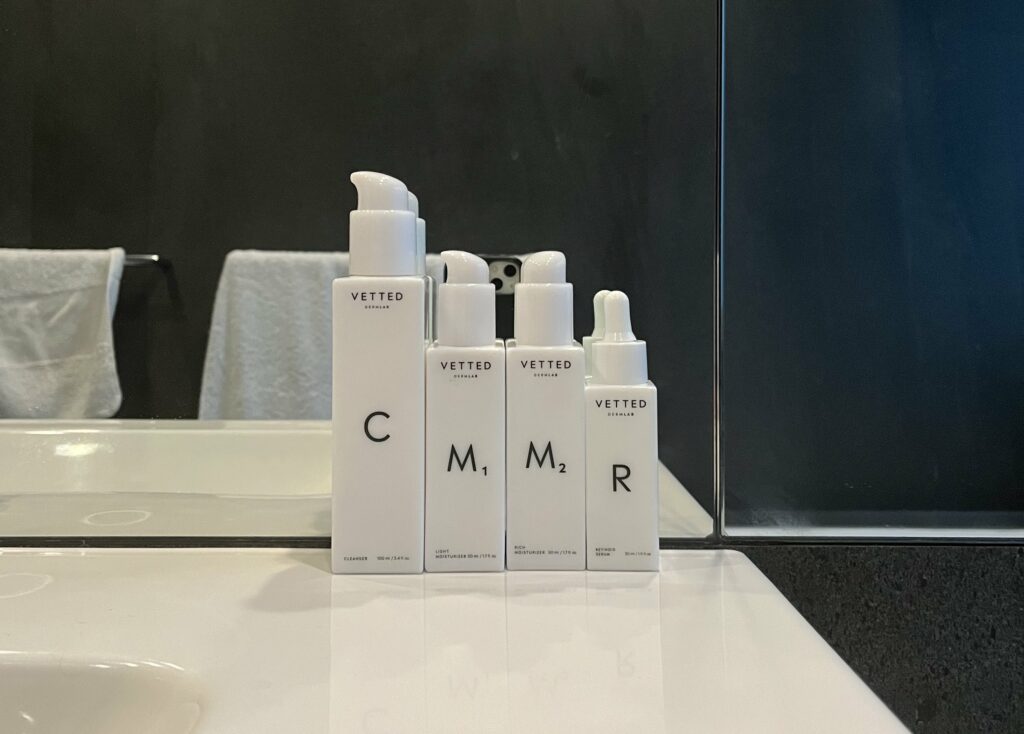
Carina Woodruff, dermatologist and co-founder of skincare brand Vetted Dermlab, says, “All this creates patient confusion about what dermatologists do, what aestheticians do and what services you can get in each place.” She emphasizes, “Fillers and Botox are not to be taken lightly. If someone does your Botox incorrectly, in some cases you may need to walk around like that for a few months, which is concerning.”
Ever-evolving technology combined with the pandemic sparked a massive uptick in telehealth enabling patients to set up virtual appointments with doctors. Despite the pandemic’s retreat in the U.S., telehealth’s penetration is anticipated to escalate going forward, no doubt reshaping the practice of dermatology. Per the market research firm Fortune Business Insights, the global telehealth market is projected to accelerate at a CAGR of 19.7% from $142.96 billion in 2023 to $504.24 billion by 2030.
Telehealth regulations vary by state, a factor that’s constraining its adoption, and states usually permit doctors to execute telehealth appointments solely in the state where they’re licensed. Dermatologists assess skin conditions and prescribe remedies for acne, melasma, sun damage, rosacea and beyond via virtual appointments. They generally commend telehealth for broadening dermatological care, notably for patients who can’t make it to the office.
Talakoub says telehealth is beneficial because not every patient can leave work or childcare to visit a dermatologist. Hopping on a computer saves precious time and commute money. Typically, younger patients accustomed to technology prefer telehealth. Talakoub says, “Dermatology is so visual, which is one of the reasons I think we are seeing younger patients request telemedicine visits.”
However, telehealth presents challenges. Appointments can be inadequate and lead to misdiagnoses. Some dermatologists aren’t integrating telehealth technology into their practice and workflows successfully. Shamban, whose office performs telehealth appointments regularly, calls telemedicine “fantastic,” especially for making pre-treatment decisions and follow-up visits, but says “it’s not a substitute for a full-body skin check.”
The advent and embrace of digital capabilities have brought about a spate of companies like Musely, Apostrophe, Hers and Curology specializing in dispensing prescription skincare online. Marie Jhin, dermatologist and chief medical officer at Musely, says Musely has decreased the average price of skincare prescriptions from between $200 and $400 to $64, giving patients fast access to affordable medications.
And she highlights that Musely’s custom and freshly compounded medications feature prescription-grade ingredients like hydroquinone, tretinoin, minoxidil, dutasteride and ivermectin delivered straight to a patient’s home. The company has developed more than 150 customized formulas with prescription ingredients.
“Custom formulations can be tailored to address the unique needs of each individual rather than relying on single ingredient formulas,” says Jhin. “We consider skin type, specific concerns, medical history and desired outcomes for a more targeted and optimized skincare experience.” Traditionally, she remarks, “Dermatologists primarily have access to mass-produced, single-ingredient generic or brand prescription formulas.”
Most dermatologists aren’t completely persuaded by online skincare prescription brands. Woodruff says, “Patients communicate their skin issues and are sent prescription-strength products, but often issues can arise if patients are not seeing a dermatologist in person to monitor their skin. For example, the problem may be a manifestation of a larger problem that merits further evaluation, which can sometimes be the case with acne or hair loss. Or, if patients are not completely transparent about all the medications they take or are dealing with other conditions, that could be problematic.”
Even Jhin concedes in-person visits are necessary on occasion. “Dermatologists cannot treat some skin conditions or provide specific services online,” says Jihn. “Medical emergencies or procedures and surgeries such as biopsies, excisions or laser treatments can only be performed in person.”
Whether in person or digitally, consumers look to dermatologists for skincare recommendations. Product consulting has become a standard component of dermatologist appointments and a meaningful revenue catalyst for dermatologists. A powerful partnership can form between skincare brands and dermatologists knowledgeable about the appropriate patients who could be aided by the brands’ products. Woodruff says, “If somebody has no guidance and is not well-versed in skincare, they usually need help knowing where to start.”
In her practice, Woodruff is frequently asked how personalized a skincare routine should be. “For example, if someone has atopic dermatitis, they usually want to know what actives they can use in high-performance products that will not cause adverse skin problems,” she says. “As doctors, we receive a lot of training on safety, comparative efficacy of different actives, and the risks of skincare products like contact dermatitis and how they interact with certain conditions.”
Dermatologists are constantly being pitched skincare brands. Professional skincare brands in particular are designed to be distributed through doctors’ offices, spas, salons and med-spas. The firm Industry Research approximates that the global professional skincare market was valued at around $12.1 billion in 2022 and forecasts it will progress at a CAGR of 3.2% from 2023 to 2029. Obagi, Skinceuticals, Dermalogica, SkinMedica, PCA Skin, Skinbetter Science, Revision Skincare, EltaMD and ZO Skin Health are among the top professional skincare brands.
Aubrey Rankin, interim president of facial technology company Geneo and formerly president of HintMD, a platform that customized beauty programs for doctors’ patients acquired by biotechnology company Revance in 2020, told Beauty Independent in 2019 that doctors can sell as much as $50,000 worth of a brand’s products monthly, but he stipulated the average is considerable lower at about $20,000 a year for a brand.
Hartman says brands want dermatologists to assist them in spreading the word out about their products to patients and giving their esteemed stamp of approval, but laments that certain brands aren’t loyal to the dermatologists that spread the word about them and sell their products elsewhere. In contrast, he credits Skinbetter Science for not selling online. Hartman says, “Similarly, AlumierMD does not sell products on its website. You must have a link from the doctor’s office to buy it.”
Aire Health, a new digital drop-ship skincare retail platform developed by dermatologists Dhaval Bhanusali and Muneeb Shah, aims to ensure dermatologists reap the rewards from the products they recommend by giving them an online destination they can direct their patients to in order to purchase the products suggested for them. The brands RoC Skincare, EltaMD, CeraVe, BioDermA, Heliocare, Cetaphil and PCA Skin are available on Aire Health. It negotiates with skincare manufacturers to reduce the prices on its platform to 10% to 40% cheaper than standard retail prices.
Ideally, the products available at dermatologists’ offices are formulated with higher percentages of actives than is available at a typical drugstore to garner substantial improvement in skin health, not simply appearance. Shamban stresses that a vital purpose of professional skincare products is to boost the results and extend the life of in-office treatments.
Dermatologists tread an uncomfortable line when touting products to patients, and they’ll persistently have to strike a balance not to fall off it. They can’t transform into salespeople and retain their authority. “You’re trying to give objective recommendations as a clinician, and then, of course, you have this incentive,” says Woodruff. “I try to provide patients with several options because it is important to maintain integrity as a physician and not take on the role of a salesperson. I want my patients to have great efficacy products, and I want them to trust my skincare recommendations.”
The players
5 mentionedAllergan

Waldencast
Merit
Alchemy 43
Topicals