From Penises To Pods, Five Wellness Trends Poised To Explode In 2024
2024 is the year of the dick, specifically aesthetic and wellness treatments for the penis, including shockwave therapy, Botox, platelet-rich plasma (PRP), filler and exosomes. The popularity of these treatments, which are intended to deliver wellness and off-label aesthetic benefits, has been ascending steadily in recent years and is expected to explode in 2024.
Family nurse practitioner Akis Ntonos, founder of New York City aesthetics practice Aion Aesthetics, which offers services like the P Shot, believes the destigmatization of sexual wellness has given men the freedom to discuss intimate issues for the first time. “These conversations are hard for both men and women, but, as a woman, you have your OB-GYN visits. You have someone that you go to annually to talk about your gynecology issues and what your body is going through,” he says. “Men don’t have that. So, we are a lot more reserved, not open to talk about our issues or sexual dysfunction or pleasure. It’s a very sensitive topic for men.”
At med-spa Lushful Aesthetics, treatments such as scrotum filler, aka Scrofill, are already a significant portion of the business and that portion is anticipated to increase as they become normalized in the coming years. “Over the next 10 years, we will see a huge societal shift in the way that we talk about these procedures,” says founder and aesthetic nurse practitioner Chris Bustamante. “I think that penis and scrotum filler are going to very much be the breast implants of this era. In the early 2000s, talking about breast implants was like, I can believe she’s doing that, versus now half my girlfriends over the age of 30 have breast implants.”
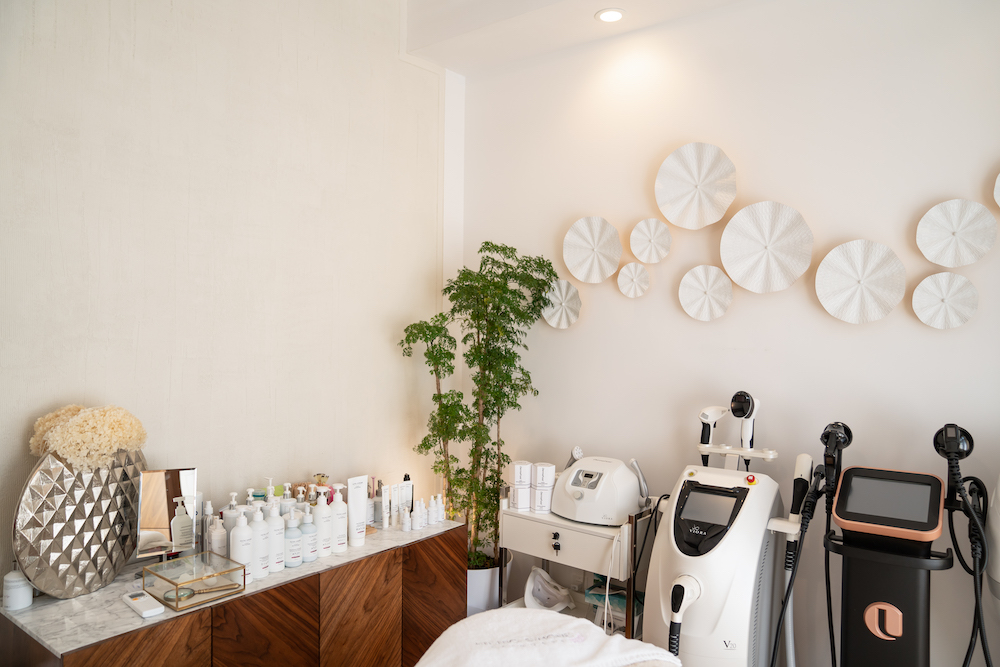
Is the next iteration of a “deep cleansing” referring to aura cleansing? Soul cleansing? Some innovative treatment providers are envisioning just that. Pietro Simone, founder of an eponymous luxury skincare range and aesthetic studio in Manhattan, has built his reputation on specializing in the most cutting edge tech-forward treatments as well as lo-fi, super hands-on services that show results. In the near future, he sees facial and aesthetic treatments that employ items like crystal beds be accompanied by guided meditations to unlock a deeper sense of wellness for the consumer.
“If someone is going to have an hour facial, and the music is going, hands are moving around your face, your neck and there are also speeches going on, it changes a lot,” he says. “All of a sudden, maybe you can open up. Hopefully, you can open up a specific emotional perspective for the customer.”
As “magic” mushrooms and other psychedelics are decriminalized and microdosing becomes more widely accepted as a way for people to achieve better emotional well-being, the facial of the future could start with a shroom gummy. With broad legalization of psilocybin and other psychedelic drugs still yet to come, an early iteration of the spa treatment-psychedelic experience combo could incorporate a psychoactive ingestible like KA! Empathogenics rather than a psychedelic.
Sleep quality has been a buzzy wellness concept for years now, but the luxury end of the market is nailing down impactful solutions beyond melatonin supplements that can be picked up at local pharmacies to differentiate itself. One of upscale European health resort chain Lanserhof’s offerings is a sleep medicine and biorhythms program. It encompasses the team at the resort conducting a complete sleep hygiene analysis dubbed polysomnography tapping state-of-the-art equipment.
A key piece of the program is the bed guests sleep on. Luxury hotels are known for comfortable beds, but Lanserhof’s mattresses are comfortable and functional. It’s partnered with FreshBed, a handcrafted, Swiss-engineered ergonomic mattress that’s designed to regulate temperature and humidity regulation and improve air quality, all in the name of better sleep hygiene. According to FreshBed’s website, it “uses a silent active airflow technology that’s integrated into the foot of the bed to draw air in from the underside of the bed and push it through a medical-grade HEPA filter. The air is then purified, removing pollen, fine particles, allergens, virus carriers, bacteria and more.”
Even if people don’t have a FreshBed at home—they clock in at just under $27,000—after a 10-night stay at Lanserhof, Nils Behrens, CMO at the company, says they’re “learning how it feels to have a good sleep…They’re bringing a better sleep habit pattern back home.” For about $2,300 plus a $180 per year membership, guests can get an 8 Sleep Pod that helps optimize sleeping conditions and scores sleep quality.
For those who can’t take a trip to Lanserhof or spare $30,000 for a FreshBed, Los Angeles’s Quantum Clinic is a “spa for your DNA” that’s uses a mix of ancient practices and modern technology to enable clients to unplug, relieve stress and achieve serenity. A 45-minute Scalar Upgrade treatment, which is described as yielding “regenerative healing from trauma and toxic stress,” is $212.
When non-alcoholic beverage specialist Little Saints founder Megan Klein launched her mezcal alternative St. Mezcal last year, she included a functional dose of lion’s mane mushroom in every serving of the brand’s because, as she told Beauty Independent last year, “We wanted you to feel it.”
Many people are taking part in “Dry January” this month, where they abstain from alcohol, but a good chunk of them still want to feel something while they’re socializing, just not enough to cause a hangover the next day. This desire has led to the “damp lifestyle” trend, where people are permitting themselves to imbibe beverages without alcohol, yet with small amounts of ingredients with pleasing effects.
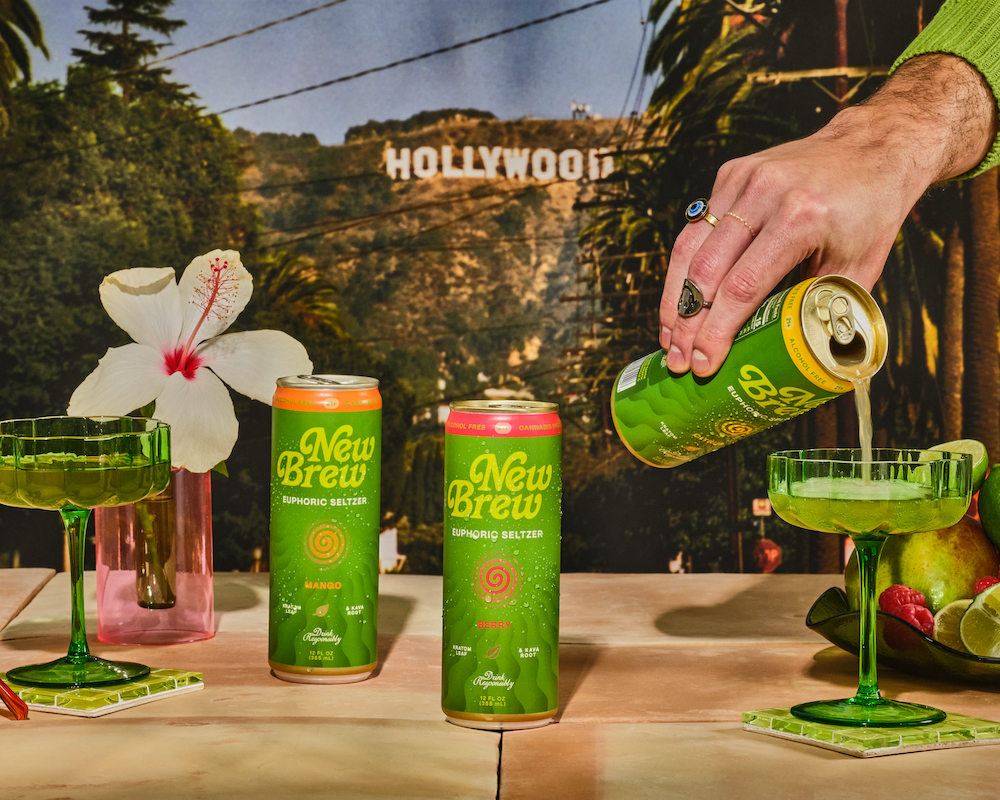
The trend is sparking the increased proliferation of ready-to-drink craft beverages that skip alcohol, but are chockfull of other plant-based buzz-inducing ingredients. Brands in this space will stand on the shoulders of companies like Kin Euphorics by offering options infused with kratom, an ingredient from a tropical evergreen tree native to Southwest Asia, and relaxing root kava.
New Brew, for example, aims to take the edge off, as alcohol does, and help elicit a positive attitude shift. Psychedelic Water, which isn’t psychedelic, contains kava as well as velvet bean, an aphrodisiac. Newcomer Illicit Elixirs has four flavors of sparkling juice drinks infused with dopajoy, the company’s proprietary blend of functional ingredients created in partnership with functional neurologist Chris Caffery to support dopamine production.
The new crop of beverages widens the array of non-alc drinks for consumers seeking a buzz stronger than that offered by nootropic-infused De Soi or nervine-infused Ghia, both of which recently launched at Target, or are steering clear of products with CBD and THC that have made up a large portion of the non-alc space during its explosion in recent years.
Much ink has been spilled about 2023 being the year of “social wellness.” Wellness destinations like Remedy Place and Othership extended their footprints, allowing groups of people to bond via the shared trauma of an ice bath, but the trend pendulum never stops swinging. Emerging wellness innovations are characterized by a decidedly solitary experience, notably treatments encompassing pod-like structures that facilitate solo meditation, healing modalities, rest, diagnostics and healthcare services. Welcome to the rise of anti-social wellness.
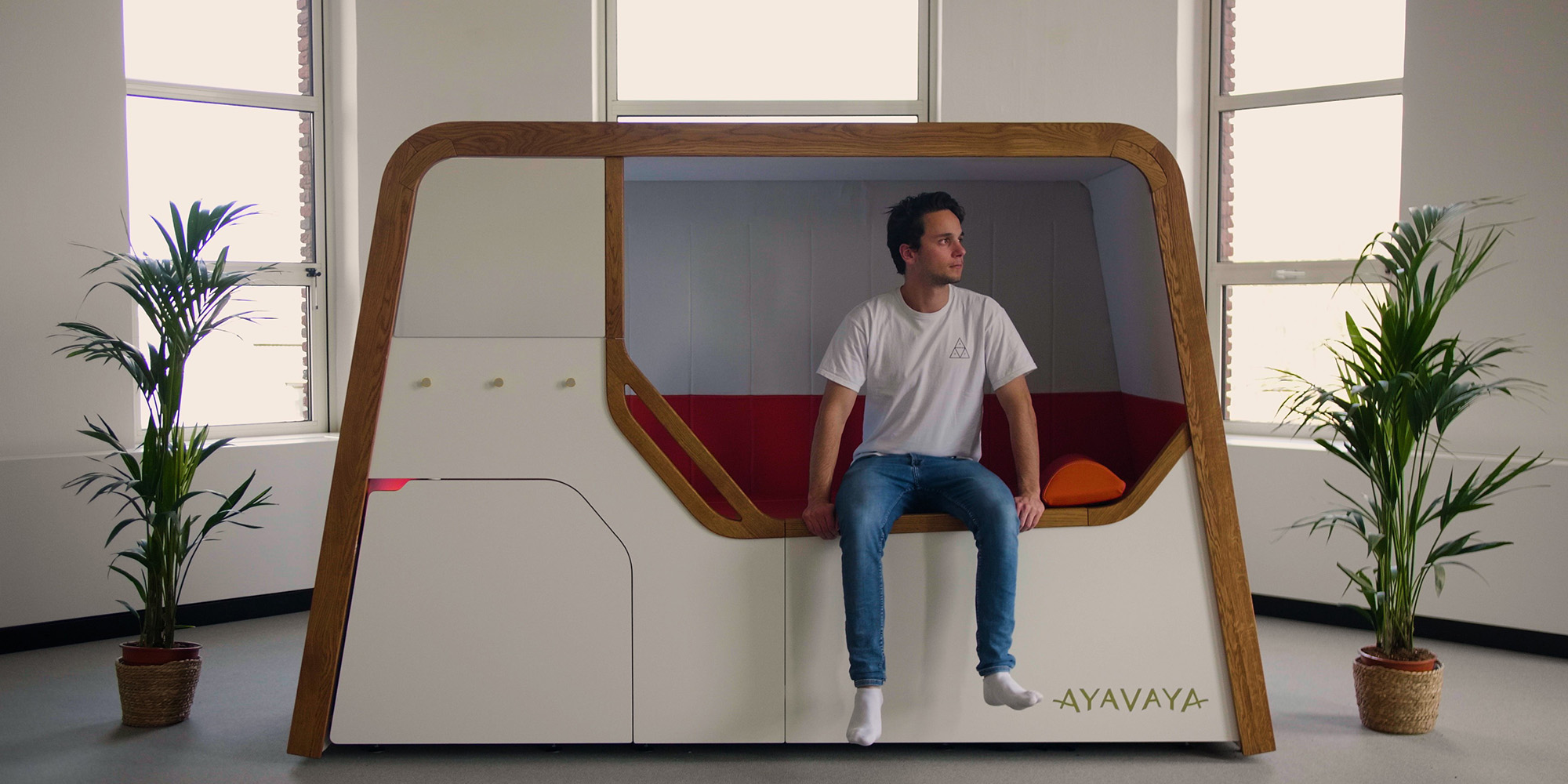
At technology trade show CES in January last year, health technology company Ayavaya introduced the Stress-Busting Cabin, which utilizes four automated, non-invasive, science-backed treatments to bring the user into a meditative state and eliminate stress in 20 minutes. The $25,000 unit is featured at the Netherlands BLUE Wellness Hotel by Fletcher Hotels, where users push a button for a fully automated treatment, including sound therapy, aromatherapy and coloured light therapy.
Ayavaya and competitor The Wellbeing Cabin consider pods a good fit for hotels, spas and wellness centers. Other pod tech includes the increasingly popular hyperbaric chambers, coffin-esque photobiomodulation offerings from ReGen Pod and Hocatt’s Infrared Ozone Sauna.
Pods are coming for the healthcare industry, too. Late last year, startup Forward Health unveiled the artificial intelligence-powered standalone medical station CarePod. Its launch was fueled by a $100 million cash infusion. A backlash to the trend of sauna sweating and ice bath shivering in a large group could be contributing to the burst of pod-based wellness, but Lisa Starr, spa industry veteran and principal at consultancy Wynne Business, contends that the spa and wellness industry’s labor shortage is a main driver.
“We don’t have enough people working in spas anywhere,” she says. “Let’s say you own a spa, and you’ve got eight treatment rooms, five for massage and three for facials, and you’re open 60 hours a week, you probably have enough staff to cover it for 40 hours a week, what are you supposed to do? You pay rent on the whole time. Owners are looking at what they can offer that’s wellness-oriented that doesn’t need labor…That’s when you see the pods, the Somadomes, etc. They’re anywhere from $5,000 or $6,000 to $30,000 and up, but they don’t call out sick. They just sit in the room and do their thing 24/7.”
The players
5 mentionedOthership

Topicals
AS Beauty
Under Your Skin
Better Being