They Sold Their Brands. Now, They’ve Swooped In To Save Them.
Three months later, that mantra continues to drive her. On April 18, news broke that Renfrew saved Beautycounter from being buried in the graveyard of private equity-backed brand carcasses by buying its name and assets out of foreclosure with the goal of bringing it back to glory.
Renfrew isn’t the only founder busy with a reclamation project. Vita Liberata founder Alyson Hogg has purchased the self-tanning brand back from Crown Laboratories, the skincare and aesthetics company that scooped it up in in 2018. One of Goli Nutrition’s founders is a member of a consortium that’s swooped in to help the brand avoid bankruptcy.
Following Amyris’s descent into Chapter 11, founder Francisco Costa has once again taken charge of Costa Brazil, which he sold to the biotechnology company in 2021, and founder Naomi Watts has bought menopause products brand Stripes, which she started with Amyris in 2022. Zoë Foster Blake has resumed control over Go-To Skin, which BWX picked up in 2021 prior to going into administration last year.
Founders retaking their brands isn’t a novel concept (Francesco Clark’s purchase of Clark’s Botanicals and Derek Maxfield and Melanie Huscroft’s acquisition of Younique, both in 2019, are among several earlier examples), but Tina Bou-Saba, a beauty and wellness investor, predicts the number of founders returning to brands they created will increase in the current environment. She explains strategic and financial buyers did deals during a period of lower interest rates that may not make sense now, and they’re disentangling themselves from them in a less forgiving market with a narrower buyer pool.
“The cost of capital is much higher, which adds to the challenge of fixing an underperforming brand,” says Bou-Saba. “At the margin, more buyers may decide to simply dump those businesses. No other strategic or financial buyer will pay much, if anything, for a money-losing, underperforming brand. Thus, selling it back to the founder may be the only option versus shutting it down.”

Following a bumper crop of beauty mergers and acquisitions activity from 2018 to 2022, Andrew Ross, senior advisor and venture partner at XRC Ventures, and Andrew Shore, a beauty brand consultant and former managing director at investment bank Moelis & Co., view founders buying back their brands as part of a larger shakeout happening in beauty M&A characterized by conglomerates and investment firms divesting or closing brands. Caress, Dollar Shave Club, Sanoflore and Suave are just a few of the brands beauty conglomerates recently divested.
“There has been so much M&A activity that some portfolio companies are simply getting lost,” says Shore. “Strategics always talk about pruning. It’s no different for private equity. Resources are not infinite.”
Shore mentions there can be misalignment on mission, vision and culture between an acquirer and acquired brand that derails the brand, and the founder may be better suited than the acquirer to reestablishing realignment. From an acquirer’s perspective, he says selling the derailed brand back to the founder “is probably the most eloquent solution to a difficult public relations issue.”
Katherine “Annie” Finch, founder of Katherine Girl, a cosmetics brand she sold to a private equity firm in 2019 and took back over in 2021, blames a mismatch between private equity firms’ financial engineering and beauty brand operations as propelling founders to rejoin their brands. She declines to name Katherine Girl’s ex-private equity owner for legal reasons.
“Beauty is so interesting because per item it is so profitable, but brand building is not profitable. People don’t really understand the complexities of it,” says Finch. “The money people just don’t know how to run beauty businesses.”
While offloaded brands are enfeebled, they’ve often had some work done on them—supply chain streamlining or international expansion, for instance—and founders can get them back for pennies on the dollar to strengthen that work as they address atrophied areas of the business. Foster Blake sold Go-To Skincare for $65 million and reclaimed a majority stake in it for about $22 million.
Ross says, “There could actually be a position where you’re like, this is great, I basically got two years’ worth of investment from somebody who is now is going to sell it back to me at what I would say is an arbitrage.”
Intertwined with the brands they birthed, white knight founders are confident the personal passion and grasp of the business that put their brands on the paths to lucrative exits will also put them on the paths to successful revivals. “Much of it is about having your identity attached to it,” says Shore.
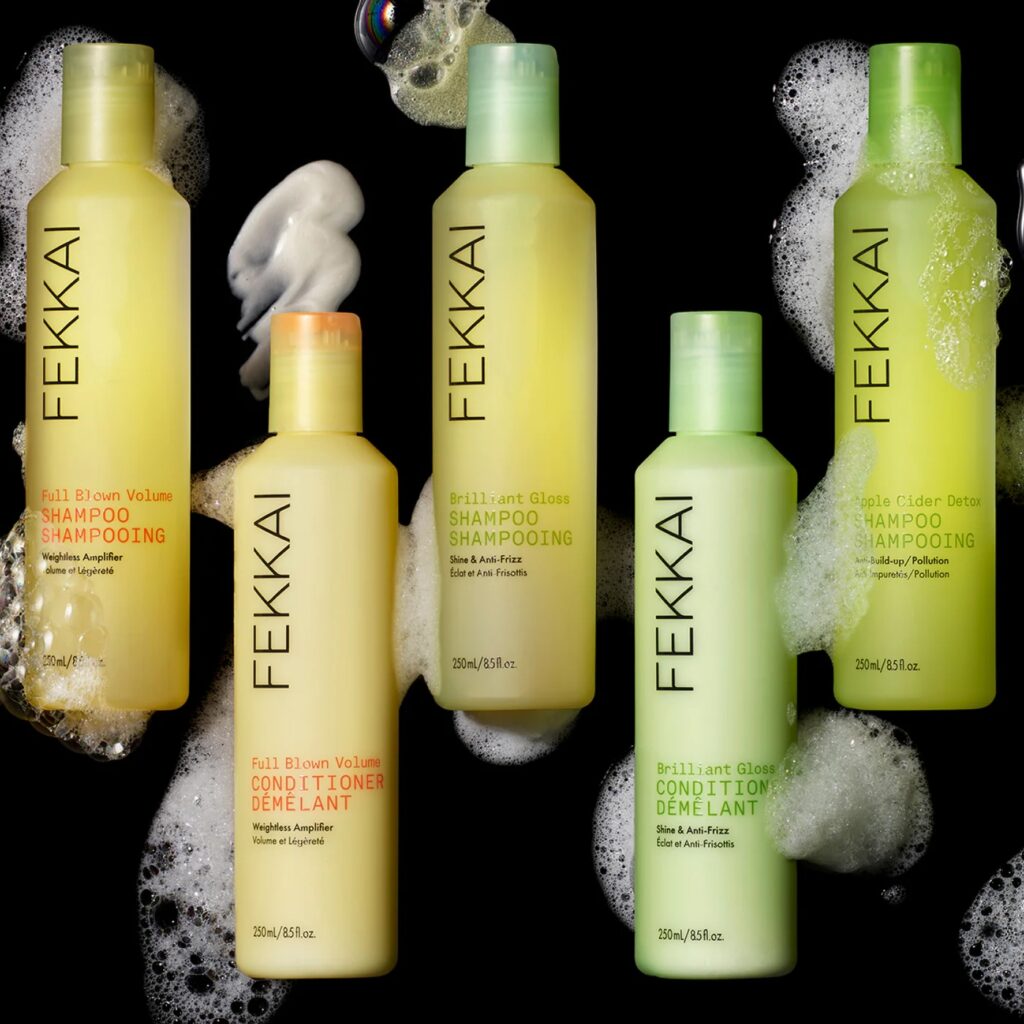
Frédéric Fekkai is very familiar with how attached entrepreneurs can be to the companies they forged. In partnership with investment firm Cornell Capital, he bought back his namesake brand from an ownership group involving Dilesh Mehta, Tony Bajaj, Joel Ronkin and Amy Sachs in 2018. Procter & Gamble bought the brand in 2008 and sold it to the ownership group in 2015.
“As an entrepreneur and founder, you bet on yourself,” says Fekkai. “I’ve had proposals from other businesses where I look at the business model, and I say to myself, you know what, I’m glad I bet on myself because I know what I want, and I know what it takes to get there.”
Founders’ reemergence at brands doesn’t repair them overnight. Fekkai, who expects his brand’s sales to grow between a high single-digit and low double-digit percentage in the next three to four years, warns that brand recovery timelines can be longer than anticipated.
“It’s not easy to rebuild a brand, if I’m being honest with you,” he says. “When you have to rebuild the brand—changing the distribution, changing the formulation, changing the packaging—it’s basically another startup.”
Similarly, Bou-Saba underscores that it’s “enormous undertaking” for founders to fix what may be a broken brand. “It is likely a turnaround situation that will require tremendous attention and resources,” she says. “Even if the founder can buy back the brand for a low price, they will need to invest significant capital—their own or that of investors—to improve the business and reignite its growth.”
A brand basically being a startup isn’t altogether bad, however. It can have flexibility it didn’t have previously. Once Finch retook Katherine Girl, which has focused on a community of horse-loving women and girls, she says, “We could do a lot of fresh new things. We could really be personal because we didn’t have to be generic. It’s very personal now. When they [customers] look at the site and the brand, they get the heart of it immediately.”
A caveat is that brands with restituted founders must have funders with patience and the right team in place to orchestrate a turnaround plan. Henry Cornell, senior partner at Cornell Capital, had invested in Fekkai’s fragrance, hand, body and home brand Bastide in advance of partnering with him to buy Fekkai and was a proponent of his strategy to elevate the brand that P&G had dispersed in the mass market. Last year, Fekkai appointed Tennille Kopiasz, former global CMO of Fresh, as CEO.
“It’s almost like school when you graduate from middle school to go to high school,” says Fekkai. “You need to have a different brain, different thinking and different caliber. Today, we are very strong with an amazing team that has incredible marketing and brand awareness skills.”

Ross points out a tricky challenge for funders and founders at a brand acquired before is figuring out the brand’s future capital sources. “You will always have to answer the question, what went wrong?” he says. “It makes your due diligence to raise incremental capital from somebody else I think two times as hard.”
Not only is it tricky to woo capital, it’s tricky to woo customers. They may have felt burned by a founder’s departure and the choices of ensuing ownership. Injecting the founder’s story back into the business can be an important reboot to regain trust. Fekkai’s relationship with consumers as a hairdresser who educates them on managing and styling their hair is foundational to his brand.
“It was all about the story, the story about the brand, the story about the product, the story of the ingredients, the story about the packaging, the story of me,” he says. “P&G and those companies are amazing marketers, but it’s all about transaction. How do I sell more product? So, they were emphasizing value as opposed to the story of the product.”
An additional obstacle is that founders may be reuniting with brands grounded in trends or categories that aren’t as relevant as they were in the past—and they must adjust their brands to be relevant. Clean beauty has gone from unique to ubiquitous in the years since Renfrew launched Beautycounter in 2013, and she’s going to have to sort through if the brand should push the clean beauty movement forward or pivot from it to cement a contemporary competitive advantage.
“Her reason for being and her moat has diminished,” says Shore. “She started a moat that had alligators in it, but those alligators have aged, and they are slow moving.”
Still, with their founders back at the helm, Shore thinks brands that struggled in the stables of erstwhile parent companies have a chance at redemption. They tend to have decent name recognition and a history of cultivating an audience that can be resuscitated if the magic their founders originally brought is reanimated.
Shore says, “A lot of these brands can find their sea legs again by doing things slightly different.”
The players
5 mentionedAS Beauty

Better Being
Under Your Skin
Dollar Shave Club
Beautycounter