Does Amyris’s Bankruptcy Raise Red Flags About Beauty’s Love Affair With Biotechnology?
But L’Oréal isn’t putting all its biotech bucks in Debut’s bucket. It’s joined competitors Unilever and Kao Corp. in backing Geno, a biotech company engineering molecules that are swaps for petroleum- and palm oil-based ingredients without their troublesome baggage. Chanel has invested in biotech outfits Evolved By Nature and Arcaea, which has also received funding from Olaplex and Givaudan.
That’s just a smattering of the players throwing cash at science to construct pipelines of ingredients that aren’t threatening the climate or threatened by it and stay at the cutting edge of a consumer packaged goods market not friendly to brands that lose their edge. For leading beauty companies, allotting what for them are tiny amounts to biotech could pay huge dividends for their longevity.
But the investments aren’t completely free of risk. When Amyris, a biotech company that made a splash with squalane, an alternative to the coveted shark liver-derived hydrator squalene produced by sugarcane-driven fermentation, filed for Chapter 11 protection last week, it set off alarm bells about beauty’s budding relationship with biotech. Although individual brands may flop, beauty is generally a category with robust financial fundamentals and steady sales progress, and biotech can be its inverse. It has huge potential, but beauty companies climbing into bed with it could end up on the floor.
Amyris raised $1.9 billion in funding, racked up over $1.3 billion in debt and, according to its 2022 annual report, accumulated a deficit of $2.9 billion. Incurring losses from its inception, the company went public in 2010, and its share price hit a 5-year high of $20.82 in 2021. On Tuesday last week, the day before it announced its bankruptcy filing, the company’s shares closed at 45 cents.
“The Chapter 11 is not a huge surprise to a lot of us who have been in the loop for a while,” says Erin Kim, a consultant and former creative director at biotech firm Geltor. “The frustrating thing I would say is that those of us who’ve been on the startup side is that Amryis was largely viewed as relatively stable. They had raised a lot of venture capital over the years. For a long time in the startup scene, the game was about how much capital you could raise, it wasn’t about building businesses for long-term sustainable growth.”
Saddled with towering expenditures to get their technology to function, biotech startups tend to have challenges achieving profitability. VC funding can bridge the gap between ideation and commercialization, but the VC squeeze has squeezed biotech startups, particularly those still trying to bridge that illusive gap. In 2022, professional services company EY estimates VC investment in biotech cratered 54% to $54.6 billion, the lowest sum in six years.
CPG brands are looked to as comparatively easy generators of revenues and profits, not to mention marketing, to prop up biotech companies as they stoke wider demand for their technologies. Yet, brands can be bedeviled by economic headwinds, shifting consumer preferences and poor management.
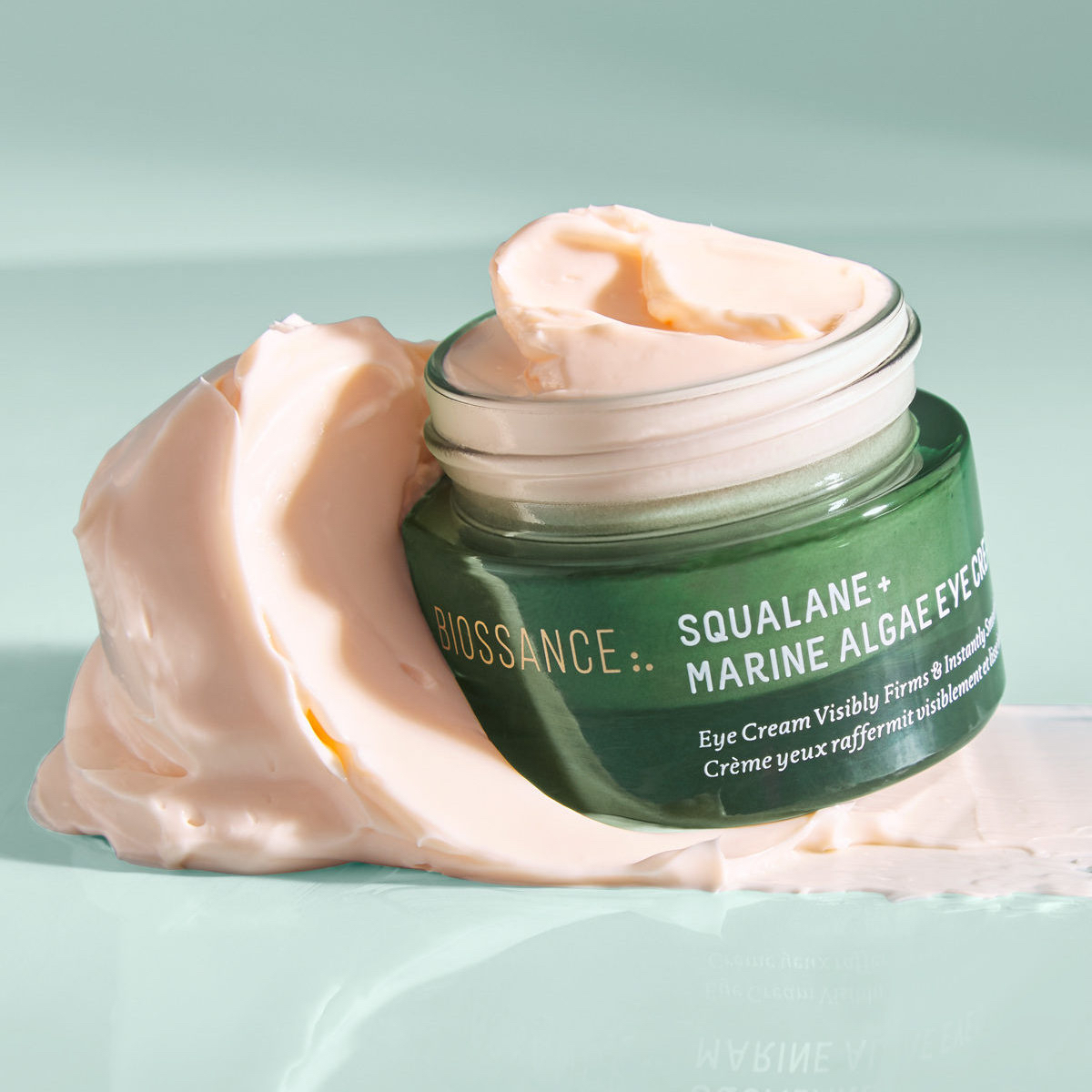
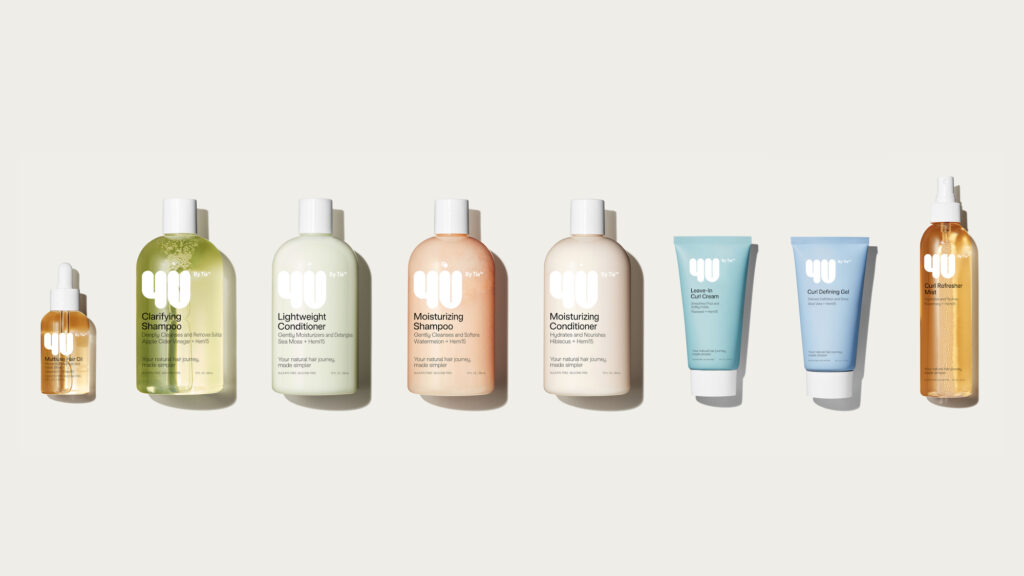
With John Melo, previously an executive at oil and gas company BP, at the helm as CEO, Amyris assembled a collection of a dozen brands via incubation and acquisition, starting with Biossance in 2016, a clean skincare brand created in-house to promote squalane, in advance of branching out to celebrity-affiliated brands JVN, Rose Inc, Stripes and 4U by Tia. Along with the 12 brands, it bought retailer Onda Beauty.
In 2021, the company told Beauty Independent its brands were projected to reach $300 million in sales the next year, but the entire company reached $269.6 million in 2022 revenues. Total cost and operating expenses were $838.8 million in 2022. Melo resigned from the CEO role in June, and Han Kieftenbeld, who became CFO and chief administrative officer at Amyris in 2020, is serving as interim CEO as well as CFO.
The brands’ failure to live up to expectations certainly hurt Amyris. However, its struggles began prior to them. Founded in 2003 by microbiologist Jack D. Newman, physicist Kinkead Reiling and chemical engineer Neil Renninger, it received support from the Bill & Melinda Gates Foundation for malaria therapies, but, as Annie Hammang, an Amyris alum and cultural anthropologist, chronicles in a piece for the publication Slate, its roots are in the biofuels boom of the early aughts. Illustrative of biofuels speculation at the time, venture capitalist and Amyris backer Vinod Khosla instructed the company’s founders, “Set your sights on diesel. It’s the hardest thing you’d want to do, but it’s the biggest market out there, and you’ll build an incredible company.”
Amyris and biotech firms similar to it aiming for a fossil fuel-replacement moonshot couldn’t accomplish it. They didn’t have the production muscle of corporate fossil-fuel giants. “The long arc of early aughts biofuels is instructive in how you might be less likely to land among the stars than in the shampoo-making business,” writes Hammang. “In stretching for something very out of reach—cheaper oil than cheap oil—companies stumbled and reactively had to scramble for a sure bet to keep things going.”
For Amyris, though, beauty wasn’t a sure bet to erase its problems, and the company has crumbled under its own weight. “With a looming recession since the invasion of Ukraine, Amyris could not carry its debt burden and so its stock started to crash in late 2021 and fully crashed in 2023 after a brief last breath,” says Barbara Paldus, CEO at science-powered skincare company Codex Labs and managing partner at VC firm Sekhmet Ventures. “So, the lessons are to limit a company’s debt-to-equity ratio, no matter how rapid the growth. You never know when the market will turn, and there are always investors out there eager to short a stock at an excessive debt-to-equity ratio.”
Amyris’s struggles could presage the struggles of companies beyond it because, as Kim points out in a LinkedIn post, other companies are emulating its business model pairing reservoirs of ingredients with consumer brands. Debut, for example, has unveiled plans to establish an in-house brand incubator. B.A.I. Bioscience, a specialist in identifying and scaling molecules for beauty and personal care, has released the photoaging brand Pavise and is developing subsequent brands.
Matice Bioscience, a company that harnesses machine learning to design and optimize peptides, has hired Brandy Hoffman, co-founder of skincare brand Volition Beauty and former VP of operations at skincare brand Algenist, a spinoff of Solazyme, a now-defunct forerunner of the ingredient-plus-brand architecture, as president and COO to help it enter the brand world. Biotechnology company Visolis acquired beauty brand Yuni, appointed Yuni founder Emmanuel Rey, former GM for professional brands at Estée Lauder, as global head of consumer brands, and introduced skincare brand Ameva.
Artificial intelligence-propelled molecule discovery platform Revela put out a haircare and skincare brand, but the brand was summarily dispensed with once Oddity, owner of makeup brand Il Makiage and skincare brand SpoildChild, acquired it for $76 million earlier this year. Oddity was less interested in Revela’s brand than applying its technology to its own brand arsenal.
Rose Fernandez, a consultant and former CEO of Algenist, calls biotech companies launching brands “smart.” In a caveat, she adds, “The issue is that, when these same smart companies start leaning too far into the brand/consumer space, it distracts from the very thing that biotechnology does, which is solve problems based in science through innovation-focused work to deliver to the broader markets. Distraction from why any business exists is not sustainable.”
Oliver Worsley, CEO and co-founder of Sequential Skin, a microbiome testing startup that’s raised $3.2 million and has a partnership with Johnson & Johnson, understands full well the possible distraction of consumer brands. The company had considered launching a consumer-oriented microbiome testing product, but ultimately opted to stick to its B2B enterprise. It has about 60 personal care clients today and is on pace to profitably surpass $1 million in 2023 revenues.
For the consumer-oriented microbiome testing product, Worsley explains the “research took a lot of capital and a lot of our focus. To then be able to develop the consumer arm and sell successfully through consumer channels would be completely impossible unless we were raising hundreds of millions. Investors will want you to go after the higher margin activity, but we really had to push back and actually decide we need to be focusing on what we are really good at.”
Given the business difficulties biotech startups encounter, beauty brands interested in pursuing durable connections with them should evaluate their durability. Gilles Kortzagadarian, founder of consultancy Freestyle Beauty and former GM for the United States at Guerlain, says, “I would carefully assess the viability of these ingredient manufacturers to avoid reformulating or discontinuing products in the future. Many biotech companies supplying the beauty industry are promising startups, some will make it, others won’t.”
As first covered by fashion and beauty media outlet Business of Fashion, Amyris is shuttering Onda Beauty, fragrance brand Costa Brazil and sweetener brand PureCane. The company moved to discontinue another brand in its portfolio, skincare brand Terasana, last year. The remaining brands are up for sale, and Business of Fashion names Clarins, L’Occitane, Orveon and Authentic Brands as conceivable buyers. Biossance is the most attractive asset, and the publication reports its sales are figured to be $110 million.
Amyris has laid off about a third of its workforce. The workforce currently stands at 1,090 employees. The company is tapping $190 million in financing from an entity associated with Foris Ventures, a firm linked to John Doerr, Amyris’s largest shareholder and chair of VC firm Kleiner Perkins, to subsidize ongoing operations. Separated from its brands, Kieftenbeld said in a statement, “We believe that Amyris will emerge as a financially stronger company with a more focused business model and well-defined path to profitability.”
Kim predicts there could be subsequent brand selloffs by biotech companies as the companies shore up their businesses and beauty companies will amplify internal scientific expertise in part to avoid reliance on unstable external partners. “With some of the technologies, you might start to see more of them being licensed,” she says, noting that internal scientific experts can aid with due diligence of external partners. “We are in a situation where the startups are in desperate need of cash and the more established beauty customers want access to the technology. I think we are going to see transactions happening.”
Amyris isn’t a stranger to licensing ingredients. It recently entered into an exclusive licensing deal with Givaudan involving squalane, a silicone alternative it’s dubbed hemisqualane and an eco-conscious sun protection ingredient it’s named cleanscreen. Amyris approximates the overall deal value at $500 million. It encompasses $200 million upfront and as much as $150 million in earnouts. In 2021, it entered into an agreement with DSM Nutritional Products that provided DSM exclusive rights to select flavor and fragrance ingredients. Amyris valued that transaction at $500 million, too.
Despite the woes of biotech startups, beauty’s ties to the biotech sector aren’t anticipated to be severed anytime soon. Biotech startups may be in desperate need of cash, but Worsley characterizes beauty companies as “really desperate for innovation.” He says, “Consumers are increasing their demand for high-quality science-backed claims that aren’t just a celebrity endorsement, but a tangible benefit that has been measured.”
Fernandez’s faith in the contributions biotech can offer beauty hasn’t wavered. She says, “Biotech is incredibly important to the beauty industry….The beauty industry needs to continue to uncover new ingredients and technologies that are sustainably sourced and produced.”
Paldus emphasizes that Amyris’s missteps shouldn’t undermine the ingredients biotech is bringing to beauty. She says, “This is not a story about biotech failing in beauty or that biotech ingredients are not going to become the predominant source of ingredients within a decade because one company failed. That would be like saying that Xbox would never exist because Atari crashed and failed in the 1980s.”
Paldus elaborates, “Amyris is a tale of lack of focus and poor business practices/ethics by key management, and investors allowing a CEO to pile up crushing debt that ultimately undid the company. Amyris had excellent biotechnology, and its squalene ingredient set in motion the adoption of biotechnology in cosmetics and paved the way for other companies like Geltor, Ginkgo Bioworks or Arcaea.”
Amyris is a cautionary tale that the runway afforded to biotech startups by investors and forays into the CPG space has shortened—and their in-house brands and the third-party brands depending on them could suffer. On LinkedIn, Kim writes, “The time of easy money, wishful thinking, and throwing business development spaghetti at the wall is over. I do still believe that in the long term, the strongest of the biotech companies who are able to successfully weather the collective rug pull taking place will be able to deliver on some the sector’s potential, but the time has undoubtedly come to switch gears, or face very real consequences.”
The players
5 mentionedIl Makiage

Under Your Skin
Givaudan
Unilever
Estée Lauder