The Brand Incubators And Holding Companies Pursuing The Huge Wellness Opportunity
But the beauty incubator bubble, if not completely burst, has deflated. Brandable, which spawned a dozen brands and had merchandise in Target and Walmart, disappeared. Arfa, the outfit from former Glossier president and COO Henry Davis, didn’t last two years in brand generation. Previously valued at $2.2 billion, Forma Brands, parent company of Morphe, the makeup brush line that turned into a social media-driven brand house and retailer, has gone bankrupt.
Still, the incubator model persists in the beauty industry (see Bain Capital-backed Maesa, Lion Capital-backed Hatch Collective and Prelude Capital-backed The Center) and could get healthier as weaker entrants fizzle. And it’s not isolated to beauty. Now, it’s growing in wellness as both incubators, those concerns that create brands in-house, and multibrand holding companies shaped by acquisitions multiply to seize upon the enormous $4.5 trillion wellness opportunity they believe has room for rivals to entrenched conglomerates. They’re generally not trying to be P&G. Instead, they aspire to be modern versions of Reckitt.
Among the multibrand companies in the wellness space spanning supplements, sexual health, fitness, sleep, nutrition, mindfulness and more are The Healing Company, an entity founded by former model and supplement entrepreneur Anabel Oelmann and former Jet.com president Simon Belsham with ambitions to build a portfolio of 15 brands fueled by a $150 million credit facility, CC Wellness, an intimate care ankle biter funded by Catalus Capital, Thirty Madison, a healthcare enterprise stretching from men’s hair loss to migraines that’s drawn $210 million from Johnson & Johnson Innovation, Greycroft, Polaris Partners and others, and Beacon Wellness Brands, a flotilla of sexual wellness brands under Yellow Wood Partners’ umbrella.
“In the last three or four years, a lot of these holding companies have popped up as consumers have become aware they can take a proactive approach to their health and wellness, and that’s paired with a post-COVID wellness trend,” says Ziv Haklili, co-founder at Scale Media, a bootstrapped e-commerce wellness and beauty incubator with 1MD Nutrition, Hair La Vie, Live Conscious, Essential Elements and Tru Alchemy in its brand stable. “With that, there’s been a rise of the aggregator model that’s had a lot of attention from investors, who are eager to enter the space. It’s this convergence of wellness and the business model of aggregating smaller brands.”
Lauren Leibrandt, director and beauty and wellness practice leader at investment bank Baird, says, “I see it really as a play for growth and trying to bring brands together that could potentially have selling synergies. Certainly, the consumer has shown that they are willing to spend money on wellness, and these companies are going after that attractive consumer.”
Describing the development of wellness incubators and multibrand holding companies as “nascent,” Tina Bou-Saba, co-founder and managing partner at Verity Venture Partners, an early-stage consumer brand investment firm, suggests that, because wellness brands often drill down on specific merchandise categories or demographics, they could be prime rollup targets. “For example, supplements,” she says. “People buy one brand for hair, one for gut—like our portfolio company Arrae—one for multi. It’s so different from the legacy brands that did the ABC vitamins. Many of today’s consumers want something different.”
While Amazon brand aggregators (Growve, Alphawell Brands and Intrinsic are illustrations of aggregators in the wellness arena) have lost steam as Amazon has faded from its pandemic high, wellness brand holding companies with capital can buy brands at dampened valuations due to current mergers and acquisitions dynamics. Belsham of The Healing Company told Beauty Independent in November, “We can find great businesses at good prices that we wouldn’t have found a few years ago.” At the time, he was seeing asset prices dip by 25% to 50% and expected further declines.
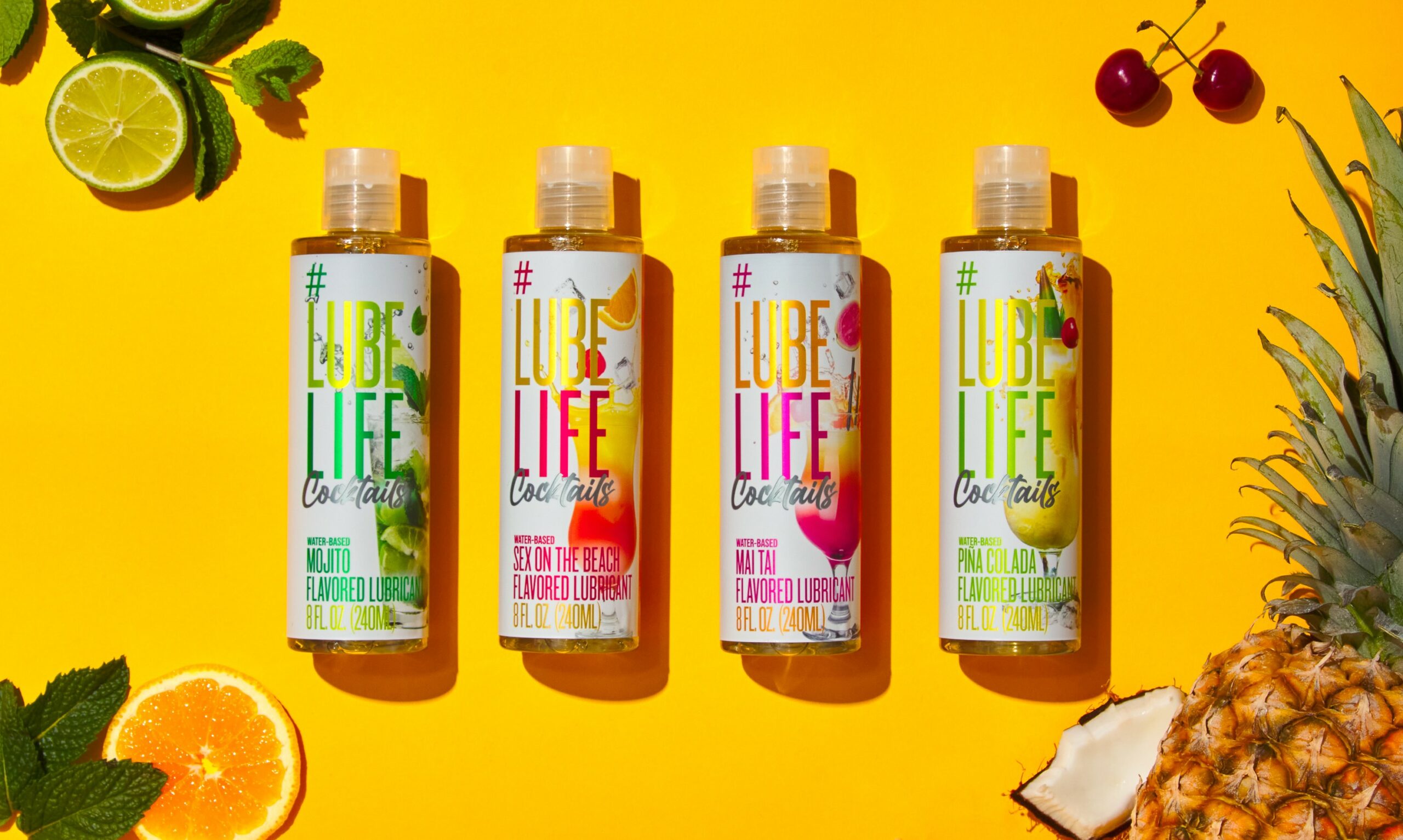
At least in sexual health, Mimi Anderson, CMO at CC Wellness, parent company of the brands #LubeLife, JO, Shibari and Muse Health, believes companies that experiment with various brands fill a gap in the industry between the capabilities of large conglomerates and single brands. She says, “They aren’t players with global reach, but, if they do it the right way, they act more like an indie player, do things differently, lean into consumer research and trends, and are focused on the right storytelling with the right ingredients.”
In categories perceived to be risky, notably sexual health, where conglomerates have historically been hesitant to jump in, incubators and budding multibrand holding companies can innovate without the huge obstacle of fierce competition from mammoth companies. Wendy Nicholson, managing director of the global consumer banking investment team at Baird, says, “It feels like the strategics are waiting a little bit to be sure there is proof of concept. At the end of the day, the advantage of the strategics is they do have big balance sheets, and they can afford to come in later even if valuations go up.”
With wellness being so vast—not only are there several subcategories, but people change as they age and confront ailments—multibrand companies can dive into subcategories and build trust for the solutions they provide in them to relevant consumers. At Thirty Madison, owner of Nurx, Cove, Keeps, Facet and Picnic, Caroline Hofmann, head of emerging business, says, “Each of our specialized brands focus on one condition. Each one is thoughtfully designed with personalized treatments and care. To do that, we focus on conditions where there is a need for a better experience and improved outcomes.”
Haklili points out, “Digestive health for a woman who is over 55 with a certain set of conditions looks different from digestive health for a young male in their early 30s. The challenge is to be able to provide the right product, and the right education around the products with the right tools to help a person.”
He continues, “What excites us and where we should be headed is not only what is the best product or formulation that I can give someone, but what is the best education, app or tool that is going to help them make meaningful lifestyle changes and achieve the goal they want to achieve? Those companies that stay focused not only on selling something to someone but how to support them post-purchase and make it a meaningful experience, they are going to succeed and thrive.”
Thriving as a multibrand company is tricky, however, because of the structural difficulty of stretching manpower and money across brands, particularly for lean operations without much to stretch, and it’s hard to have the skills required for incubating and scaling brands under a one roof. There’s a range of organizational formations multibrand companies institute to handle assorted tasks. CC Wellness’s employees are delineated by channel (e.g., e-commerce and specialty retail). Scale Media has brand-centered teams along with departments that bridge teams like video production and conversion rate optimization.
“Our unofficial motto is ABO or ‘always be optimizing.’ We strive to improve and routinely look at the team and restructure every year,” says Haklili. “It’s really a balance between having certain efficiencies from running five brands, but also having that personal touch and the team that is dedicated to ensuring that a brand is unique and optimizing for the customer it serves.”
Multibrand holding companies and incubators are tricky for M&A, too. Speaking to BI last month about the incubator model in beauty, Sonya Brown, co-head of the growth equity team at investment firm Norwest Venture Partners, said, “The question that is still outstanding for me is whether or not there’s M&A activity at the incubator holding company level or the M&A really happens at the brand level. I think it might be more the latter unless somebody becomes big enough to go public. There could be one that makes it to the public market and maybe one that then acquires smaller versions.”
She elaborated, “One scenario is, maybe you have two brands that really break out, and you sell those separately to L’Oréal. The rest of the business you recapitalize with another private equity firm, and then they have the same experience. They run it for a while, have two breakout brands and recapitalize it with another private equity firm.”
Asked about beauty incubators in 2020, Rich Gersten, co-founder and managing partner of beauty and wellness investment firm True Beauty Ventures, raised the possibility of a “stranded overhead issue.” He explained, “Let’s say there is an incubator with $8 million of overhead expenses shared over four brands. If one brand is sold, the $8 million is now spread over three brands. Each brand is now absorbing more overhead. It may also be harder to sell one of the brands independently because the buyer is likely only buying assets and the incubator holding company still has to provide transition services until the buyer can stand on their own. This makes it harder to transact.”
Whether through transactions involving strategic buyers, private equity or sizable brands picking up smaller brands, Anderson predicts consolidation will accelerate—and feebler companies will be weeded out as they’ve been in the beauty incubator universe. “Right now, there’s a lot of white space for new entrants within sexual and intimate wellness,” she says. “Within a 5-year horizon or so, it will mirror what’s happening in the rest of the beauty industry, where there is a leveling out of players and consolidation as well as decisions not to dip your toe in the water.”
The leveling out could quicken in an environment characterized by heightened digital customer acquisition costs, lower valuations and diminished startup funding. Seeded with $38 million out of the gate, FemTec Health, a company with aims to “revolutionize women’s healthcare” that garnered headlines in 2021 for snapping up beauty subscription box Birchbox, recently cut 10% of its staff. Known for erectile dysfunction and hair loss medication resource Ro, Roman Health Ventures slashed 18% of its workforce in June 2022. It’s amassed $1 billion in funding and was valued at $7 billion in February last year.
Bou-Saba calls the track record of multibrand holding companies “mixed,” especially in the era of elevated customer acquisition costs. She says, “Multibrand holding companies don’t really get efficiencies there. So, a whole bunch of unprofitable brands is not really better than one I think. Still a lot to figure out with this model.”
Those with the model are trying to figure it out in the tough market. “It seems like the days of growth at all cost without considering profitability have come to an end. On the one hand, there will be opportunities to acquire businesses at more realistic valuations. On the other hand, growing these businesses post-acquisition is a challenge many are encountering in this space,” says Haklili. “In the last few years, billions of dollars were invested in this space. Now, it’s about proving out the thesis to see if it works in a meaningful way. You have to prove the whole is worth more than the sum of the parts.”
The players
5 mentionedFormulate

Better Being
The Center
AS Beauty
Glossier