23 Bold Indie Beauty Predictions For 2023
Despite the gloomy economic outlook, industry insiders are optimistic that beauty will be a resilient category in the face of consumer restraint, but that doesn’t mean they aren’t prepping for lean times. A major theme of 2023 will be profits over profligacy across every facet of business, from marketing to merchandise.
“Brands are going to start to look at the true ROI they get from activations and optimize more efficiently the way they spend their money because they will have limited money to spend,” says Jeremy Reid, founder and CEO of consumer packaged goods sampling company PinchMe. “I think you are going to see people will become very selective with their tactics, and tactics that don’t have data and ROI will become obsolete.”
Beauty Independent’s 2023 indie beauty predictions illustrate the many ways beauty brands are balancing their bank accounts to protect against getting caught without a cushion as shoppers squeeze their pennies. While brands continue to root around for areas of potential that haven’t been fully zapped, the drive for growth at all costs is definitely being supplanted by a thirst for sustainable surpluses.
Retailers have loaded up on beauty brands. Last year, around 70 new brands filtered into Walmart’s beauty department, and Target broadcast this year that it injected 40 new brands into its beauty repertoire. Now, retailers are assessing the track records of the brands they brought in and cutting ties with those that haven’t met expectations.
Similarly, following a year in which expanding at retail was a key distribution tactic due to heightened digital advertising costs and a return to in-store shopping, 2023 will see brands evaluate the profitability of their retail networks and exit retailers that aren’t profitable for them. Their culling of retailers is already beginning.
The makeup brand Jouer for example, has exited Sephora stores, although it’s staying on the beauty retailer’s website. Jouer had been chain-wide in Sephora’s American locations at the Beauty on the Fly section, 300 The Next Big Thing displays, 250 gondolas and one bay.
Frances Grant, president of Jouer, explains the cost of doing business at a retailer like Sephora, including gondola updates and sales teams, can be prohibitive for an indie brand. She says, “Of course, the loss of brand awareness and having access to an engaged group of beauty shoppers who want to touch and feel your brand at retail is huge. Partnering with smaller, more nimble retailers where we can bring our brand to life is part of our go-forward strategy—being a bigger fish in a smaller pond—as well as having access to Amazon that was once prohibited with a Sephora contract.”
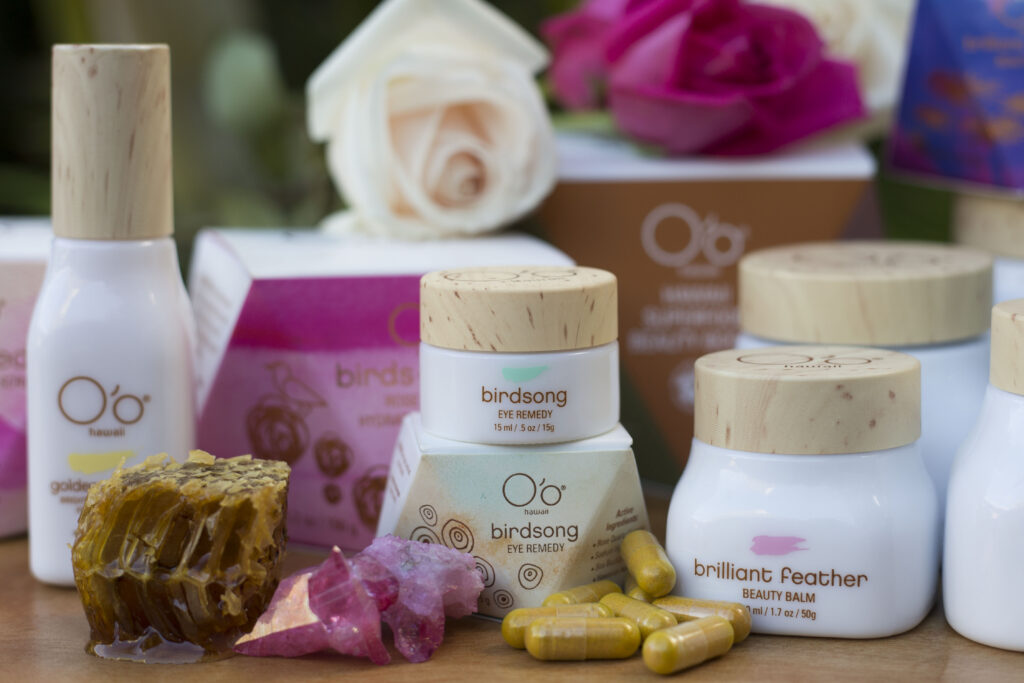
Skincare brand O’o Hawaii has left QVC and department stores to concentrate on direct sales, Amazon and luxury spas, especially in Hawaii, its home state. Discussing QVC, founder Holly Harding, says, “The cost of the 3PL plus the amount of discount we had to give QVC to move the needle for promotions yielded us almost nothing as a company…While my rationale at the beginning with QVC was to just increase volume across all retailers regardless of profit initially and grow, grow, grow, then reduce costs while gaining investors and eventually selling, I had a major revelation that I didn’t want that for my company or my life.”
In its direct distribution, O’o Hawaii hits a 65% to 93% profit margin. It uses structured affiliate programs, organic social marketing techniques and robust e-mail marketing to fuel direct sales. Its profit margins for mom-and-pop stores hits 65% to 86%, while department store retailer margins for it were 10% to 40% because of the charges department stores levy on brands.
“While I launched O’o four years ago with different intentions, I got caught up early on with some initial success and attention that I quite honestly wish I wouldn’t have gotten,” says Harding. “But, hey, it’s all a learning experience in this life. So, now, I’m doing things my way again and keeping my brand the way I want and the way my devout customers have grown to love.”
Jessica Thomas, founder and CEO of Curate 360, an agency that connects minority- and woman-owned brands with retail brokers, advises brands to take a really hard look at their retailers to determine the ones that their core customers shop at. “You don’t just want to be on shelf, you want to be on shelves that will be successful for you,” she says. “For example, I have tons of brands with haircare that have launched at stores like J.C. Penney, and I’m like, ‘Do any of your customers go to J.C. Penney for haircare?’ They don’t.”
Susannah Dellinger, founder and CEO of clean beauty sales agency Bright Beauty Collective, is calling 2023 the “year of the sales teams.” There are indeed signs pointing in that direction. Demand for Bright Beauty Collective’s services has escalated of late. In the past six weeks, Dellinger says it’s fielded “inquiries from multi-nine-figure companies to brands making their first quarter million in sales.”
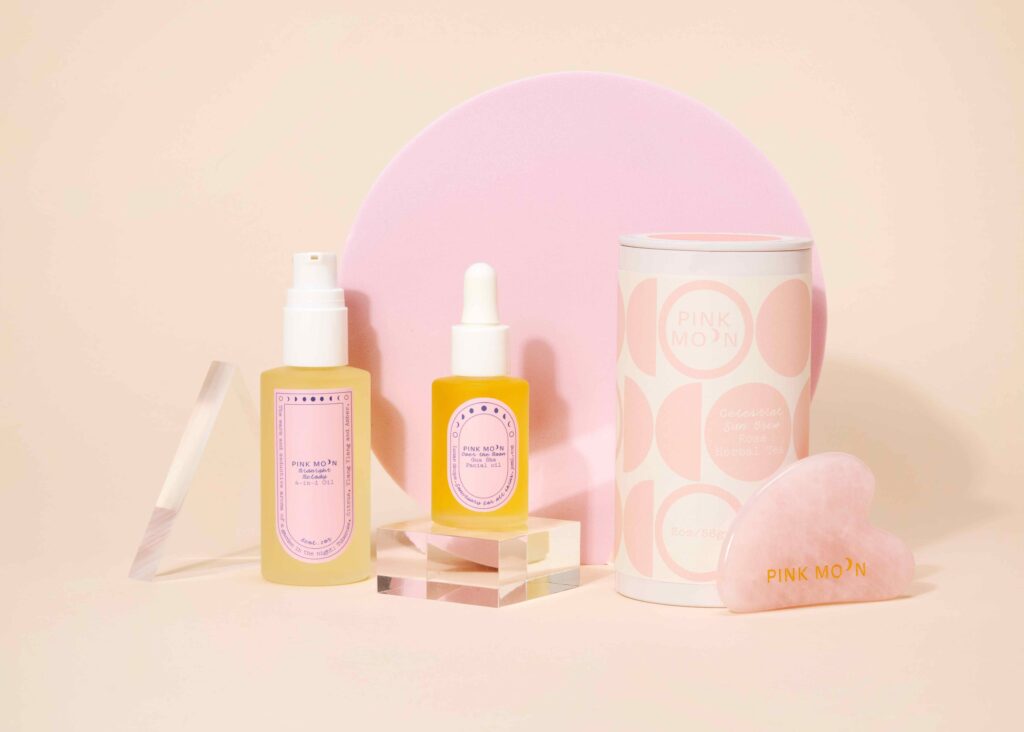
The number of health and beauty clients on the roster of Curate 360, which shifted its focus in 2022 from preparing brands for retail to supporting their in-store performance, has more than doubled in the last year to around 65. Among the brands beefing up sales support are Pink Moon, which has hired the sales agency Lydia Charlotte International, Vintner’s Daughter, which has hired an in-house head of sales for the first time, and Dae, which is growing its salesforce.
Lin Chen, founder of Pink Moon, chose Lydia Charlotte International because the agency has worked with indie brands such as Juara and Dr. Loretta, and founder Lydia Lovig is passionate about Pink Moon’s story and mission. “We have worked with other sales reps and agencies in the past who were clearly checked out or not passionate about Pink Moon,” says Chen, who shares agencies typically charge brands $2,500-plus and a commission for opening orders of 10% to 15%.
Dellinger pegs the cost of agencies at $50 to $65 per hour, with a set minimum number of hours. Thomas figures retail brokers generally charge brands $3,400 to $5,000 for a monthly retainer or a fee of roughly 7% of sales once they’re able to reach the retainer with their sales volume. For brands building a sales staff in-house, costs can encompass a national sales manager earning $100,000 or above a year, three to six coordinators earning around $75,000, an education department lead earning around $85,000 a year, and freelancers earning $22 to $33 an hour, according to Dellinger, who estimates the total can easily exceed $500,000.
“If a brand answers that budget is no concern and they want to be highly involved, then my recommendation is always to build your own team,” she says. “You can create the biggest impact, have the most control and see incredible results if you have a team of seasoned professionals running it.”
For brands electing for a sales agency, Dellinger recommends they consider if an agency has a history of winning in retailers that matter to them, the brands on its roster and what’s included in its fee. “It can be tempting to want to work with the same agency that is having great results for a large brand that you look up to. However, will that agency have the time to give your brand the attention it needs to thrive?” she says, adding of the fee, “Look for an agency that includes education services for the store staff. The best result is when your sales start to lift even on the days that you aren’t paying for support due to education that is happening.”
Dellinger warns brands not to end their relationship with a sales agency too soon. She says, “While many of our brand partners that our agency works with have seen lifts in sales almost immediately, that is the exception not the rule. The first 30 to 60 days are building that reputation and getting ready to run. While it can feel like a long wait, the payoff is worth the patience. We have seen brands turn from being exited in stores to becoming the No. 1 trending category leader in the same retailer within one season.”
As the pandemic got underway, David Klar, CEO of beauty brand incubator Klar&Co., presented the accessible germ-busting skincare brand Fortify+ to Costco. In conveying reasons for not taking on Fortify+ back then, he recounts Costco informed him, “We don’t need to give our customers a bigger option of what’s at Walmart. We already have that with Procter & Gamble brands. We want our indie brands to be high-end only.”
Recently, Klar had another meeting with Costco and, while it hasn’t committed to Fortify+, he senses the retailer is warming up to indie beauty brands of all sorts, including brands with natural positioning and affordability at their core. “Something has shifted,” says Klar. “They are not launching from scratch. They have to see traction nationwide, but it doesn’t have to have been everywhere for the past 50 years as long as you offer great value and something special for their customer.”
As Costco appears to be warming up to indie brands, indie brands are certainly warming up to Costco as they zero in on warehouse and club retailers in an economy characterized by value hunting. Stephanie Schull, who started selling her vaginal weight set brand Kegelbell online at Costco three years ago, says, “Reliable and demonstrably convenient sources like Costco and Amazon should do better than most when economic times are hard. What places Costco in a superior position to Amazon, in my view, is its reputation for quality, whereas Amazon is reliable for shipping, but dubious with respect to quality and safety.”
For indie brands, Schull says partnering with Costco can seem expensive. She details there are “requirements for product liability insurance, regulatory fees, and quality assurance for a medical device like ours, and putting in place the infrastructure they expect from their vendors are expenses not required when selling directly to consumer from one’s own website or even through Amazon. Still, they make every effort to keep the expenses low, and the associated costs of partnering with them are modest from a big business perspective, but any expense is hard for a small bootstrapping startup.”
Space NK’s consideration of Nordstrom Rack and T.J. Maxx for future expansion of its BeautySpaceNK installation that debuted at Walmart this year reveals that the beauty industry’s adverse opinion of off-price retailers is ebbing. The off-price conversion stems from its pursuit of cost-conscious shoppers and store growth. Nordstrom Rack and Saks Off 5th are adding locations. TJX, parent company of T.J. Maxx, Marshalls, plans to reach 6,275 stores long term, up from around 4,700 stores at the beginning of 2022.
Although beauty brands have lingering concerns that products sold at off-price outlets will eat into their full-price business, Klar mentions creating distinct products for off-price alleviates that problem. Distinct off-price products and brands is Klar&Co.’s forte, and it’s been doubling revenues annually. Klar stresses the beauty industry is rethinking off-price because contemporary consumers are rewarding brands for paying attention to their pocketbooks.
“Instead of boasting to their friends about how much they spent, now, when they boast, it’s about how inexpensively they got something,” says Klar. “It’s a change of mindset that, of course, has been going on for a long time, but I think is definitely getting more commonplace.”
The change in consumer mindset isn’t leading brands to boast about their off-price presences, but that could modulate. “I do think you are going to have people boast about it a little bit more or at least be less embarrassed and more proud of off-price,” says Klar. “Will they advertise it? Possibly not because they want it to be a surprise. If you advertise it, it takes out the whole treasure hunt mentality of off-price.”
CTZN Cosmetics isn’t shy about being at both Nordstrom and Nordstrom Rack. The makeup brand doesn’t discount for Nordstrom Rack, where it’s arrived at 200-plus stores in impulse sections with a pack of three lip liners priced at $11 that’s not available elsewhere. Tariq Khan, executive chair and CEO of CTZN parent company Citizen Cosmetics, says, “A portion of the Nordstrom Rack customers is the younger, more price-sensitive demographic that could eventually transition to become a Nordstrom customer and, hopefully, that consumer finds us early in their beauty consumer journey.”
With diminishing returns on digital ad spend and a crowded retail landscape, brands are searching for alternative distribution channels introducing them to new customers. The professional beauty channel comprised of doctors’ offices, salons, wellness centers, med spas and traditional spas is an attractive alternative.
Demand is ascending in the professional channel as consumers count on dermatologists, aestheticians and hairstylists for information and product recommendations. “We’re really seeing a higher willingness to purchase from that derm channel or that plastic surgeon or the med-spa channel because of that credentialed recommendation,” said Nini Zhang, managing director of investment at Bank of America, during a recent Beauty Independent webinar.
Scoring distribution in the professional channel imbues brands with credibility, a doubly helpful tool if beauty professionals take to social media to spread their product knowledge. At Clarisonic, the facial device brand L’Oréal closed in 2020, co-founder Robb Akridge says, “The professional channel was a great way for us to validate our product and our claims.” At his current brand Opulus Beauty Labs, Akridge is again leveraging the abilities of dermatologists and aestheticians to validate merchandise and educate consumers.
Building a professional network isn’t without challenges, especially for smaller brands. Unlike large retailers that issue single purchase orders to fulfill multiple stores, dermatologists, salons and spas are discrete profit centers usually serviced by brand representatives or distributors.
“You must have more of a drug sales rep model where you need reps in multiple markets who have to visit one doctor after another to secure the distribution, which can make this strategy very expensive and time-consuming,” says Akridge. “To note, the days of pure commission are gone. So, it is often a numbers game that you need to consistently manage to ensure that you are staying profitable while keeping your reps happy and motivated.”
Akridge recommends targeting high-density areas with clusters of practices and spas to make it easier for reps to visit them. He underscores the territory has to be lucrative for reps to recoup their salaries while garnering profits for the brand. “Another strategy is having one person in-office within sales who cold calls practices and spas. They work with their sales buddy who is on the ground to provide them with leads of those interested within their respective market,” says Akridge. “This helps to manage time and visits needed and, therefore, it minimizes expenses while maximizing results.”
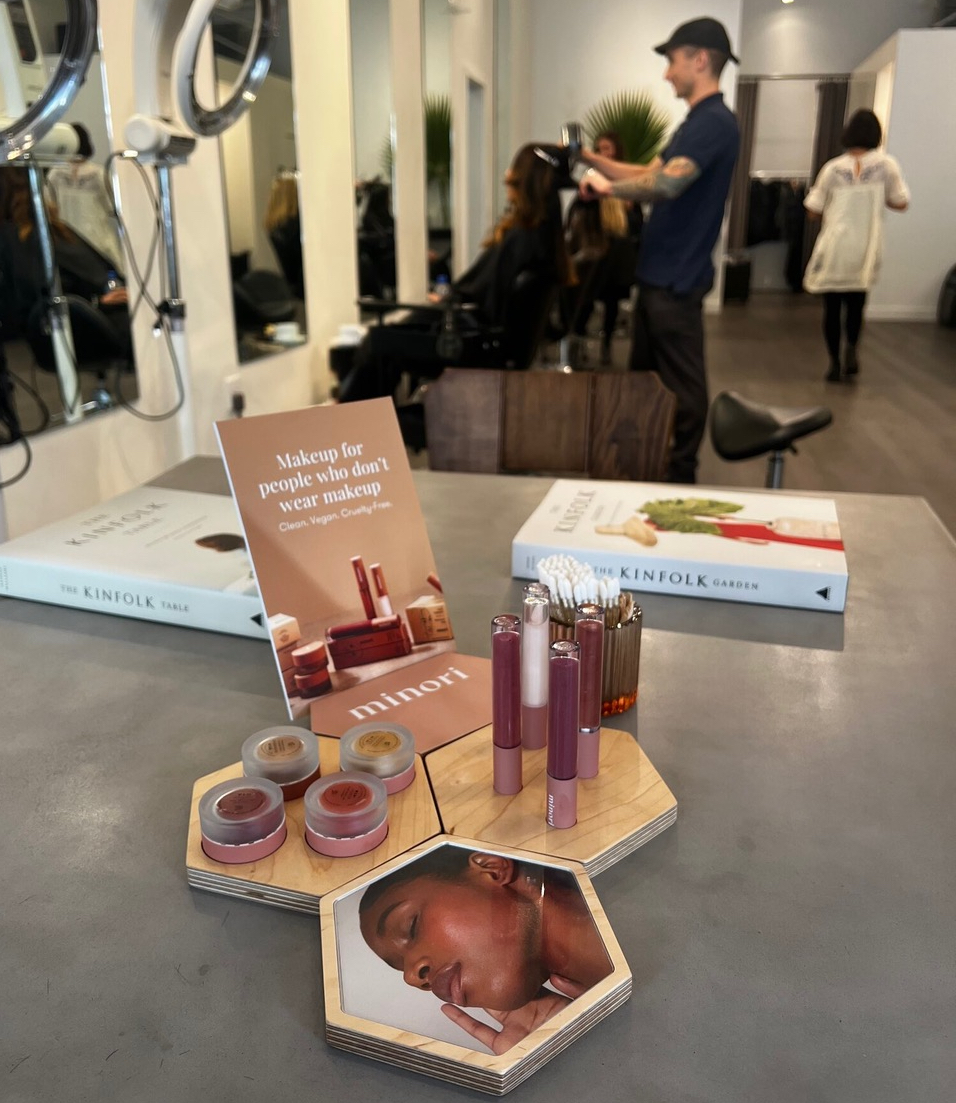
The makeup brand Minori Beauty is establishing salon distribution without reps or a distributor. After experimenting with pop-ups at hair salons, the brand anticipates ramping up the number of salons it’s in to 100 by the end of next year. Overall, it expects to be in 200 points of distribution. Anastasia Bezrukova, founder and CEO of Minori Beauty, says the brand will test salon placements in large East Coast and West Coast cities along with major suburbs. She’s confident its no-makeup-makeup ethos suits salon customers, and its tight selection is relatively low cost for salons to buy into.
The brands The Ordinary and Ethique recently went public about their decisions to eliminate underperforming product categories. The Ordinary disclosed it will stop selling its “Colours” makeup range in 2023. It told customers, “Despite many people loving the formulas, we didn’t manage to reach enough of you with our Colours range and the products have not been profitable since their launch. Although we really strongly believe in both products, their popularity simply was not strong enough to make their production sustainable.”
Ethique has moved out of the cleansing concentrates category. In a blog post, the brand specified it made the move for two reasons: One, “we cannot make them for the price other companies are selling them for due to the choices we make with packaging, ingredients and sourcing. And two, our NPD process has as its first checkpoint, ‘is someone else already doing this better, and as sustainably as we could?’” To the second question, it concluded the answer is yes and suggested its customers buy cleansing concentrates from Good Change, Blueland, Everdrop and Homethings.
Ethique founder and CEO Brianne West says the brand publicized its decision to discontinue cleansing concentrates “because we try to be transparent in all things. Some people were disappointed but, largely, the response has been wonderful. So many people have embraced the decision and our values, and that is truly one of the most rewarding things to experience. Honestly, we wouldn’t hesitate to do it again if we felt a product of ours didn’t have a place on the market.”
Undoubtedly, The Ordinary and Ethique will soon be joined by other brands discontinuing products that are sore spots on their balance sheets, and they provide models for how to communicate openly about those discontinuations. The discontinuation of product categories counters the lifestyle trend that has had brands trodding into categories that may not be their strengths. To gauge whether to excise a product or product category, Elizabeth Lim, a strategic advisor and consultant with Elizabeth Lim Strategy & Consulting, counsels brands to drill down on their customers and what’s resonating with them.
She expounds, “This would require a full analysis that would include sales, sell-through if at retail, core customer profile, marketing drivers and market trends. A brand should be able to identify distinct patterns after this analysis. My recommendation is to always stay true to the brand in order for long-term gains versus launching products or into new categories for short term wins.” Once the analysis is conducted and floundering products with limited potential are identified, she says jettisoning them can “free up valuable resources to focus on categories that are better performers with growth potential.”
Ingestibles go through waves in the beauty industry. In the 2000s, the now-defunct brand Borba, known for its waters and gummies with beauty benefits, made headway in the likes of CVS, Sephora, Ulta and QVC. Liberty Interactive, QVC’s parent company at the time, even invested in the brand. To not miss out on the ingestible action, consumer packaged goods conglomerate Nestle introduced Glowelle, another defunct brand. It specialized in a daily beauty drink supplement.
In the 2010s, brands like Hum Nutrition, WelleCo, Moon Juice and The Beauty Chef invaded the beauty scene with powders and pills. They proliferated in beauty stores, including at Sephora, as consumers gravitating to holistic remedies embraced an inside-out approach to beauty. Currently, only two of the four brands—Hum Nutrition and Moon Juice—remain available at Sephora.
Today, after there’s been a boom of beauty- and wellness-oriented tea and other beverage startups such as Kin Euphorics, Poppi, Dune Glow Remedy, Tease and Wunder Workshop, swallowable stuff is poised to have another run at beauty retail. Sheena Brady, founder of Tease, a purveyor of teas for focus, immunity, sleep and calm, argues there’s plenty of opportunity for beauty retailers to dive into drinks. The Detox Market recently picked up Tease’s teas.
Acknowledging that education can be a hurdle for beauty stores selling teas, Brady says that hurdle is overmatched by “store sampling, often accessible MSRP price points, not to mention tea can also make incredibly thoughtful, low cost, yet high impact gifts with little risk in ingredient sensitivity and no issues with worrying about, will this tone or color work for them?”
Elaborating on sampling, she says, “When you invite browsing guests to enjoy a sample cup of tea while shopping, they are almost instantly disarmed and more open to connecting, asking questions. They shop longer and want to engage in conversation. Ultimately, they are connecting more mindfully with their in-store shopping experience and want to take some of that connection home with them.”
It’s no secret that BIPOC founders receive far less venture capital funding than their white counterparts. While several in the beauty industry raised $1 million or more this year, funding going to Black entrepreneurs decreased in 2022 amid economic uncertainty. In October, based on data from funding resource Crunchbase, Dominic-Madori Davis wrote in the publication TechCrunch, “Black founders raised a paltry $187 million out of the near $43 billion in venture capital allocated in Q3 this year. To put that into perspective, that’s only about 0.43% of the total investment made in the quarter.”
In response to the onerous fundraising reality, Corey Huggins, founder of beauty industry think tank Ready to Beauty, says BIPOC brand founders will seek creative financing options that “have a more even exchange for brands and investors.” The options include deals with contract manufacturers or suppliers for lines of credit in return for a percentage of sales or an equity stake. “In these instances, the CM or suppliers are funding the vision and the future of the brand in hopes that it becomes beauty’s next big thing,” says Huggins.
Crowdsourcing funds is another option, and brands are also teaming up to form charitable cohorts. Huggins says, “By adding a philanthropic component to their brand story, they’re able to receive institutional grants to help fund their endeavor. Essentially, they are brands that function like a not-for-profit, only with a beauty twist.”
Additional alternatives include firms like Daintree Capital, which offers working capital loans to underrepresented founders. Although small in size—the loans typically range from $10,000 to $75,000—they’re useful to assist with inventory and advertising. Daintree Capital founder Alisha Griffey points out the loans are a good option for brands not drawing VC dollars, a situation most indie brands find themselves in.
“It is true that venture capitalists have a lot of money to spend, but they’re only looking for companies that are growing at hyper rates and chasing mega markets,” she says. “A lot of companies don’t fit that mold, and in particular, a lot of companies run by women and people of color don’t fit that mold.”
Out of the countless questionable trends that emerged on TikTok in the past year, skin cycling is one of the few that experts actually co-sign. The routine of alternating days of applying active ingredients with rest days to give the skin time to recover is straightforward, and it’s probable it will spill into categories beyond skincare such as body care, haircare and fragrance.
Celebrity hairstylist Ashley Streicher is a proponent of hair cycling with a schedule for washing, accompanying treatments and rest days to prevent people from going overboard with products. “Hair cycling allows your hair to really benefit from each break in that hair cycle, whether it be the cleanse portion, the rest portion, the hydration part,” she says. “The cycle gives your hair space to do its job.”
Brands can leap on the cycling trend with cycling-centered sets featuring instructions on how often to use each product and when. “Clients love to be on a system, especially when it comes to hair, to make sure that you’re getting the proper care,” says Streicher. “This takes all the guessing out of when, how much and what to use each time you feel like you need to shampoo or care for your hair. I think this is so great for everyone and can be adjusted to fit your specific hair type and need.”
A similar principle can be applied to body care, notably for brands addressing conditions like acne, ingrown hairs or hyperpigmentation. The body care brand Nakery Beauty has developed a step-by-step body care cycling protocol, with step one consisting of its Smooth Things Over Body Retexturizing Scrub, step two consisting of its Skinny Dip Body Cream and Get the Scoop Butter Wash, and step three consisting of its SkinToning Body Butter and SkinVitamin Pressed Body Oil Melt. On the fragrance front, as mood-boosting scents and layering mount, outlining days or times in in which consumers should use energizing notes versus calming notes would be a fit for scent cycling.
Indie beauty saw a ton of brand closures in 2022. Closures aren’t expected to abate in 2023, but select brand founders may opt to pause or sell parts of their business instead of shutting things down completely. Melody Bockelman, founder of product development agency Private Label Insider, says a slew of brands erected during the pandemic have had sales plummet over the past year due to a lack of foundation and funding. Some of the brands, though, have managed to assemble strong followings via email or social media, and they can sell parts of their business to keep their brands afloat.
“Even if it’s not your entire business, you have target assets in that business, you have email lists, you have branding, Instagram accounts, Facebook groups, TikTok pages that someone would want to purchase,” she says. “Put those together to sell instead of just walking away from your work, and this way the brand can live on.”
Struggling brands can press the brakes for a moment to reevaluate their businesses and come up with a new game plan. “The brands that want to stay in business can maybe take a pause and go back and rebuild their foundation and then move forward,” says Bockelman. “If you can separate yourself from it, instead of closing it down and mourning it say, ‘What can I do? What are the lessons I need to learn? What can I sell? And, then, what can I move forward with?’”
A gaggle of brands catering to women in their 40s, 50s and above are rolling out and attempting to, as cosmetics brand 19/99 puts it, “narrow the generational beauty gap.” Examples in addition to 19/19 include I Know and Sun People Beauty, skincare brands that offer products formulated specifically for mature skin, and makeup brands Flyte.70 and EpicLight Beauty.
But older consumers still have a long way to go before they’re fairly represented. Peach & Lily founder Alicia Yoon has encountered difficulties finding people with mature skin for her brand’s imagery because there’s not much representation of them at agencies. She says, “It’s made it really challenging because we always want someone with more mature skin in our campaigns…We need more.”
Although agencies may not have, brands are waking up to women over 50 having $15 trillion in spending power, according to publication Women’s Wear Daily. “Gen Xers are recognizing what an important contribution they are to beauty, particularly in the high-end spending segment,” observes Valdé founder Margarita Arriagada, former chief merchant at Sephora. Elena Frankel, co-founder of Flyte.70, wonder if retailers share that recognition. She says, “Will retailers embrace brands like ours who commit to niche demographics? We question if there is hesitation with retailers and why.”
Frankel argues that the beauty industry has been slow to cater to gen Xers and older groups because society has broadly been slow to cater to them. Germaine Bolds-Leftridge, founder of I Know, is convinced the tide is turning. “Baby boomers are not going down without a fight,” she says. “We are going to embrace this aging thing and you’re going to hear our voice. We’re not going to stay silent.”
It wasn’t an easy year for retail. Buying behavior shifted as prices surged and the resulting pressure on inventory caused many retailers to rely on deep discounts to rev up sales. Even as inflation eases, retailers will be looking to strategies next year to lower risk and widen margins. Consignment is appealing to those aiming for lighter inventory investments.
Emerging brands may be the most affected by the shift to consignment, says Shelby Olsen, a member of the Adit retail success team. Adit is a retail matchmaking service owned by Beauty Independent parent company Indie Beauty Media Group that links brands with retailers like Ulta, Neiman Marcus, Credo, C.O. Bigelow, Bluemercury and Beauty Heroes. Olsen believes that retailers will integrate consignment more consistently next year to test small brands that are new to the market.
“They want to work with you, but they don’t know yet if it’s going to take off. So, they’re going to reduce the risk. A lot of them, even the larger players, may start with consignment or drop-ship and be willing to go wholesale later on, but they want to get some proof first,” she said during a recent Beauty Independent webinar.
The social commerce platform Flip launched a consignment component over the summer called Fulfilled By Flip that it reports has taken off with emerging brands. Brands in the program ship smaller quantities of stock and receive payment as they sell. There are about 350 brands in the Fulfilled By Flip program, and consignment is forecast to become Flip’s dominant model in the future.
In the fall, Philipp Wingsoe, CEO of international and president of retail and partnerships at Flip, told Beauty Independent, “My closing rate on the program is about 97%.”
While consignment allows brands and retailers to better manage risk, the model can have drawbacks. Consignment orders tend to be smaller than traditional wholesale orders. Therefore, brands reliant on larger purchase orders may be disappointed. Conversely, retailers can confront greater resistance when it comes to charging shelving and marketing fees for stock that they don’t own. Accounting can prove challenging for retailers, too.
Camille Barreto, founder and CEO of Me Cosmetics, a participant in the Fulfilled By Flip program, says, “Certain consignment relationships face challenges such as less promotion of a brand by consignees or limited access to critical data around inventory and sales flows, so it is crucial to work with the right retail partner in order to build a successful consignment partnership.”
In a development that was hastened by the pandemic, brands are scouring global manufacturers and suppliers to moderate their dependence on China. The nail and makeup brand Emilie Heathe is vetting possible manufacturers in Italy, Germany, Korea and Japan. Emily H. Rudman, founder of Emilie Heathe, believes more brands will follow suit in 2023. She says, “As brands look for paths to sustainability, looking at domestic or closer manufacturing facilities will continue to trend in order to reduce waste and carbon footprints.”
Rudman says manufacturers in Mexico tick all her boxes in terms of competitive prices and artisanship. She’s researching contract manufacturers in the country for the brand’s nail polish business. For pencils and eye products, she’s eyeing facilities elsewhere in Latin America.
To Raine Madhi, founder and CEO of global sourcing platform Zipfox, the advantages that American companies can reap by sourcing products in Mexico outweigh the advantages of China. He says, “You have the standard advantages that are not product-specific like shipping times around one week to ten days, low shipping costs, same time zones as the U.S., low cost of labor, an experienced workforce, and the U.S.-Mexico-Canada agreement, which means no trade war tariffs.” He adds that labor costs in Mexico average 10% to 15% lower than they do in China, and shipping costs to the U.S. clock in at 30% to 50% less.
While big beauty and personal care companies like Avon, Unilever and Proctor & Gamble have turned to Mexico for years to produce products, Madhi says there are plenty of smaller contract manufacturers available to partner with emerging beauty brands. “Just do the same diligence you would in considering any new supplier,” he advises. “Be specific, get samples and start small.”
As more brands reduce their dependence on China, Madhi asserts Mexico’s position on the global stage as a manufacturing and supply hub will grow. It will take time and energy, though, for it to rival China. He says, “There are deep roots planted in Asia and production capacity will need to expand in Mexico as more U.S. importers leave China, but the transition is happening.”
It can be a thrilling exercise to build a fantastical avatar, but if someone’s shopping for makeup in the metaverse, it’s impossible to truly virtually try-on a foundation or a lipstick and know what it will look like on. Enter the digital twin, a realistic representation of you designed to appear exactly like you, from skin tone to bone structure to eye color and everything in between. A digital twin can shop in a virtual store similar to how a person can browse Sephora, trying on products and seeing immediately what they look like.
Wayne Liu, chief growth officer at artificial intelligence and augmented reality beauty company Perfect Corp., enthuses that a digital twin allows for an immersive experience. He says, “Trying makeup on an avatar doesn’t sound very exciting, but trying makeup on your digital twin, wearing all this makeup and going to a concert in the metaverse or something like that, that can be a very exciting thing.”
The conversation around menopause has been incredibly empowering for women of a certain age. Brands like Womaness, Pause Well-Aging and Wile have helped provide life-changing education and solutions as well as shed the myriad of stigmas that come with middle age for women. But menopause affects more than people who identify as women.
Just as we’ve seen a less gendered approach to period care and sexual wellness gain traction in recent years, in 2023, brands across the menopause space will become more inclusive in their language, branding and offerings so nonbinary and trans people experiencing menopause feel welcome in the currently female-focused movement.
“The menopausal journey is expansive relative to the variety of symptoms experienced, when and by whom,” says Debbie Dickinson, who founded Thermaband, a cooling wearable device brand designed to provide hot flash relief, with her daughter Markea Dickinson-Frasier. “As we normalize and destigmatize menopause and encourage open conversations and innovate solutions, it is imperative that we recognize and welcome everyone who is affected, without binary limitations and stereotypical restrictions. Inclusivity is paramount as we navigate this very human experience of living and healthy aging.”
Leading brands in the space are planning ways to make their products and services more inclusive and expansive, starting with the definition of who their customers are. Alessandra Henderson, co-founder and CEO of Elektra Health, a menopause-focused online education platform and community says that, in 2023, she will look to “expanding the conversation to the transgender community, non-binary individuals, and ‘younger’ women who experience menopause due to surgery or medically induced hormonal shifts. Elektra Health will be rolling out education and resources addressing the wide spectrum of people navigating menopause’s needs, including a mix of evidence-based recommendations and storytelling catered to normalizing the conversation for the trans community and other less-addressed populations.”
With SpaceNK set up in Walmart and selling on Amazon going from no way to a necessity for many upmarket beauty brands, the lines between mass and prestige beauty have become incredibly fuzzy. Expect to see more brands that reside in the blurry in-between to be hot investment and acquisition targets in 2023.
Ariel Ohana, managing partner at investment bank Ohana & Co., believes that the mass market will be the new frontier for prestige beauty, and that shift will be reflected in transactions next year. It’s been bubbling up a bit this year, too. In 2022, mass-market cosmetics and skincare brand Pacifica nabbed investment from Brentwood Associates, and Church & Dwight acquired acne patch brand Hero Cosmetics.
“Prestige beauty brands sold at Sephora, Ulta, etc. are looking for new growth channels as the specialty prestige channel is plateauing. There is a real gap in the mass market, with very little innovation in terms of formulation, branding and marketing,” says Ohana. “Think how Bubble is disrupting the incumbent acne brands or how brands such as The Ordinary and Versed are doing the same in skincare. New brands are entering this channel, and 2023 will see more brands selling in mass being funded or acquired, when traditionally up to now most beauty deals were prestige or DTC brands.”
While aesthetic treatments like Botox and Morpheus8 aren’t going anywhere in 2023, med spas and wellness centers will be taking the idea of holistic health and beauty to whole new levels with treatments that are way more than skin deep. A treatment that exemplifies the trend is ozone therapy, where a not insignificant amount of blood is taken out of the body, detoxified, infused with ozone and circulated back into the body.
Tiffany Faith Demers, founder of aesthetic treatment booking app Upkeep, sees the rising popularity of these more innovative—some would say invasive—treatments as part of the longevity movement. “You’re actually medically, and therefore aesthetically cleaning up your internal environment,” she says, dubbing the emerging sector “long bio.” She continues, “That’s where these drug companies are going, autophagy. They have nanotech that goes into your bloodstream actually breaking down the toxic components to your blood.”
Faith Demers draws a parallel to professional products like hyaluronidase, an enzyme that can be injected to dissolve filler. She says, “It literally sits in there and eats hyaluronic acid in a chain reaction. Drug companies want to create that type of procedure for things like cancer cells, but you can also target the kind of byproducts in your blood that are causing you to age.”
The buccal fat removal discourse on TikTok reached a fever pitch over the last week, with many users lamenting that celebrities are allegedly resorting to a permanent solution for what is a temporary problem. As people age, they lose fat in their faces, and some are paying to have it surgically removed in an effort to create chiseled cheekbones.
Content creators have hypothesized that, in a bid to have women spend more money to tweak their appearance, chubby cheeks will be back in style, and all the women getting their buccal fat pads removed will flock to their plastic surgeons to have filler injected where their fat pads once were. Model and beauty social media strategist Ann Krisha Buenaobra seems to agree. She believes the “cherub” aesthetic will be big in 2023, starting with makeup.
“Taking cues from cold girl makeup, fairy core and coquette style, I think we’re going to see full faces, rosy cheeks, and bright eyes become a big trend in makeup,” she says. “More and more, women are moving away from the lens of male desirability and our makeup trends are becoming less ‘sexy’ and more cute, almost as if we’re tending to our inner childs and doing the things that make us feel good. There is always a place for siren eyes, but, in general, I think we’re making room for the precious, cute and playful.”
Over the years, it’s felt like a natural evolution for a handful of florists to dip their stems into the beauty category. Florists like Oldvine and Eric Buterbaugh have created fragrances and candles inspired by the beautiful blooms they work with every day.
Now, florists and high-end plant shops across the country are expanding their offerings to include beauty, wellness and personal care. At Chicago’s picturesque Asrai Garden, customers can order a bespoke bouquet, fine jewelry and taxidermy animals along with Marvis toothpaste, Saint Jane serum, Not Pot muscle soak, Toca Botanicals Intimate Oil and more apothecary finds.
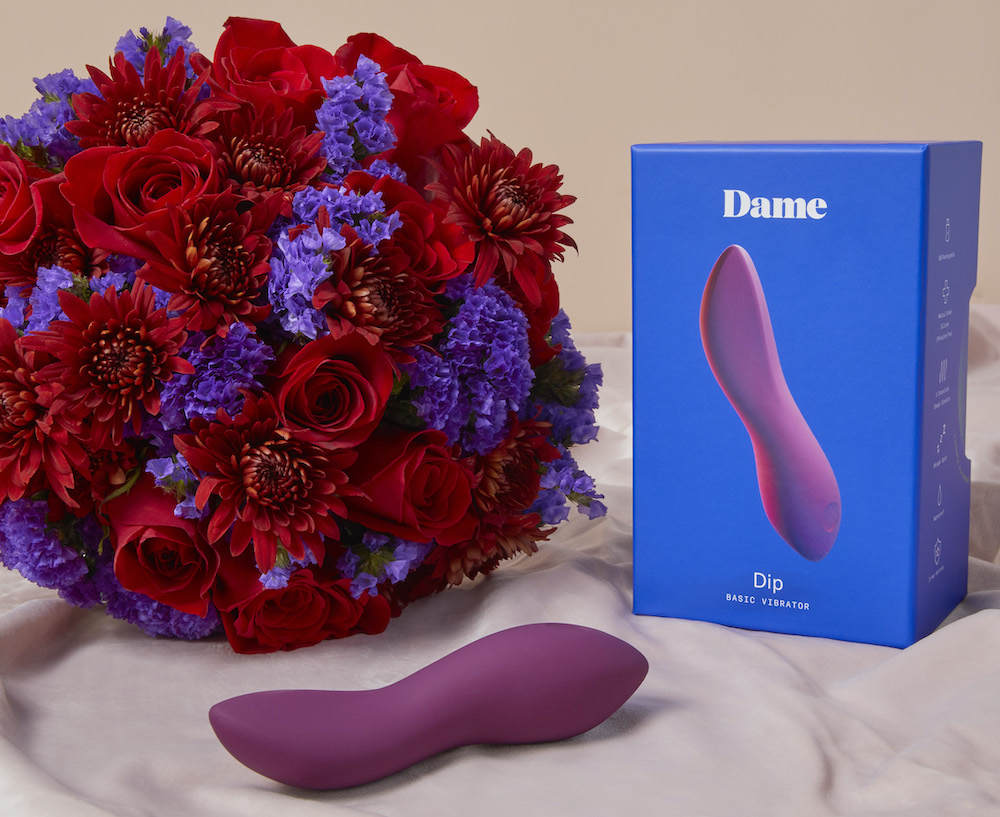
Sexual wellness is a favorite subcategory of florists jumping into beauty and personal care. Asrai Garden carries several Dame vibrators, and Los Angeles florist The Bouqs has partnered with the sex toy specialist on its Valentine’s Day bundles, combining the brand’s toys and massage oil with bouquets.
Wendy Oliff, SVP at The Bouqs, thinks that beauty, sexual wellness and fresh flowers are all part of the modern self-care movement. Referring to sexual wellness, she says, “Had you asked me five years ago, the topic was still very taboo, but it’s mainstream now. It’s part of the health and wellness trend to empower yourself…Getting yourself flowers is a form of self-care because you’re happier when you have fresh flowers around you.”
Currently, The Bouqs has a physical location in LA and a Manhattan pop-up. The LA store is set up as more like a gift boutique than a florist. Oliff says, “We’ve got candles, books, plants, plant care. We wanted to make sure that there was truly a gift boutique experience in addition to what we offer on the flower side.”
Rachel Roberts Mattox, founder of brand development and marketing firm Oyl + Water, detects a budding crop of differentiated luxury beauty brands. She says, “We are witnessing the slow rebirth of refinement. In the current landscape of too much noise and too much choice, we’re seeing a return towards quality over quantity, interest-based experiences, niche categories and one-of-a-kind offerings. This still allows for access and connection, but with more emphasis on intention, curation and creativity.”
As examples, Roberts Mattox highlights Flamingo Estate, Perfumehead, J.Hannah and Hildegaard. She extols Flamingo Estate’s regenerative agricultural philosophy and original products, singling out limited-edition honeys it produced in collaboration with celebrities such as Julianne Moore, Tiffany Haddish and Will Ferrell. With a curated edit of extrait de parfums and partnership with Violet Grey, Roberts Mattox says Perfumehead is “the epitome of niche luxury.” She was enamored of bottles it sent to VIP customers at launch that were personalized by an artist.
Roberts Mattox lauds J. Hannah for elevating nail art to an art form. She says the brand has “one-of-a-kind relics, and they’ve partnered with The Met in their latest color collaboration and hosted an event there. Beauty brands have taken notice. They just did a collaboration with Moon Juice.” Inspired by nature, Hildegaard partners with artists, scientists, farmers and musicians on unique oils. Roberts Mattox describes it as “very exclusive and garnering a lot of buzz.”
To modernize the poet John Dunne and the immortal Hugh Grant, aka Will Freeman in “About a Boy” referencing Jon Bon Jovi who referenced John Dunne, “No brand is an island.” Particularly in this period of mission-driven brands, the idea that a brand can have an impact on the environment, women’s rights or another cause alone is laughable. Brands have to collaborate to make change. That collaboration has been happening for philanthropic or causal purposes, but it could start increasingly happening to better businesses.
Brook Harvey-Taylor, founder and CEO of Pacifica, hopes it does. She’s an advocate for radical collaboration. She defines it as “being fearless around helping your competitor” by sharing ideas and information about suppliers and other resources. “I’ve learned really hard things, and I’ve had to learn them really hard ways,” says Harvey-Taylor. “I think the whole notion of pull up the ladder once you get there is horrible, and I truly believe in sharing. If I can share, if I can make someone’s life and brand and experience, whatever it may be, a little bit easier by sharing information or what I’ve learned, I’m here for it.”
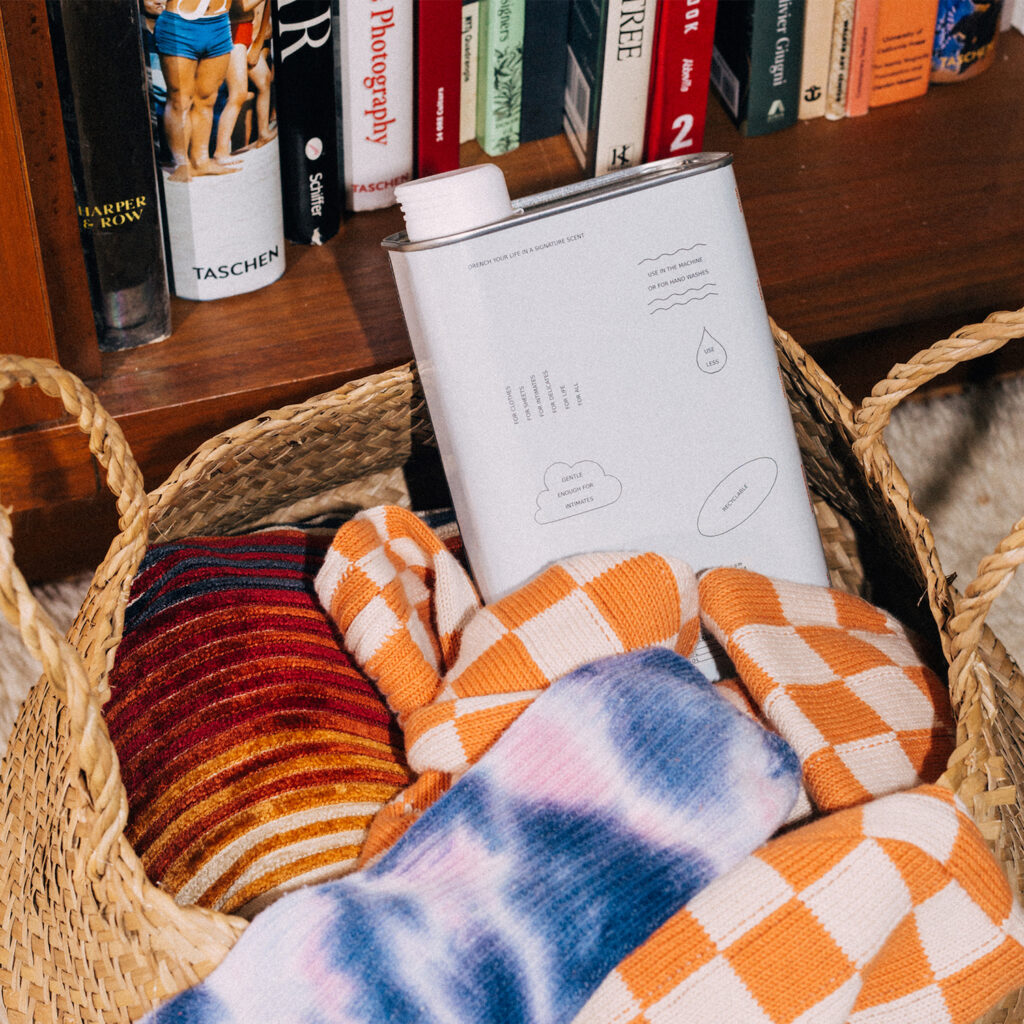
Fragrance has been a standout category since the pandemic took hold. Buoyed by the category’s fortitude, brands in it are feeling secure in extending their reach to product categories beyond conventional perfumes and candles. The brand Dedcool has been bullish on exploring ancillary categories. Following fragrances, air fresheners and laundry detergents are Dedcool’s most popular products. The brand has also released poop drops as well as room and linen sprays. It’s working on pet and hair products.
“We see that people come in interested in the fragrance, and we see how their experience from the fragrance then translates to other scents,” says Dedcool founder Carina Chaz. “We’re seeing a lot of momentum, and it’s driving us to really rethink the product offerings and the categories that we’re launching.”
Bringing fragrance into various aspects of consumers’ lives with an array of products urges them to explore a brand’s full offering and personalize fragrances and formats to their tastes. “Maybe there are scents that you’re liking in your car as opposed to on your clothes or your body,” says Chaz, adding, “Our consumer is the hero, and we want to inspire people to be unique and experience the product how they want. Personalization is everything.”
A number of greenwashing-related lawsuits have rained down on brands and retailers this year, from the case arguing the brand Sukin falsely claimed it was carbon-neutral to the class action complaint challenging Sephora’s clean beauty label. While it’s unclear what the verdicts will be in these lawsuits or even if they’ll hold up in court, they could be harbingers of what’s to come: Consumers and lawyers will be carefully scrutinizing sustainability efforts.
Bockelman says brands’ use of certified manufacturing facilities can bolster their sustainability claims. E.l.f. Beauty, for instance, manufactures at a fair trade-certified facility. Certifications can be advantageous because Bockelman notes brands often don’t know what happens on the manufacturing floor or what ingredients manufacturers are incorporating in products.
“Making sure that your manufacturer’s up to speed and that they’re following good practices is going to be a necessary step just to ensure quality,” she says. “I’m sure that that’s why E.l.f. did it was just to make sure there’s not bacteria growing in their formulations or everybody’s in fair labor conditions.”
Indie beauty brands, however, may not have the option to partner with certified manufacturers. KKT Consultants founder Krupa Koestline suggests brands make adjustments grounded in standards they spell out. “It is imperative for brands to define the ethos for itself, rather than relying on these constantly evolving industry standards,” she says. “Instead of trying to blindly fit into a category, I recommend brands stay abreast on the latest research and make their own educated decisions on a particular issue.”
The players
5 mentionedViolet Grey

Versed
AS Beauty
The Detox Market
Church & Dwight