Is Biotechnology The Answer To Beauty’s Sustainability Problem?
But a beauty industry swing toward science-backed products has pushed the focus from natural ingredients to those nurtured in labs. It’s been prompted by consumer demand for ecological and cutting-edge ingredients as well pandemic-exacerbated supply chain snags and climate change revealing the fragility of the consumer goods ecosystem. More and more brands are turning to ingredients born through biotechnology as a sustainable alternative to natural ingredients that are becoming challenging to source or are found to be harmful to the environment.
According to biotechnology firm Geltor, biotech beauty ingredients are a $1 billion opportunity advancing at a compound annual growth rate of 9%, a drop in the bucket of the $534 billion global beauty industry that’s poised to stimulate a splash as brand and consumer recognition mounts, and biotech solutions proliferate.
Already, David Hjalmarsson, founder and CEO of Tiny Associates, a skincare brand incorporating biotech ingredients, has noticed that biotech compounds are generally priced on par with what they’re replacing. He says, “Some biotech ingredients will likely be more expensive, but that premium will likely be happily absorbed by cosmetics brands due to the storytelling and growing consumer preferences.”
For the uninitiated, biotechnology can call to mind visions of mutant strawberries and genetically modified salmon. However, Shara Ticku, co-founder and CEO of palm oil alternative supplier C16 Biosciences, explains the technology has progressed in leaps and bounds over the past two decades from the realm of genetically modified organisms. “Biotech is basically using the tools of biology to produce [ingredients],” she says.
Frequently, when people refer to biotech, they’re talking about microbiology and the fermentation of microorganisms. Think brewing beer or making bread. “Right now, we talk about ‘natural’ as ingredients that come from plants. When we’re talking about biotechnology in beauty, you’re shifting from the plant kingdom to the fungal kingdom,” says Ticku. “Yeast, algae and fungi are the three main groups that people use. And, within those groups, you use the microorganism—the yeast, the fungi or the algae—as a sort of factory to grow your ingredients instead of using the plant to grow your ingredient.”
Biotech is appealing because it brings stability and consistency to the ingredient formulation process and has the promise of enabling brands to meet sustainability goals. “All the corporate brands set targets in terms of sustainability which are super ambitious,” says Romain Reynaud, R&D director of active beauty for ingredient supplier Givaudan. “And they have started to realize that they still have ingredients in their portfolio that are coming from non-renewable origin. They have realized that biotech will be one of the main options to make their portfolio of ingredients more sustainable, and so they have started to communicate around biotech in a positive manner.”
Mia Davis, VP of sustainability and impact at clean beauty retailer Credo, expounds, “Many conventional synthetic ingredients can have sustainability concerns and safety concerns. And, on the other hand, a similar concern is that many naturally derived ingredients also have sustainability concerns. They may be from a plant and be very safe for us, but, if you’re growing them on a plantation or you clear cut a forest, that’s not sustainable. So, the fact that an ingredient is natural or safe doesn’t mean necessarily that it’s sustainable. It’s this complexity that I think is helping to drive growth in bioidentical ingredients.”
Take, for instance, bisabolol, an anti-inflammatory, anti-aging and anti-microbial ingredient in Cetaphil, The Honest Co., The Ordinary and La Roche-Posay products. Per Annie Tsong, chief strategy and product officer at biotech and beauty brand company Amyris, when sourced from the candeia tree, it takes 230 hectares of land to produce a ton of bisabolol. A single hectare of sugarcane results in the same amount of Amyris’s bisabolol alternative. In fermentation, sugarcane is the engine or the feedstock of the yeast factory that produces the ingredient.
Tsong says, “We’re talking about multiple orders of magnitude difference in resource efficiency when we make ingredients using our technology versus taking them from trees and plants.”

Palm oil is associated with deforestation devastating animal and plant populations in Southeast Asian countries such as Indonesia and Malaysia, and biotech companies like C16 and Geno have popped up to offer options for brands moving away from it. “It just seemed totally insane to me that we are burning down rainforests to make a vegetable oil,” says Ticku. “And, at the same time, palm oil is found in 50% of products on supermarket shelves and essentially unavoidable, so we’d become totally dependent on this thing. We just looked at this and we said, ‘Could we do it better?’”
Doing it better with biotech means “you can source either first- or second-generation sugars or carbohydrates—our process is using sugars from common crops like wheat and corn—and you can grow these in almost all regions of the world,” says Kyle Huston, product director at Geno. “Not only do regions get more control over how the raw materials are being produced, but you also don’t have to ship commodities on a boat across the world, creating even more emissions.”
Geno recently partnered with CPG conglomerates Kao and Unilever on a $120 million-plus venture to form a biotech alternative to surfactants. “We’re stepping over palm oil and working towards the downstream products the palm oil is being turned into, so primarily your palm and palm kernel oil,” says Huston. “We’re going into the building blocks for surfactants.”
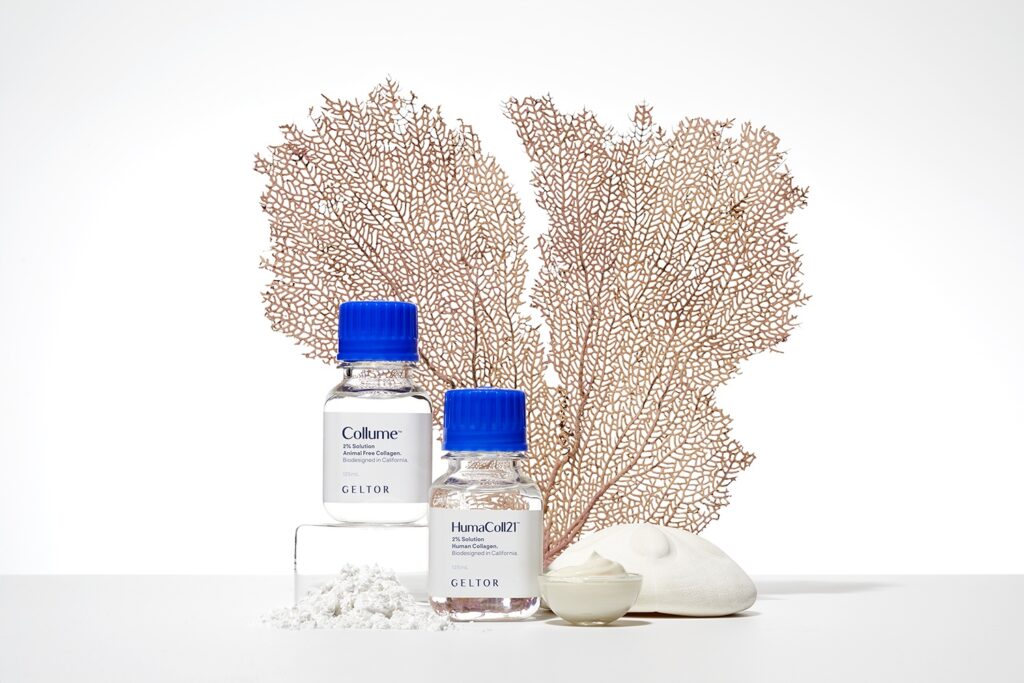
Land use isn’t the only environmental issue biotech can improve. The common cosmetic ingredient squalene traditionally is sourced from shark liver oil. Amyris’s lab-engineered alternative squalane doesn’t require shark fishing to produce. Tsong estimates the company holds 70% to 80% of the squalane market share and sells squalane to nine of the top 10 beauty companies in the world. Geltor’s Collume and HumaColl21 collagen molecules are alternatives to animal-derived collagen molecules.
“Collagen is a huge ingredient in the industry. It’s well-known, consumers trust the molecule, and they’ve been using it, but the supply chain is just not clean,” says Sonia Renac, chief commercial officer at Geltor. “Traditional collagen is directly extracted from animals with all the safety and lack of purity you can imagine. The bigger chunk of the business is vegan collagen, which is not actually collagen, but a product extracted from plants which can boost collagen with different types of mechanism or mode of action, but they’re not real collagen. The big difference of what we do is nailing the sequence of the protein.”
The buzz around biotech tends to be of the glowing variety, with media coverage positioning it as a savior to the beauty industry that’s seeking to be expunged of its myriad of environmental sins. The truth is nuanced. Biotech faces a lack of regulation and oversight. There are no standard parameters as to what renders a biotech ingredient “better” for the environment than the natural or petroleum-based ingredient it’s substituting.
Patrick Foley, co-founder and chief innovation officer at green chemistry company P2 Science, says there are three major factors that have to be done correctly for a biotech operation to be sustainable. One is the feedstock that powers fermentation and the land use connected to the feedstock. “The next part of it is the fermentation,” says Foley, elaborating, “How efficient is it? What scale do you have to go to get a certain volume of product? You can generate a lot of waste and wind up heating a lot of water for a low yield and that energy balance can start to become a real burden on the overall lifecycle analysis.”
The last factor he outlines is separation. Foley elaborates, “Often you’re getting these kind of intractable mixtures of organic molecules and water molecules, and if you don’t have an elegant separation, you can incur a huge carbon footprint just in the separation piece of your fermentation.” If the feedstock, fermentation and separation aren’t locked in, he says a product can wind up no better from an environmental perspective than a petroleum-based product or a conventional crop oil product.
To Gay Timmons, founder of sustainable ingredient distributor Oh, Oh Organic, the biggest worry with biotech is the plants “feeding” the microorganisms that spawn lab-engineered beauty molecules. “The practice of how they’re produced is not sustainable because you’re using sugar,” she says. “It’s mono-cropped, and they’re burning down the rainforest to plant sugar. I think if they paid attention to their feedstock and actually used things that are grown sustainably, using organic methods, whether it’s certified or not, they could make a legitimate sustainability claim, but when you make a sustainability claim to me and you’re using conventional sugar from Brazil, I call BS.”
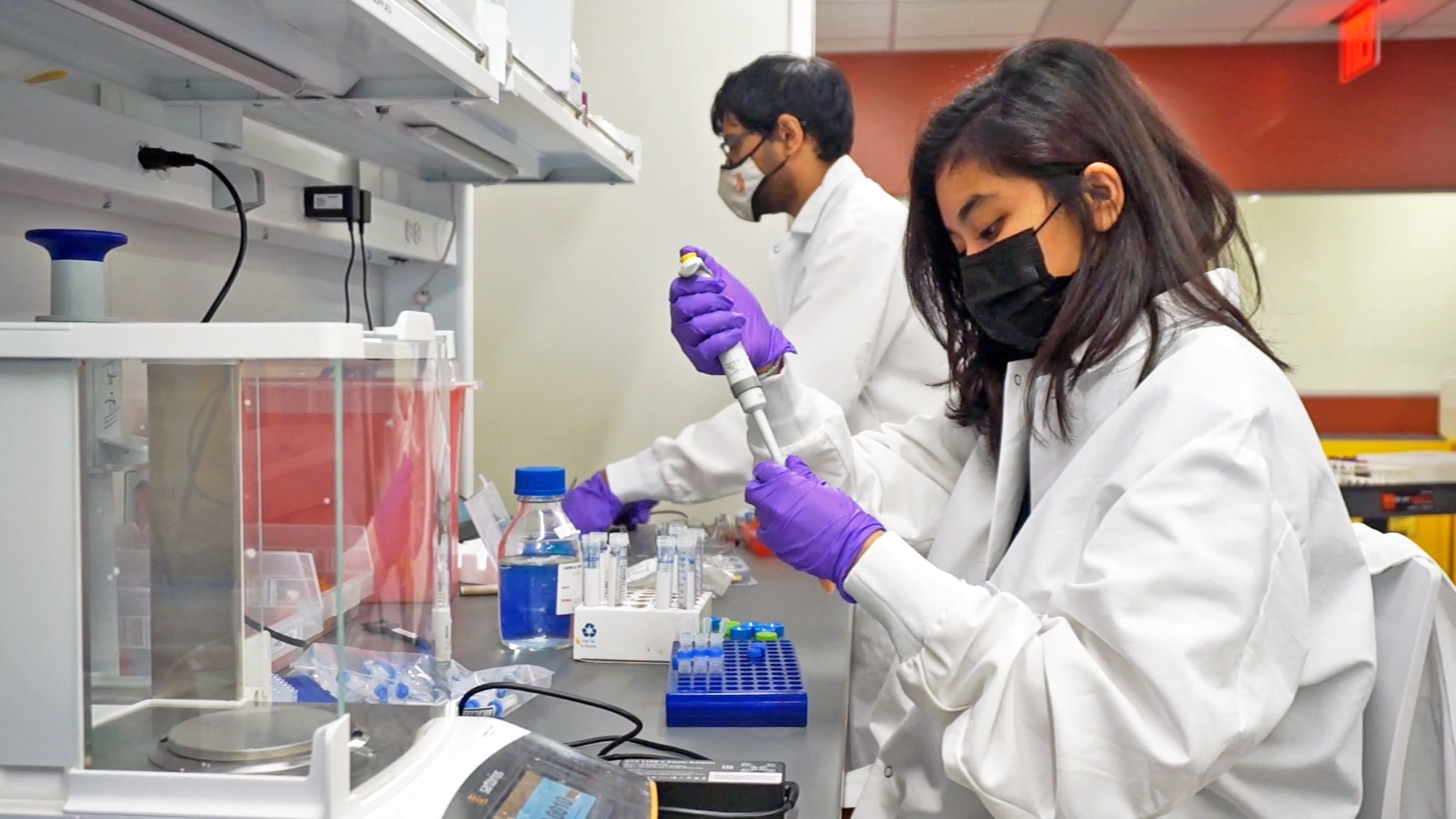
There are biotech companies attempting to disentangle fermentation from environmentally destructive feedstock. Capra Biosciences has developed a biotech version of retinol with a special reactor that depends on upcycled food waste as a food source.
Andrew Magyar, chief technology officer and co-founder at Capra Biosciences, says, “Palm oil replacement is something that can be really important, but if you are replacing palm oil with sugarcane derived product, you really have to look at that big circle of impact. Our process has the ability to use a diverse set of carbon sources. We’re looking at everything from food waste to agricultural byproducts to really try to reduce the impact of the carbon as much as possible.”
Magyar suggests the allure of sugar is that it’s reliable and cheap. “The food industry has helped to make sugar really inexpensive. The tradeoff is that, as more biotech solutions come onto the marketplace, sugarcane is not going to be available to meet that demand,” he says. “So, you’re either going to push up prices for food or need new sugar plantations.” If the current situation continues, he indicates, the sugar dilemma will intensify, and companies will have to innovate to keep costs and environmental effects at bay.
“They’re able to make a really predictable molecule around using that sugar to make a product, so it’s a more complicated process to use other carbon sources,” says Magyar. “But that’s where technology like ours comes in where we have different reactor designs, and it also has to handle some of the complexity of different carbon sources.”
Aware of the drawbacks of sugarcane, Amyris and Givaudan have teamed up with organizations to help them work with sugarcane that’s farmed responsibly. “Amyris works very closely with Bonsucro founded by the World Wildlife Fund,” says Tsong. “They have an extremely stringent set of standards for farming sugarcane, and it covers both the societal and the environmental aspects. On the societal piece, they ensure that the labor conditions are safe and that the benefit of the industry goes back into the community. For the environmental aspects, they ensure that the most sustainable practices are used.”
With biotech in its infancy, there could be difficulties that emerge that haven’t been hashed out yet. Davis warns that the beauty industry should proceed with caution. She says, “When we’re talking about things in a laboratory, we still have to be asking a lot of hard questions about short-term and long-term safety for human beings and other animals and the environment.”
Nonetheless, Davis is optimistic about the possibility that biotech could do good. “If there is a sustainable and safe feedstock that is used to create a product, you get to have more control over it,” she says. “Now that we’re seeing a major uptick in catastrophic weather events, we potentially have a much more reliable supply chain, and if those building blocks are safer and sustainable, then this would be a really big win for the chemical companies, for brands, for customers, and of course for the environment.”
Foley is bullish on the combination of biotech and green chemistry or the design of chemicals to reduce hazardous substances. “People are perhaps overly optimistic about the breadth of what biotechnology can accomplish by itself, and I think that’s right. You have to be cautious about that,” he says. “One area I really like is bio fermentation of simple molecules that can then be fed into green chemistry processes. Let’s play to the strengths of bio fermentation. You get us a really nice, low carbon footprint, organic molecule that we can work with to design something around and take it forward from there. It’s not one versus the other, it’s them together.”
Davis agrees, noting, “Biotech and organic are not duplicative, but they don’t have to be opposed. In a lab when we have really great controls and a sustainable feedstock and where we’re actually driving for safety data, I think we have to be creating a future where they live side by side.”
Hjalmarsson believes biotech ingredients will be superior in particular circumstances, but conventional ingredients may be superior occasionally, too. He advises beauty brands not to conclude that biotech is a holy grail. Hjalmarsson says, “When we do some lifecycle analysis on specific ingredients, we will probably see that it’s more cost-effective, it’s more sustainable, it’s more beneficial from a societal point of view to actually continue to farm and extract some ingredients the traditional way.”
Biotech could propel beauty in untold directions, though. Renac says, “Biotech is still nascent. It’s still an expensive process from bench to shelf, so we have to be mindful of that. Performance has to be first in my mind about the why you will go in the biotech realm, so you need to target big problems that are not being resolved today. It’s a very non-invasive, non-extractive process that is clean, and the consumer is very ready to understand that science is not bad, synthetic is not bad.”
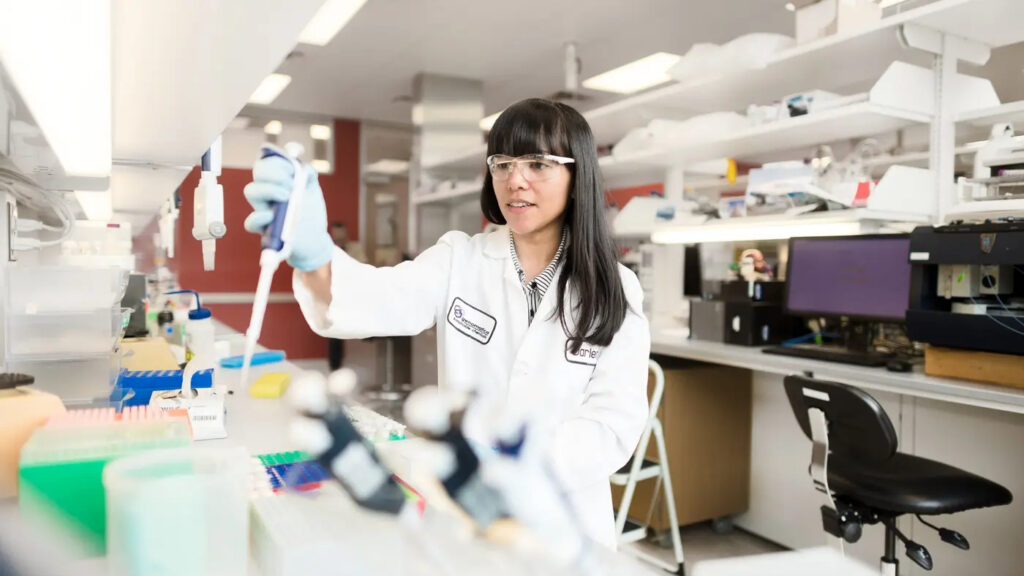
While biotech is an expensive endeavor for companies in the space, Huston says that research and development costs have diminished, allowing technologies to evolve and biotech to expand its reach. Exciting initiatives are on the very near horizon. Reynaud says, “Next year we will announce that we have succeeded in replacing one of the hero molecules with a biotech process, which will be a massive breakthrough for the cosmetic industry.”
Foley is adamant massive breakthroughs are essential to combat the massive consequences of flooding the planet with consumer goods. He says, “Our environment is under duress, supply chains are being tested, and the solutions that you can realize today can’t be the solutions of yesterday.”
Feature photo image credit: C16 Biosciences
The players
5 mentionedCommodity

Formulate
The Ordinary
Givaudan
Davids